 Bellingham Exterior
 Exterior Work Built for Ferndale's Coastal Conditions
Ferndale sits close enough to the water and far enough into Whatcom County's rain shadow-free weather pattern that homes here take a specific kind of beating. It's not the driest corner of Washington, and it's not the harshest either — it's the combination that wears exteriors down: salt-laden air drifting in off the water, long stretches of driving rain through fall and winter, and a moss season that seems to start earlier and last longer every year. None of that is dramatic on its own. It's the accumulation, year after year, that separates homes that hold up from homes that need premature repairs.
We're a Bellingham-based exterior contractor, and Ferndale is part of our regular service area — not a stretch assignment we drive out for once and don't come back to. We know what siding, roofing, windows, and decks are actually up against here, and we build our recommendations around that rather than a generic weatherproofing checklist.
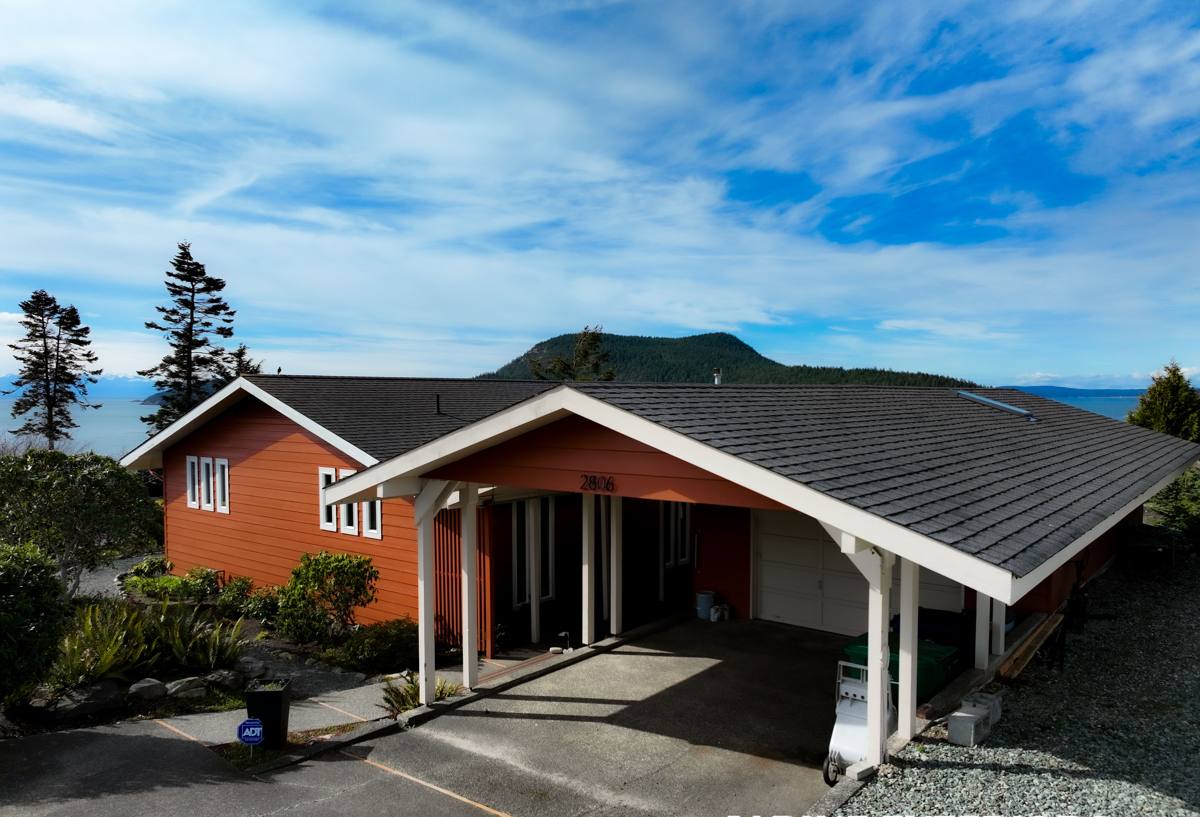
What Ferndale Homes Actually Face
Salt Air and Corrosion
Proximity to Puget Sound and Georgia Strait means airborne salt is a real factor for a lot of Ferndale properties, especially anything with clear sightlines toward the water or exposure to prevailing winds. Salt air accelerates corrosion on fasteners, flashing, and any exposed metal, and it can shorten the working life of finishes that aren't formulated to resist it. It also interacts with moisture — a home that's dealing with both salt exposure and near-constant damp air ages differently than one dealing with either alone.
Driving Rain and Wind
Whatcom County doesn't get the same relentless rain totals as some parts of western Washington, but Ferndale sees plenty of wind-driven rain, especially during fall and winter storm systems moving through from the water. Wind-driven rain doesn't just fall on a house — it gets pushed sideways into seams, laps, and joints that a straight-down rain would never reach. That's a different, more demanding test for siding, trim, and window installation than most people assume.
Moss and Sustained Dampness
Long moss season is one of the most consistent complaints we hear from homeowners in this area. Shaded roof slopes, north-facing siding, and any surface that stays damp for extended stretches becomes a candidate for moss and algae growth. Moss holds moisture against a surface long after the rain has stopped, which is exactly the condition that rots wood trim, degrades cheap siding substrates, and shortens the life of roofing materials that aren't built to shed it.
Siding in Ferndale: Why We Only Install James Hardie
We install James Hardie fiber cement siding exclusively. We don't offer vinyl, LP SmartSide, Cemplank, Allura, or unfinished wood siding like primed spruce or cedar, and that's a deliberate standard, not a limited product line we're stuck with. In a climate like Ferndale's — salt air, sustained dampness, moss pressure — the differences between siding materials show up faster than they would in a drier region.
Vinyl siding can warp and become brittle with age, and it relies on caulking and overlap for water management rather than a rigid, factory-finished surface. Engineered wood products like LP SmartSide use a wood-based substrate that, while treated, is still more vulnerable to sustained moisture exposure than fiber cement — a real consideration in an area where siding can stay damp for days at a time during moss season. Unfinished wood siding requires ongoing maintenance — repainting, sealing, and vigilance against rot — that most homeowners underestimate until they're several years in.
James Hardie fiber cement is non-combustible, dimensionally stable, and doesn't feed moss and algae growth the way wood-based products can. Its ColorPlus factory finish is baked on under controlled conditions, which gives it more consistent, longer-lasting color performance than field-applied paint — a meaningful advantage in a climate where UV exposure and salt air both work against a painted finish over time. Hardie also builds engineered product lines (their HZ series) specifically rated for different moisture and climate zones, so we're not installing a one-size-fits-all product on a house that faces real weather exposure.
None of this means other siding products are junk — they have real uses and real customers. It means that for the conditions Ferndale homes actually face, we've made a professional judgment call that Hardie is the product worth standing behind, and it's the only one we put our name on.
Roofing Built for Whatcom County Weather
Roofing in this area has to handle two separate jobs: shedding wind-driven rain without letting it find its way under shingles or through flashing, and resisting the moss and algae growth that comes with long damp stretches and shaded rooflines. We pay close attention to flashing details around chimneys, valleys, and penetrations, since that's where the vast majority of roof leaks actually originate — not from failed shingles in the open field of the roof.
Moss prevention starts with material choice and roof design, but ongoing care matters too. A roof that's never cleaned or inspected in a moss-prone area is going to age faster than one that gets occasional attention, regardless of how good the original installation was.
Windows That Handle Condensation and Drafts
Coastal proximity and consistent humidity make condensation a common complaint on older or poorly performing windows in this area. Single-pane or aging dual-pane windows fog, sweat, and let drafts through in ways that show up as higher heating bills and uncomfortable rooms, especially through the wetter months. Proper window replacement addresses both the glass unit itself and the flashing and sealing around the frame — a window that's well-built but poorly flashed will still leak and draft.
Decks That Survive Moss and Moisture
Outdoor living spaces in Ferndale deal with the same moss and sustained-dampness pressure as roofs and siding, just at ground level where it's often less visible until it becomes a structural issue. Ledger board connections, joist hangers, and any wood-to-wood or wood-to-house contact point are where rot typically starts, hidden under decking boards until a problem is well established. Material choice, proper drainage, and correct flashing at the house connection all matter more here than most homeowners expect.
What a Local Crew Brings to a Ferndale Job
A crew that works this area regularly has already seen how salt air, moss, and wind-driven rain play out on real Ferndale homes across different exposures and roof orientations. That's different from a crew installing the same materials with the same techniques everywhere they go, regardless of local conditions. We adjust flashing details, product selection, and maintenance recommendations based on what actually holds up here — not a generic manufacturer spec sheet written for a national market.
Being based nearby also means we're not disappearing after the invoice is paid. If a question comes up six months or two years after a project, we're a local call, not a number that only picks up during the original sales cycle.
Cost Factors to Understand Before You Start
Every exterior project has a handful of variables that drive price more than square footage alone. Understanding them upfront makes for a more useful conversation when you're getting estimates.
| Project | Main Cost Drivers | Ferndale-Specific Factor |
|---|---|---|
| Siding | Material grade, home size, trim complexity, tear-off needs | Salt/moisture exposure may justify upgraded product lines or finishes |
| Roofing | Roofing material, roof pitch, number of layers to remove, flashing detail | Moss-prone shaded slopes may need extra flashing and ventilation attention |
| Windows | Window count, frame material, glass package, structural or sizing changes | Condensation-prone rooms may benefit from higher-performance glass |
| Decks | Size, decking material, railing style, structural condition underneath | Ledger and joist connections need extra scrutiny given local moisture levels |
Signs Your Exterior Needs a Closer Look
Most exterior problems in this climate develop slowly, which makes early signs easy to dismiss. A few things worth checking before they turn into bigger repairs:
- Moss or algae buildup on roof slopes, siding, or deck boards that keeps coming back after cleaning
- Soft or spongy spots on deck boards, especially near the house connection
- Peeling, bubbling, or fading paint on wood trim or siding
- Fogging or moisture between window panes, or persistent drafts near frames
- Streaking or dark staining below roof valleys or flashing points
- Visible rust on fasteners, flashing, or metal trim
Getting Started
Whether you're dealing with visible siding damage, a roof that's showing its age, drafty windows, or a deck that needs more than a fresh coat of stain, it helps to have someone look at the whole picture rather than one component in isolation — a lot of exterior problems in Ferndale are connected. We offer free, no-pressure estimates for homeowners in Ferndale and throughout Whatcom County. Use the form below to get a conversation started about your home.