 Bellingham Exterior
 Two Different Materials, Two Different Bets
When homeowners in Bellingham start comparing siding options, two products usually end up on the short list: engineered wood siding (LP SmartSide is the best-known brand) and fiber cement siding (James Hardie is the market leader). Both are marketed as upgrades over vinyl or old-growth cedar. Both look good on a sample board. But they are fundamentally different materials with different failure modes, and in a climate like ours — salt air off Bellingham Bay, driving rain off the Sound, and a moss season that can run eight months out of the year — those differences show up faster than they would in a drier inland market.
We install James Hardie fiber cement exclusively. We don't install LP SmartSide, and we want to explain why in plain terms, without pretending engineered wood is a bad product across the board. It isn't. It's just not the product we're willing to put our name behind here in Whatcom County.
What Engineered Wood Siding Actually Is
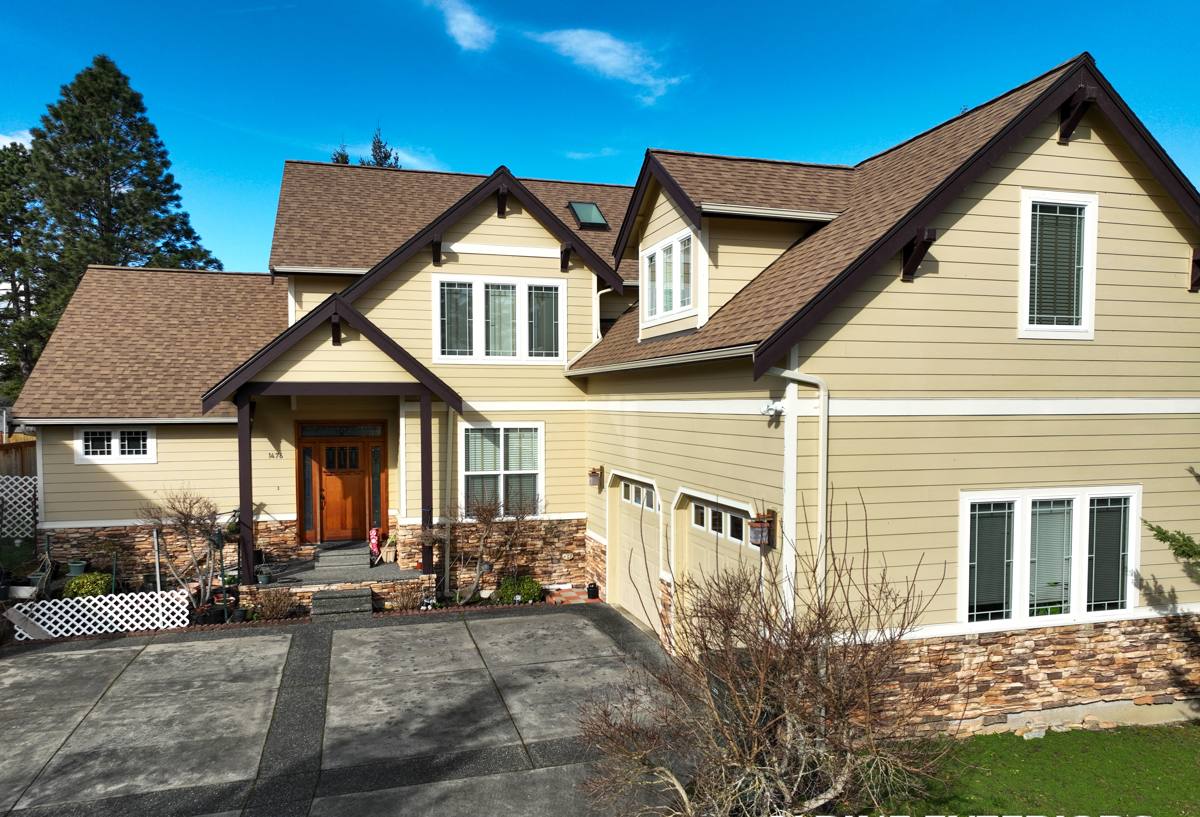
LP SmartSide and similar engineered wood products are made from wood strands — often a mix of species — bonded together with resin under heat and pressure, then treated with a zinc borate preservative and coated with a factory primer or finish. It's essentially a more consistent, more moisture-resistant cousin of oriented strand board (OSB), engineered specifically for exterior use.
What It Gets Right
- Lighter and easier to handle on site than fiber cement, which can speed up installation labor
- Accepts fasteners and cuts more like traditional wood, which some carpenters find familiar
- Lower material cost per square foot in most markets, including western Washington
- Zinc borate treatment genuinely improves resistance to fungal decay and insect damage compared to untreated wood
These are real advantages, and in dry or moderate climates, engineered wood siding has a solid track record when it's installed correctly and maintained on schedule.
Where It Struggles in a Wet, Salty Climate
The core vulnerability of any wood-based product — engineered or not — is what happens at the edges and seams once water gets past the finish. Engineered wood is still wood fiber at its core. Cut ends, butt joints, and any place the factory coating gets breached during installation or by weather exposure become entry points for moisture. Once water works into the strand matrix, the product can swell, and swelling doesn't reverse itself. Whatcom County's combination of near-constant winter rain, coastal humidity, and long stretches without enough sun to fully dry a wall assembly means those entry points stay wet longer than they would in Spokane or Yakima. Add moss and algae growth on north-facing and shaded elevations — extremely common here — and you get a surface that holds moisture against the siding for extended periods, which is exactly the condition engineered wood is least suited to.
None of this means every SmartSide installation fails. It means the product's success depends heavily on flawless caulking, prompt touch-up of any damage, and consistent maintenance — upkeep that's easy to defer and easy to miss on a two-story wall in a rainy climate.
What Fiber Cement Is and Why It Behaves Differently
Fiber cement siding is made from portland cement, sand, and cellulose fiber, cured into a dense, rigid board. There is no wood strand core to swell, and the material itself is non-combustible. Where engineered wood's weak point is moisture intrusion into an organic core, fiber cement's dimensional stability comes from being an inorganic composite in the first place. It still needs to be installed with proper clearances, flashing, and caulking — no siding product is maintenance-free — but the consequences of a small installation flaw are generally less severe and develop more slowly.
James Hardie's Climate-Specific Engineering
James Hardie makes region-specific formulations under its HardieZone system, and the Pacific Northwest falls under the HZ5 line, engineered for climates with significant moisture exposure. That's a meaningful distinction from a one-size-fits-all product — it tells you the manufacturer designed the formulation around exactly the conditions Bellingham sees: sustained rain, humidity, and temperature swings near the water.
ColorPlus Factory Finish
Rather than relying on field-applied paint, Hardie's ColorPlus finish is baked on at the factory in multiple coats, which produces more consistent color and better adhesion than most job-site paint jobs. It's backed by its own finish warranty separate from the product warranty, and it means less repainting over the life of the siding — a real factor in a market where scaffolding and repaint labor aren't cheap.
Side-by-Side: The Honest Comparison
| Factor | Engineered Wood (LP SmartSide) | Fiber Cement (James Hardie) |
|---|---|---|
| Core material | Wood strand + resin, zinc borate treated | Cement, sand, cellulose fiber |
| Combustibility | Combustible | Non-combustible |
| Moisture behavior | Can swell if coating is breached and water reaches the core | Dimensionally stable; does not swell like wood |
| Factory finish | Primed or pre-finished, field paint common | ColorPlus baked-on finish available, factory primed option also available |
| Typical material cost | Generally lower | Generally higher |
| Weight / installation | Lighter, faster to handle | Heavier, requires fiber-cement-rated tools and technique |
| Warranty structure | Limited warranty, terms vary by product line | Long-term limited warranty, transferable to one subsequent owner |
| Maintenance demand | Regular caulk and coating inspection is important | Lower ongoing maintenance once properly installed and finished |
Installation Sensitivity Cuts Both Ways
It's worth being honest about this: both products are installation-sensitive. Bad flashing, missed clearances above rooflines and decks, or improperly sealed joints will cause problems with either material eventually. The difference isn't that fiber cement forgives sloppy work — it doesn't. The difference is what happens after a small mistake goes unnoticed for a season or two. On engineered wood, a missed caulk joint that lets water track behind the panel can lead to swelling and softening of the wood core, which usually means replacing the affected section. On fiber cement, the same missed joint is more likely to show as a stain or a maintenance item rather than structural degradation of the board itself, simply because there's no organic material to break down.
That difference in consequence is a big part of why we standardized on one product. When we're the ones whose name is on the job, we want a material where a minor installation imperfection is a cosmetic fix, not the start of a rot problem behind the wall.
The Moss and Algae Factor Specific to Whatcom County
Bellingham's tree cover, marine humidity, and long overcast stretches create ideal conditions for moss and algae growth on exterior surfaces, especially on north- and west-facing walls that don't get much direct sun. Any siding product will need occasional cleaning in this environment. The distinction that matters is what's happening underneath that growth. On fiber cement, moss and algae are essentially a surface issue — unattractive, but not structurally threatening to the board. On wood-based products, prolonged organic growth against the surface keeps moisture in contact with the material longer, which is the exact condition that accelerates the moisture-related risks described above. If you've ever pressure-washed a wood fence or wood-sided outbuilding in this area and found soft spots underneath the moss, you've seen this dynamic firsthand.
Cost Over the Life of the Siding
Sticker price is only part of the picture. Engineered wood siding typically costs less per square foot going in, but a fair comparison has to account for repainting cycles, caulk maintenance, and the possibility of localized repair or replacement if moisture gets into a section. Fiber cement costs more upfront, particularly with a ColorPlus factory finish, but the repaint interval is longer and the material's resistance to moisture-driven degradation reduces the odds of a surprise repair bill ten or fifteen years in. We're not going to invent numbers for either scenario — every home and exposure is different — but it's a real factor to weigh, not just the quote on install day.
Simple Homeowner Checklist: Questions Worth Asking Before You Choose
- How exposed is this wall to driving rain and wind — south and west elevations near the water take the most weather
- How much direct sun does each elevation get, and how likely is moss or algae buildup
- What's the realistic maintenance schedule you're willing to keep up with — caulk inspection, repainting, cleaning
- What does the manufacturer's warranty actually cover, and is it transferable if you sell the home
- Is the installer using techniques and clearances specific to the product, not just "siding in general"
- Does the finish come factory-applied, or will it need field painting and future repainting
Why We Standardized on James Hardie
We used to get asked to install a range of siding products, and for a while we did. Over time, the pattern of callbacks and moisture-related repairs we saw on wood-based and lower-grade cement-board products in this specific climate — salt air, sustained rain, heavy shade, long moss seasons — convinced us it wasn't worth the risk to our customers or our reputation. James Hardie's HZ5 formulation, non-combustible composition, factory ColorPlus finish, and transferable warranty gave us a product we could stand behind without hedging. We're not saying engineered wood siding is a bad choice everywhere. We're saying that for homes in Bellingham and the rest of Whatcom County, we've made our decision, and we only install what we're confident will hold up here.
Get a Straight Answer for Your Home
Every home's exposure is different — a wall tucked under deep eaves on a sheltered lot faces a different reality than one taking direct rain off the water. If you're weighing your siding options and want an honest, no-pressure assessment of what your home actually needs, we're happy to take a look and walk you through it. Request a free estimate below.