 Bellingham Exterior
 Exterior Work Built for Lynden's Climate
Lynden sits inland from Bellingham Bay in the Nooksack River lowlands, close enough to the Canadian border and Puget Sound's marine air that homes here deal with a specific mix of weather stress: long stretches of driving rain from fall through spring, humidity that never fully lets up, and a moss and algae season that can run most of the year on north-facing walls and roofs. Add in the occasional cold snap that pushes down out of the Fraser Valley in winter, and Lynden's exteriors work harder than people who haven't lived here tend to assume.
None of that is dramatic on its own. It's the accumulation that causes problems — siding that stays damp two extra days after every storm, roofing that never fully dries out under a layer of moss, window seals that see repeated wet-dry-freeze cycles over the years. We've built our approach around that reality, not around what works in a drier climate.
What We See on Lynden Homes
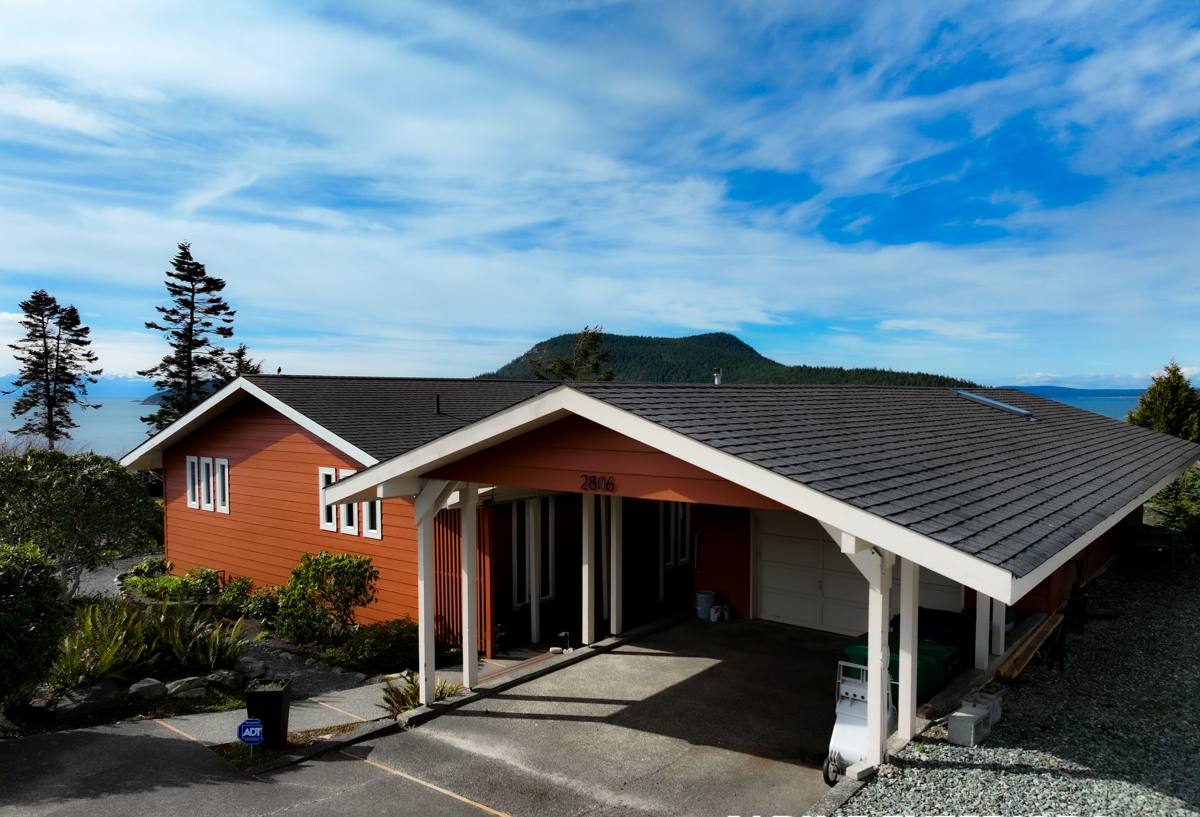
Whatcom County's building stock includes a lot of older farmhouses, mid-century ranch homes, and newer developments, and each generation of siding, roofing, and window products responds differently to sustained moisture. A few patterns show up often enough that they're worth calling out plainly:
- Wood and engineered wood siding that has taken on moisture at butt joints and panel edges, leading to swelling, delamination, or soft spots
- Vinyl siding that has warped or faded on south and west exposures after years of sun and temperature swings
- Roof surfaces with visible moss growth, especially on the shaded north slopes common on Lynden's tree-lined lots
- Window seals and flashing showing early failure where wind-driven rain gets pushed sideways into the wall assembly
- Deck ledger boards and fasteners that have corroded or softened the surrounding wood from years of standing moisture
Most of these aren't emergencies when we catch them. They're maintenance items that become expensive repairs if ignored for a few more wet seasons.
Siding: Why We Only Install James Hardie
We made a decision a while back to stop installing several common siding products, not because they're bad products in the abstract, but because we don't think they hold up well enough in this specific climate to put our name behind them long-term. We don't install vinyl siding, LP SmartSide, Cemplank, Allura, or unfinished cedar and spruce siding. James Hardie fiber cement is the only siding system we put on homes, and we think that's worth explaining rather than just asserting.
The Trade-Offs of the Alternatives
Vinyl is inexpensive and low-maintenance in the sense that it doesn't need painting, but it's a petroleum-based product that becomes brittle in cold snaps and can warp or buckle under sustained heat and UV exposure. It also doesn't hold up well to impact, and seams are a constant path for moisture intrusion in a climate that gets as much wind-driven rain as Whatcom County does.
Engineered wood products like LP SmartSide use a wood-strand core with a resin coating. When that coating is intact and joints are properly caulked and maintained, it performs reasonably well. But the core is still wood, and wood-based sidings are unforgiving of the kind of caulk failure and joint gapping that happens naturally over a decade of freeze-thaw and constant rain exposure. Once moisture gets past the surface, the core can swell and soften from the inside, and that damage isn't always visible until it's advanced.
Cemplank and Allura are both fiber cement products, similar in composition to James Hardie, but we've standardized on Hardie specifically for its factory-applied ColorPlus finish, its HardieZone engineering (products formulated for specific regional climate demands), and the strength of its transferable warranty when installation is done to spec. Unfinished cedar and primed spruce require an ongoing paint and sealing commitment that most homeowners underestimate — in a climate this wet, that maintenance window shrinks fast.
Why Hardie Fits Lynden
James Hardie fiber cement is non-combustible, doesn't support moss and mildew growth the way wood-based products can, and holds its factory finish for decades without the repainting cycle that cedar or spruce demand. It's engineered specifically for climates like this one — Hardie's HZ5 product line is formulated for regions with freeze-thaw cycling and sustained moisture, which describes Whatcom County well. When it's installed correctly, with proper flashing, clearances, and joint treatment, it's about as close to a set-it-and-forget-it siding as exists for this climate.
| Siding Option | Moisture Resistance | Maintenance | Longevity Here |
|---|---|---|---|
| James Hardie Fiber Cement | Excellent | Occasional cleaning | Decades with correct install |
| Vinyl | Fair (seam-dependent) | Low, but prone to warping | Moderate |
| LP SmartSide / Engineered Wood | Good if maintained | Regular caulk/paint upkeep | Moderate, sensitive to joint failure |
| Cedar / Primed Spruce | Poor without upkeep | High — regular sealing/painting | Shorter without diligent care |
Roofing for a Long Moss Season
Roofing in Lynden isn't just about keeping rain out — it's about managing the conditions that let moss and algae take hold in the first place. Shaded roof planes, tree cover, and long stretches of damp weather all favor moss growth, and moss holds moisture against roofing material in a way that shortens its life regardless of the underlying product quality.
When we replace or repair a roof, we're thinking about ventilation, underlayment quality, and flashing details around valleys, chimneys, and penetrations — the places where wind-driven rain actually gets in. We also talk with homeowners about realistic moss management: keeping roof lines clear of overhanging branches, periodic gentle cleaning, and zinc or copper strips where appropriate, rather than aggressive pressure washing that can strip granules and shorten a roof's life on its own.
Common Roofing Trouble Spots
- North-facing slopes with heavy moss buildup and slower drying time
- Valleys and flashing points where debris collects and water pools
- Attic ventilation that's inadequate for the humidity load, leading to condensation issues from the inside
- Gutters that stay full of needles and leaves through the wet season, backing water up under the roof edge
Windows: Sealing Out Wind-Driven Rain
Window failures in this climate are rarely about the glass — they're about the seals, flashing, and installation details around the frame. Wind-driven rain during a Whatcom County storm doesn't just fall straight down; it gets pushed sideways into wall assemblies, which means window installation quality matters as much as the window product itself. We install with proper flashing and drainage planes so that any water that does get past the exterior surface has somewhere to go, rather than sitting against framing.
For replacement windows, we also talk through energy performance with homeowners, since Lynden's temperature swings between damp winter cold and dry summer heat mean a well-sealed, properly rated window pays for itself in comfort and heating costs over time, not just in curb appeal.
Decks Built to Handle Standing Moisture
Decks take a different kind of abuse in this climate — horizontal surfaces that collect standing water, ledger connections against the house that are prone to hidden rot if not flashed correctly, and fasteners that corrode faster in persistently damp conditions. We pay particular attention to ledger board flashing, joist protection, and fastener selection, since those are the components most likely to fail quietly, out of sight, over several wet seasons.
Composite decking has become a popular option for homeowners who want to avoid the recurring sanding-and-sealing cycle that wood decks demand in this climate, though a well-built and properly maintained wood deck is still a reasonable choice for homeowners who prefer that look and are willing to keep up with it.
Deck Maintenance Checklist for Wet-Climate Homes
- Check ledger board flashing and caulking annually before the rainy season
- Clear debris from between deck boards to prevent moisture traps
- Inspect fasteners and hardware for corrosion, especially near ground contact
- Confirm proper drainage slope away from the house at the deck's base
- Address any soft or discolored boards before they spread to adjacent framing
Why a Local Crew Matters Here
Exterior work in Lynden isn't the same job as exterior work in a drier inland climate, and it isn't quite the same as work right on the immediate waterfront either. It sits in its own middle ground — enough rain and humidity to demand real moisture management, enough seasonal cold to require materials that handle freeze-thaw, and a moss season long enough that roof and siding choices need to account for it from the start. A crew that works this specific area regularly knows which details actually matter here versus which ones are copied out of a general specification sheet.
We're a Bellingham-based company, and Lynden and the surrounding Whatcom County communities are core to the area we serve. That means we're not guessing at what this climate does to a home over ten or twenty years — we're seeing it on jobs throughout the same weather patterns, season after season.
Getting Started
If you're dealing with siding that's showing its age, a roof that's carrying more moss than you'd like, windows that let in drafts during a storm, or a deck that needs an honest evaluation, we're happy to take a look and give you a straight assessment — no pressure, no inflated claims. Reach out for a free estimate and we'll walk the property with you and talk through what actually makes sense for your home.