 Bellingham Exterior
 Exterior Work Built for Birch Bay's Waterfront Climate
Birch Bay sits right where Whatcom County meets the water, and that changes what a house needs to hold up over time. Homes here face a combination that inland Bellingham properties don't deal with in the same way: salt-laden air coming straight off the water, wind-driven rain that gets pushed sideways into walls and trim, and a long, damp moss season that runs from fall through spring. We work on homes throughout Bellingham and the surrounding Whatcom County communities, and Birch Bay is one of the areas where we see exterior wear patterns that are noticeably different from what shows up a few miles inland.
This page covers how our siding, roofing, window, and deck work is approached specifically for Birch Bay's conditions, and why we think a crew that understands this stretch of coastline matters more than it might seem.
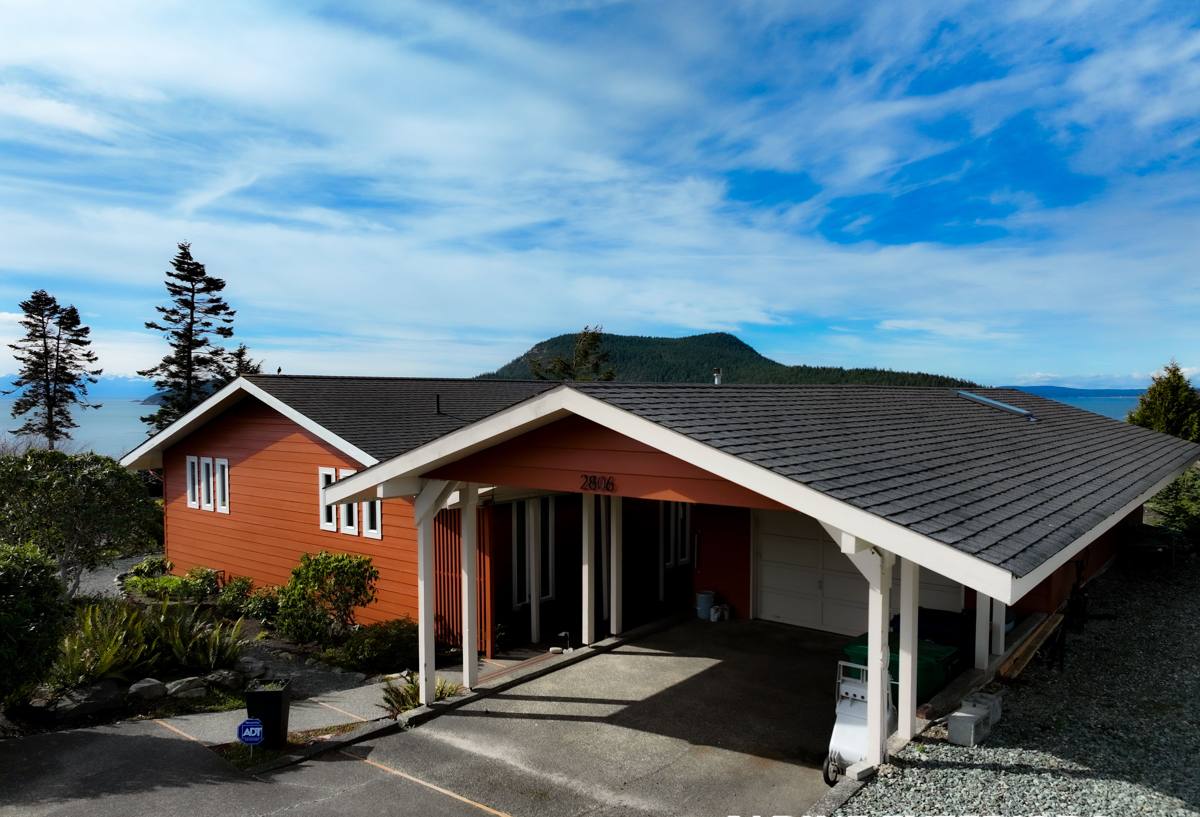
What the Coastal Environment Does to a House
Salt Air and Metal Fatigue
Airborne salt doesn't just affect boats and docks. It settles on siding, flashing, fasteners, and roofing metal, and over years it accelerates corrosion on anything that isn't rated to handle it. Cheap fasteners rust and stain siding. Uncoated or poorly coated metal flashing pits and fails earlier than it should. This is one of the reasons material choice and hardware choice both matter more in Birch Bay than in a drier, inland neighborhood.
Driving Rain and Wind Exposure
Birch Bay's open exposure to the water means wind-driven rain hits walls at an angle instead of just falling straight down. That kind of rain finds gaps in siding laps, exposed end cuts, poorly flashed windows, and weak caulking that would otherwise hold up fine. Water intrusion here tends to show up first around window and door openings, at deck ledger connections, and at any point where two materials meet.
Moss, Algae, and Prolonged Moisture
The long wet season in this part of Whatcom County keeps north-facing walls, roof valleys, and shaded siding damp for extended stretches. That's exactly the environment moss and algae need. On roofing, moss growth under shingles can lift them and create paths for water. On siding, prolonged dampness is what breaks down products that aren't engineered to shed and dry quickly.
Siding: Why We Only Install James Hardie
We install James Hardie fiber cement siding exclusively. We don't install vinyl, LP SmartSide, Cemplank, Allura, primed spruce, or cedar, and in a climate like Birch Bay's, that decision comes down to how each of those materials actually behaves over time near salt water and constant moisture.
- Vinyl can warp and become brittle with UV and temperature swings, and its seams and J-channels give wind-driven rain more opportunities to get behind the cladding.
- Wood products (cedar, primed spruce) need consistent maintenance — repainting, caulking, and moisture checks — to resist rot in a climate this damp. Skip a cycle or two and problems compound quickly.
- LP SmartSide is an engineered wood product, and like other wood-based sidings it depends on intact factory coatings and careful field sealing at every cut edge to keep moisture out.
- Cemplank and Allura are other fiber cement brands with legitimate products, but we've standardized on one system so our crews install one product to one exacting spec, every time, with warranty coverage we can stand behind.
James Hardie fiber cement is non-combustible, dimensionally stable, and its ColorPlus factory finish is baked on rather than field-applied, which matters when you're dealing with salt air and driving rain that will test every seam and cut edge over the years. Hardie's HZ5 product line in particular is engineered for harsher climates and freeze-thaw exposure, which fits a coastal Whatcom County location like Birch Bay. Correct installation — proper clearances, factory-sealed cuts, and flashing details — is what makes the difference between a siding job that lasts decades and one that fails early regardless of the brand on the box.
Roofing in a Moss-Heavy, Wind-Exposed Location
Roofs in Birch Bay take on two separate challenges: wind exposure off the water and near-constant moisture that feeds moss and algae growth. Our roofing work for this area focuses on:
- Proper underlayment and ice-and-water-shield placement at valleys and eaves, where moss dams and wind-driven rain cause the most trouble
- Corrosion-resistant flashing and fasteners suited to salt air exposure
- Ventilation that keeps attic spaces dry, since trapped moisture accelerates both roof deck deterioration and moss growth from underneath
- Edge and fastening details rated for the wind exposure that comes with open water frontage
Moss removal and prevention treatments are useful maintenance, but they don't fix a roof that was installed with the wrong underlayment or inadequate ventilation. We look at the whole system, not just the surface.
Windows: Sealing Out Wind-Driven Rain
Window failures in coastal areas rarely start with the glass — they start with the flashing and sealant around the frame. Wind-driven rain pushes water into any gap left by poor flashing integration or degraded caulking, and once water gets behind a window frame, it can travel into wall framing before anyone notices a problem inside. When we replace windows in Birch Bay, we pay close attention to:
- Flashing that integrates correctly with the siding's weather-resistive barrier
- Sill pan flashing to direct any water that does get past the frame back outside the wall
- Sealant and gasket materials rated for UV and salt air exposure, not just a general-purpose caulk
Energy performance matters too, but in this location, keeping water out of the wall assembly is the more urgent job.
Decks: Built to Handle Salt Air and Standing Moisture
Decks facing the water get more direct salt exposure than almost any other part of the exterior, plus the structural stress of wind. Ledger board connections — where the deck attaches to the house — are a common point of water intrusion if they weren't flashed correctly to begin with, and that's a problem that often stays hidden until it's advanced. For Birch Bay decks, we focus on:
- Proper ledger flashing and structural connection to keep water from tracking into the house framing
- Corrosion-resistant fasteners and hardware rated for coastal/salt exposure
- Decking and railing materials chosen with UV, moisture, and maintenance expectations in mind
- Drainage and airflow underneath the deck to reduce prolonged dampness and rot risk in framing
Cost Factors to Expect in a Coastal Location
Every project is different, and we don't quote sight-unseen, but homeowners in Birch Bay should know that coastal exposure can shift some cost factors compared to a similar job inland.
| Factor | Why It Affects Cost in Birch Bay |
|---|---|
| Fastener and flashing grade | Corrosion-resistant hardware costs more than standard-grade but is necessary given salt air exposure |
| Extent of hidden water damage | Long-term moisture and moss issues can mean more sheathing or framing repair once old siding or roofing is opened up |
| Wind exposure and access | Open water-facing sites may need additional bracing, safety measures, or fastening schedules on roofing and decks |
| Existing material removal | Failed vinyl, wood, or older fiber cement often needs full tear-off rather than overlay, especially where rot is present |
Why a Local, Whatcom County Crew Matters Here
General exterior contractors from outside the area sometimes treat Birch Bay the same as any inland Bellingham job, and that's where problems start. A crew that regularly works this coastline knows to check for the moisture patterns that show up first on north walls and roof valleys, to spec hardware that won't corrode prematurely, and to flash details with wind-driven rain in mind rather than a standard rainfall assumption. That local familiarity with Whatcom County's coastal conditions is part of what should shape every material and installation decision on a Birch Bay home.
What to Look for in an Exterior Contractor
- Willingness to explain material trade-offs honestly, not just push the product with the best margin
- Specific experience with coastal or waterfront exterior work, not just general residential jobs
- Clear explanation of flashing and moisture-management details, not just finished appearance
- Manufacturer training or certification on the products they install
- A written scope that specifies fastener type, underlayment, and flashing materials — not just "siding" or "roofing" as a line item
If you own a home in Birch Bay and you're noticing early wear, moss buildup, or want a second opinion on siding, roofing, windows, or a deck, we're happy to take a look and walk through what we see. There's no pressure and no obligation — just a straightforward assessment from a crew that works this part of Whatcom County regularly. Use the form below to request a free estimate.