 Bellingham Exterior
 Exterior Work Built for Columbia's Older Housing Stock
Columbia is one of Bellingham's older, established neighborhoods, and that history shows up on the exteriors of its homes. A lot of houses here were built well before modern moisture barriers, rainscreen gaps, or engineered siding products existed. That's not a knock on the neighborhood — it's just a reality that matters when it's time to replace siding, a roof, windows, or a deck. Older assemblies were built for a different era of building science, and when we work on a Columbia home, we're usually dealing with layers of history: the original construction, whatever repairs were made in the decades since, and the current condition of the wood, trim, and flashing underneath.
Being a Bellingham-based crew, we've worked on enough homes in this part of town to know what tends to be hiding under old siding here, and what corners were sometimes cut on rushed re-siding jobs in past decades. That local knowledge changes how we approach an estimate — we're not guessing at what's under there, we're checking.
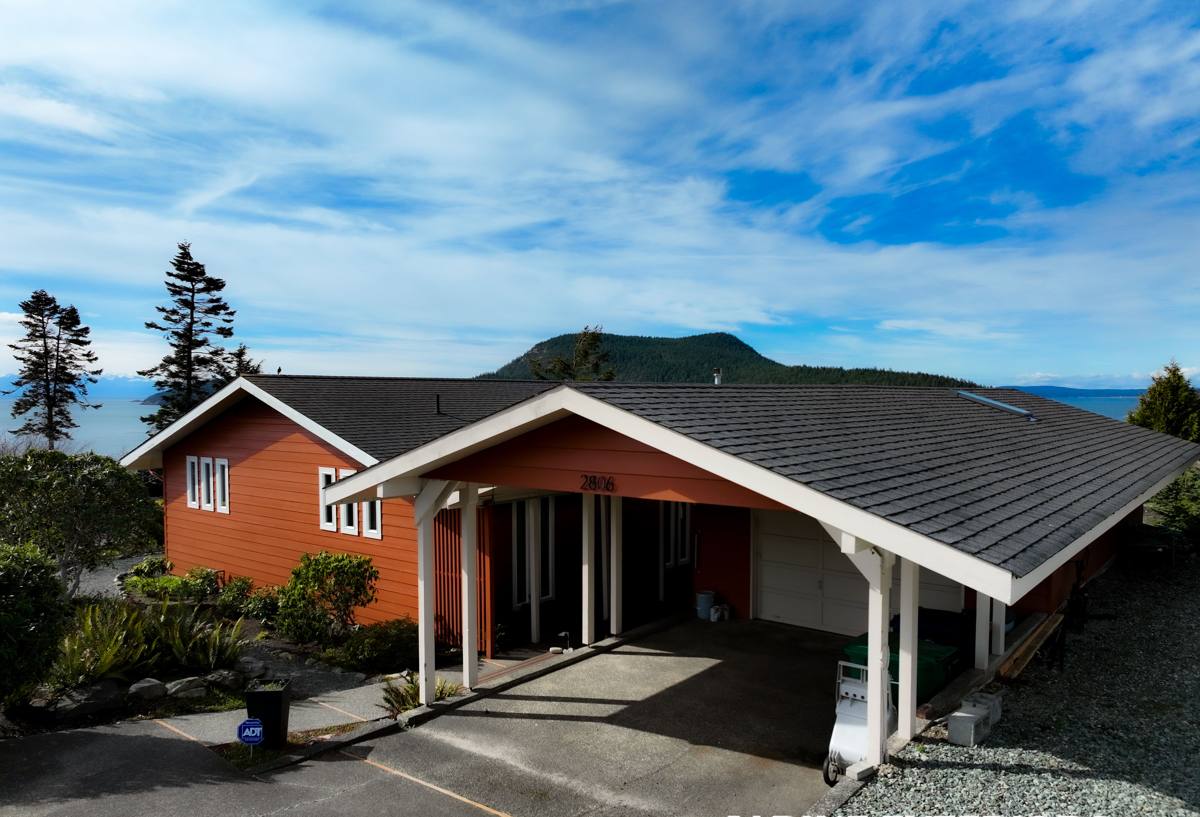
What Whatcom County's Climate Does to a Home Over Time
Bellingham sits close enough to the water that salt-laden air is a real factor on exterior materials, even a few miles inland. Combine that with Whatcom County's long, wet stretches of driving rain and a moss season that can run most of the year in shaded, north-facing spots, and you've got a climate that's genuinely hard on a building envelope. Wood siding and trim absorb moisture, swell, and eventually rot at the joints and bottom edges. Metal fasteners and flashing corrode faster in salt air than manufacturers' generic warranty language usually accounts for. And moss doesn't just look bad — it holds moisture against a roof or siding surface for weeks at a time, which is exactly the condition that accelerates decay.
Homes in Columbia, with mature tree canopy in a lot of yards, often see more shade and slower drying than newer subdivisions built on cleared lots. That's good for curb appeal and bad for anything on the exterior that isn't built to shed water fast and dry out completely between storms.
The Big Four Symptoms We See
- Soft or delaminating siding at the bottom few feet of a wall, especially near grade or under downspouts
- Moss and algae streaking on north- and west-facing roof slopes and siding
- Window frames with visible rot at the corners or sills, often masked by paint until it's advanced
- Deck ledger boards and post bases showing rot where the deck meets the house or the ground
Siding: Why We Only Install James Hardie
We install James Hardie fiber cement siding exclusively. We don't install vinyl, LP SmartSide, Cemplank, Allura, primed spruce, or cedar, and we're upfront about why. Every one of those products has a legitimate use case and reasonable customers who like them — but for a climate like this one, with salt air, sustained rain, and long damp stretches, we've made a professional judgment that Hardie's fiber cement gives homeowners the best long-term outcome with the least maintenance.
Wood products, including cedar and primed spruce, look good on day one but require ongoing paint and caulk maintenance to keep water out, and in a wet climate that maintenance window shrinks. Engineered wood products like LP SmartSide resist some of wood's weaknesses but are still wood-based at the core, meaning moisture intrusion at a cut edge or fastener point can still cause swelling over time. Vinyl is low-maintenance and inexpensive, but it expands and contracts with temperature swings, can crack in cold snaps, and isn't fire-resistant. Other fiber cement brands like Cemplank and Allura are legitimate competitors to Hardie, but we've standardized on one manufacturer so our crews install to one spec, one flashing detail, and one warranty structure — consistency that shows up in the quality of the finished job.
James Hardie fiber cement is non-combustible, doesn't swell or rot from moisture the way wood-based products can, and holds its factory-applied ColorPlus finish far longer than field-applied paint. Hardie also engineers specific HZ5 product lines for regions with more moisture and temperature swings, which fits Whatcom County's profile well.
Hardie Product Lines We Commonly Recommend
| Product | Best For | Notes |
|---|---|---|
| HardiePlank lap siding | Most Columbia homes, traditional look | Several profile and texture options |
| HardieShingle | Craftsman and cottage-style homes | Common in Bellingham's older neighborhoods |
| HardiePanel | Accent walls, gables, modern facades | Often paired with trim boards |
| HardieTrim | Window and corner trim | Pairs with any of the above |
Roofing for a Wet, Mossy Climate
Roofing in this part of Whatcom County has to deal with volume — a lot of rain over a lot of months — plus the moss growth that thrives in the shaded, damp conditions common under Columbia's tree cover. A roof replacement here isn't just about shingles; it's about ventilation, underlayment quality, and flashing detail at every valley, chimney, and penetration. We pay particular attention to ice-and-water shield placement at eaves and valleys, and to keeping attic ventilation balanced so moisture doesn't get trapped from the inside, which speeds up moss growth and shortens shingle life from underneath.
For homes with mature trees close to the roofline, we also talk through practical moss-prevention steps — zinc or copper strips, periodic gentle cleaning — as part of a roofing job, since prevention is a lot cheaper than repeated cleaning or premature replacement.
Windows: Stopping Rot Before It Starts
Old single-pane or early double-pane windows in Columbia homes are often the first place moisture damage shows up, because the sill and frame take direct water exposure every time it rains — which in this climate is often. Beyond energy performance, the bigger issue with aging windows is what's happening at the frame-to-wall connection: failed caulking or flashing lets water track down into the wall cavity, where it can sit against sheathing and framing for months before anyone notices a soft spot on the interior.
When we replace windows, we treat the flashing and integration with the siding as seriously as the window unit itself — a well-built window installed with poor flashing will fail early, and a modest window installed correctly will outperform it.
Decks: Built to Handle Standing Moisture
Decks in this climate face a different challenge than siding or roofing: they're horizontal, so water sits on them rather than running off, and the framing underneath is often shaded and slow to dry. Ledger board connections, post bases, and any horizontal ledge or joist top are the first places we check on an older Columbia deck, since that's where standing moisture does the most damage over the years. Whether we're rebuilding a deck structure or refreshing the decking material, we build in drainage and gaps that let air move underneath, because a deck that dries out between rains will always outlast one that doesn't.
What a Columbia Exterior Project Typically Involves
- An on-site assessment where we check siding, trim, roofing, windows, and any deck structures for hidden moisture damage, not just surface condition
- A written scope that separates what needs replacement now from what can be monitored
- Removal of old material with a check of the sheathing and framing underneath before anything new goes up
- Installation to manufacturer spec — correct fastening, flashing, and clearances, especially at grade and roof-wall intersections
- A final walkthrough so you understand what was done and what maintenance, if any, is expected going forward
Questions Worth Asking Any Contractor Before You Hire
- Are you checking the sheathing and framing underneath, or just replacing the surface material?
- What's your flashing detail at windows, doors, and deck ledgers — can you explain it, not just show a brochure?
- Is your crew's own labor, not just the material, covered by warranty?
- Do you have current licensing and insurance for work in Washington State?
- Will the same crew that gives the estimate be the one doing the work?
Why a Local Crew Matters Here
A contractor based outside Whatcom County can install siding or shingles competently, but they won't necessarily know that a certain block in Columbia tends to have moss buildup on north roof slopes, or that homes of a certain age in this neighborhood often have a specific type of trim rot at the eaves. That kind of pattern recognition comes from working here repeatedly, not from a regional playbook. It also means callbacks and warranty visits are simple — we're not driving in from out of town to check on a job we did two years ago.
If you're weighing exterior work on a Columbia home — whether it's one failing wall of siding, a full re-roof, window replacement, or a deck rebuild — we're happy to take a look and give you a straight assessment of what's actually going on, with no pressure to sign anything on the spot. A free estimate is the easiest way to find out what your home actually needs.