 Bellingham Exterior
 Primed Wood Siding Has a Real Appeal
Primed spruce and pine lap siding shows up on a lot of remodel wish lists, and it's easy to see why. It's a traditional material, it takes paint well, it's easy for a crew to cut and nail, and on a dry, sunny job site it goes up fast. If you're picturing a classic Pacific Northwest farmhouse look, primed wood is often the first product that comes to mind, and there's nothing wrong with that instinct.
We're not going to pretend wood siding is a bad product in every climate, or that generations of homeowners were wrong to use it. But we're an exteriors contractor based in Bellingham, working on homes across Whatcom County, and our decision about what to put on a house has to hold up against our actual weather — not a showroom photo or a catalog spec sheet. After years of tear-offs, repaints, and rot repairs on wood-sided homes here, we made the call to stop installing primed wood siding. This page explains why, honestly and specifically.
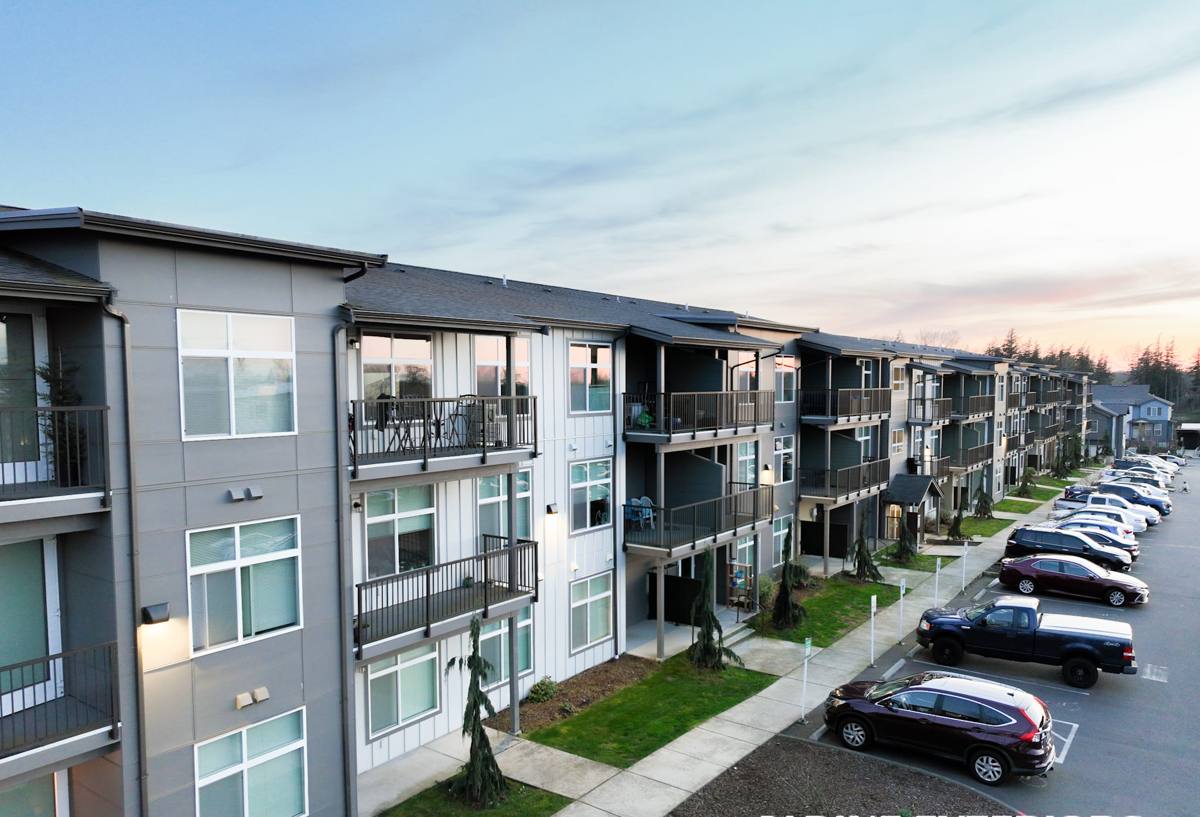
Bellingham's Climate Is Genuinely Hard on Wood
Whatcom County sits where marine air off the Salish Sea meets the foothills of the Cascades, and that combination creates conditions that are tough on any wood product left exposed to the outdoors.
Salt Air and Moisture Load
Homes closer to Bellingham Bay and the surrounding shoreline deal with salt-laden air that accelerates the breakdown of paint films and primer coats. Salt is hygroscopic — it pulls moisture out of the air and holds it against the surface it settles on. On wood siding, that means the painted surface stays damp longer after every weather event, which is exactly the condition wood rot needs to get started.
Driving Rain, Not Just Rain
Bellingham doesn't just get a lot of rainfall — it gets a lot of wind-driven rain, especially during fall and winter storms off the water. Driving rain pushes moisture up under lap joints, into end-grain cuts, and behind trim in ways that straight-down rain doesn't. Wood siding is most vulnerable at exactly those points: end cuts, butt joints, and anywhere the factory primer got cut through on site.
A Long Moss and Algae Season
Our shoulder seasons stay cool, shaded, and damp for months at a time, which is ideal growing conditions for moss, algae, and mildew. On wood siding, organic growth doesn't just look bad — it holds moisture against the wood surface and can work into hairline cracks in the paint film, giving rot a foothold in places you can't see until the damage is already done.
Where Primed Wood Siding Actually Fails
The failures we see on wood siding in this area aren't random bad luck. They follow predictable patterns tied to how the material is made and how it's installed.
The Primer Is a Temporary Layer, Not a Finish
"Primed" wood siding ships from the factory with a base coat meant to protect the board during shipping and give the field-applied topcoat something to bond to. It is not a finished, weather-sealed product. Every cut end, nail hole, and job-site scratch exposes bare wood that has to be caught and sealed before the elements find it — and in our experience, that step is the one most often rushed or skipped.
Field-Applied Paint Depends on Perfect Timing and Technique
Once wood siding is installed, its performance depends entirely on the topcoat: correct back-priming, correct number of coats, correct dry time between coats, and repainting on a schedule before the existing film breaks down. In a climate with our rain calendar, finding a stretch of dry, mild weather long enough to paint or repaint properly is harder than it sounds — and a rushed paint job on wood siding fails faster than a rushed paint job on almost anything else.
Wood Moves With Moisture
Wood absorbs and releases moisture with the seasons, expanding and contracting. That movement stresses the paint film at every seam and fastener over time, eventually causing hairline cracks that let water in behind the coating. Once water gets behind painted wood, it can sit there — trapped by the very paint film meant to protect it — and that's when you start seeing soft spots, cupping, and eventually rot.
Common Failure Points We See on Wood-Sided Homes
- Cracked and peeling paint at butt joints and board ends where end-grain was left unsealed
- Soft, spongy siding low on the wall, near grade, decks, and downspouts where splashback keeps wood wet longer
- Moss and algae staining on north- and shade-facing walls that never fully dry between rain events
- Nail pops and fastener staining as boards swell and shrink with the seasons
- Warping or cupping on south- and west-facing walls exposed to repeated wet-dry cycling
The Maintenance Reality Homeowners Don't Always Budget For
The sticker price of primed wood siding is often lower than fiber cement up front, but the real cost shows up over the ownership period, not on install day.
| Task | Primed Wood Siding | James Hardie Fiber Cement |
|---|---|---|
| Repainting schedule | Roughly every 3-7 years in this climate, sooner in salt-exposed or shaded areas | ColorPlus factory finish is warrantied for years; when repainting is eventually desired, cycles are much longer |
| Caulk and seal maintenance | Annual inspection recommended at joints, cuts, and trim | Far less caulk-dependent; factory-engineered joints |
| Moss and algae cleaning | Regular soft-washing needed to prevent moisture retention | Also benefits from cleaning, but doesn't feed rot the way exposed wood does |
| Rot risk | Real and ongoing, especially at grade and low walls | Not a wood product — won't rot |
| Pest vulnerability | Susceptible to woodpeckers, carpenter ants, and other wood-seeking pests | Not a food or nesting source |
| Fire resistance | Combustible material | Non-combustible fiber cement |
None of that means wood siding is worthless — it means the real, all-in cost of owning it here includes a maintenance calendar most homeowners underestimate when they're comparing quotes.
Why We Standardized on James Hardie Instead
When we stopped installing primed wood siding, we didn't switch to just any alternative. We looked specifically at what performs in Whatcom County's climate and landed on James Hardie fiber cement siding.
Built for Moisture, Not Just Resistant to It
Fiber cement is manufactured from cement, sand, and cellulose fibers — it doesn't rot, and it isn't a food source for pests or fungi the way wood is. James Hardie also makes climate-specific HZ5 product engineered for wetter, harsher regions, which fits our marine, moss-heavy conditions better than a general-purpose product.
The Finish Is Factory-Applied, Not Field-Dependent
ColorPlus technology bakes the color into the board at the factory under controlled conditions, rather than depending on a crew finding a dry week to brush or spray paint on site. That takes the single biggest variable in wood siding's failure rate — inconsistent field-applied finish — out of the equation entirely.
A Warranty Built Around the Product, Not the Weather
James Hardie backs its siding with a strong transferable warranty on the substrate and finish. That's a meaningfully different position than hoping a repaint job holds up through another wet Bellingham winter.
Non-Combustible
Fiber cement doesn't burn. In a region where wildfire smoke and dry-season fire risk are an increasing part of the conversation even west of the Cascades, that's a real, practical difference between the two materials — not a marketing point.
What Correct Installation Still Requires
Switching materials doesn't remove the need for good workmanship. Even a moisture-resistant product like fiber cement needs to be installed to manufacturer spec to perform the way it's designed to.
- Proper water-resistive barrier and flashing details behind every board, especially at windows, doors, and roof intersections
- Correct clearance from grade, decks, and roof lines to avoid splashback and standing moisture
- Manufacturer-specified nailing pattern and fastener type to prevent blow-off in wind events
- Sealed and primed cut ends on site, following James Hardie's installation guidelines
- Proper joint treatment and caulking at trim and butt joints
We follow James Hardie's published installation requirements as a baseline, not a suggestion, because a good product installed poorly can still fail in this climate.
If You Already Have Wood Siding
If your home currently has primed wood siding and it's holding up, you don't necessarily need to rip it off tomorrow. Keeping it in good shape means staying ahead of the maintenance: repainting before the existing film cracks or peels, keeping gutters and downspouts directing water away from the walls, trimming back vegetation that keeps siding shaded and damp, and having soft or discolored areas checked before they become structural repairs. When the maintenance burden or repair costs start outweighing the value of keeping wood siding, that's usually the point where replacing with fiber cement starts making financial sense rather than being a preference.
Our Honest Bottom Line
Primed wood siding isn't a scam or a bad product on paper — it's a material that needs a level of ongoing care that our climate makes expensive and easy to fall behind on. Between the salt air near the water, the driving rain off the Sound, and a moss season that runs most of the year, we've seen too many wood-sided homes in Whatcom County end up needing rot repair or full replacement well before their time. That's why we made the decision to install James Hardie fiber cement siding exclusively, and why we stand behind it on every job we do.
If you're weighing wood siding against fiber cement for a home in the Bellingham area, we're happy to walk your property, point out what we're seeing, and give you a straight answer — not a sales pitch. Request a free, no-pressure estimate below and we'll take a look.