 Bellingham Exterior
 Exterior Work Built for Barkley's Climate
Barkley sits close enough to Bellingham Bay and the surrounding wetlands that homes here deal with a specific combination of weather stresses: salt-tinged air moving in off the water, long stretches of driving rain through fall and winter, and shade patterns from mature landscaping that keep north- and east-facing walls damp well into spring. None of that is unusual for Whatcom County, but it adds up differently depending on the age and construction of the home, and Barkley has a mix of both established houses and newer construction from the neighborhood's ongoing development.
We work on exteriors in this part of Bellingham regularly enough to know which walls fail first, which roof valleys clog with moss and debris, and which window and door assemblies tend to let moisture in around the trim. That local pattern recognition is worth more than a generic inspection checklist, and it shapes how we approach siding, roofing, windows, and decks on every job we take in the area.
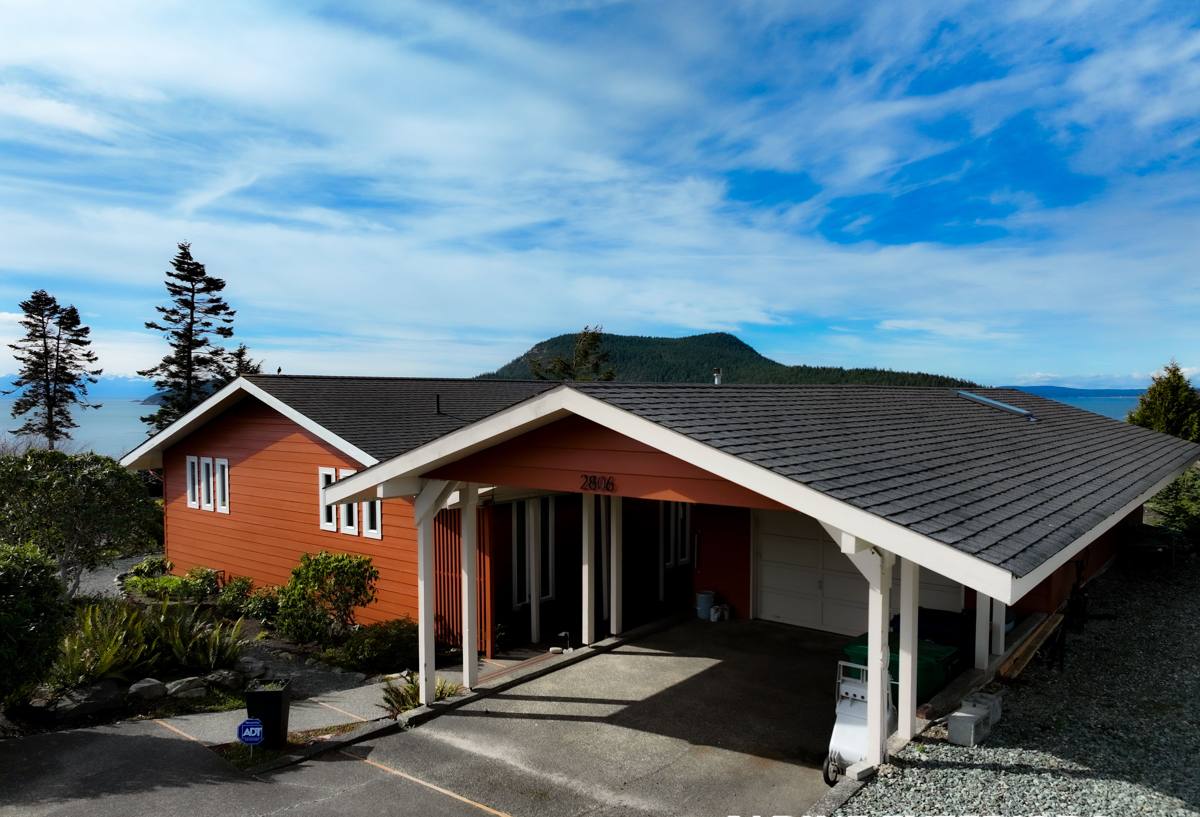
What Salt Air and Moss Season Actually Do to a Home
Salt Air
Bellingham isn't a heavy salt-spray environment the way an oceanfront town is, but proximity to the bay still means airborne moisture carries more salt and mineral content than an inland location would see. Over years, that accelerates corrosion on exposed metal fasteners, flashing, and hardware, and it can speed up the breakdown of paint films and lower-grade siding materials that weren't engineered with coastal exposure in mind.
Driving Rain
Whatcom County's rain doesn't just fall straight down — wind-driven storms push water sideways into wall assemblies, window seams, and anywhere a butt joint or trim detail isn't sealed correctly. Homes with inadequate water-resistive barriers or poorly lapped siding show it first at corners, around window heads, and at the bottom courses closest to grade.
Moss and Prolonged Dampness
The long wet season means moss and algae get a real foothold on roofs, decking, and shaded siding. Beyond the cosmetic issue, moss holds moisture against the surface it's growing on, which is a slow but steady path to rot in wood components and premature wear on roofing materials.
Siding: Why We Only Install James Hardie
Siding is the first line of defense against everything above, and it's also the exterior component most homeowners underestimate until there's a problem. We install James Hardie fiber cement exclusively — not because it's the only decent product on the market, but because after years of exterior work in this climate, it's the one system we're comfortable standing behind on every home we touch.
What We Don't Install, and Why
We don't install vinyl, LP SmartSide, Cemplank, Allura, or primed wood species like spruce or cedar. Each of those has legitimate uses and loyal installers elsewhere. Vinyl can warp and fade under UV and temperature swings, and it relies on caulked seams that can open up under sustained wind-driven rain. Engineered wood products like LP SmartSide perform well when installation and maintenance are followed exactly, but they're wood-based, meaning edge sealing, caulking, and paint upkeep aren't optional — they're the difference between a 30-year siding job and a 12-year one. Primed cedar and spruce look great on day one but demand the most ongoing maintenance of any option, especially in a climate that barely gives wood siding a chance to dry out between storms.
Why Hardie Fits This Climate
Fiber cement is non-combustible, doesn't swell or rot the way wood-based products can, and holds up to sustained moisture exposure far better than vinyl or engineered wood siding. Hardie's ColorPlus finish is factory-baked rather than field-painted, which matters in a region where site-applied paint has fewer good drying windows per year. Hardie also builds HZ5 product formulations for climates with more moisture exposure, which fits Whatcom County's weather profile better than a generic national spec. The combination of the material itself and a strong transferable warranty is why it's what goes on every home we side, Barkley included.
Roofing for Barkley Homes
Roofs in this area take a beating from the same forces as siding, plus the added weight and moisture retention of moss and debris in valleys and around penetrations. A roof that's shedding water properly but hasn't been kept clear of moss and organic buildup will still degrade faster than one that has. When we're on a roof for repair, replacement, or inspection, we're looking at flashing condition around chimneys, skylights, and vent stacks, the state of the underlayment where accessible, and whether ventilation is adequate — poor attic ventilation combined with a wet climate is a common driver of premature roof failure that has nothing to do with the shingles themselves.
Windows That Handle Wind-Driven Rain
Window failures in this region are rarely about the glass — they're about the installation. A quality window installed with poor flashing detail or without proper integration into the water-resistive barrier will leak eventually, and wind-driven rain finds those gaps faster than a straight-down rain ever would. When we replace or install windows, the flashing and sealing details around the rough opening get as much attention as the window unit itself, because that's where the actual protection comes from in a climate like ours.
Decks Built to Survive Wet Winters
Decks take the most direct, sustained exposure of any exterior component — full weather, foot traffic, and standing moisture if drainage isn't right. In Barkley's mix of mature and newer lots, we see decks with inadequate under-deck drainage, ledger board connections that were never properly flashed, and decking material that's held moss and moisture against it for years without anyone noticing until boards start to soften. Proper flashing at the ledger, adequate spacing between boards for drainage and airflow, and material choices suited to a wet climate all matter more here than they would in a drier region.
Comparing Exterior Siding Options in a Marine Climate
| Material | Moisture Resistance | Maintenance Burden | Typical Lifespan Locally |
|---|---|---|---|
| James Hardie Fiber Cement | High — engineered for wet climates, non-combustible | Low — factory finish, occasional wash | 30+ years with correct install |
| Vinyl | Moderate — seams and caulk are failure points | Low, but prone to warping/fading over time | 15-25 years |
| LP SmartSide / Engineered Wood | Moderate — depends heavily on sealed edges and paint upkeep | Moderate to high — regular caulk and paint checks | 15-25 years with diligent maintenance |
| Primed Cedar/Spruce | Lower — wood absorbs moisture without diligent upkeep | High — repainting, caulking, and rot checks needed regularly | 10-20 years, highly maintenance-dependent |
These are general patterns, not guarantees for any individual product installation — quality of install and upkeep matter as much as the material itself. But the pattern holds across the jobs we see: materials engineered specifically for wet, marine-influenced climates hold up with less intervention than materials that require the homeowner to stay on top of maintenance year after year.
Why a Local Crew Matters in Barkley
An exterior contractor working out of a different region can install a good product with a generic spec sheet and still get the details wrong for Whatcom County's weather. Flashing laps, siding clearance from grade, ventilation requirements, and how much slope a deck needs for proper drainage all shift depending on how much rain and moisture a climate actually sees. We're a Bellingham-based crew that works this specific weather pattern year-round, which means the details that matter here — moss mitigation, wind-driven rain protection, salt air considerations — aren't an afterthought. They're built into how we plan and execute every job from the start.
A Practical Seasonal Checklist for Barkley Homeowners
- Check roof valleys and gutters for moss and debris buildup at least twice a year, especially after fall leaf drop
- Inspect siding corners, window trim, and the bottom courses near grade for gaps, soft spots, or discoloration
- Clear moss from shaded roof sections and deck boards before it has a chance to hold moisture against the surface
- Confirm deck ledger board flashing is intact and that drainage under the deck isn't pooling water
- Look for peeling paint or caulk failure around windows and doors, which often signals a moisture intrusion point
- Have a professional check attic and roof ventilation if you notice consistent moisture or moss regrowth in the same spots
Get a Straight Answer for Your Barkley Home
Every home in Barkley carries its own combination of sun exposure, tree cover, and age-related wear, so a walkthrough tells us far more than a generic estimate ever could. If your siding, roof, windows, or deck are showing signs of wear from Bellingham's wet seasons, we're happy to take a look and give you a straightforward, no-pressure assessment of what actually needs attention. Fill out the form below to schedule a free estimate.