 Bellingham Exterior
 Living With Birchwood's Climate
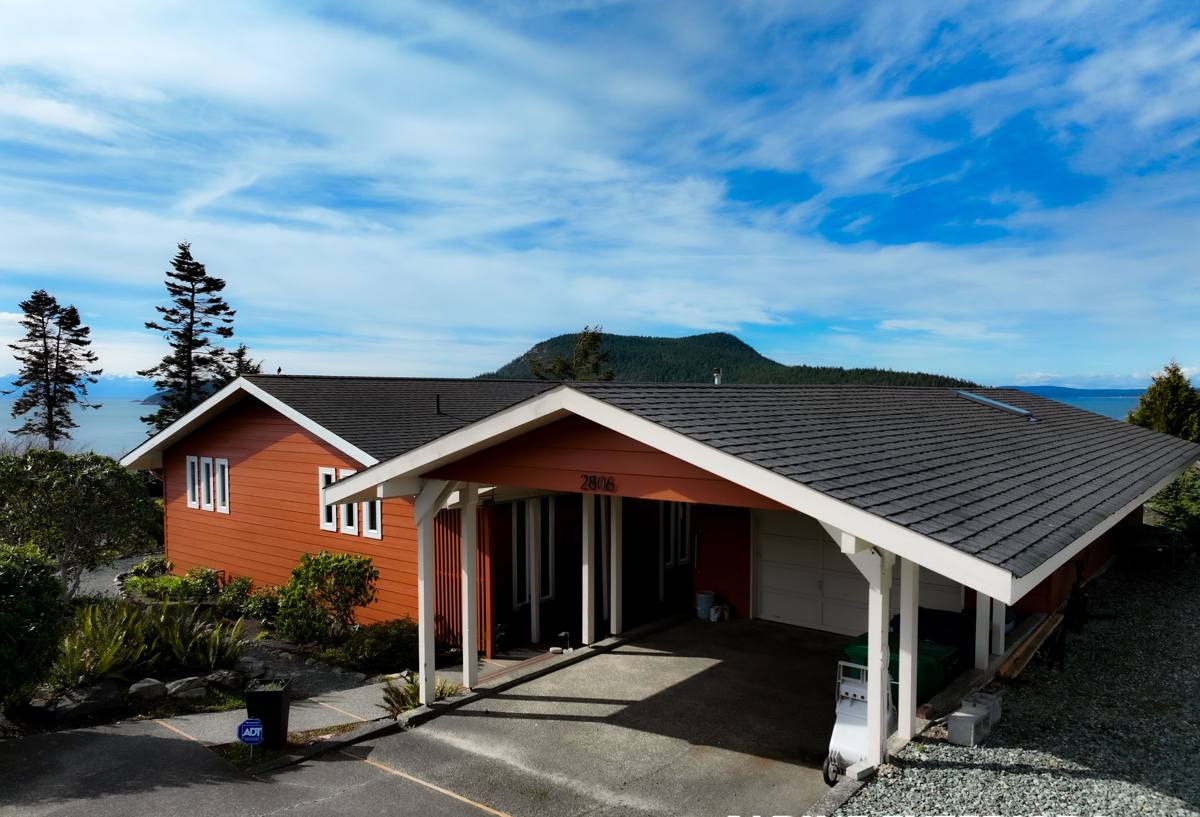
Birchwood sits close enough to the water and the wet Pacific weather patterns that roll through Whatcom County that its homes take a different kind of beating than houses further inland. Between the salt-tinged air coming off the bay, the driving rain that arrives sideways during winter storms, and the long stretch of the year when moss and moisture just don't let up, exterior materials here are working harder than they would almost anywhere else in the state. We've built our business around understanding exactly what that means for siding, roofing, windows, and decks, and around installing products and details that hold up to it.
This isn't generic advice pulled from a national playbook. It's what we see on Birchwood homes, season after season, and what we've learned works and what doesn't.
What Salt Air Does to an Exterior
Salt-laden air doesn't need to be right on the beach to cause problems — it travels on wind and settles on every exterior surface it touches. Over years, that salt film accelerates corrosion on fasteners, flashing, and any exposed metal trim. It also interacts with paint and coatings, breaking down finishes faster than the same products would fail in a drier, inland climate.
For siding specifically, salt air is hardest on products that rely on a surface paint job for protection. Once that finish starts to chalk, crack, or peel, the substrate underneath is exposed to moisture, and the clock starts ticking on rot, swelling, or delamination depending on the material. This is one of the biggest reasons material choice matters so much in a place like Birchwood — not every siding product is engineered to take this kind of exposure.
Metal Components Need Attention Too
Nails, screws, hinges, gutter hardware, and flashing are all vulnerable to salt-accelerated corrosion. Part of doing an exterior job right here is specifying corrosion-resistant fasteners and flashing details, not just the visible siding or roofing material, since a failure in a hidden fastener can undermine an otherwise sound installation.
Driving Rain and Bellingham's Wet Season
Whatcom County doesn't just get a lot of rain — a good portion of it arrives as wind-driven, near-horizontal rain during winter storms. That matters because it changes where water actually ends up on a building. Vertical rain mostly runs down a wall face and off. Driving rain gets pushed into laps, seams, window and door openings, and any gap in flashing or caulking that a calmer rain would never find.
This is why the quality of the installation matters as much as the quality of the material. A great siding product installed with sloppy flashing, wrong nailing patterns, or missing weather-resistive barrier details will still leak in Birchwood's wind-driven storms. We pay close attention to flashing at windows, doors, decks, and roof-to-wall transitions because that's where driving rain finds its way in.
Moss Season: More Than a Roof Problem
Everyone in this part of Washington knows moss is a roofing issue, but it affects the whole exterior. Moss and algae thrive anywhere moisture lingers and sunlight is limited — north-facing walls, shaded siding under trees, deck boards that don't dry out between rains, and of course roof surfaces, especially on the shaded and lower-pitched sections.
Moss holds moisture against whatever it's growing on. On a roof, that means shortened shingle life and, eventually, water finding its way under the roofing material. On siding, sustained moss or algae growth can trap moisture against the surface long enough to cause problems for materials that aren't dimensionally stable or moisture-resistant. On decking, it becomes a slip hazard on top of a durability problem. A big part of what a local crew brings to the table is understanding which parts of a Birchwood property are prone to this — usually the shaded, low-airflow sides — and building or repairing with that in mind.
Why We Install Only James Hardie Fiber Cement Siding
We made a deliberate decision to install James Hardie fiber cement siding exclusively, and we don't install vinyl, LP SmartSide, Cemplank, Allura, or unfinished wood siding like primed spruce or cedar. That's not a marketing angle — it's a standard we hold to because of what we've seen these materials do, and not do, in a climate like this one.
Fiber cement is a non-combustible material made from cement, sand, and cellulose fiber. It doesn't expand and contract with moisture the way wood-based products can, and it isn't vulnerable to the kind of heat and impact damage that affects vinyl. James Hardie's ColorPlus factory-applied finish is baked on under controlled conditions, which gives it more consistent coverage and better fade and wear resistance than field-applied paint, and it comes backed by a real transferable warranty. For a climate that combines salt air, driving rain, and a long damp season, those characteristics line up directly with the problems we described above.
James Hardie also engineers regional product lines (HZ5 for this Pacific Northwest climate zone) specifically to perform in wetter, more variable weather. That's a meaningful difference from a one-size-fits-all siding product.
What We're Not Saying
We're not going to tell you every other siding product is junk — that's not honest or fair. Vinyl is inexpensive and low-maintenance in mild climates. LP SmartSide and similar engineered wood products have real strengths in dry, moderate conditions. Cedar and primed spruce have a natural look plenty of homeowners love. What we are saying is that after years of installation work in this specific climate, we standardized on the one product that consistently holds up to Birchwood's combination of salt air, wind-driven rain, and moss season without the maintenance burden or moisture vulnerability the alternatives carry here.
| Siding Material | Moisture Behavior | Salt Air / Coastal Fit | Maintenance |
|---|---|---|---|
| James Hardie Fiber Cement | Dimensionally stable, doesn't rot or swell | Engineered HZ5 line for PNW conditions | Low — factory finish, no repainting cycle for years |
| Vinyl | Can warp or crack with temperature swings | Seams and fasteners vulnerable over time | Low but finish can't be refreshed, only replaced |
| LP SmartSide / Engineered Wood | Wood-based; sensitive to sustained moisture exposure | Requires diligent caulking and finish upkeep | Moderate — finish maintenance matters |
| Cedar / Primed Spruce | Natural wood movement; absorbs moisture | Prone to moss/algae growth in shaded, damp spots | High — repainting, sealing, moss treatment |
Roofing for Whatcom County Homes
A roof in Birchwood needs to do two jobs well: shed wind-driven rain without letting it work backward under shingles at eaves and valleys, and resist the moss and algae growth that comes with shaded, moisture-heavy conditions. That means proper underlayment, correctly lapped flashing at every penetration and valley, and attention to ventilation, since a poorly ventilated attic traps moisture that accelerates decay from the underside of the roof deck as well as the top.
We also look at tree cover and roof orientation on every job, because those factors tell us which sections of a roof are going to see the most moss pressure over time and where drainage details need extra care.
Windows That Hold Up to Marine Air
Window performance in this climate comes down to two things: the quality of the window unit itself and how well it's flashed and sealed into the wall. Salt air and humidity can degrade weatherstripping and hardware faster than in a dry climate, so we favor window products with corrosion-resistant hardware and durable seals. On the installation side, proper flashing integration with the siding and weather-resistive barrier is what actually keeps driving rain from finding its way around a window opening — this is one of the most common failure points we find on older Birchwood homes during exterior work.
Decks Built for the Wet Cycle
Decks in this area go through repeated wet-dry cycles for much of the year, and shaded decks can stay damp for extended stretches, which is exactly the environment moss and algae favor. Good deck work here means thinking about board spacing and drainage from the start, choosing fasteners and hardware that won't corrode, and detailing ledger boards and any deck-to-house connections so water isn't directed into the structure. A deck that looks fine on day one can develop hidden problems fast if those details are skipped.
Why a Local Crew Matters
Exterior work in Birchwood isn't the same job as exterior work in a drier part of the state, and it isn't identical to work done right on the immediate waterfront either. It sits in its own spot on that spectrum — enough salt air and driving rain exposure to matter, with the moss season that comes with being in Whatcom County generally. A crew that works in this specific area regularly knows which details to prioritize, which sides of a house tend to take the worst weather, and how local permitting and inspection norms work. That local knowledge shows up in fewer callbacks and exteriors that actually perform the way they're supposed to for the long haul.
What to Expect From Our Process
- An on-site assessment that looks at sun/shade exposure, tree cover, drainage, and existing moisture damage
- A clear, honest recommendation — including telling you if a repair makes more sense than a full replacement
- Detailed flashing and moisture-barrier work at every penetration, not just the visible surface material
- James Hardie fiber cement siding, installed to manufacturer specifications, for every siding project we take on
- A walkthrough at completion so you understand what was done and what maintenance, if any, to expect
Seasonal Maintenance Checklist for Birchwood Homes
Even the right materials, installed correctly, benefit from a little seasonal attention in this climate. Here's what we recommend homeowners keep an eye on:
- Check gutters and downspouts before the fall rains start and again mid-winter
- Look at shaded roof sections and north-facing siding for early moss or algae growth
- Inspect deck boards and ledger connections for softness or discoloration each spring
- Confirm window and door caulking is intact, especially on walls facing prevailing storm winds
- Trim back vegetation that's shading and holding moisture against walls or roof sections
- Have flashing at roof valleys, chimneys, and wall transitions checked periodically, since these are common leak points
Let's Take a Look at Your Home
If you're in Birchwood and dealing with siding that's showing its age, a roof that's collecting moss faster than it should, windows that let in drafts during winter storms, or a deck that needs attention, we're happy to come take a look. We'll give you a straight assessment of what's going on and what it would take to fix it — no pressure, no upsell. Reach out for a free estimate using the form below.