 Bellingham Exterior
 Exterior Work Built for South Hill's Particular Climate
South Hill sits above the flats of Bellingham with a mix of mature tree canopy, older housing stock, and enough elevation to catch wind that never quite reaches the lower neighborhoods. That combination creates its own set of exterior problems. Homes here deal with shaded, damp siding that never fully dries out, driving rain that comes in sideways off the water during winter storms, and salt-laden air drifting up from Bellingham Bay. None of that is unique to one street or one house — it's the reality of exterior building work anywhere in Whatcom County, and South Hill gets a concentrated version of it because of the tree cover and the hill's exposure to weather moving in off the Salish Sea.
We're a Bellingham-based exterior contractor, and South Hill is one of the neighborhoods we work in regularly. This page covers what we actually see on homes there, how our siding, roofing, window, and deck work addresses it, and why using a crew that already knows this specific corner of Whatcom County matters more than most homeowners assume.
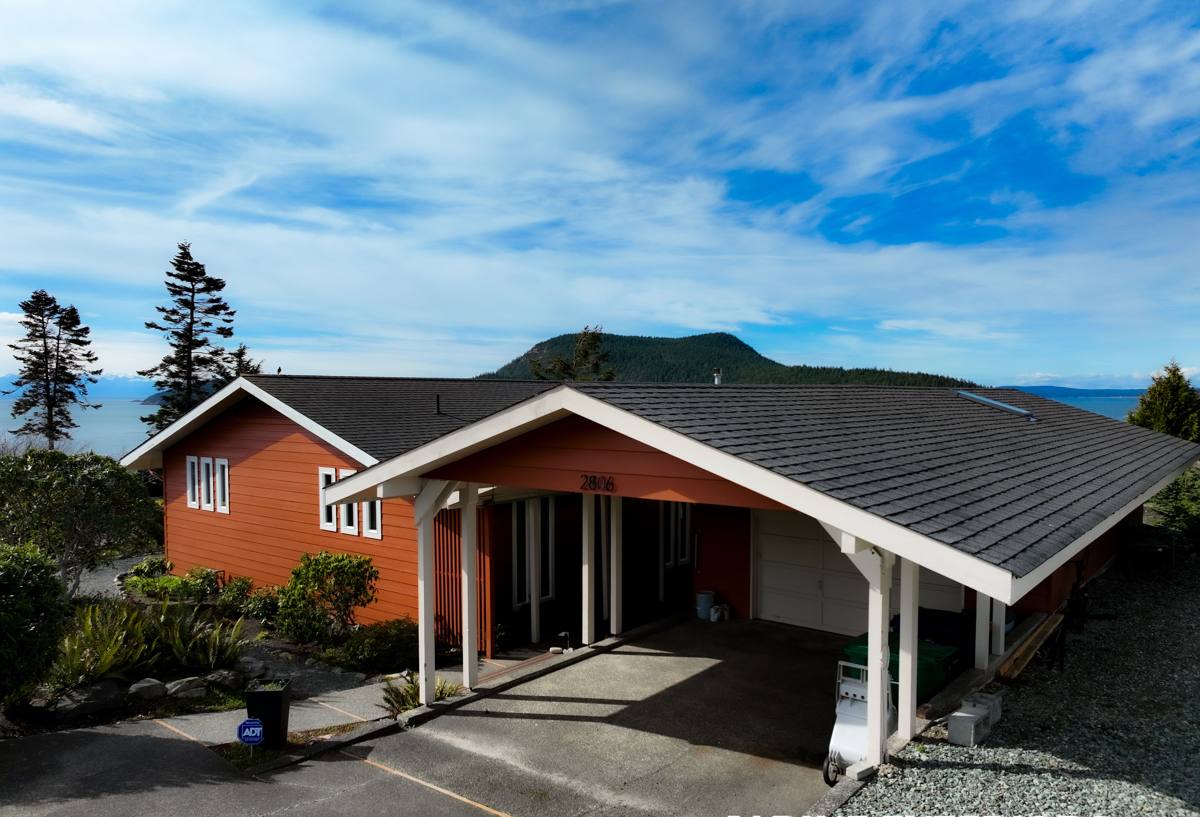
What the Climate Actually Does to a South Hill Home
Moss and Constant Moisture
The mature trees that make South Hill a pleasant place to live also mean a lot of homes sit in partial shade most of the year. Shaded siding, roof valleys, and deck boards dry slower after every rain, which is exactly what moss, algae, and mildew need to take hold. On a lot of exterior materials, that constant low-grade moisture doesn't just look bad — it works its way into seams, fastener holes, and butt joints over years, and that's where rot actually starts.
Driving, Wind-Driven Rain
Bellingham's Pacific storm systems don't just drop rain straight down — they push it sideways, and a hillside neighborhood like South Hill gets more of that wind exposure than sheltered valley lots. Wind-driven rain finds every weak point in an exterior: a poorly caulked window, a siding seam that wasn't flashed correctly, a deck ledger board that was never properly sealed to the house. It's less about total rainfall and more about rain that's actively being forced into gaps other climates wouldn't test as hard.
Salt Air Off the Bay
South Hill's elevation and proximity to Bellingham Bay mean a steady low-level dose of salt-laden air, especially on the west-facing sides of homes. Salt air accelerates corrosion on exposed metal — fasteners, flashing, gutter hardware — and it's part of why we're particular about the fastener and flashing details on every job, not just the visible siding or roofing material.
Siding: Why We Only Install James Hardie Fiber Cement
We install James Hardie fiber cement siding exclusively. We don't install vinyl, LP SmartSide, Cemplank, Allura, or unprimed wood species like cedar or spruce, and that's a deliberate standard, not a lack of options. Here's the honest reasoning behind it, specifically as it applies to a climate like South Hill's:
- Non-combustible material — fiber cement doesn't burn, which matters increasingly across Washington as wildfire smoke and ember exposure become a bigger seasonal concern, even in a wet climate like ours.
- Moisture stability — Hardie's fiber cement doesn't swell, rot, or delaminate the way wood-based products can when they stay damp for extended periods, which is the exact condition shaded South Hill lots create.
- Factory-applied ColorPlus finish — the color is baked on at the factory under controlled conditions, so it holds up to UV and moisture far more consistently than field-applied paint, and it means less repainting over the life of the siding.
- Climate-engineered HZ product lines — Hardie makes region-specific formulations (HZ5 for our climate zone) designed around freeze-thaw cycling and sustained moisture exposure, which is a more honest fit for the Pacific Northwest than a one-size-fits-all product.
- A real transferable warranty — Hardie's warranty structure is well established and transfers to a new owner if the home sells, which matters to buyers doing due diligence on an older South Hill property.
We're not going to tell you other siding products are junk — vinyl, LP, and cedar all have legitimate uses and plenty of homes carry them without issue. But the maintenance burden, moisture sensitivity, and long-term appearance trade-offs are real, and once we saw enough of them play out on wet, shaded Whatcom County lots, we stopped installing anything else. Hardie is what goes on every siding job we do, full stop.
How Siding Material Choices Actually Compare
| Material | Moisture behavior in shaded/wet lots | Finish durability | Long-term maintenance |
|---|---|---|---|
| James Hardie fiber cement | Dimensionally stable, resists moisture-driven swelling | Factory ColorPlus finish, long fade resistance | Low — occasional wash, minimal repainting |
| Vinyl | Doesn't rot, but can warp or crack in temperature swings; traps moisture behind it if installed poorly | Color molded in but can fade and chalk over time | Low, but damage often means full panel replacement |
| LP SmartSide (engineered wood) | More moisture-sensitive than fiber cement; edges and cuts need diligent sealing | Factory finish available, but wood substrate is the vulnerability | Moderate — edge sealing and inspection matter |
| Cedar / primed spruce | Natural wood; absorbs moisture readily in shaded, damp conditions | Field-applied finish, fades and needs refinishing | Highest — regular refinishing, moisture monitoring |
Roofing for a Wet, Shaded Neighborhood
Roofs on South Hill deal with the same moss pressure as siding, plus the added factor of tree debris — needles and leaf litter that collect in valleys and behind chimneys and hold moisture against the roofing material. We look closely at ventilation, valley flashing, and moss growth patterns when we're evaluating a roof here, because a roof that looks fine from the ground can already have moss working under shingle edges. Good roofing work in this neighborhood is as much about drainage and airflow as it is about the shingle or material itself.
Windows: Sealing Out Driving Rain and Drafts
Because South Hill catches wind-driven rain more directly than sheltered lots, window installation quality matters more here than in a lot of neighborhoods. Flashing details around the window opening, proper sealant, and correct integration with the siding system are what actually keep water out — the window unit itself is only part of the equation. We see plenty of older South Hill homes where the original windows are structurally fine but the surrounding flashing and sealant have failed, letting water track behind the siding rather than the window being the problem itself. Replacement work has to address both, or the leak just comes back somewhere else.
Decks: Standing Up to Moss and Moisture
Decks in shaded South Hill yards fight the same battle as siding — slow drying, moss buildup on boards and rails, and moisture that gets trapped at ledger boards and joist hangers if they weren't flashed correctly when built. A deck that looks solid on the surface can have a compromised ledger connection underneath, which is a structural issue, not just a cosmetic one. We pay particular attention to ledger flashing, joist hanger corrosion (worse with the salt air exposure here), and drainage under the deck when we're repairing or rebuilding.
Why a Local Crew Matters
A lot of exterior work fails not because the material was wrong, but because it was installed to a generic spec rather than to the conditions of the actual site. A crew that's worked across Bellingham and Whatcom County knows to flash a South Hill deck ledger differently than a flat, sun-exposed lot in a drier part of the county, and knows which sides of a house need extra attention for wind-driven rain based on how the hill sits relative to storm direction. That's not something you get from a national franchise crew rotating through on a regional schedule — it comes from doing this work, on these hills, in this weather, over and over.
Signs Your South Hill Exterior Needs Attention
- Moss or dark streaking building up on siding, especially on shaded or north-facing walls
- Soft spots, discoloration, or bubbling paint on wood-based siding or trim
- Gaps opening up at siding seams, window trim, or where siding meets the foundation
- Moss collecting in roof valleys or along shingle edges
- Rust staining below fasteners, flashing, or gutter hardware
- Deck boards that stay damp long after rain has stopped, or soft spots near the house connection
- Drafts or water staining around window frames during heavy wind-driven storms
If any of that sounds familiar, it's worth getting a second set of eyes on it before a cosmetic issue turns into a moisture or structural one. We offer free, no-pressure estimates for siding, roofing, window, and deck work throughout South Hill and the rest of Bellingham — use the form below to get a local crew out to take a look.