 Bellingham Exterior
 Exterior Homes in York Face a Distinct Pacific Northwest Climate
York is one of Bellingham's older residential neighborhoods, and homes there carry the marks of decades spent in a marine climate. Whatcom County sits right where the Salish Sea meets a wet, temperate weather pattern, and that combination is tougher on a house exterior than most homeowners realize until they're dealing with the consequences. Salt-laden air moves inland off the water, driving rain comes in sideways during winter storms, and a long, damp shoulder season keeps everything from roofs to fence posts perpetually shaded and slow to dry.
None of that is unusual for this part of Washington, but it does mean exterior materials and installation details matter more here than they would in a drier climate. A siding product, roof system, window seal, or deck board that performs fine in Eastern Washington or the Midwest can fail early in York simply because it was never designed for near-constant moisture exposure and repeated wet-dry cycling.
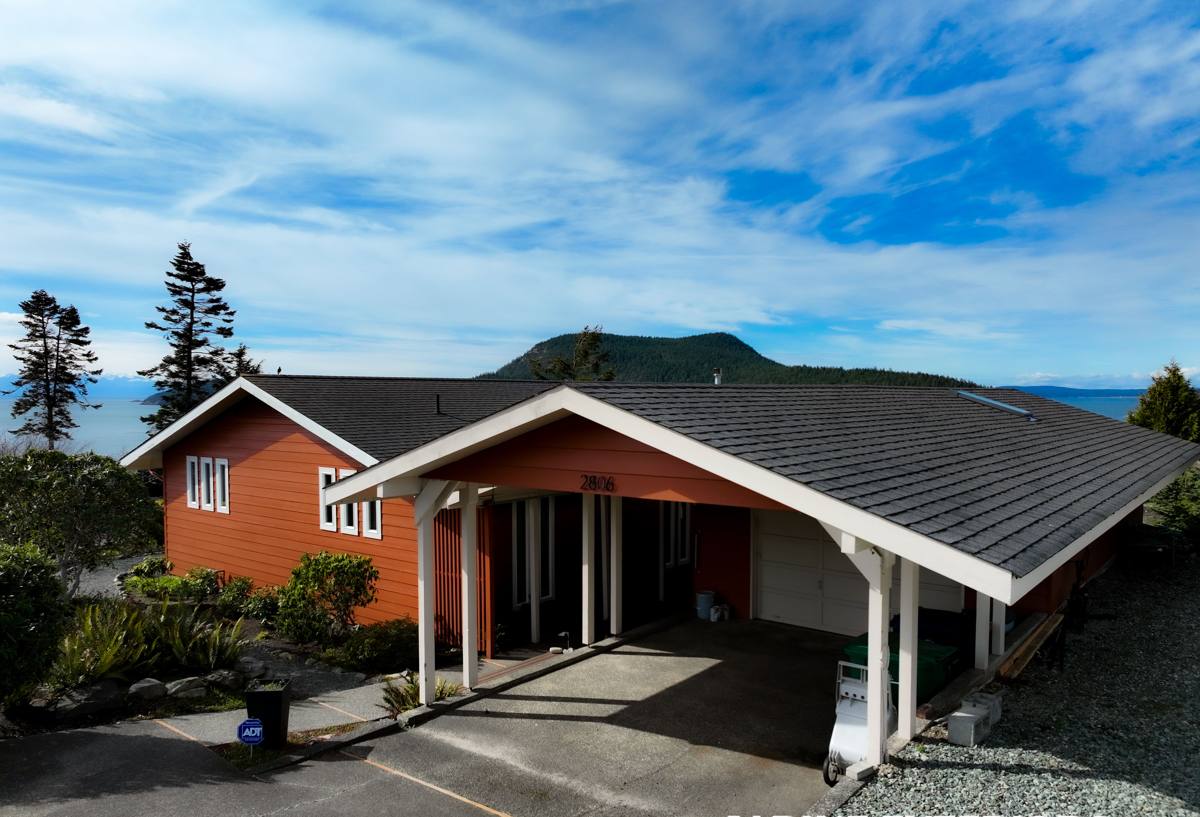
Salt Air, Rain, and Moss: What That Combination Does to a House
Salt Air and Corrosion
Being close enough to tidal water for salt air to reach a property accelerates corrosion on fasteners, flashing, gutters, and any metal trim. Over years, this can undermine parts of a building envelope that homeowners never think to inspect, since the damage often starts hidden behind siding or under roofing material.
Driving Rain and Wind-Driven Moisture
Bellingham's winter storms don't just rain straight down — wind pushes moisture sideways into wall assemblies, window edges, and any gap in flashing or caulking. A house that's watertight against a light drizzle can still take on moisture during a real windstorm if the details weren't built for wind-driven rain.
Moss, Algae, and Prolonged Shade
Whatcom County's long, overcast stretches keep roofs and north-facing siding damp for extended periods, which is exactly what moss and algae need to take hold. Once established, moss holds moisture against the surface underneath it, which shortens the life of roofing material and can trap water against siding seams.
Siding in York: Why We Install Only James Hardie Fiber Cement
When it's time to replace siding on a York home, we install James Hardie fiber cement exclusively. We don't offer LP SmartSide, vinyl, Cemplank, Allura, primed spruce, or cedar — not because those products don't have a place in the market, but because we've made a professional standard around what performs best in this specific climate, and we'd rather stand fully behind one system than split our expertise across several.
What Rules Out the Alternatives
Vinyl siding is affordable and low-maintenance in a general sense, but it's a petroleum-based product that can warp or become brittle over time, and it relies heavily on its color coating staying intact — once that fades or chalks, there's no refinishing it back to new. Wood products like cedar and primed spruce look great fresh off the truck, but they demand an ongoing maintenance schedule (recaulking, repainting, checking for rot) that's especially punishing in a climate where wood rarely gets a long enough dry stretch to fully cure between rain events. Engineered wood products like LP SmartSide perform better than raw wood in many ways, but they're still wood-based at the core, meaning moisture intrusion at a cut edge or fastener point remains a real vulnerability. Fiber cement competitors to Hardie, like Cemplank or Allura, use similar base chemistry but don't carry the same factory-finish system or track record we've come to trust.
Why James Hardie
James Hardie fiber cement is non-combustible, dimensionally stable, and engineered specifically for regions like the Pacific Northwest through its HZ5 product line, which is formulated for wetter, harsher climates. The ColorPlus factory finish is baked on under controlled conditions rather than field-applied, which gives it better fade and moisture resistance than a job-site paint job, and it comes backed by a strong transferable warranty. It won't absorb water the way wood does, it won't become brittle from cold snaps the way some vinyl can, and it holds paint and caulk lines far better over a 20- to 30-year span.
| Siding Material | Moisture Behavior in a Marine Climate | Maintenance Burden |
|---|---|---|
| James Hardie Fiber Cement | Engineered for wet climates; doesn't rot or absorb water like wood | Low — occasional wash, repaint on a long cycle |
| Vinyl | Doesn't absorb water but can warp with temperature swings and UV wear | Low, but color and finish cannot be restored once degraded |
| Cedar / Primed Spruce | Absorbs moisture at cut edges and joints; prone to rot without upkeep | High — regular recaulking, staining or painting |
| LP SmartSide / Engineered Wood | Better than raw wood but still wood-based; vulnerable at exposed edges | Moderate — periodic sealing and inspection |
Roofing for Whatcom County's Wet Winters
Roofs in York take the brunt of the region's weather. Beyond material selection, correct roofing in this climate is largely about the details most homeowners never see: underlayment quality, flashing at every penetration and valley, ventilation that keeps moisture from condensing inside the attic, and ice-and-water shield in the spots most prone to wind-driven rain or ice damming. We also pay close attention to moss prevention during installation, since a roof that's shaded most of the day needs design choices — like zinc strips or proper ventilation — that reduce how long moisture sits on the surface.
A roof replacement is also the right time to address any rot or damage in the decking underneath, which is common on older York homes where a previous roof may have been leaking slowly for years without an obvious interior sign.
Windows: Sealing Out Drafts and Coastal Moisture
Older homes in York often still have original or early-replacement windows that were never built to modern energy or moisture standards. Failed seals show up as fogging between panes, drafts around the frame, or soft wood at the sill — all common in a climate that cycles between saturated and dry conditions constantly. Replacement windows address both comfort and building-envelope health: a properly flashed and sealed window keeps wind-driven rain from finding its way behind the siding, which protects the wall assembly, not just the glass.
When we replace windows, we pay particular attention to flashing integration with the surrounding siding — a beautiful new window installed with poor flashing details can actually create a worse moisture problem than the old one it replaced.
Decks Built for Rain and Moss
A deck in York spends much of the year wet, shaded, or both, which is a hard combination for decking materials and structural framing alike. Board selection matters, but so does the structure underneath: proper spacing for drainage and airflow, ledger board flashing where the deck meets the house, and joist protection all determine whether a deck lasts one decade or three. Moss and algae growth on deck surfaces isn't just cosmetic — it holds moisture against the boards and makes the surface slick and unsafe underfoot during the wetter months.
We build decks with drainage and long-term maintenance in mind from the start, since retrofitting proper drainage after the fact is far more disruptive than designing for it up front.
Our Process for a York Exterior Project
- On-site inspection to assess current siding, roofing, window, or deck condition and identify any hidden moisture damage
- Honest recommendation on repair versus replacement — we won't push a full replacement when a repair will genuinely hold up
- Clear, itemized estimate before any work begins, with no pressure to sign on the spot
- Proper flashing, moisture barrier, and fastening details at every transition point, not just the visible surface
- Cleanup and a final walkthrough so you understand exactly what was done and why
Cost Factors Homeowners Should Plan For
Every home in York is different, and exterior project costs depend on more than just square footage. The table below outlines the main variables that tend to move a project's scope and price, so you can walk into an estimate conversation with realistic expectations.
| Factor | Why It Matters |
|---|---|
| Underlying damage or rot | Moisture-related damage found once old material is removed can add repair work not visible during the initial estimate |
| Home age and construction style | Older York homes may have non-standard framing or trim details that require more custom work |
| Roof or siding complexity | Steep rooflines, multiple valleys, or intricate siding transitions take more labor and material than a simple rectangular elevation |
| Access and site conditions | Tight lots, mature landscaping, or limited driveway access can affect staging and labor time |
| Material selection | Product line, profile, and finish choices within a given category (like James Hardie's various siding styles) carry different price points |
Why a Local Crew Matters
A crew that works throughout Bellingham and Whatcom County day in and day out understands how this specific climate behaves in a way an out-of-area contractor simply can't from a spec sheet. We know which north-facing walls in this region tend to hold moss, how far salt air typically reaches inland from the water, and which installation shortcuts cause problems three winters down the road instead of showing up right away. That local knowledge shapes every flashing detail, every material choice, and every recommendation we make — it's not something you can get from a crew passing through for a single job.
Being local also means accountability. If something needs a warranty follow-up or a question comes up two years after the project wraps, we're still here, in the same county, working on the same kinds of homes.
Get an Honest Look at Your Exterior
If you're weighing siding, roofing, window, or deck work on a York home, we're happy to take a look and give you a straightforward, no-pressure assessment. Fill out the form below to schedule a free estimate — we'll tell you what we actually see, not just what's easiest to sell.