 Bellingham Exterior
 Exterior Work Built for Sunnyland's Climate
Sunnyland is one of Bellingham's older, tree-shaded neighborhoods, and that character comes with a real maintenance story. Mature canopy means constant shade on north- and east-facing walls, roofs that rarely get a full dry-out between rain events, and gutters that fill with needles and leaf litter every fall. Add in Whatcom County's marine air moving up from Bellingham Bay, and you've got a combination of moisture, shade, and salt that is genuinely tough on exterior materials. We've worked on homes throughout this part of Bellingham long enough to know which problems show up first and which corners of a house fail years before the rest.
This page covers how our siding, roofing, window, and deck work applies specifically to Sunnyland's housing stock and conditions — not a generic sales pitch, but a straight rundown of what we see here and how we handle it.
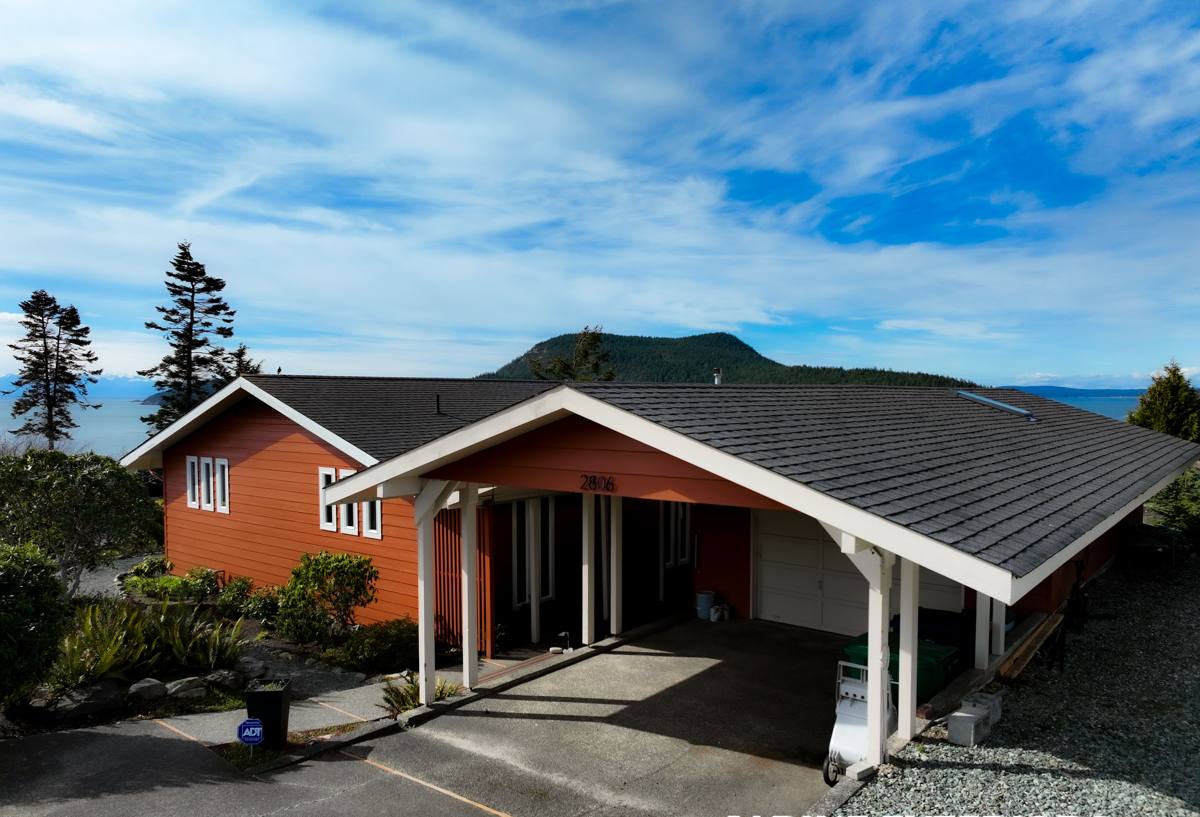
What Sunnyland Homes Are Actually Dealing With
Shade and Slow-Drying Walls
A lot of Sunnyland's streets are lined with tall conifers and deciduous trees that were already mature decades ago. That's great for curb appeal and terrible for siding that can't handle staying damp. Walls tucked under heavy shade dry out slowly after every rain, which is exactly the environment where moss, algae, and mildew take hold on painted wood, vinyl, and some engineered wood products. If your siding holds moisture at the surface for days at a time through a wet Bellingham winter, you're going to see it in the paint film and eventually in the substrate underneath.
Salt Air and Driving Rain
Sunnyland sits close enough to the water that homes here get a steady dose of the salt-laden air that moves in off Bellingham Bay and the Salish Sea, especially during winter storms when wind drives rain sideways into south- and west-facing elevations. That combination — salt exposure plus wind-driven moisture — accelerates corrosion on unprotected fasteners and trim, and it puts extra stress on any siding seam, caulk joint, or flashing detail that wasn't installed tight the first time.
Moss Season Is Long
In this part of Whatcom County, moss isn't a once-a-year nuisance — it's closer to a year-round tenant on north-facing roof slopes and shaded siding. Roofs with poor ventilation or aging shingles collect moss that holds water against the roofing material, shortens shingle life, and can work its way under tabs and flashing over a few seasons. Siding in deep shade gets the same treatment along ground-level courses and anywhere water sheets off a roof edge without a gutter to catch it.
Siding: Why We Only Install James Hardie
We install James Hardie fiber cement siding exclusively. We don't install vinyl, LP SmartSide, Cemplank, Allura, primed spruce, or cedar, and that's a deliberate standard, not a limitation of what we're capable of installing.
Here's the honest reasoning: vinyl siding is affordable and low-maintenance in mild conditions, but it softens and can warp under sustained heat and gets brittle in cold snaps, and its seams are a long-term weak point against wind-driven rain. Engineered wood products like LP SmartSide perform well when installation and maintenance are perfect, but they rely on an intact resin-treated surface — any gap in caulking, paint, or flashing lets moisture into the wood fiber core, and repairs are harder to blend in cleanly. Primed spruce and cedar are beautiful materials, but they're natural wood: they need repainting or restaining on a real schedule, and in a shaded, damp neighborhood like Sunnyland that schedule gets shorter, not longer.
James Hardie fiber cement is cement, sand, and cellulose fiber — it doesn't rot, it isn't a food source for moss or mildew, and it's non-combustible, which matters given how many Sunnyland lots run in tight proximity to mature trees. Hardie's ColorPlus factory finish is baked on under controlled conditions rather than field-applied, which means better color retention and a finish that isn't dependent on job-site weather the day it goes on. Hardie also engineers different product lines (HZ5, for example) for different climate zones, so the material specified for a marine, high-moisture area like ours isn't the same spec used in the desert Southwest.
How We Install It
- Proper rainscreen or drainage plane behind the siding so any moisture that gets past the surface has somewhere to go
- Correct fastener spacing and type — stainless or coated fasteners rated for coastal exposure
- Factory-cut and factory-primed edges wherever possible, with field cuts sealed per manufacturer spec
- Flashing at every window, door, and horizontal trim intersection — this is where most siding failures actually start
- Manufacturer-specified caulking and joint treatment, not just "whatever's on the truck"
Roofing for Shaded, Moss-Prone Lots
Roofing in Sunnyland has to account for shade and moss more than almost anything else. We look at ventilation first — a roof that isn't breathing properly traps heat and moisture in the attic, which shortens shingle life from underneath even before weather gets at it from above. Where a roof has heavy tree cover, we talk through moss-resistant shingle options, proper flashing at valleys and penetrations, and realistic gutter and downspout sizing so water actually clears the roof instead of backing up under the edge.
We also check the small details that get skipped on a lot of roof jobs: drip edge at eaves and rakes, ice-and-water shield in vulnerable areas, and step flashing that's actually woven into the roofing course by course rather than caulked on top after the fact. In a wet climate, flashing quality determines whether a roof lasts its full rated life or starts leaking at year eight.
Windows: Sealing Out Wind-Driven Rain
Older Sunnyland homes often still have original or early-replacement windows, and the failure point is almost never the glass — it's the flashing and sealant around the frame. Wind-driven rain off the bay finds any gap in the weather barrier around a window opening, and once water gets behind the frame it can sit there against wood sheathing for months in our climate. When we replace windows, we treat the flashing and integration with the wall's water management as seriously as the window unit itself, and we size and select units with an eye toward the specific exposure of each elevation — a west-facing wall catching storm winds needs a different approach than a sheltered, shaded north wall.
Decks: Built for Wet, Shaded Yards
A lot of Sunnyland's older lots have decks tucked under tree cover, which means constant leaf litter, slow drying, and surfaces that stay damp and slick longer than a deck out in the open. We build and repair decks with attention to proper drainage under and around ledger boards and posts, ledger flashing that actually sheds water away from the house rim joist, and decking material choices suited to shaded, high-moisture conditions rather than a one-size-fits-all spec.
Cost Factors to Expect
| Project | Main Cost Drivers | Sunnyland-Specific Factor |
|---|---|---|
| Siding replacement | Home size, trim complexity, number of stories | Extra flashing detail at shaded, slow-drying walls |
| Roof replacement | Roof size, pitch, number of layers to remove | Moss remediation, ventilation upgrades, tree-cover access |
| Window replacement | Number of units, frame material, sizing | Additional flashing work on wind-exposed elevations |
| Deck build/repair | Square footage, framing condition, railing style | Drainage and ledger detailing for damp, shaded yards |
These are directional factors, not quotes — every home's actual scope depends on current condition, access, and what we find once we're up close. That's what the estimate visit is for.
Why a Local Crew Matters Here
A crew that mostly works inland or in drier parts of Washington won't automatically know that a Sunnyland roof under heavy tree cover needs a different ventilation and moss strategy than a roof three miles away in the open. Knowing Bellingham and Whatcom County's specific mix of marine air, rainfall pattern, and tree cover means we're not guessing at flashing details or material choices — we're applying what we've already seen hold up, and what we've seen fail, on homes with the same exposure.
What to Look for When Hiring an Exterior Contractor Here
- Washington contractor license and proof of insurance, checked before any work starts
- A written scope that names specific flashing, ventilation, and drainage details — not just "replace siding" or "replace roof"
- Manufacturer-backed warranty terms explained clearly, including what voids them
- Willingness to walk the property and point out shade, moisture, and moss-prone areas specific to your lot
- References or completed work you can actually see in the local area
Getting Started
If you're weighing a siding, roofing, window, or deck project on a Sunnyland home, we're happy to walk the property, point out what your specific exposure and tree cover are doing to the exterior, and give you a clear, no-pressure estimate. There's a form below this page — reach out and we'll get a visit scheduled.