 Bellingham Exterior
 Puget sits close enough to the water that the weather off the Sound is part of everyday life, not an occasional inconvenience. Homes here take on a steady mix of salt-laden air, wind-pushed rain, and the long stretch of gray, damp months that Whatcom County is known for. We handle siding, roofing, windows, and decks for homes throughout the greater Bellingham area, and Puget is one of the places where the gap between an exterior built for this climate and one that wasn't tends to show up sooner rather than later.
What Living Near the Water Does to a House
Proximity to Puget Sound changes the math on exterior maintenance. Salt in the air corrodes exposed metal, fasteners, and flashing faster than it would further inland, and it doesn't take a waterfront lot for that effect to matter — salt-laden air travels well beyond the shoreline, especially when it's riding on wind. Add in driving rain, which is rain pushed sideways by wind instead of falling straight down, and you get moisture finding its way into seams, laps, and gaps that would stay dry in calmer weather. Then there's moss. Western Whatcom County's damp, mild climate keeps shaded roof slopes and north-facing walls wet for long stretches of the year, and moss takes hold anywhere that moisture lingers.
None of this means a house in Puget is destined for problems. It means the materials and the installation details carry more weight here than they would in a drier, more sheltered part of the state, and that shortcuts that might get away with themselves elsewhere tend to get found out faster near the Sound.
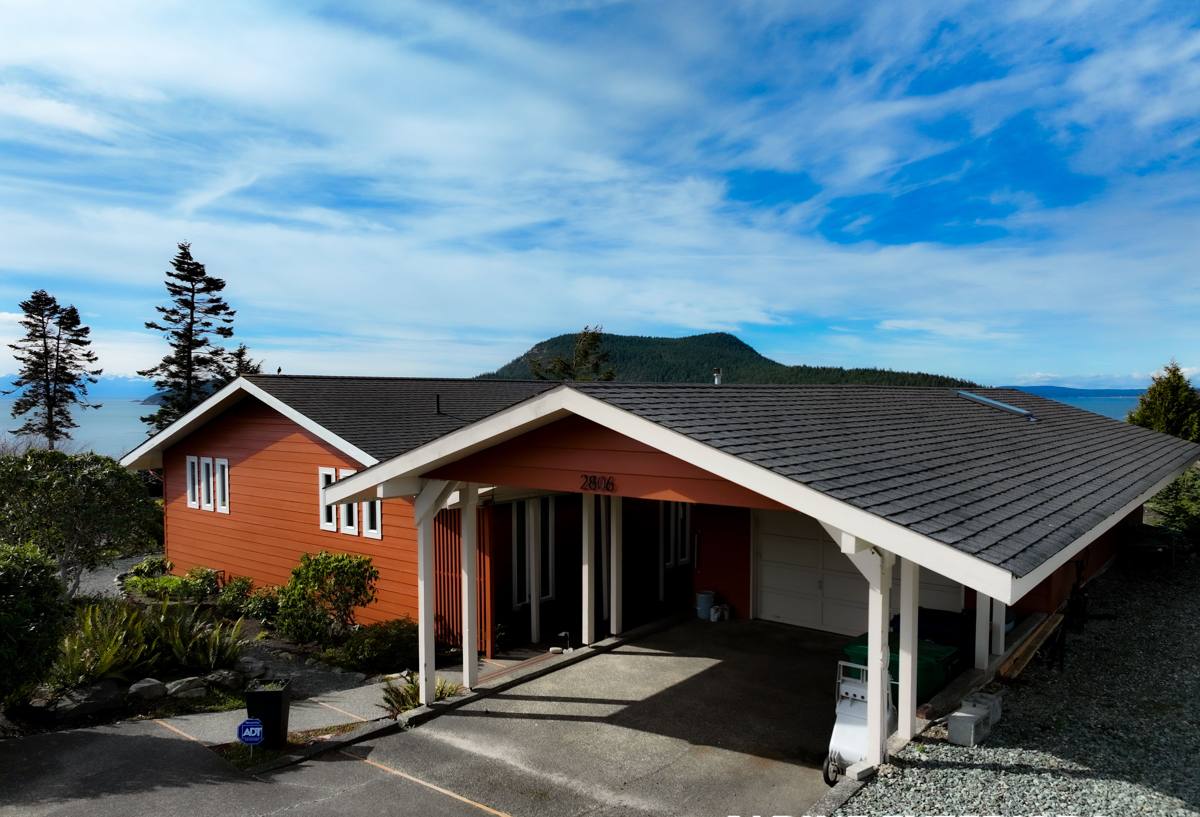
Siding That Can Actually Handle Salt Air
We install James Hardie fiber cement siding exclusively, and near the water that's less a brand preference than a response to what the climate does to a wall system over years of exposure. Fiber cement has no organic core for moisture to work into, so it doesn't rot, swell, or attract the kind of decay that wood-based products are vulnerable to. It also doesn't go brittle or fade under years of sun, salt, and temperature swings the way vinyl can. Hardie's ColorPlus finish is baked on at the factory under controlled conditions, which matters in a climate that puts siding through more wet-dry cycles per year than a lot of inland locations see.
Why We Don't Install Everything on the Market
Homeowners in Puget ask us about vinyl, LP SmartSide, primed wood, and cedar often enough, usually because they're familiar or cost less upfront. We don't install any of them, and we think it's fair to explain why. Vinyl siding depends entirely on the water-resistive barrier behind it staying intact for the life of the house, and it can become brittle with age under sustained UV and salt exposure. Engineered wood products like LP SmartSide use wood-strand cores that are genuinely vulnerable if moisture reaches a cut edge, fastener hole, or unsealed joint — a real risk in a place where wind-driven rain is routine, not occasional. Primed wood and cedar both look good going up, but they need an ongoing maintenance commitment — recoating, caulk renewal, moss and mildew treatment — to keep performing, and that schedule only gets tighter this close to the water. None of these are bad products everywhere. We just don't think they hold up the way we want on a home in Puget, and we'd rather tell a homeowner that upfront than sell something we don't believe will last.
Roofing for Wind-Driven Rain and Moss
A roof near the Sound deals with the same directional weather as the siding, just overhead. Wind-driven rain works its way under shingles and around flashing at a much higher rate than rain that falls straight down, so the details that actually determine how long a roof lasts are the ones a homeowner rarely sees during the estimate — correctly lapped flashing at valleys and penetrations, proper underlayment, and attic ventilation that keeps condensation from building up where it can't dry out. Moss is close to a constant presence on shaded roof planes in this part of Whatcom County, and left unchecked it holds moisture against the roofing material and can work its way under shingle edges over time.
Signs Worth Checking Before They Become a Leak
Because roofs near the water take on a heavier moisture load than a sheltered inland home, problems tend to show up first in the same handful of spots. Granule buildup collecting in gutters, moss spreading beyond what a light cleaning would fix, and soft or discolored spots around chimneys, skylights, and vent penetrations are all worth a look. Catching these early is almost always cheaper and less disruptive than waiting until water reaches the roof decking or the interior ceiling below it.
Windows That Hold Up to Marine Exposure
Windows are one of the most common places a leak actually originates, and it usually isn't the glass — it's the flashing and sealant integration around the frame. Near Puget Sound, wind-driven rain puts extra pressure on that seal, and a window installed without proper flashing detail can let moisture in behind the trim long before anyone notices a problem inside the house. We pay close attention to how a new window ties into the surrounding siding and weather-resistive barrier, not just to the window unit itself, because that connection is what determines whether the installation actually keeps water out over time.
Cost Factors for Window Replacement
| Factor | What Drives the Cost |
|---|---|
| Frame material | Vinyl, fiberglass, and composite frames each carry different price points and different long-term performance |
| Glass package | Double-pane vs. triple-pane, and low-E coatings, affect both upfront cost and energy performance |
| Flashing and integration | Proper tie-in with the surrounding siding adds labor but is what actually prevents leaks |
| Number and size of openings | Larger or custom-sized windows cost more than standard sizes |
| Full-frame vs. insert replacement | Full-frame replacement costs more but allows correction of old flashing mistakes |
We'll walk through these factors specific to your home rather than quoting a flat per-window number that doesn't account for what your house actually needs.
Decks Built for Sustained Moisture
Deck framing and fasteners take a real beating this close to the water — sustained moisture, salt-influenced air, and long stretches without much drying time between rain events all work against untreated lumber and standard-grade hardware. Ledger board attachment, flashing where the deck meets the house, and corrosion-resistant fasteners matter as much as whatever decking material sits on top. A deck can look solid on the surface and still have a compromised ledger connection or rusting hardware underneath if it wasn't built with this kind of exposure in mind from the start.
Both wood and composite decking can perform well in Puget if the structure underneath is done correctly. Wood costs less upfront but needs regular sealing or staining to keep moisture out, especially given how much of the year this area spends damp. Composite costs more initially but resists moisture absorption without the ongoing sealing schedule, which matters to homeowners who'd rather not be on a yearly maintenance clock. Neither choice makes up for framing or fastening that wasn't done right in the first place.
Why a Local Crew Matters Here
Puget isn't uniform — some homes sit more exposed to wind and salt spray than others, depending on elevation, tree cover, and how directly they face the water. A crew that works in and around Bellingham regularly develops a feel for which walls take the worst of the weather, which roof slopes hold moss the longest, and which flashing details actually matter versus which ones are just code minimum. That kind of judgment comes from doing this work on homes like these, in this climate, on an ongoing basis — not from a general contractor passing through once and moving on to the next job outside the area.
What to Check Before Hiring for Exterior Work Near the Water
- Ask specifically how the contractor handles wind-driven rain and flashing, not just which siding brand they carry
- Confirm fasteners and hardware are rated for coastal or marine-adjacent exposure, not standard-grade only
- Get a clear answer on both the manufacturer's material warranty and the contractor's workmanship warranty
- Ask how window flashing integrates with the siding system, since that connection is where most long-term leaks start
- Verify the contractor is licensed, bonded, and insured to perform exterior work in Washington State
What This Means for Your Home
Every property in Puget sits a little differently relative to the water, tree cover, and prevailing wind, and the right scope of work depends on the specific house — its age, orientation, and the real condition of the current siding, roof, windows, or deck. We won't push a full exterior overhaul when a targeted repair will do the job, and we won't install a material we don't think will hold up this close to the Sound. If you're trying to figure out what your home actually needs, we're glad to take a look and give you a straight answer.
If you'd like an honest assessment of your home's exterior, reach out for a free, no-pressure estimate. We'll walk the property, talk through what we see, and lay out options that fit the house and the budget — no pressure either way.