 Bellingham Exterior
 Why Roof Quotes Vary So Much
Ask three roofing contractors in Whatcom County to price the same roof and you'll often get three different numbers, sometimes by a wide margin. That's not always a sign that someone is overcharging or someone else is cutting corners. Roof replacement pricing is built from a stack of separate variables, and contractors weigh them differently depending on their crew size, their material relationships, and how thoroughly they inspect before quoting.
This page breaks down what actually moves the number on a roof replacement estimate, so you can read a quote with some understanding of where the dollars are going instead of just comparing bottom-line totals.
The Big Three: Size, Pitch, and Complexity
Roof Size (Measured in Squares)
Roofers price in "squares" — 100 square feet of roof surface. A simple 2,000-square-foot single-story home with a low-slope gable roof might only run 22-25 squares of actual roof area. The same footprint with dormers, valleys, and a steeper pitch can easily push past 30 squares once you account for the extra surface area a sloped plane covers compared to flat ground.
Pitch and Access
Steeper roofs take longer to work safely, require more fall-protection setup, and slow down material staging. A roof a crew can walk comfortably prices differently than one that requires ropes and harnesses for every trip up. Tree cover, tight side-yard access for dumpsters and material delivery, and multi-story homes all add labor time that shows up in the final price even though they have nothing to do with material cost.
Roof Shape
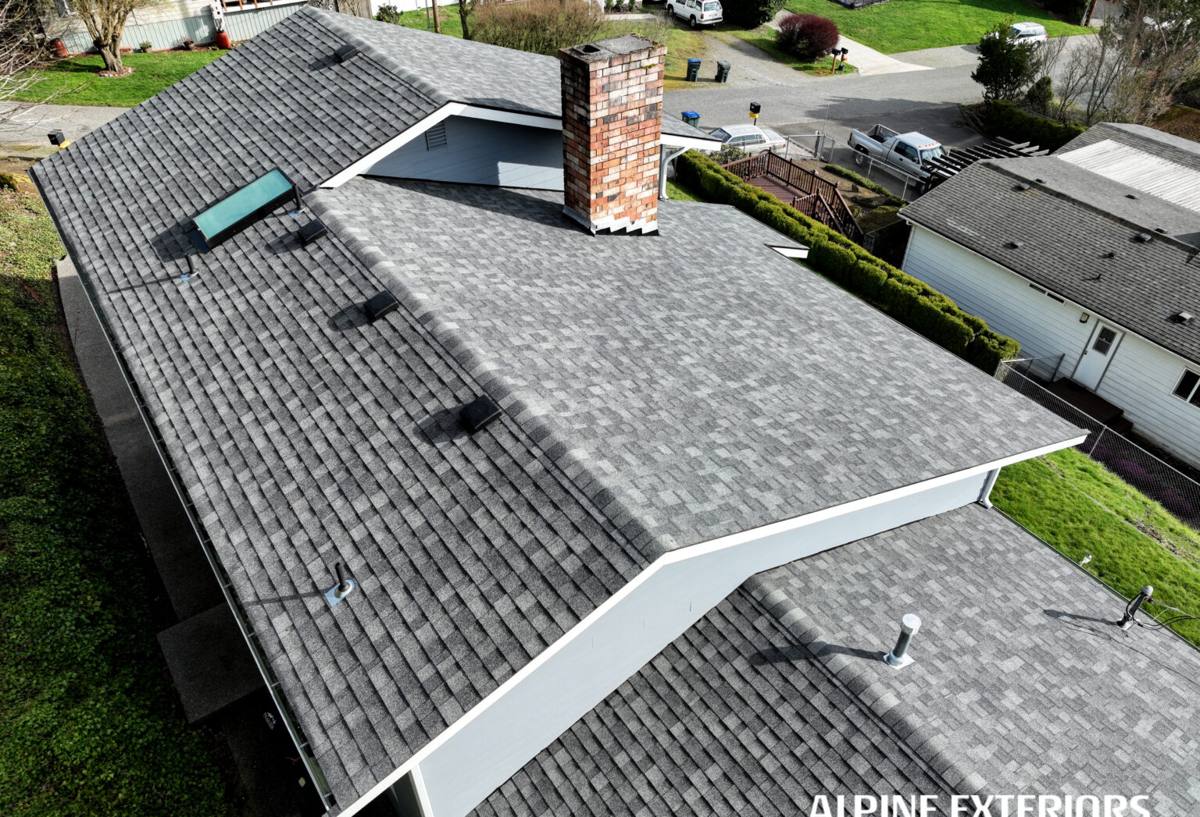
A simple rectangular roof with two planes is the cheapest shape to install. Every additional hip, valley, dormer, or roof-to-wall intersection adds flashing work, cutting waste, and labor hours. Homes with a lot of architectural character on the roofline often cost noticeably more per square than a simple gable roof of the same total size.
Material Choice
Asphalt shingles remain the most common roofing material in this region, but there's real range within that category.
| Material | Typical Lifespan | Relative Cost |
|---|---|---|
| 3-tab asphalt shingle | 15-20 years | Lowest |
| Architectural (dimensional) asphalt shingle | 25-30 years | Moderate |
| Premium/designer asphalt shingle | 30+ years | Higher |
| Standing seam metal | 40-50+ years | Highest upfront |
3-tab shingles are becoming harder to find as manufacturers shift production toward architectural lines, and they generally aren't the best fit for a region with this much sustained rain exposure. Architectural shingles are the practical middle ground for most Bellingham homes — heavier, more wind-resistant, and better warrantied than 3-tab. Metal costs more to install but trades that upfront cost for a much longer service life and better shedding of moss and moisture over time.
What's Under the Shingles Matters As Much As What's On Top
Tear-Off and Layers
If your home already has two layers of shingles, most jurisdictions and manufacturers require full tear-off before a new layer goes down — you can't stack a third. Tear-off adds labor and disposal cost, but it also lets the crew actually see the deck underneath, which is the part that determines whether your new roof performs.
Decking Condition
You generally don't know the condition of the roof deck until the old roofing is off. Soft spots from long-term leaks, rot around old flashing, or delaminated sheathing all need to be replaced before new shingles go on — skipping this step is how a roof looks fine for a year or two and then fails early. A fair contract should spell out a per-sheet replacement cost for deck repairs discovered mid-tear-off, rather than leaving it as an open-ended surprise.
Underlayment
Synthetic underlayment and ice-and-water shield at eaves, valleys, and penetrations are cheap relative to the whole project but do a lot of the actual water-shedding work in a climate that sees sustained rain rather than short bursts. This is not a place to accept a stripped-down spec to save a few hundred dollars.
Regional Climate Factors That Push Costs
Bellingham's exposure to Puget Sound and the Salish Sea brings a specific combination of conditions that roofs elsewhere don't have to deal with: salt-laden air, driving wind-driven rain rather than straight-down rain, and long stretches of damp shade that keep moss and algae established for most of the year rather than just a season.
Moss and Algae
Moss doesn't just sit on a roof — its root structure lifts shingle tabs and holds moisture against the surface, which shortens shingle life if it's left unchecked. Roofs with heavy tree cover or north-facing shaded slopes in Whatcom County tend to need moss treatment or physical removal more often than roofs in drier parts of the state, and some homeowners opt for algae-resistant shingle lines (with copper or zinc granules) specifically to slow regrowth. That upgrade adds modest cost but reduces a recurring maintenance headache.
Salt Air and Fastener Corrosion
Homes closer to the water see faster corrosion on exposed metal — nail heads, flashing seams, and vent stacks. Stainless or higher-grade coated fasteners and flashing cost more than standard galvanized components but hold up better this close to salt air, and a contractor who specs for the coast rather than a generic inland install is doing you a favor even if the quote looks slightly higher.
Ventilation and Flashing: The Overlooked Line Items
Proper attic ventilation isn't optional in a climate this wet — trapped moisture in an attic space causes deck rot, mold, and premature shingle failure from the underside, which no amount of surface-level shingle quality can fix. Ridge vents, soffit vents, and correctly sized intake-to-exhaust ratios are a small percentage of total project cost but a large percentage of whether the roof actually lasts its rated lifespan.
Flashing around chimneys, skylights, and roof-to-wall transitions is where most leaks actually originate, not in the open field of shingles. Quotes that seem unusually low sometimes reuse old flashing instead of replacing it — a cost-cutting move that a homeowner won't notice until the next hard rain finds the old seams.
Permits, Disposal, and Timing
Whatcom County and City of Bellingham both require permits for roof replacement, and that cost, along with dump fees for the torn-off material, should appear as a line item rather than being buried into a vague "materials" number. Disposal costs in particular scale with the number of layers removed and the total tonnage of old shingle, so a tear-off from a two-layer roof costs more to haul away than a single-layer job of the same size.
Scheduling also affects price indirectly. Late spring through early fall is the busiest roofing season here, and crews often book out weeks in advance. Getting a quote and committing to a project earlier in the year, before the rain returns in earnest, generally gives you more contractor availability and less pressure to rush a decision.
Roof and Siding: Sequencing the Work
If your siding is also aging out around the same time as your roof, it's worth having both assessed together rather than treating them as unrelated projects. Roof work should generally happen before or alongside siding work, since roofing crews sometimes need to adjust flashing at the wall line, and you don't want new siding damaged by roofing debris or ladder placement. When siding replacement is part of the conversation, our position is that James Hardie fiber cement is the right material for this climate specifically — it doesn't absorb moisture the way wood-based siding can, it holds up to the driving rain and salt air common in Whatcom County, and its factory-applied ColorPlus finish is built to handle sustained damp exposure without the recoating cycle that other sidings need. That's a separate decision from your roof, but it's worth planning the timing together if both are on the horizon.
Getting an Accurate, Comparable Quote
The best way to compare roofing bids isn't the bottom-line number — it's making sure every contractor is quoting the same scope. Use this list when reviewing proposals:
- Full tear-off to the deck, not an overlay, unless you've specifically discussed and accepted an overlay
- A stated per-sheet cost for any decking replacement found during tear-off
- Underlayment type and ice-and-water shield coverage called out specifically, not just "as needed"
- New flashing at all penetrations, chimneys, and roof-to-wall transitions, not reuse of existing flashing
- Ventilation plan — intake and exhaust vents, not just "existing vents reused"
- Fastener and flashing material grade, especially if your home is close to the water
- Permit and disposal fees itemized rather than folded into a lump sum
- Both a material warranty and a separate workmanship warranty, with the length of each spelled out
A quote that's meaningfully lower than others is worth a direct conversation about which of these items got left out — sometimes it's a legitimate efficiency, and sometimes it's a corner that will show up as a problem in a few years.
Get a Straight Answer for Your Roof
Every roof in Whatcom County carries its own combination of size, pitch, tree cover, and exposure, and a real number only comes from someone walking your roof and looking at your attic, not a phone estimate. If you'd like a free, no-pressure look at what your roof actually needs, we're glad to walk it with you and explain what we find — no obligation attached.