 Bellingham Exterior
 Exterior Work for Happy Valley Homes
Happy Valley is one of Bellingham's older, established residential pockets, with a housing stock that spans mid-century ramblers, updated bungalows, and newer infill construction sitting side by side on tree-shaded lots. That mix means no two exteriors are dealing with quite the same set of problems. An older home might be on its second or third roof and original siding that's finally given up. A newer build might be well within its warranty window but already showing early moss growth or a window seal that's failed faster than it should have. We work on both, and everything in between, because most of the exterior problems we see in this neighborhood trace back to the same handful of causes.
As a Bellingham-based exterior contractor, we handle siding, roofing, windows, and decks as connected systems rather than separate line items. Water that gets behind siding at a poorly flashed window, or that pools on a deck ledger board because the roof drainage above it was never routed properly, doesn't respect the boundary between trades. Fixing one piece without understanding how it ties into the rest is how homeowners end up paying for the same repair twice.
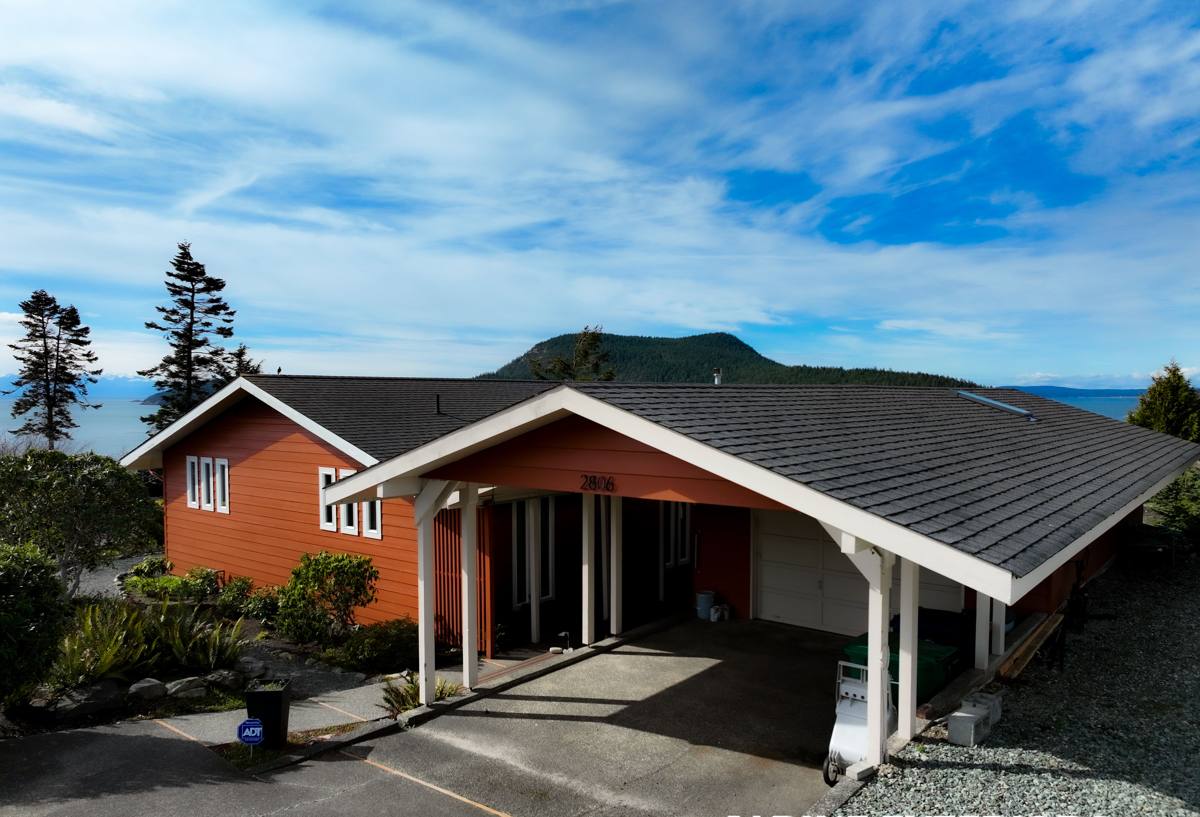
What Whatcom County's Climate Does to a House
Bellingham sits on Bellingham Bay, and the marine air that comes with that location is part of what makes this such a good place to live — and part of what wears down an exterior faster than homeowners moving here from drier climates expect. Salt-laden air corrodes exposed metal fasteners, fascia flashing, and lower-quality hardware over time, especially on the west- and south-facing sides of a house that catch the brunt of weather moving in off the water.
Layer on top of that the driving rain that's typical of a Pacific Northwest winter — rain that doesn't just fall straight down but gets pushed sideways into siding laps, window trim, and deck ledgers by wind — and you get a climate that punishes any gap in the water management details. A roof, siding system, or window installation that would hold up fine in a drier region can fail here within a few years if the flashing, caulking, and drainage planes weren't done correctly the first time.
Then there's moss. Whatcom County's mild, wet stretch from fall through spring gives moss and algae a long runway to establish themselves on roofs, in siding grain, and in shaded corners of a deck that never fully dry out. Moss holds moisture against building materials far longer than bare wood or fiber cement would on its own, and on a roof it works its way under shingle tabs and lifts them, creating entry points for water. None of this is unique to Happy Valley specifically, but it's the reality for every home in this part of Bellingham, and it's why we build every project around drainage, ventilation, and material choices that are meant to shed water rather than absorb it.
Siding: What Holds Up Here and What Doesn't
Siding takes the most direct and constant abuse of any exterior component, since it's exposed to wind-driven rain, temperature swings, and moisture cycling year-round. We install James Hardie fiber cement siding exclusively, and that's a deliberate standard, not a default.
Wood-based sidings — cedar, primed spruce, and similar products — look good on day one, but they're organic material in a climate that stays damp for months at a stretch. They need regular refinishing to keep water out, and once a coating starts to fail, the substrate underneath is exposed to exactly the kind of driving rain and prolonged dampness this region delivers. Engineered wood products like LP SmartSide hold up better than raw wood but are still wood-based at their core, which means the same moisture sensitivity at cut edges and seams if installation and maintenance aren't precise. Vinyl siding sheds water fine on its face, but it's a thin material that can crack in cold snaps, fade under UV exposure, and it relies on the wall assembly behind it to do the real moisture management work, since vinyl itself isn't a structural moisture barrier.
James Hardie fiber cement is cement-based rather than wood-based, so it doesn't rot, and it isn't a food source for the moss and mildew that thrive in this climate. It's also non-combustible, which matters given the wildfire smoke seasons the Pacific Northwest has seen in recent summers. Hardie's factory-applied ColorPlus finish is baked on under controlled conditions rather than field-painted, which gives it a more consistent, longer-lasting bond than a coating applied on-site in variable weather. The company backs it with a strong, transferable limited warranty, which matters to buyers if a home ever sells. None of this means fiber cement is magic — it still has to be installed to Hardie's spec, with correct clearances, fastening, and flashing, or it will develop the same problems as anything else. That installation discipline is where we put our attention.
Siding Options at a Glance
| Material | Moisture Behavior | Maintenance | Fire Resistance |
|---|---|---|---|
| James Hardie fiber cement | Does not rot or absorb water like wood | Low — factory finish, periodic wash | Non-combustible |
| Cedar / primed wood | Absorbs moisture; prone to rot if coating fails | High — refinishing every few years | Combustible |
| Engineered wood (LP SmartSide) | Better than raw wood, still moisture-sensitive at edges | Moderate — coating upkeep needed | Combustible |
| Vinyl | Sheds surface water; relies on wall assembly behind it | Low, but can crack and fade | Combustible, can deform in heat |
Roofing: Built for a Wet, Mossy Climate
Roofs in Happy Valley deal with the same moss pressure and driving rain as the siding, but with more direct sun and wind exposure on top. We look at three things on every roofing job: whether the roof deck underneath is dry and sound, whether ventilation is adequate to keep moisture from condensing in the attic, and whether the roofing material and installation details are matched to this climate specifically. Ice and heavy snow aren't the primary threat here the way they are further inland — it's sustained moisture and moss that do the damage over years.
Underlayment and flashing details around chimneys, vents, and valleys matter more than the shingle brand in most cases, since that's where wind-driven rain actually finds its way in. A roof that looks fine from the ground can still be letting water into the decking at a poorly sealed penetration.
Windows: Sealing Out Wind-Driven Rain
Window failures in this climate are almost always about the installation, not just the window unit itself. A quality window installed with poor flashing will leak; a mid-grade window installed correctly, with proper head flashing and a continuous drainage path behind the trim, will usually outperform it. Replacement window work here is really about restoring or upgrading that whole water management assembly, not just swapping glass and frames.
Older homes in this neighborhood often have original windows with degraded seals, single-pane glass, or wood frames that have taken on moisture over the years. Replacing them is as much about stopping ongoing water intrusion into the wall cavity as it is about energy efficiency.
Decks: Standing Up to Year-Round Exposure
Decks in Whatcom County stay damp for a large part of the year, which makes ledger board attachment, joist protection, and drainage the details that determine whether a deck lasts a decade or three. Ledger flashing that isn't done correctly is one of the most common sources of hidden rot we find, since it's tucked against the house where it's easy to overlook and hard to inspect without pulling boards. We also pay attention to gaps and spacing in decking material, since tight, poorly ventilated boards trap moisture and encourage exactly the kind of moss and algae growth this climate is known for.
Why a Local Crew Matters
A crew that works Whatcom County exteriors every week knows what a marine-climate roof looks like after ten wet winters, not just what it looks like on installation day. That experience shows up in small decisions — how much clearance to leave under siding near grade, which flashing details actually hold up to sideways rain, where moss tends to establish first on a given roof pitch — that don't show up in a manufacturer's install manual but make the difference between an exterior that needs attention every couple of years and one that doesn't.
A Practical Exterior Checklist for Happy Valley Homeowners
- Check siding for soft spots, bubbling paint, or dark staining near the bottom courses, which often signal moisture getting in from below
- Look at roof valleys and north-facing slopes for moss buildup, since these areas dry out slowest
- Inspect window trim and caulking for cracks or gaps after the wettest months of the year
- Look underneath the deck at the ledger board connection for staining or soft wood
- Clear gutters and downspouts before the fall rains start, since overflow drives water straight into siding and fascia
- Watch for any siding, trim, or roofing product installed with visible gaps at seams and joints — that's where this climate finds its way in
Getting Started
If you're noticing moss buildup, staining, a window that seems to fog or leak, or siding that's due for an honest look, we're happy to come take a look. We offer free, no-pressure estimates for homeowners in Happy Valley and the rest of Bellingham, and we'll tell you plainly what we see, what can wait, and what shouldn't.