 Bellingham Exterior
 Windows Built for the Way Cordata Actually Weathers
Cordata sits far enough inland to avoid the worst of the waterfront exposure, but homes here still take a beating from the same weather that defines Whatcom County: long stretches of driving rain from fall through spring, humid air that never fully dries out, and enough moss and mildew pressure to test any window's seals within a few years. Add in the salt-tinged air that drifts in off Bellingham Bay and the Strait of Georgia, and you've got a climate that's genuinely hard on window frames, glazing seals, and the flashing details around them. A window that's rated for "energy efficiency" on a spec sheet still has to survive that environment before the efficiency numbers mean anything.
We work on homes across Bellingham, but Cordata's mix of housing stock — a good number of homes built from the 1980s through the 2000s, along with newer construction near the retail corridor — means we see a fairly consistent set of window problems here: aging vinyl units with failed seals, aluminum-framed originals that were never efficient to begin with, and newer builder-grade windows that were installed correctly but spec'd cheap. This page is about what actually needs to happen when you replace or upgrade windows in this specific neighborhood, not a generic rundown of window features.
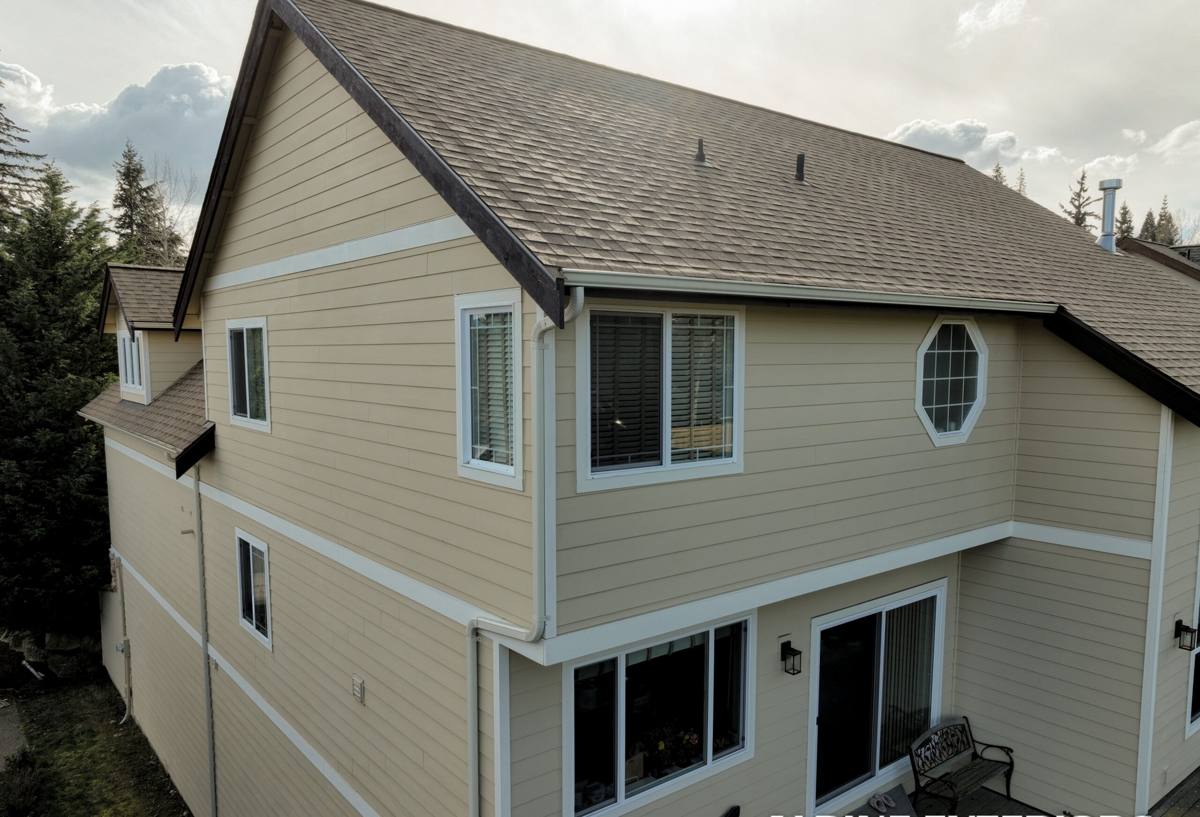
What the Local Climate Does to a Window Over Time
Moisture is the constant enemy
Whatcom County doesn't get extreme cold, but it gets extended dampness — day after day of rain and high humidity, sometimes for weeks without a real dry stretch. That's harder on a window than a short, brutal winter would be. Moisture works into any gap in the seal, the sill, or the flashing and just sits there. Over years, that's what causes fogged double-pane glass (a failed seal letting moisture between the panes), soft spots in wood sills, and slow rot behind trim that looks fine from six feet away.
Wind-driven rain finds the weak points
Storms coming off the Strait don't just rain straight down — the wind pushes water sideways and up under trim, sills, and poorly sealed frames. A window that would be fine in a calmer climate can leak here simply because it wasn't installed with the flashing sequence this weather demands.
Moss and organic growth degrade seals and finishes
The same conditions that grow moss on roofs and north-facing siding also colonize window sills, tracks, and exterior trim. Moss and algae hold moisture against the surface, which accelerates rot in wood components and can slowly degrade the sealants and gaskets that keep a window airtight.
Salt air adds a slower, quieter toll
Cordata isn't waterfront, but Bellingham's proximity to salt water means the air carries more corrosive salt content than an inland town would. Over years, this is harder on exposed metal hardware, aluminum components, and certain finishes than dry-climate manufacturers' warranties typically account for.
What "Energy-Efficient" Should Actually Mean for a Cordata Home
The phrase gets used loosely in this industry. For a home in this climate, an energy-efficient window needs to perform on three fronts at once, not just one:
- Thermal performance — low U-factor glazing that keeps conditioned air in and cold, damp air out, which matters more here than solar heat gain does, given our mostly overcast climate
- Air and water sealing — a frame and installation detail that resists wind-driven rain, not just still-air weatherstripping tests
- Material durability in a wet climate — frame materials and hardware that won't degrade, warp, or corrode faster than expected given the moisture and salt exposure
A window can score well on paper for U-factor and still underperform in Cordata if the frame material or installation doesn't hold up to the wet cycle. That's why we treat glass performance and installation quality as equally important, not glass performance as the whole story.
Signs Your Windows Are Underperforming
Homeowners in this neighborhood usually come to us for one of a few reasons. If any of these sound familiar, it's worth having windows looked at:
- Visible fog, haze, or moisture between the panes of a double-pane window — this means the seal has failed and the insulating gas or air gap is gone
- Noticeably cold air near the window even when it's fully closed and latched
- Condensation forming on the inside of the glass regularly, especially in colder months
- Soft, spongy, or discolored wood at the sill or lower frame
- Difficulty opening, closing, or latching a window that used to operate smoothly
- Visible moss, algae, or black staining building up in the tracks or on exterior trim
- A noticeable jump in heating costs without another clear explanation
What a Correct Installation Involves
Replacing a window is not just removing the old unit and screwing in a new one. In a climate that pushes water sideways and keeps things damp for months at a time, the flashing and sealing details around the window matter as much as the window itself. A correct installation in this area includes:
- Removing the old window and fully inspecting the rough opening for hidden rot or water damage before anything new goes in
- Repairing any compromised framing or sheathing rather than sealing a new window over a damaged opening
- Installing proper flashing — starting at the sill pan and working up the sides, so any water that does get past the window sheds outward instead of pooling
- Setting the window level, plumb, and square, then sealing and insulating the gap between the frame and the rough opening correctly
- Applying weather-resistant exterior sealant and trim detailing suited to sustained rain exposure, not just a quick bead of caulk
- Testing operation and checking seals before considering the job complete
Skipping any of these steps is exactly how a brand-new, high-efficiency window ends up leaking or fogging within a few years anyway. The window's rating only matters if the installation around it is done right for this climate.
Frame Material Comparison for This Climate
| Frame Material | How It Handles Our Climate | Maintenance |
|---|---|---|
| Vinyl | Good moisture resistance, doesn't corrode; performance depends heavily on installation quality | Low — occasional cleaning |
| Fiberglass | Very stable in temperature and moisture swings, holds up well to sustained damp conditions | Low |
| Wood (clad or unclad) | Excellent insulating properties, but unclad wood is vulnerable to our wet cycle without diligent upkeep | Higher — needs regular sealing/paint upkeep, especially unclad |
| Aluminum | Durable but conducts heat and cold readily and is more exposed to salt-air corrosion over time | Moderate — watch hardware and finish wear |
We don't push one material as universally "best" — the right call depends on the home's exposure, the homeowner's maintenance appetite, and budget. What we do insist on, as our professional standard, is matching the material to how much weather and salt exposure that particular side of the house actually sees, rather than using one frame choice for every elevation regardless of exposure.
Our Process, Start to Finish
We keep this straightforward on purpose:
- Free on-site assessment — we look at your current windows, check for existing moisture or rot issues, and talk through what's actually happening with your home, not just what you called about
- Honest recommendation — we'll tell you if a window can be repaired instead of replaced, and we'll explain the trade-offs between frame materials and glazing options for your specific exposure
- Clear, itemized estimate — no vague lump sums; you'll know what you're paying for
- Careful removal and opening inspection — this is where hidden problems get caught before they're sealed behind new windows
- Installation with proper flashing and sealing — done to hold up to wind-driven rain, not just pass a quick visual check
- Walkthrough and cleanup — we test every window with you before we consider the job done
Why It Matters That We Already Work in This Neighborhood
A crew that's replaced windows in Cordata and the surrounding parts of Bellingham repeatedly has already seen what this specific housing stock tends to hide — where the builder-grade units from a certain era usually have thin flashing details, which older homes tend to have rot concealed behind trim, and how exposure varies from one side of a lot to another depending on how the wind and rain typically hit it here. That's not something you get from a crew that mostly works a different climate or drives in from outside Whatcom County for a one-off job. Local, repeat experience means fewer surprises during the job and fewer callbacks after it.
It also means accountability. We're not a crew that finishes a job and disappears out of the area — we're working homes near yours on an ongoing basis, and our reputation in this neighborhood depends on the work holding up through a few wet winters, not just looking good on installation day.
What Affects the Cost
| Factor | Why It Matters |
|---|---|
| Number and size of windows | Larger openings and whole-house replacements have different economies of scale than a single problem window |
| Frame material chosen | Vinyl, fiberglass, wood, and aluminum carry different material and labor costs |
| Glazing package | Double vs. triple pane, low-E coatings, and gas fill all affect both performance and price |
| Condition of the existing opening | Hidden rot or framing damage found during removal adds repair scope before the new window goes in |
| Access and site conditions | Second-story windows, tight side yards, or landscaping obstructions can affect labor time |
We won't quote a number without seeing the actual windows and openings — anyone offering a firm price over the phone for a whole-house job is guessing.
A Practical Checklist Before You Call Anyone
- Note which windows feel drafty, fog up, or stick — this helps prioritize if you're not replacing all of them at once
- Check for soft or discolored wood at the sill from both inside and outside
- Look for moss, algae, or dark staining on the tracks or nearby trim
- Have a rough idea of your budget range and whether you want to phase the project by room or elevation
- Ask any contractor how they handle flashing and sealing, not just what brand of window they sell
- Get more than one estimate, and be wary of anyone who won't do an in-person inspection first
If you're in Cordata or elsewhere in Bellingham and want a straight answer on whether your windows need repair, replacement, or are simply fine as they are, we're happy to take a look. The estimate is free, there's no pressure to sign anything on the spot, and you can use the form below to get started.