 Bellingham Exterior
 What "Storm Damage" Actually Means on an Edgemoor Roof
Edgemoor sits close enough to the water that its roofs take a different kind of weathering than homes further inland. When people say "storm damage," they usually picture a dramatic event — a tree limb through the roof, a full section of shingles ripped loose overnight. Those things happen, but on this stretch of the Bellingham waterfront, storm damage is more often a slower accumulation: wind-driven rain forcing water sideways into laps and flashing that were only ever designed to shed water falling straight down, salt-laden air working on exposed fasteners and metal trim, and a moss season that runs long enough to hold moisture against the roof surface for months at a stretch.
That distinction matters because it changes what an honest repair actually looks like. A roof that "looks fine from the driveway" after a windstorm can still have lifted shingle tabs, compromised sealant strips, or a flashing detail that's just barely holding — problems that don't show up as a leak until the next heavy rain finds the gap. Storm damage repair done right in Edgemoor isn't just patching the obvious hole. It's finding what the wind and salt air actually did to the roof system and fixing that, not just the symptom you can see from the ground.
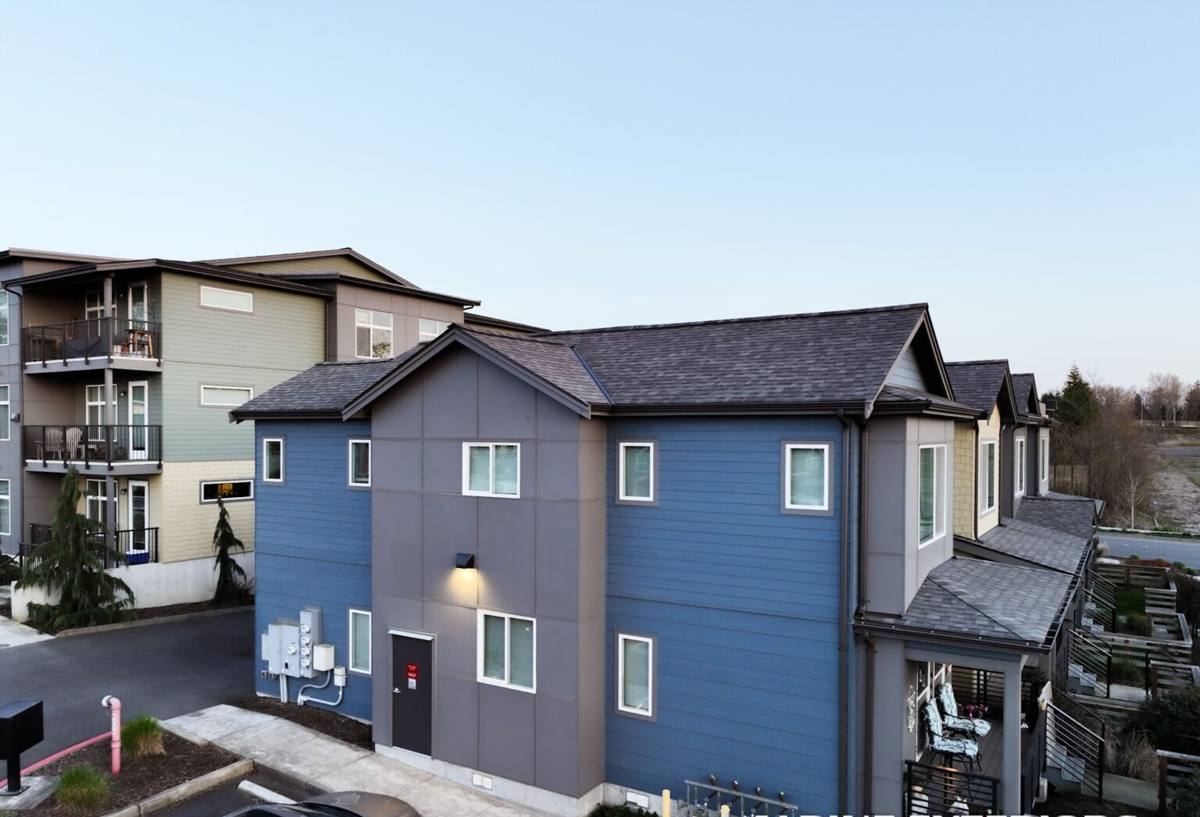
Why Edgemoor's Exposure Is Different
Bellingham as a whole sees plenty of wind and rain off the Sound, but waterfront and near-waterfront neighborhoods like Edgemoor take it more directly. Three things compound on roofs here more than they do a few miles inland:
Wind Off the Water
Storm systems moving in off Bellingham Bay hit exposed roof planes at an angle, not straight down. That drives rain up under shingle tabs and pushes on ridge caps and hip lines hard enough, over repeated events, to break sealant bonds that were never rated for sustained lateral pressure. A single storm rarely tears a whole roof apart — what it does is loosen things a little at a time until one storm finally finds the weak point.
Salt Air and Fastener Corrosion
Salt-laden air moving in from the water accelerates corrosion on exposed nail heads, flashing, and any metal roof component that isn't fully protected. A corroding fastener loses its grip on the material around it before it fails outright, which is exactly the kind of quiet problem that turns a minor storm into a real leak the next time wind gets underneath a shingle edge.
A Long Moss Season
Mild, damp conditions keep moss and moisture-loving growth active across most of the year on shaded and north-facing roof planes, which are common on wooded Edgemoor lots. Moss doesn't just look bad — it holds water against shingles and underlayment far longer than the roof would otherwise stay wet, and it can lift shingle edges as it grows, creating a path for wind-driven rain to get underneath.
What a Correct Storm Damage Repair Involves
A repair that only addresses what's visible from the ground is a repair that's likely to need a return visit. A thorough job on an Edgemoor roof typically covers the following ground, in roughly this order:
1. A Full Roof-Plane Inspection, Not Just the Damaged Spot
Wind damage rarely stays confined to one area. We walk the full roof — not just the section that prompted the call — because lifted or cracked shingles a few feet away from the obvious damage are common after the same wind event and get missed if the inspection stops at the first problem found.
2. Checking Flashing and Penetrations First
Chimneys, vent stacks, skylights, and valleys are where most storm-related leaks actually originate, even when the shingles nearby look intact. Flashing that's been worked loose by wind or corroded by salt air is often the real source of a leak that appears to be coming from somewhere else entirely.
3. Matching Materials, Not Just Covering the Hole
Shingle color, profile, and granule wear all shift over time, and a patch that doesn't account for that stands out and can behave differently than the surrounding roof under wind load. We match material and installation pattern to the existing roof as closely as the product allows, rather than using whatever's on the truck.
4. Underlayment and Decking Check Where Water Got Through
If water made it past the shingle layer, the underlayment and sheathing underneath need to be checked for saturation or soft spots before new material goes back down. Covering wet decking with new shingles just seals the moisture in and sets up a slower, more expensive problem down the road.
5. Documentation for Insurance
Storm damage repairs frequently involve an insurance claim. We document what we find with dated photos and a clear written scope before starting work, which gives homeowners something concrete to work with when dealing with an adjuster rather than a verbal description after the fact.
How Our Process Works
- Initial call and scheduling. We ask what happened, when, and what you've noticed, so the inspection is focused on the right areas from the start.
- On-site inspection. Full roof-plane walk, flashing and penetration check, and a look at attic or interior signs of water intrusion where accessible.
- Written scope and estimate. A clear description of what's damaged, what needs repair versus what's cosmetic, and an honest cost range before any work begins.
- Insurance documentation, if needed. Photos and a written report you can hand directly to your adjuster.
- Repair. Matched materials, correct flashing detail, and a check of underlayment and decking wherever water reached them.
- Final walkthrough. We show you what was done and what to watch for, so you're not guessing about the condition of the roof afterward.
Repair vs. Replacement: How We Make the Call
| Factor | Favors Repair | Favors Replacement |
|---|---|---|
| Roof age | Well within expected shingle lifespan | Already near or past typical service life |
| Extent of damage | Isolated to one section or a few penetrations | Spread across multiple roof planes |
| Decking condition | Dry, structurally sound underneath | Soft, delaminated, or repeatedly saturated |
| Prior repair history | First significant issue on this roof | Pattern of recurring leaks or patch-on-patch repairs |
| Material availability | Matching shingle still produced or in stock | Discontinued profile or badly weathered color mismatch |
We'll tell you honestly which side of that table your roof lands on. A roof with isolated, recent damage on sound decking almost always gets a repair recommendation from us — replacement isn't the default answer just because it's the larger job.
What to Do Right After a Storm
- Do a visual check from the ground for obvious missing shingles, dented vents, or debris on the roof — don't get on the roof yourself after a storm
- Check the attic or top-floor ceilings for staining, damp insulation, or a musty smell, which can show up before an exterior leak is visible
- Photograph anything visible from the ground or from inside, with a date, for your own records
- Avoid tarping or covering damage yourself unless it's actively leaking indoors — improper tarping can trap moisture or create new damage points
- Call your insurer to open a claim if the damage looks significant, and get a contractor inspection scheduled before the next rain if possible
- Be cautious of unsolicited door-to-door storm chasers offering same-day repairs — verify any contractor's Washington license and local presence before signing anything
Why a Crew That Already Works Edgemoor Matters
Roofing crews unfamiliar with this specific stretch of the Bellingham waterfront tend to underestimate two things: how much lateral wind load an exposed Edgemoor roof plane actually takes compared to a more sheltered inland lot, and how much faster salt air ages exposed metal here than the manufacturer's general guidance assumes. A crew that already works this neighborhood knows which roof orientations take the worst of the weather off the water, which flashing details tend to fail first in this exposure, and how long moss growth realistically has to work on a shaded roof plane before it starts lifting shingle edges. That local pattern recognition shortens the inspection and reduces the chance of missing a second, less obvious problem while fixing the first one.
It also matters for insurance work specifically. Adjusters see a lot of storm claims, and documentation that clearly ties damage to a specific, verifiable weather event — with photos, dates, and a scope that matches what actually happened in this area during that storm — moves through the claims process more smoothly than a generic damage report.
Maintaining Roof Health Between Storms
The best storm damage repair is the one you never need, and the gap between storms is where that gets decided. Keeping gutters and valleys clear of debris so water has somewhere to go during a heavy rain, addressing moss growth before it has a chance to lift shingle edges, and having a roof looked at after any unusually strong wind event — even if nothing looks obviously wrong — all reduce the odds that the next storm finds a weak point that's been quietly developing. A roof that's kept in good condition between events also holds up better to the wind-driven rain and salt air that are simply part of living this close to the water in Whatcom County.
If a recent storm has you wondering about the condition of your roof, or you've noticed a leak, a stain, or missing shingles, we're glad to take a look and give you a straight answer about what's actually going on. Reach out below for a free, no-pressure estimate.