 Bellingham Exterior
 Roofing in Puget: A Different Set of Problems Than Inland Homes Face
If you own a home in the Puget area of Bellingham, your roof works harder than a roof fifty miles inland. You're close enough to Bellingham Bay and the greater Puget Sound that salt-laden air is a constant, low-grade stressor on metal components. You're in a part of Whatcom County that catches driving, wind-pushed rain off the water rather than gentle straight-down showers. And you're in a climate that supports moss growth for a good chunk of the year, not just a few damp winter months. None of these things alone is unusual for Western Washington. Together, on a roof that's aging or was built with materials or details that didn't account for them, they add up faster than most homeowners expect.
This page is about roof replacement specifically for Puget-area homes — what the local conditions actually do to a roof system, what a correct replacement job looks like here, and how we approach the work. It's not a general roofing brochure. If you want the broader Bellingham roofing overview, that's a separate page; this one is about doing the job right for your specific corner of Whatcom County.
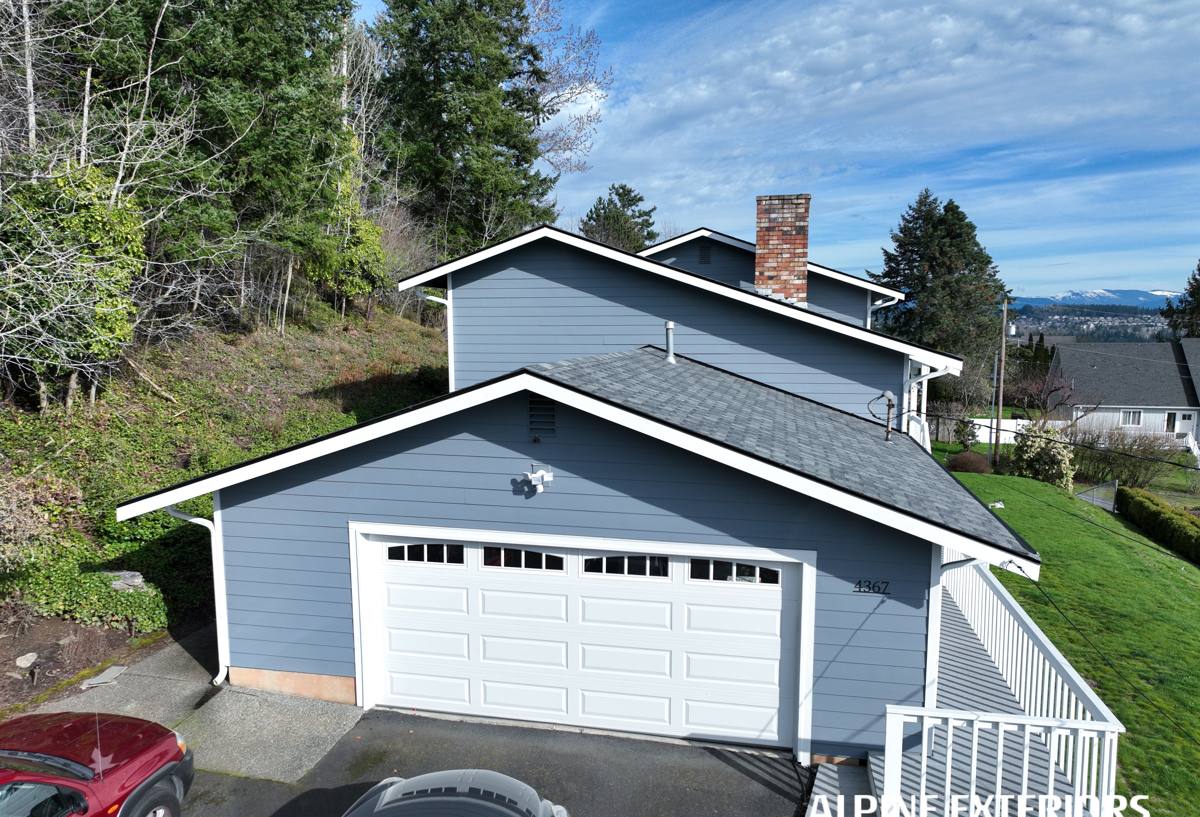
What Salt Air, Driving Rain, and Moss Actually Do to a Roof
Salt Air and Metal Components
Salt-carrying air corrodes exposed metal faster than it does further inland. On a roof, that means flashing, fasteners, drip edge, and any metal roofing panels are all working against a slower but steady corrosion clock. Galvanized fasteners that would last decades in a dry inland climate can start showing rust streaks and weakening well before their rated lifespan near the water. This matters most at the details — valleys, chimney flashing, vent boots — because that's where a small amount of corrosion turns into an active leak path.
Wind-Driven Rain
Rain that comes in at an angle behaves differently than rain that falls straight down. It gets pushed up under shingle tabs, into laps that were only ever designed to shed water moving downhill, and around penetrations that a straight-down rain would never reach. A roof system built with the minimum code-required underlayment and standard nailing pattern can perform fine in a low-wind climate and still leak in a Puget-area storm, simply because the water is attacking from a different angle than the materials were laid out to resist.
A Long Moss Season
Moss doesn't just look bad. It holds moisture against the roofing material for extended periods, works its way under shingle tabs and shakes as it grows, and can lift edges enough to let water in during the next rain. In a climate where the wet season stretches long and shaded, north-facing, or tree-covered sections of roof rarely get a chance to dry out completely, moss isn't an occasional problem — it's an ongoing maintenance reality for most Puget-area homes.
Individually, a roof can tolerate any one of these stressors for a while. The problem is that most Puget homes face all three at once, which is why we see roofs here fail at the details — flashing, fasteners, edges — well before the field of the roof itself wears out.
Signs a Puget-Area Roof Is Ready for Replacement
Not every roof problem means you need a full replacement — some are legitimately repairable. But there's a point where patching stops making financial sense and a full replacement is the honest recommendation. Signs worth taking seriously include:
- Granule loss heavy enough that you're finding sand-like debris in gutters or downspouts regularly
- Shingles that are cupping, curling at the edges, or cracking, especially on south- and west-facing slopes
- Moss or algae staining that returns within a season or two of cleaning, even after treatment
- Soft spots in the decking felt when walking the roof, or sagging visible from the ground
- Rusted, lifted, or missing flashing at valleys, chimneys, skylights, or wall-to-roof transitions
- Daylight visible through the roof deck from inside the attic
- Interior water stains on ceilings or upper walls, particularly after wind-driven storms
- A roof that's approaching or past the manufacturer's rated lifespan for its material and exposure
If you're seeing two or more of these, it's worth having someone look at the whole system rather than chasing individual leaks one at a time.
What a Correct Roof Replacement Actually Involves
A roof replacement done right is a system, not a single product. Shingles or panels get the attention because they're what you see, but most of the leaks we get called out to repair on other people's work trace back to what's underneath or around them, not the field material itself.
Full Tear-Off and Deck Inspection
We don't recommend roofing over an existing layer on this type of home, in this climate. A full tear-off lets us actually see the deck — every board, every soft spot, every sign of past moisture intrusion — and replace only what needs it rather than guessing. Given how much moisture Puget-area roofs deal with over their life, deck issues found during tear-off are common enough that we plan for them rather than treat them as a surprise change order.
Underlayment and Ice-and-Water Protection
Given the wind-driven rain this area sees, we treat underlayment as a real second layer of defense, not a formality. That means self-adhering ice-and-water membrane at eaves, valleys, and around every penetration — the places wind-driven water actually reaches — combined with a quality synthetic underlayment across the rest of the field.
Ventilation
A roof deck that can't dry out between storms stays wetter longer, which shortens its life and feeds moss and moisture problems from underneath. Balanced intake and exhaust ventilation matters as much here as the roofing material itself, and it's frequently under-built or missing on older Puget-area homes.
Flashing Done for This Climate, Not the Minimum Code
Because salt air shortens the working life of standard fasteners and flashing, we spec corrosion-resistant metal and fastener grades at the details that take the most abuse — valleys, chimney saddles, wall step-flashing — rather than defaulting to whatever is cheapest to source. This is one of the few places where spending slightly more up front measurably extends how long the roof performs before those details need attention again.
Choosing a Roofing Material for a Puget-Area Home
There's no single "best" roofing material for this area — the right choice depends on your home's exposure, roof pitch, budget, and how much moss and moisture management you're willing to keep up with. Here's how the common options actually compare for a home in this climate:
| Material | Moss & moisture behavior | Salt air / coastal exposure | Typical lifespan here |
|---|---|---|---|
| Asphalt composition shingle | Good with proper ventilation and periodic moss treatment; algae-resistant granules help but aren't a substitute for airflow | Fine — main exposure risk is at metal flashing and fasteners, not the shingle itself | 20–30 years, depending on product tier and slope shading |
| Standing seam metal | Sheds moss buildup better than shingles due to smooth, steep-shedding surface | Requires marine-grade coatings and fasteners near the water; standard finishes will corrode faster | 40–50+ years with the right coating spec |
| Cedar shake/shingle | Highest moss and moisture sensitivity; needs consistent airflow underneath and regular treatment to avoid premature rot | Salt air isn't the primary concern — moisture retention is | Highly variable; often shorter here without diligent upkeep |
| Synthetic/composite shingle | Resists moisture absorption well; good option where moss has been a chronic problem | Not affected by salt air directly; flashing details still need proper spec | 30–50 years depending on product |
For most Puget-area homes, a quality architectural asphalt shingle with properly specified flashing and ventilation is the most cost-effective long-term choice. Metal makes sense on lower-slope sections or for homeowners planning to stay long enough to value the extended lifespan. We'll walk through what fits your specific roof rather than push one option across every job.
How Our Replacement Process Works
- On-site inspection and assessment. We walk the roof, check the attic, and look at how your home's specific exposure — tree cover, prevailing wind, slope orientation — is affecting wear patterns.
- Written scope and estimate. You get a clear breakdown of materials, the underlayment and flashing spec, ventilation plan, and price — no vague allowances.
- Material selection. We help you weigh the trade-offs in the table above against your budget and how the home will be used going forward.
- Tear-off and deck repair. Old roofing comes off completely; deck is inspected and any damaged sections are replaced before anything new goes down.
- Underlayment, flashing, and ventilation installation. This is where most of the long-term performance difference actually gets built in.
- Final roofing material installation and cleanup. Includes a walk-through so you understand what was done and what to watch for going forward.
Why Hiring a Crew That Already Works in Puget Matters
A roofing crew that mostly works dry, inland areas can still do competent work — but they may not default to the details that matter most here unless you specifically ask for them. A crew that already works Puget and the surrounding Bellingham area knows which slopes on which orientations tend to hold moss longest, which flashing details fail first in wind-driven storms off the water, and what fastener and coating specs actually hold up to the salt air instead of just meeting minimum code. That's not a sales pitch — it's the difference between a roof that's technically installed correctly and one that's installed correctly for this specific climate.
Local experience also means fewer surprises with permitting and scheduling. Whatcom County and City of Bellingham permitting requirements, typical weather windows for safe tear-off and dry-in, and realistic timelines for getting materials here are all things a local crew has already worked through many times over.
Protecting the Investment After Installation
A correctly installed roof still benefits from basic upkeep in this climate. A short, realistic maintenance routine goes a long way toward hitting the full lifespan of the materials you paid for:
- Keep gutters and downspouts clear so water isn't backing up against the roof edge, especially during fall leaf drop
- Have moss growth treated before it becomes established rather than after it's visibly lifting shingle edges
- Trim back overhanging branches that keep sections of roof shaded and slow to dry
- Schedule a walk-through inspection every couple of years, particularly after any unusually severe windstorm
- Address small flashing or fastener issues promptly — they're inexpensive to fix early and expensive to ignore
What Roof Replacement Costs Depend On
We won't quote a number without seeing the roof, but the honest range for a full replacement on a typical Puget-area home spans widely based on a handful of real factors: roof size and pitch, the material you choose, how much deck repair is needed once tear-off exposes the sheathing, the complexity of valleys and penetrations, and access for equipment and material staging. A steep, cut-up roof with several skylights and chimneys will cost meaningfully more than a simple gable roof of the same square footage, regardless of material. We'll break all of this out in writing during your estimate so you know exactly what you're paying for and why.
If your roof is showing signs of age or you've had recurring leaks, we're happy to come take a look. There's no pressure and no obligation — just a straightforward assessment of what your roof actually needs, from a crew that works this part of Whatcom County regularly. Reach out using the form below to schedule a free estimate.