 Bellingham Exterior
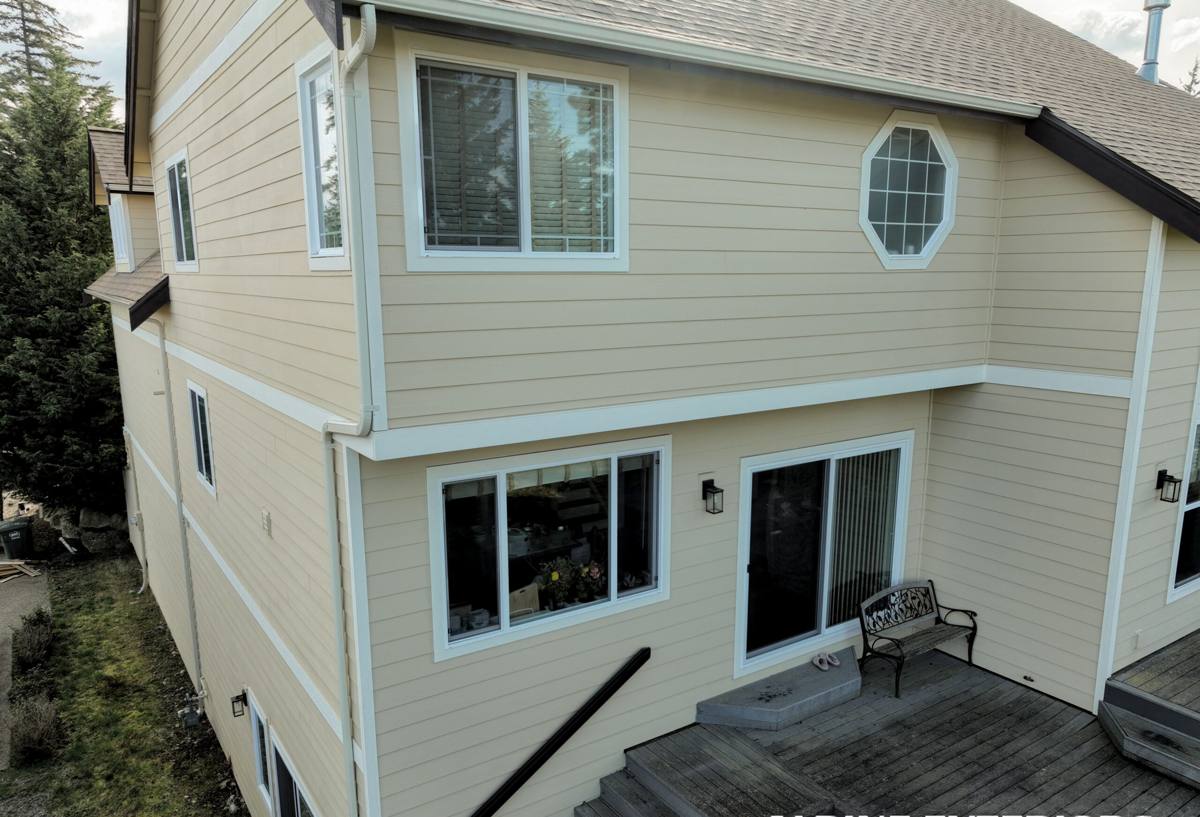
 Deck Replacement for Barkley Homes
Barkley sits close enough to Bellingham Bay and the surrounding wetlands that its decks take on a specific kind of punishment. It's not just rain — it's the combination of salt-tinged air drifting in off the water, driving rain that comes in sideways during winter storms, and a moss season that in Whatcom County can run eight months or longer. A deck built or maintained without that combination in mind will show its age faster than homeowners expect, often while the surface boards still look fine from a distance.
We work on decks throughout Bellingham, and Barkley properties tend to show a consistent pattern: framing and fasteners fail before the decking does. That's the part of the job that matters most, and it's the part that's easy for a quick refinish or board-swap to miss entirely.
Why Decks in This Area Wear Out the Way They Do
Salt Air and Metal Fasteners
Homes closer to the bay deal with airborne salt that accelerates corrosion on nails, screws, and joist hangers. Once fasteners start to rust, they lose holding strength long before the corrosion is visible on the surface. A deck can look structurally sound and still have compromised connections underneath.
Driving Rain and End-Grain Exposure
Wind-driven rain doesn't just fall on a deck — it gets pushed into joints, under railings, and into the end grain of boards where they meet the house or a post. End grain absorbs water far faster than the face of a board, which is why deck boards often rot from the cut ends inward rather than from the top down.
Moss, Algae, and Trapped Moisture
Bellingham's long wet season gives moss and algae plenty of time to establish on shaded or low-airflow deck surfaces. Beyond being slippery, moss holds moisture directly against the wood, which keeps boards damp for days after a storm has passed. Over a few seasons that constant dampness breaks down wood fiber and accelerates rot in ways a sunnier climate simply doesn't produce.
Signs a Barkley Deck Needs Replacement, Not Repair
- Soft or spongy spots when you walk across the deck, especially near the house or stair landings
- Ledger board (where the deck attaches to the house) shows staining, gaps, or soft wood
- Railing posts that flex or wiggle when pushed
- Persistent moss or dark staining that returns within weeks of cleaning
- Visible rust streaks below joist hangers or fastener heads
- Boards cupping, splitting, or pulling away from fasteners
- Deck is more than 15-20 years old and hasn't had structural components inspected
Any one of these on its own might just call for a repair. Two or three together, especially involving the ledger or framing, usually mean the deck has reached the point where patching individual boards won't address the underlying problem.
What a Correct Deck Replacement Actually Involves
A deck replacement done right isn't just pulling old boards and screwing down new ones. The parts homeowners don't see are the parts that determine whether the new deck lasts 10 years or 30.
Ledger and Flashing
The ledger board connection to the house is the single most common failure point on any deck in a wet climate, and it's also the connection most responsible for catastrophic deck failures when it's done wrong. Proper flashing — installed so water is directed away from the house wall rather than trapped behind the ledger — is not optional in this climate. We treat this connection as the most important part of the entire job.
Footings and Framing
Footings need to sit below frost depth and be sized correctly for the deck's load. Joists and beams should be rated for exterior use and spaced according to the actual span and decking material chosen, not just "what was there before." If the old framing shows rot or fastener corrosion, replacing the decking on top of it just resets the clock on a problem that's still there.
Fasteners and Hardware
Given the salt air common closer to the bay, we use corrosion-resistant, code-rated hardware — hot-dip galvanized or stainless steel joist hangers, screws, and connectors rated for the specific decking material. Mismatched metals (for example, standard fasteners with certain treated lumber) can actually accelerate corrosion, so hardware selection has to match the lumber and connector chemistry, not just look similar.
Drainage and Airflow
Moss and rot both thrive where water sits and air doesn't move. Proper board spacing, joist gap venting, and grading underneath the deck so water doesn't pool are part of a correct build — not upgrades, just the baseline for a deck that's supposed to hold up in Whatcom County weather.
Choosing Decking Material for a Barkley Property
There's no single "best" decking material — the right choice depends on how much maintenance you want to take on, your budget, and how exposed the deck is to sun, shade, and moisture.
| Material | Maintenance | Moisture Behavior | Typical Lifespan |
|---|---|---|---|
| Pressure-treated lumber | Annual cleaning, periodic sealing/staining | Absorbs water; needs sealed end cuts and good drainage to avoid rot | 10-15 years with upkeep |
| Cedar | Regular sealing to maintain color and resistance | Naturally rot-resistant but still needs protection from standing water | 15-20 years with upkeep |
| Composite (capped) | Occasional washing; no staining or sealing | Resists moisture absorption and moss staining well | 25-30+ years, manufacturer-warrantied |
| PVC decking | Occasional washing; no staining or sealing | Fully moisture-resistant; performs well in constant damp shade | 25-30+ years, manufacturer-warrantied |
In our experience, homeowners in shaded or bay-facing sections of Barkley who go with natural wood end up doing more moss and mildew maintenance than they expected. That doesn't make wood the wrong choice — it has a warmer, more traditional look that composite can't fully replicate — but it's worth going in with realistic expectations about the upkeep, especially on a deck with a lot of shade or limited airflow underneath.
What Drives Cost on a Deck Replacement
| Factor | Why It Matters |
|---|---|
| Deck size and shape | More linear footage of framing, decking, and railing; complex shapes add labor |
| Height and stairs | Taller decks need engineered footings and railings that meet code; stairs add framing complexity |
| Decking material | Composite and PVC cost more upfront than wood but reduce long-term maintenance spending |
| Ledger and flashing condition | If the house wall shows water damage behind the old ledger, repair work there adds to the scope |
| Existing structure reuse | Sound footings sometimes can be reused, which lowers cost; rotted or undersized footings cannot |
| Railing style | Cable, glass, and custom railing systems cost more than standard wood or composite balusters |
We don't quote a number until we've actually looked at the deck and the ground it sits on. A ballpark figure without seeing the framing condition or footing situation isn't a real estimate — it's a guess, and guesses lead to surprises mid-project.
Our Process
- On-site inspection — We check the ledger connection, framing, footings, and fastener condition, not just the surface boards, so we know what's actually driving the replacement decision.
- Honest scope and estimate — You get a clear breakdown of what needs to be replaced, what (if anything) can be reused, and material options with real cost trade-offs.
- Permitting — We handle the permit application with the City of Bellingham or Whatcom County, whichever applies to your property.
- Demolition and disposal — Old decking, framing, and hardware are removed and hauled off; we check the house wall behind the ledger once it's exposed.
- Rebuild — Footings, framing, flashing, decking, and railing are installed to code, with hardware matched to the materials used.
- Final walkthrough — We go over the finished deck with you, including basic care guidance for whatever material you chose.
Why Hiring a Crew That Already Works in Barkley Matters
Deck problems in this part of Whatcom County follow patterns that a crew unfamiliar with the region can miss. A contractor who mostly works in drier climates may not think twice about standard fasteners, minimal ledger flashing, or tight board spacing — details that hold up fine elsewhere but fail faster here. A crew that regularly works Bellingham properties knows to check for the specific combination of salt exposure, wind-driven rain, and moss growth that shapes how a deck should be built and where it's most likely to fail if it isn't.
Local permitting is another piece that's easy to get wrong from a distance. Setback rules, footing depth requirements, and railing code can vary by jurisdiction, and a crew that regularly pulls permits in this area already knows what inspectors are looking for, which keeps the project moving instead of stalling on avoidable corrections.
Extending the Life of Your New Deck
Whatever material you choose, a few habits make a real difference in a climate like this one:
- Sweep debris and standing leaves off the deck regularly, especially in fall and winter
- Clean moss and algae off the surface at the first sign of growth rather than waiting until it's established
- Keep gutters and downspouts clear so water isn't dumping directly onto or near the deck
- Check railing posts and stair connections annually for movement
- For wood decks, reseal or restain on the manufacturer's recommended schedule, not just when it looks faded
- Trim back vegetation that's shading the deck and keeping it damp longer than necessary
None of this replaces a properly built deck, but it does buy you years of extra life out of one — and it makes small problems easy to spot before they turn into another full replacement.
If your deck in Barkley is showing soft spots, persistent moss, or just isn't holding up the way it used to, we're happy to take a look and give you a straightforward, no-pressure estimate. Fill out the form below and we'll get in touch to schedule a time.