 Bellingham Exterior
 Metal Roofing in Barkley: A Different Kind of Roof for a Specific Kind of Weather
Barkley sits close enough to Bellingham Bay and the surrounding wetlands that homes here deal with a steady mix of moisture, wind-driven rain, and shade from mature landscaping. That combination is hard on asphalt shingles, which is why more homeowners in this part of Whatcom County are asking about metal roofing when it's time to replace an aging roof. Metal isn't the right fit for every house or every budget, but for the climate we work in, it solves problems that shingles simply can't.
This page covers what metal roofing actually involves for a home in Barkley specifically — not a generic overview of the product, but what our crew sees and plans for on roofs in this neighborhood.
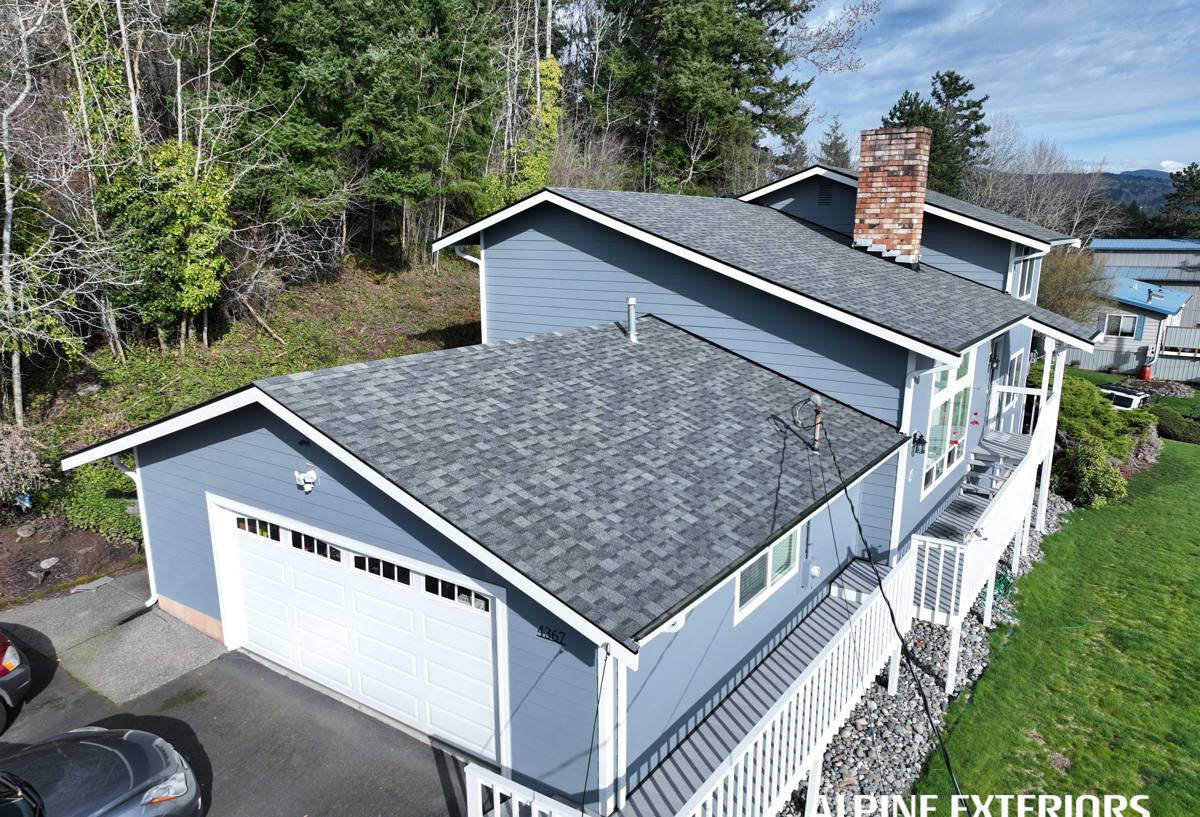
What Bellingham's Climate Does to a Roof Over Time
Three things drive most of the roofing problems we find in this area, and Barkley gets a full dose of all three.
Salt air and moisture
Proximity to the bay means a persistent low level of salt and moisture in the air, even on properties that aren't right on the water. Over years, that moisture works into fastener heads, flashing seams, and any exposed metal that isn't rated for coastal exposure. Standard hardware corrodes faster here than it would inland — it's one of the first things we check on an older roof.
Driving rain
Bellingham doesn't just get rain — it gets rain pushed sideways by wind off the water, which finds every weak seam, nail pop, and lifted shingle edge. A roof that would hold up fine in a calmer climate can develop leaks here simply because water is being driven uphill under the roofing material during a storm, not just running downhill off it.
A long moss season
Between the shade from mature trees common in Barkley's older sections and the amount of moisture that sits on a roof through fall, winter, and spring, moss has a long window to take hold. On asphalt shingles, moss roots into the granule surface and lifts tabs as it grows. On a properly installed metal roof, there's no organic surface for it to grip — but moss and debris can still build up in valleys and against snow guards if the roof isn't designed with clean water flow in mind.
Why Metal Makes Sense for This Specific Combination
Metal roofing doesn't fix every issue on its own — a poor install in metal fails just like a poor install in anything else. But the material itself is well suited to what Barkley homes deal with:
- Interlocking or standing-seam panels shed wind-driven rain instead of relying on granule friction and gravity alone
- A correctly coated steel or aluminum panel resists the slow corrosion that salt air causes in exposed fasteners and flashing
- There's no organic surface for moss to establish on, which cuts down on the yearly moss treatment and cleaning that shingle roofs need
- Steep-slope metal sheds snow and heavy rain quickly rather than holding water against the surface
- A well-installed metal roof commonly outlasts two or more asphalt roofing cycles, which matters when re-roofing means scaffolding, disposal, and disruption every time
Metal Roofing Options We Install
Not all metal roofing is the same product wearing a different name. The panel type changes the price, the look, and how the roof performs over time. Here's how the main options compare for a Barkley home:
| Panel Type | Typical Look | Best Suited For | Relative Cost |
|---|---|---|---|
| Standing seam | Clean vertical lines, raised interlocking seams, no visible fasteners | Homes wanting a modern or high-end look; best long-term weathertightness | Higher |
| Exposed-fastener panel | Ribbed panel, visible screws | Outbuildings, garages, budget-conscious re-roofs | Lower |
| Stone-coated steel | Mimics shingle, shake, or tile profiles | Homeowners who want a traditional appearance with metal's durability | Mid to higher |
| Metal shingle panels | Interlocking shingle-style metal sections | Matching a more residential, less industrial look while keeping metal's performance | Mid |
For most Barkley homes, we lean toward standing seam or stone-coated steel. Exposed-fastener panels are a reasonable option on a detached garage or shop, but on a primary residence exposed to years of driving rain, the fewer penetration points on a standing-seam panel are worth the difference in cost.
A note on why we're selective about certain products
Some lower-end steel panels and thin-gauge imports are marketed at attractive prices but use coatings or gauges that weren't designed for a coastal, high-moisture climate like ours. We don't install those on homes in this area — not because the product is inherently bad everywhere, but because the maintenance burden and the risk of premature coating failure in this specific climate isn't worth passing on to a homeowner. We'll walk you through exactly what gauge, coating, and fastening system we're proposing and why, so there's no guesswork.
What a Correct Metal Roof Installation Actually Involves
A metal roof is only as good as what's underneath it. Panels get most of the attention, but the components a homeowner never sees are what determine whether the roof performs for the next 30-plus years or starts causing problems in five.
Deck condition and prep
We check the roof deck for soft spots, rot, or sagging before anything else goes down. Metal is unforgiving of an uneven substrate — waves and oil-canning in panels are almost always traced back to deck problems that should have been addressed first.
Underlayment
Given how much moisture this roof will see over its life, we use a high-temp synthetic or self-adhered underlayment rated for the panel system, with extra protection at eaves and valleys where wind-driven rain concentrates.
Fasteners and clips
Coastal exposure calls for corrosion-resistant fasteners and matched clip systems — not generic hardware from a big-box shelf. This is one of the most common corners cut on budget metal roofs, and it's usually the first thing to fail.
Flashing and penetrations
Chimneys, vents, skylights, and valleys are where the vast majority of roof leaks originate, metal or otherwise. Custom-bent flashing that matches the panel profile, properly lapped and sealed, is non-negotiable on our installs.
Ventilation
Metal roofs need proper intake and exhaust ventilation to manage condensation on the underside of the panels, especially in a climate with our humidity levels. Skipping this can trap moisture against the deck even though the top side of the roof is shedding water perfectly.
Our Process, Start to Finish
- Free on-site assessment — we inspect the current roof, deck condition, ventilation, and any problem areas specific to your property
- Written estimate — panel type, gauge, coating, and fastening system spelled out clearly, with cost factors explained rather than a single lump number
- Scheduling — we plan around weather windows, since a proper tear-off and dry-in shouldn't be rushed against an incoming storm
- Tear-off and deck repair — old roofing removed, deck inspected and repaired as needed before anything new goes down
- Underlayment, flashing, and panel installation — installed to the manufacturer's specification for coastal wind and moisture exposure
- Final walkthrough — we go over the finished roof with you, including what maintenance (if any) it needs going forward
- Cleanup and haul-away — old material and job-site debris removed; we don't leave a property with nails and scrap in the yard
Maintenance a Metal Roof Actually Needs Here
One of the appeals of metal is how little ongoing work it requires compared to a shingle roof, but "low maintenance" isn't "no maintenance" in this climate.
- Clear needles, leaves, and debris from valleys and gutters a couple of times a year, especially after fall leaf drop
- Check that gutters and downspouts are flowing freely — clogged gutters back water up under the drip edge even on a well-installed metal roof
- Have flashing around chimneys and vents visually checked periodically, since these penetrations are still the most likely leak point on any roof type
- Watch for any signs of coating wear or chalking on older panels, which signals it's time to talk about a recoat before bare metal is exposed
Why a Crew That Already Works in Barkley Matters
Roofing crews that mainly work drier inland climates sometimes under-spec fasteners, skip extra underlayment at eaves, or don't account for how far wind-driven rain travels up a roof slope here. None of that shows up as a problem on day one — it shows up two or three winters later as a leak that's now hidden behind drywall.
Working regularly in Bellingham and Whatcom County means we've already seen how roofs in this specific area age — where moss builds up first, which orientations take the worst of the weather off the bay, and which shortcuts cause callbacks. That's not something a crew passing through on a one-off job has had the chance to learn.
Signs Your Current Roof May Need Attention
Not sure whether you need a full replacement or just a repair? These are the signs we'd want to look at:
- Moss visibly growing on shingles, especially on north-facing or shaded slopes
- Granules collecting in gutters or at downspout outlets
- Curling, lifted, or missing shingle tabs
- Rust staining or streaking on flashing or metal vents
- Daylight visible through the roof deck from inside the attic
- A roof that's approaching or past 20 years old on asphalt, or showing coating wear on older metal
Get a Straight Answer for Your Roof
If you're weighing metal against another re-roof in asphalt, or your current roof is showing its age, we're glad to come take a look and give you an honest read on what it actually needs — no pressure, no inflated scope. Use the form below to request a free estimate for your Barkley property.