 Bellingham Exterior
 Asphalt Shingle Roofing Built for Columbia's Weather, Not Just Any Weather
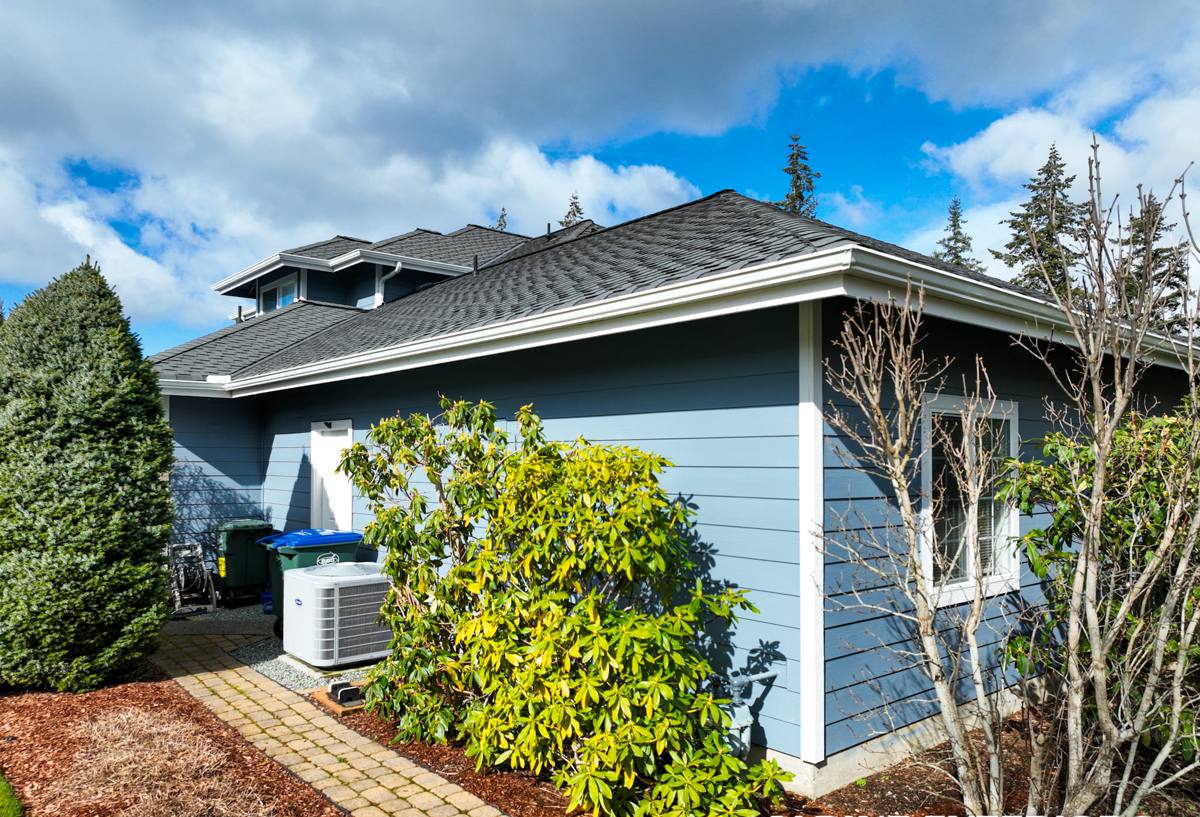
Columbia is one of Bellingham's older, closer-in neighborhoods, and that history shows up on its rooflines — a mix of homes from different decades, different roof pitches, and different levels of tree cover. What almost every one of them has in common is exposure to the same combination of conditions: proximity to Bellingham Bay means salt-tinged air moves through the neighborhood more than homeowners realize, Pacific storms bring driving, wind-angled rain rather than straight-down rain, and Whatcom County's mild, wet winters stretch the moss-growing season far longer than most manufacturers assume when they write their installation guidelines. An asphalt shingle roof that would hold up fine in a dry inland climate can wear out early here if it wasn't installed with these specific conditions in mind.
This page is about that one job — asphalt shingle roofing — done specifically for Columbia homes. Not a generic overview of shingles, but what actually matters when the roof in question is going to sit under Bellingham's cloud cover and rain for the next 25-plus years.
What Bellingham's Climate Actually Does to a Shingle Roof
Moss and Algae
Moss doesn't just sit on top of shingles looking bad — it holds moisture against the roof surface, works its way under shingle edges as it grows, and gradually lifts and loosens the tabs it's rooted under. In a climate where roofs rarely get more than a few consecutive dry days in the off-season, moss has time to establish itself in ways it wouldn't in a drier region. Dark algae streaking is a related but separate issue — it's cosmetic at first, but it signals the same damp, shaded conditions that let moss take hold.
Wind-Driven Rain
Storms off the water tend to push rain sideways rather than straight down, which puts more stress on details that a calm-weather roof could get away with skipping — valley construction, the underlayment at eaves, and flashing around anything that penetrates the roof plane. A roof that looks fine in a light rain can leak in a wind-driven storm if those details were cut short.
Salt Air and Metal Fasteners
Homes close enough to the Bay to catch salt-laden air will see faster corrosion on unprotected metal — nails, flashing, and vents — than the same materials would experience further inland. This doesn't mean asphalt roofing is a bad fit for Columbia; it means the metal components that go with it need to be specified correctly the first time.
What a Correct Asphalt Shingle Installation Involves
Tear-Off and Deck Inspection
We don't install new shingles over old ones, and we don't recommend it. A full tear-off lets us actually see the roof deck — soft spots, old water staining, or rot that's been hiding under the existing layer. In a climate this wet, deck problems left in place don't stay small; they get worse under a brand-new roof that was never given the chance to fix them.
Underlayment and Ice-and-Water Barrier
Synthetic underlayment goes down across the full deck, but the eaves, valleys, and any low-slope transitions get a self-adhering ice-and-water membrane underneath the shingles. That membrane is what keeps wind-driven rain from working its way backward under shingle tabs during a bad storm — it's cheap insurance compared to the cost of a leak repair later.
Ventilation
A shingle roof with poor attic ventilation traps moisture underneath the deck, which speeds up rot from the inside and can shorten shingle life from the underside up — a failure mode that has nothing to do with the shingles themselves. We check intake and exhaust airflow as part of every re-roof, not as an upsell.
Flashing
Chimneys, skylights, sidewalls, and vent pipes are where most roof leaks actually start — not in the open field of shingles. We use corrosion-resistant flashing and integrate it properly with the underlayment and shingle courses, rather than relying on caulk or sealant to do a flashing detail's job.
Shingle Selection
We favor shingles with algae-resistant granules (copper- or zinc-infused) for Columbia roofs specifically, since standard granules give algae and moss more to grab onto over time in a climate this damp. It's a small spec difference that pays off over the life of the roof.
Choosing the Right Shingle for a Columbia Roof
There's no single "best" shingle — the right choice depends on the home's roof pitch, tree cover, budget, and how long the owner plans to stay in the house. Here's how the common options compare for this specific climate:
| Shingle Type | Typical Lifespan | Best Suited For | Moss/Algae Resistance |
|---|---|---|---|
| 3-Tab Standard | ~20–25 years | Budget-conscious re-roofs, simple roof lines | Lower unless algae-resistant granules are specified |
| Architectural / Laminate | ~30 years | Most Columbia homes — better wind and impact resistance | Good, especially with algae-resistant granules |
| Premium Designer | ~30–50 years | Steeper, more visible rooflines; longer hold periods | Best available in asphalt shingles |
For most homes in this neighborhood, we point people toward algae-resistant architectural shingles — they cost more up front than 3-tab, but the extra lifespan and lower maintenance burden usually make more sense in a climate that never really gives moss a break.
Our Process, Start to Finish
- On-site inspection: We walk the roof (or use a drone where pitch or access makes that safer) and check the deck, flashing, ventilation, and gutter condition — not just the shingles.
- Straightforward estimate: You get a written scope and price before any work starts, with material options explained in plain terms.
- Scheduling around the weather: Roofing in Whatcom County means working with dry windows, not against them. We plan tear-off and dry-in to minimize the time your roof deck is exposed.
- Tear-off, deck repair, and installation: Old material comes off, deck issues get fixed, then underlayment, flashing, and shingles go on in that order — no shortcuts skipped to save a day.
- Cleanup and walk-through: Nails get swept with a magnetic sweeper, debris is hauled off, and we walk the finished roof with you before calling the job done.
Repair, Re-Roof, or Replace? How We Help You Decide
Not every roof problem in Columbia means a full replacement. Part of doing this job honestly is telling you when a repair is genuinely enough. Signs worth having looked at:
- Granules collecting in gutters or at downspout outlets
- Shingle edges curling, cupping, or lifting
- Visible moss growth along shaded slopes or ridgelines
- Dark streaking across large sections of the roof
- Soft spots or sagging felt when walking the roof
- Daylight visible through the attic roof deck
- Water stains on interior ceilings, especially after wind-driven storms
- A roof approaching or past 20–25 years old with no major upgrades since installation
If it's a localized flashing failure or a handful of damaged shingles, a repair can buy real years. If the deck is failing in multiple spots or the shingles are uniformly past their service life, patching becomes a short-term fix that costs more over time than doing the re-roof properly once.
Maintenance That Actually Extends Roof Life Here
Asphalt shingle roofs in this climate benefit from a bit more upkeep than the same roof would need in a drier region — none of it complicated, but it matters:
- Keep gutters and downspouts clear so water doesn't back up under the eave edge
- Have moss treated (not pressure-washed, which damages granules) before it spreads across a full slope
- Trim back overhanging branches to reduce shade, debris buildup, and the moss growth that follows
- Get a roof looked at after any major windstorm, especially one with rain driving in off the water
- Schedule a periodic inspection every couple of years rather than waiting for a visible leak
Why Hiring a Crew That Already Works in Columbia Matters
A roofer who mostly works drier, inland climates will spec a roof the way they always have — and that roof will underperform here. Working in and around Bellingham means already knowing how much ice-and-water membrane a valley actually needs in this rainfall pattern, which fastener and flashing materials hold up against salt air near the Bay, and how City of Bellingham permitting and inspection generally works for a re-roof. It also means we're not learning Columbia's roof lines, tree cover, and drainage quirks on your dime — we've already seen the pattern on other roofs nearby.
That local familiarity doesn't replace doing the job right — deck inspection, proper underlayment, correct flashing, and honest material selection still come first. But it does mean fewer surprises, and a roof that's built for the weather it will actually face rather than the weather a generic spec sheet assumes.
If your Columbia home needs a roof inspection, a repair, or a full asphalt shingle replacement, we're glad to take a look and give you a straightforward, no-pressure estimate — just fill out the form below to get started.