 Bellingham Exterior
 Why Barkley Homes Need Siding That's Built for This Climate
Barkley sits close enough to Bellingham Bay and the surrounding wetlands that homes here take on a specific combination of punishment: salt-laden air moving in off the water, long stretches of driving rain through the fall and winter, and a moss season that can run most of the year in shaded, north-facing exposures. None of that is unusual for Whatcom County, but it adds up differently than it would in a drier inland climate. Siding on a Barkley home isn't just a weather barrier — it's dealing with near-constant moisture exposure, salt-air corrosion pressure on fasteners and trim, and organic growth that thrives in the damp, tree-shaded lots common throughout the neighborhood.
That combination is hard on the wrong siding product, and it's hard on siding that was installed without real attention to water management. A lot of the siding failures we see in Barkley aren't because the product was bad on day one — they're because the installation didn't account for how much water this area actually sees, or because the material itself wasn't engineered for sustained damp exposure.
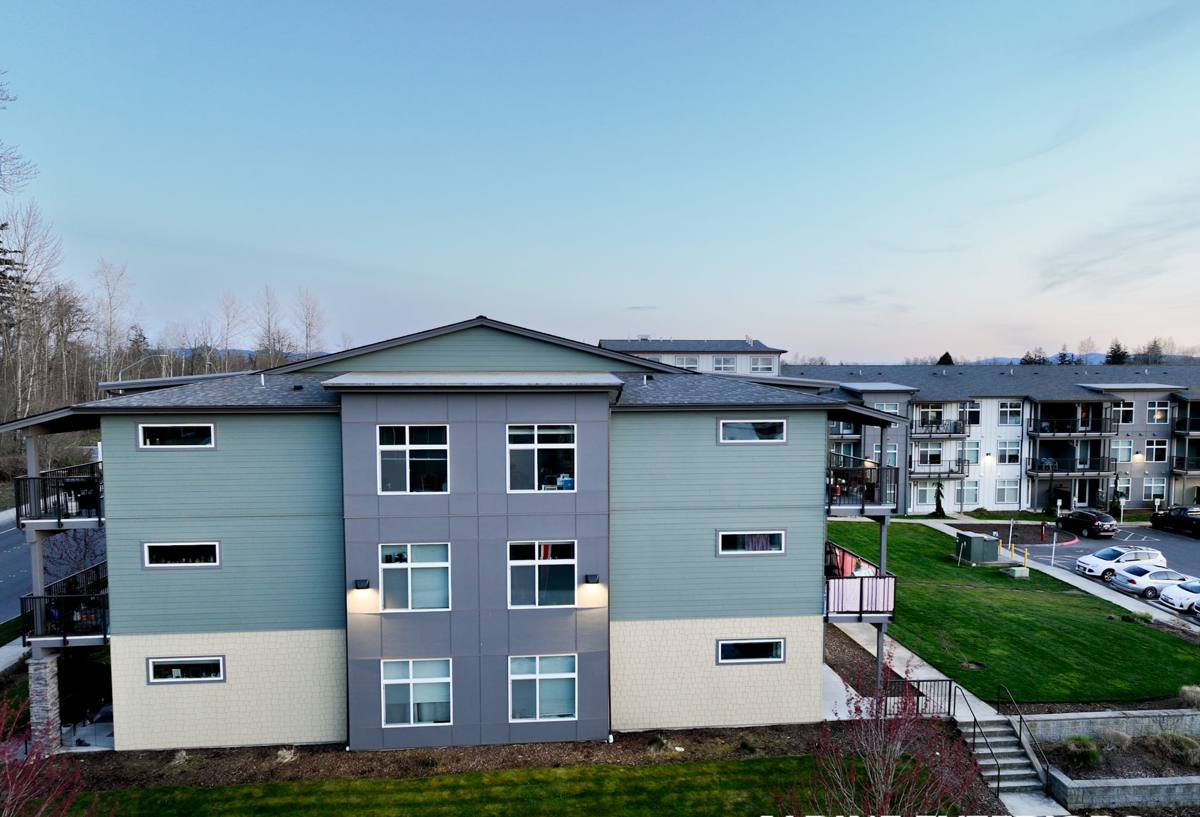
Signs Your Barkley Home's Siding Has Reached the End of Its Useful Life
Siding failure in this climate is usually gradual, and homeowners often don't notice it until it's affecting more than just the exterior. Some of the most common signs we look for on Barkley homes:
- Soft or spongy spots when you press on the siding, especially near the bottom courses or around windows and doors
- Paint that keeps failing within a year or two of repainting, no matter how good the paint job was
- Visible moss or algae staining that comes back quickly after cleaning, especially on north- and west-facing walls
- Cupping, warping, or buckling panels — a sign moisture has already gotten behind the material
- Rust streaking from fasteners, which is accelerated by the salt content in coastal air
- Gaps opening up at seams, corners, or trim joints where caulk has failed and water is finding a way in
Any one of these on its own might be a repair. Several of them together, or any sign of soft sheathing underneath, usually means it's time to talk about full replacement rather than another round of patching.
What a Correct Siding Replacement Actually Involves
Replacing siding well is mostly about what happens before the new siding ever goes up. In a climate like Bellingham's, the water management layer underneath the siding matters as much as the siding itself.
Full Tear-Off, Not a Layer Over Layer
We remove the existing siding down to the sheathing rather than installing over it. That's the only way to actually assess the condition of the wall — you can't know whether there's hidden rot, failed flashing, or compromised sheathing until the old material is off.
Sheathing and Framing Repair
Any water-damaged sheathing or framing gets replaced before anything new goes back on. Installing new siding over a compromised substrate just hides a problem that will keep getting worse underneath.
A Proper Weather-Resistive Barrier
A correctly lapped weather-resistive barrier, installed shingle-style so every layer sheds water downward and outward, is what actually keeps driving rain from reaching the wall assembly. This is arguably the most important — and most commonly rushed — part of the whole job.
Flashing at Every Penetration
Windows, doors, vents, hose bibs, light fixtures — every penetration through the wall is a potential entry point for water. Correct flashing at each one, integrated with the weather barrier, is what separates a siding job that lasts decades from one that fails in five years.
Correct Fastening and Clearances
Fastener spacing, siding-to-ground clearance, and gaps at trim and corners all need to follow the manufacturer's installation specs — not just look right from the curb. Getting these details wrong is one of the fastest ways to void a warranty and create maintenance headaches down the road.
Why We Only Install James Hardie Fiber Cement Siding
We made the decision to standardize on James Hardie fiber cement siding and stopped installing vinyl, LP SmartSide, and other engineered wood or fiber cement alternatives. That wasn't a marketing decision — it came from seeing how different products actually hold up in exactly the kind of climate Barkley sits in.
Vinyl siding is inexpensive and easy to install, but it's a poor match for coastal wind and driving rain: it can warp or crack in temperature swings, and its seams and J-channels give water plenty of places to work behind the panel over time. It also doesn't hold paint, so your color options are limited to whatever the panel came with.
Engineered wood products like LP SmartSide use a wood-strand core, which means their long-term performance depends heavily on the integrity of the factory coating and correct field caulking at every cut edge. In a climate with this much sustained moisture and moss growth, any breach in that coating gives water a path into a wood-based core — and that's a much harder problem to catch early than it is with a non-organic material.
James Hardie fiber cement is a cement, sand, and cellulose fiber composite. It doesn't have an organic wood core for moisture to migrate into, and it's non-combustible, which matters given how many Barkley properties back up to trees and green space. Hardie's HZ5 product line is specifically engineered for climates with sustained moisture exposure — freeze-thaw cycling, high humidity, and heavy rain — which is exactly the profile of a Whatcom County winter. The factory-applied ColorPlus finish is baked on under controlled conditions and backed by its own finish warranty, which gives you a more consistent, longer-lasting result than field-applied paint on any substrate.
None of this means other products are unusable everywhere — it means that for the specific combination of salt air, sustained rain, and moss exposure we deal with here, we don't think they hold up to the standard we want to put our name behind.
How the Products Actually Compare
| Factor | Vinyl Siding | Engineered Wood (LP SmartSide) | James Hardie Fiber Cement |
|---|---|---|---|
| Moisture resistance | Seams allow water intrusion behind panels | Depends on coating integrity; wood-strand core at risk if breached | Non-organic core; engineered HZ lines for wet climates |
| Fire resistance | Melts/deforms under heat | Combustible wood-based core | Non-combustible |
| Finish durability | Color molded in, fades over time, can't be repainted easily | Factory or field finish, can fail at cut edges | Factory-baked ColorPlus finish, warrantied separately |
| Performance in coastal/moss climates | Prone to warping, water tracking at seams | Vulnerable if edge sealing isn't maintained | Engineered specifically for high-moisture regions |
| Typical lifespan when correctly installed | 15-25 years | 20-30 years | 30-50+ years |
Our Process for Barkley Siding Replacement
- On-site evaluation: We walk the exterior, check for moisture damage, assess current siding condition, and look at drainage and grading around the foundation.
- Detailed proposal: You get a clear scope of work — tear-off, sheathing repair allowances, weather barrier system, flashing plan, Hardie product line and color, and timeline.
- Tear-off and inspection: Old siding comes off, sheathing is inspected and repaired as needed, and we document anything that changes the original scope before proceeding.
- Weather barrier and flashing installation: This is where most of the long-term performance is determined — done correctly, in the right sequence, at every penetration.
- Hardie installation to spec: Fastener pattern, clearances, and joint treatment follow James Hardie's published installation requirements, which is also what keeps the manufacturer's warranty intact.
- Final walkthrough and cleanup: We review the finished work with you and clear the site of old material and debris.
What Drives the Cost of a Siding Replacement
| Cost Factor | Why It Matters |
|---|---|
| Home size and wall complexity | More square footage and more corners, gables, and dormers mean more material and labor |
| Sheathing/framing repair needed | Hidden rot found during tear-off adds material and labor beyond the base bid |
| Siding profile and trim details | Lap siding, shingle-style panels, and detailed trim packages price differently |
| Color and finish selection | Factory ColorPlus finishes vs. field-painted trim affect material cost |
| Access and site conditions | Steep lots, mature landscaping, and limited access common in Barkley can affect labor time |
We won't quote a number without seeing the house, but we'll walk you through exactly what's driving the price on your specific proposal — no vague allowances or surprise change orders for things we could have caught during the initial evaluation.
What to Check Before Hiring Anyone for Siding Work
- Are they licensed and insured in Washington State, and will they show you proof without being asked twice?
- Do they tear off old siding and inspect sheathing, or install over existing material?
- Can they explain their weather-resistive barrier and flashing approach in plain terms — not just "we use house wrap"?
- Are they a manufacturer-recognized installer for the siding product they're proposing?
- Will the warranty they mention actually transfer to a future homeowner if you sell the house?
- Do they have experience with homes in your specific area, not just a general service radius?
Why a Crew That Already Works in Barkley Matters
Every neighborhood in Bellingham has its own quirks, and Barkley's are shaped by its mix of mature tree cover, proximity to the bay, and lot layouts that often complicate drainage and shade patterns. A crew that's already done siding replacements in this specific area knows where moss tends to build up fastest, which wall orientations take the worst of the driving rain, and how local grading and drainage issues tend to show up at the base of exterior walls. That familiarity shows up in fewer surprises during tear-off and a install that's actually built around how water moves across your specific lot — not a generic approach copied from a drier part of the state.
If your Barkley home's siding is showing its age — or you just want an honest read on whether repair or replacement makes more sense — we're happy to take a look and walk you through it. Reach out below for a free, no-pressure estimate.