 Bellingham Exterior
 Why Board & Batten Fits Birch Bay Homes
Board and batten has become one of the most requested looks along the Birch Bay shoreline, and it's not just a style trend. The vertical lines read as clean and modern on newer builds, and just as at home on older cottages and cabins that make up a lot of the housing stock out here. Homeowners like it as a full-elevation siding choice or as an accent on gables, dormers, and entry walls paired with horizontal lap siding elsewhere on the house.
What often gets overlooked is that board and batten isn't just a look — it's a joint system. Every seam between boards is covered by a batten, which means every one of those seams is a place water can either be shed cleanly or find its way behind the siding if the detailing is off. In a shoreline community with constant moisture exposure, that distinction matters more than it would on a drier inland lot.
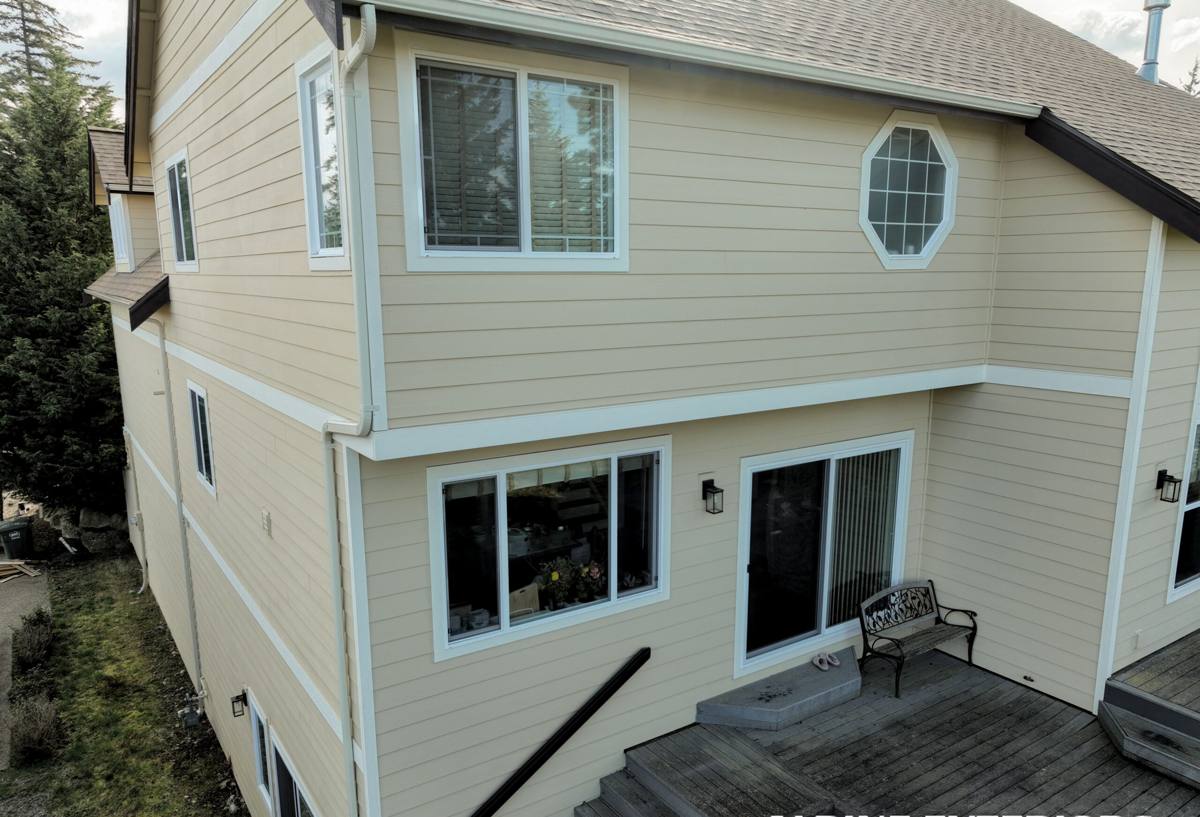
What Birch Bay's Climate Actually Does to Siding
Whatcom County gets a lot of general "Pacific Northwest is wet" advice, but Birch Bay's exposure is its own thing. Being right on the water means siding here deals with a combination most inland Bellingham homes don't see to the same degree:
- Salt air — airborne salt accelerates corrosion on fasteners, flashing, and hardware that isn't rated for it, and it degrades cheap or field-applied paint faster than it degrades a factory finish.
- Driving, wind-driven rain — open water exposure means rain doesn't just fall, it's pushed sideways into joints, corners, and trim by wind off the water. Siding that relies on caulk alone to keep water out will eventually fail somewhere.
- A long moss and algae season — shaded, north-facing, and tree-adjacent walls stay damp for extended stretches through fall, winter, and spring, which is exactly what moss and algae need to establish.
None of this means board and batten is a bad choice for Birch Bay. It means the installation details — the ones you can't see once the project is done — have to be right for the climate the house actually sits in, not a generic install done the same way it would be forty miles inland.
What a Correct Board & Batten Installation Requires Here
Drainage Plane and Rain Screen
Behind every board and batten wall should be a weather-resistant barrier that's lapped correctly, shingle-style, so water is directed down and out rather than into the sheathing. On a house exposed to the level of wind-driven rain Birch Bay sees, we install a rain screen gap behind the siding rather than fastening battens directly against the barrier. That gap lets any incidental moisture that does get past the outer layer drain and dry instead of sitting against the wall assembly.
Fasteners, Flashing, and Trim Details
In a salt-air environment, fastener choice isn't a minor spec — it's one of the things most likely to fail early on a cut-rate installation. We use corrosion-resistant fasteners appropriate for coastal exposure, and every horizontal transition — window heads, roof-to-wall intersections, deck ledgers — gets proper metal flashing, not just a bead of caulk. Caulk has a place in this system, but it's a backup layer, not the primary defense.
Board & Batten Layout and Joint Placement
Butt joints in the field of a wall are one of the most common failure points on board and batten jobs done fast. Joints need to be flashed or backed properly, staggered so they don't stack, and kept off of high-exposure areas wherever the design allows. Batten spacing should stay consistent across the elevation — inconsistent spacing is usually a sign of a crew working without a real layout plan.
Why We Install James Hardie for Board & Batten Here
Engineered for Moisture-Heavy Climates
James Hardie's HZ5 product line is engineered specifically for the moisture and humidity profile of climates like ours, which is the zone Whatcom County falls into. Fiber cement doesn't absorb and swell with moisture the way engineered wood or primed spruce products can, and it won't rot if a fastener or flashing detail is ever less than perfect down the road. That margin for error matters on a coastal property where the siding is under near-constant moisture load for months at a time.
ColorPlus Factory Finish vs. Field-Painted Siding
Board and batten siding painted on site is only ever as good as the weather conditions and prep work the day it's painted, and it starts fading and chalking the moment salt air and UV start working on it. Hardie's ColorPlus finish is baked on in a factory-controlled process, backed by its own finish warranty, and holds color significantly better under coastal sun and salt exposure than a field-applied coat. It also means cut edges get factory-matched touch-up rather than a mismatched brush job.
Our Process for a Birch Bay Board & Batten Project
The steps don't change much house to house, but the attention paid to each one does, especially this close to the water:
- Site and moisture assessment — we look at wind exposure, shaded and north-facing walls, existing moss or algae staining, and any signs of past water intrusion before we talk product or design.
- Tear-off and sheathing check — removing the old siding is when hidden rot or moisture damage shows up. We address what we find rather than sidng over it.
- Weather barrier and rain screen installation — the drainage plane goes in correctly lapped, with the rain screen gap built in behind the siding field.
- Board and batten installation — laid out with consistent spacing, proper fastening, and flashed joints, following James Hardie's fastening and clearance specifications for our exposure zone.
- Trim, caulking, and touch-up — factory-matched touch-up at cuts, sealant used as a backup layer at the details that call for it, not as the primary water barrier.
- Final walkthrough — we go over the finished elevations with the homeowner before calling the job done.
What Affects the Cost of a Board & Batten Project
Every Birch Bay property is a little different, but the same handful of factors drive most of the cost variation we see on board and batten jobs. This isn't a quote — it's what to think about before you start collecting estimates:
| Cost Factor | Why It Matters | Typical Impact |
|---|---|---|
| Tear-off vs. new construction | Removing old siding and repairing any hidden sheathing damage adds labor before installation even starts | Moderate to higher |
| Wall height and number of stories | Taller walls and multi-story sections need more scaffolding, staging, and time | Moderate |
| Corner, trim, and dormer complexity | More corners, window trim, and roofline intersections mean more flashing and cut work | Moderate to higher |
| Full elevation vs. accent application | Board and batten as a gable or entry accent covers far less area than a full house | Lower for accent use |
| Rain screen and drainage detailing | Building in a proper rain screen gap for coastal exposure takes more labor than fastening directly to the barrier | Moderate |
| HZ5 product selection and finish | Coastal-rated fiber cement with ColorPlus finish carries a premium over base-grade material | Moderate |
What to Expect for Maintenance After Installation
Correctly installed James Hardie board and batten is low-maintenance, not no-maintenance, especially this close to the water. A short seasonal routine keeps it looking and performing the way it should:
- Rinse salt residue and general grime off the siding a couple of times a year, more often on walls facing open water
- Check shaded and north-facing elevations for early moss or algae growth and clean it before it spreads
- Walk the exterior after major windstorms to check for any loose trim, damaged flashing, or debris caught behind battens
- Keep gutters clear and downspouts directed away from the wall so runoff doesn't concentrate against one section of siding
- Trim back vegetation that's shading walls or holding moisture against the siding
- Have caulked joints and trim inspected periodically — sealant is a backup layer, and backup layers eventually need renewing
Why Hiring a Crew That Already Works Birch Bay Matters
Board and batten installation isn't complicated in theory. What separates a job that holds up on the water from one that doesn't is whether the crew actually accounts for the exposure the house is sitting in. A contractor who mostly works inland jobs may not think twice about fastener grade, rain screen detailing, or joint placement on a wind-exposed wall — because most of their work doesn't demand it.
Working shoreline and near-shoreline properties regularly means we're not guessing at how a given elevation will perform. We know what wind-driven rain does to a poorly flashed corner, what a long moss season does to a wall that never gets sun, and what salt air does to hardware that wasn't rated for it. That familiarity shows up in the details you won't see again once the siding is on — which is exactly why they need to be right the first time.
If you're considering board and batten siding for a Birch Bay home, we're happy to take a look at the property and walk through what the job actually involves for your specific exposure. Request a free, no-pressure estimate using the form below.