 Bellingham Exterior
 Building a Deck That Can Handle Birch Bay
Birch Bay sits right on the water, and that changes what a deck has to deal with day to day. Homes here get salt-laden air off the bay, wind-driven rain that finds its way into every gap and fastener hole, and a wet season that stretches long enough for moss and algae to take hold on anything that stays damp. A deck built the same way you'd build one twenty miles inland, away from the water, will show its age faster in Birch Bay. Composite decking, installed correctly for this specific environment, is one of the more reliable answers to that problem.
This page is about composite decking specifically for Birch Bay properties — what the local conditions demand, what a properly built deck looks like under the surface, and how we approach the work when we're out there.
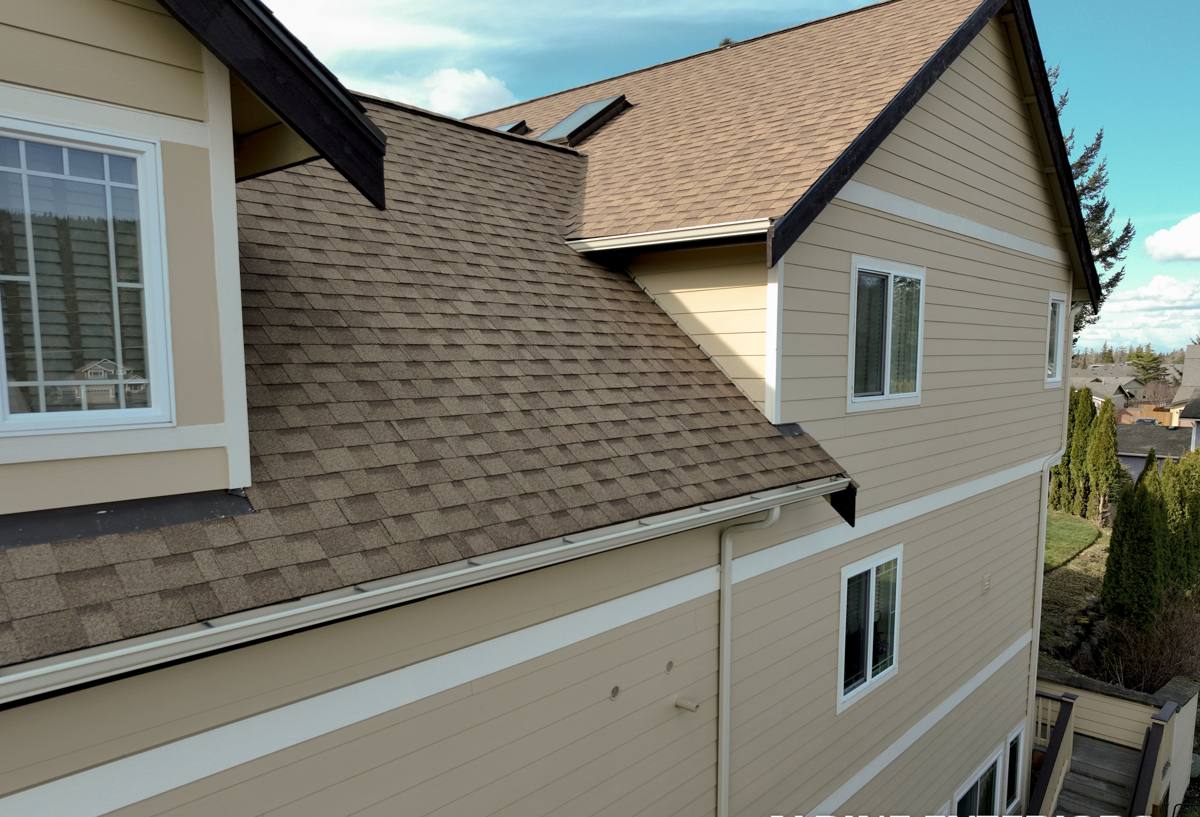
What Birch Bay's Climate Does to a Deck
Salt Air
Salt in the air settles on every exposed surface, including fasteners, flashing, and any exposed metal hardware. Over years, that salt exposure accelerates corrosion on standard hardware and can dull or stain finishes that aren't rated for coastal use. It's a slower process than storm damage, but it's constant, and it's part of why material and hardware selection matters more here than it does for a deck built a few miles from the water.
Driving Rain
Rain in Whatcom County isn't usually the problem by itself — it's rain pushed sideways by wind off the bay. That kind of weather forces water into places a vertical rain never would: under ledger boards, behind fascia, into fastener holes that weren't properly sealed. A deck that isn't detailed for wind-driven rain will develop hidden moisture problems long before anything looks wrong on the surface.
Moss and Algae Season
Bellingham and the surrounding Whatcom County coastline see an extended wet season, and anywhere moisture sits without airflow or sun exposure, moss and algae move in. On a deck, that usually means the north-facing side, areas shaded by the house or trees, and any spot where boards are laid too tight or drainage is poor. Beyond looking bad, a mossy deck surface gets slick and genuinely dangerous underfoot.
Why Composite Makes Sense Here
Composite decking is made from a blend of wood fiber and plastic, capped (in most quality products) with a protective outer shell. That construction gives it a real advantage over solid wood in a marine-influenced climate like Birch Bay's: it doesn't absorb water the way wood does, it won't rot, and it doesn't need to be refinished every couple of years to keep moisture out.
That doesn't mean composite is maintenance-free or immune to Birch Bay's conditions — it isn't. It means the maintenance burden shifts from structural protection (staining and sealing to stop rot) to surface care (washing off salt film, moss, and organic buildup). For a lot of homeowners here, that's a trade worth making.
Where Composite Still Needs Attention
- Capped composite resists moisture intrusion into the board itself, but cut ends and drilled holes expose the core and need to be sealed or capped properly during installation
- Boards still need airflow underneath — composite laid directly on a poorly ventilated substructure can trap moisture and encourage mold on the underside, even if the top surface looks fine
- Grooved, hidden-fastener composite systems can trap grit and organic debris in the channels, which is where algae tends to start
- Not all composite is created equal — lower-grade boards without a full cap or with thin capping can still take on water at the edges over time
What a Correct Installation Looks Like
The board itself is only part of the story. A composite deck that's going to hold up in Birch Bay's environment depends just as much on what's underneath and how it's fastened.
Framing and Substructure
We build the substructure with decay-resistant or treated framing lumber and pay close attention to joist spacing — composite boards generally need tighter joist spacing than wood to prevent flexing and long-term sagging, and manufacturer specs vary by product. Skipping this step is one of the most common shortcuts we see, and it's the kind of thing that doesn't show up as a problem until years later.
Ledger Attachment and Flashing
Where the deck ties into the house, proper flashing is non-negotiable in a wind-driven rain environment. A poorly flashed ledger board is one of the most common sources of hidden water damage to the house itself, not just the deck — and it's much cheaper to get right the first time than to repair after the fact.
Fasteners and Hardware
Given the salt air, we use fasteners and structural hardware rated for coastal or corrosive environments rather than standard-grade hardware. This is a small cost difference at install time and a significant difference in how the deck's hardware holds up over a decade or more near the water.
Drainage and Airflow
Proper board spacing, a substructure that allows air to move underneath, and grading that directs water away from the foundation all matter for keeping moss and mildew from getting a foothold. On shaded or north-facing decks, this is often the difference between a deck that stays clean with occasional washing and one that's fighting algae every spring.
Composite vs. Wood for a Birch Bay Deck
| Factor | Composite Decking | Wood Decking |
|---|---|---|
| Moisture resistance | Doesn't absorb water into the board face; capped products resist rot | Absorbs water; prone to rot without regular sealing, especially near the water |
| Maintenance | Periodic washing to remove salt film, pollen, and organic buildup | Annual or biannual staining/sealing to maintain water resistance |
| Moss/algae resistance | Smooth capped surface is easier to clean; some products include mold-inhibiting caps | Textured grain holds moisture and organic matter more readily |
| Upfront cost | Higher material cost | Lower material cost |
| Long-term cost | Lower recurring maintenance cost over the life of the deck | Higher recurring cost from refinishing and board replacement |
| Hardware sensitivity | Still needs coastal-rated fasteners near the bay | Same requirement — salt air affects hardware regardless of decking material |
Neither option is maintenance-free. The real difference is what kind of maintenance you're signing up for and how forgiving the material is if that maintenance slips for a season.
Our Process for Birch Bay Composite Decking
- On-site assessment. We look at sun exposure, prevailing wind and rain direction off the bay, existing drainage, and how the current structure (if there is one) has held up to the local conditions.
- Material selection. We walk through composite options with you honestly — including where a lower-tier product might not be worth the savings given how exposed the site is.
- Substructure build or repair. Framing, ledger flashing, and hardware are addressed to the standard the site actually needs, not a generic minimum.
- Installation. Board spacing, fastening, and edge sealing are done to manufacturer spec, with extra attention to any cut ends or penetrations.
- Walkthrough. We go over what routine care the specific product you chose actually needs — most composite decks need less than homeowners expect, but "less" isn't "none."
Practical Deck Care Checklist for Birch Bay Homeowners
- Rinse or wash the deck surface periodically to remove salt residue, especially after storms with onshore wind
- Sweep debris out of board gaps and any hidden-fastener grooves before it breaks down and holds moisture
- Check shaded and north-facing areas more often for early moss or algae growth
- Keep gutters and downspouts near the deck clear so runoff isn't draining onto or under the deck surface
- Inspect fasteners and hardware annually for early signs of corrosion, particularly on older or non-coastal-rated hardware
- Trim back vegetation that's shading the deck or blocking airflow underneath
Why Local Experience Matters
A crew that only occasionally works this close to the water can miss the details that matter most here — the right hardware grade, the flashing detail at the ledger, the joist spacing a specific product actually needs, or simply which parts of a Birch Bay lot tend to hold moisture longest. We work in Bellingham and throughout Whatcom County regularly enough to know how the bay's salt air, wind-driven rain, and moss season actually behave on a deck over time, not just on paper. That local pattern recognition is what keeps a composite deck performing the way it's supposed to for the long run, instead of developing avoidable problems in year three or four.
Get a Straight Answer for Your Property
Every lot in Birch Bay sits a little differently relative to the wind and water, and that affects what your deck actually needs. If you're planning a new composite deck or replacing an aging one, we're happy to come take a look and give you a straightforward, no-pressure estimate — including honest input on materials, what your site's exposure calls for, and what it'll actually cost. Reach out using the form below to get started.