 Bellingham Exterior
 Storm Damage Repair Built for South Hill's Roofs
South Hill sits up above much of Bellingham, which means the homes there catch weather a little differently than houses tucked into lower, more sheltered parts of the city. Elevation and exposure change how wind hits a roofline, how rain drives across a slope, and how long moisture sits on shaded sections after a storm passes. When we get a call about storm damage on South Hill, we're not just looking for missing shingles — we're looking at how this specific setting has stressed the roof over time, because that context changes what a correct repair actually looks like.
This page is about one thing: repairing storm damage on South Hill roofs correctly, the first time, in a way that holds up against the next storm rather than just patching over what a homeowner can see from the ground.
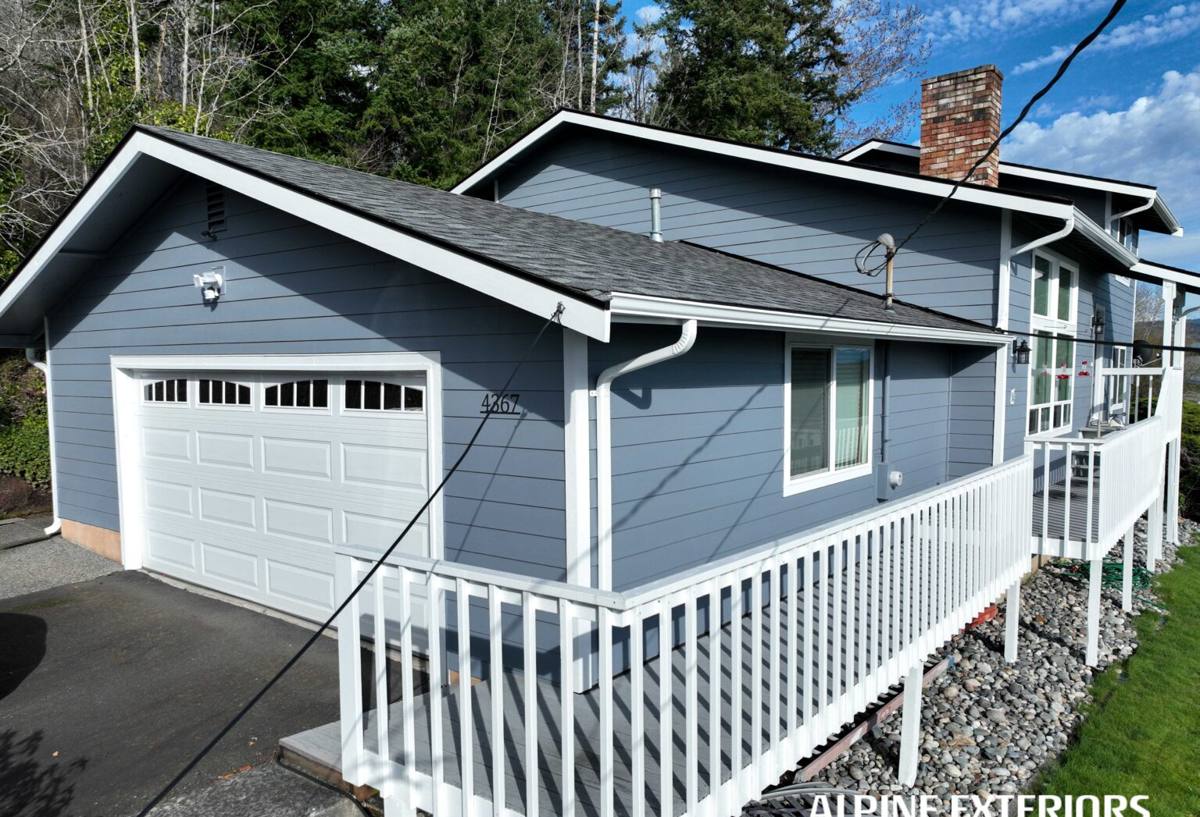
What Bellingham Storms Actually Do to a Roof
Bellingham's weather isn't dramatic in the way tornado-alley or hurricane-coast storms are, but it's persistent, and persistence causes its own kind of damage. Wind-driven rain off the water, sustained gusts during fall and winter frontal systems, and a moss season that stretches across much of the year all put steady pressure on a roof system rather than delivering one catastrophic event.
Wind Uplift and Lifted Shingles
Sustained wind gets under shingle tabs, especially on older roofs where the sealant strip has weakened with age or where nailing wasn't done to spec originally. Once a shingle lifts even slightly, wind and rain work at that edge repeatedly, and the shingle rarely reseals on its own. On South Hill's more exposed elevations, this shows up first at ridgelines, hips, and any edge that faces the prevailing wind.
Wind-Driven Rain Intrusion
Straight-down rain is easy for a roof to shed. Rain that's pushed sideways by wind is not, because it gets forced up under shingle laps, into valleys, and around flashing that was only ever designed to handle water moving downward. This is one of the most common ways storm damage turns into a leak days or weeks after the storm itself has passed — the entry point opened during the wind event, but the water damage shows up later.
Impact Damage from Debris
Branches, cones, and wind-blown debris from nearby trees can bruise or puncture shingles, crack tile, or dent metal flashing. Bruised asphalt shingles are a particular problem because they often look intact from the ground but have lost granule coverage or structural integrity underneath, which shortens their remaining life even without a visible hole.
Moss and Trapped Moisture
Storm damage and moss growth compound each other. A roof with lifted shingles or damaged flashing holds moisture longer in the areas moss already favors — shaded slopes and north-facing sections — and that trapped moisture accelerates the underlying deck and shingle deterioration. On a lot of South Hill properties with mature tree cover, this is a bigger factor in long-term roof condition than any single storm event.
Why an Honest Storm Damage Assessment Matters More Than a Quick Patch
After a storm, the instinct is to fix what's visibly wrong and move on. The problem is that storm damage on a roof is rarely limited to what's visible from the driveway. A proper assessment looks at the whole system, not just the obvious damage point, because storms stress a roof in more places than the one that happened to fail first.
- Shingle condition across the full roof plane, not just the area that's visibly missing shingles
- Flashing at every valley, chimney, skylight, and wall intersection
- Underlayment exposure anywhere shingles have lifted or blown off
- Gutter and downspout condition, since storm debris and wind damage often hit both roof and drainage together
- Attic or interior ceiling checks for water staining that indicates a leak has already started
- Deck condition in any area that's been wet for an extended period, since a soft or delaminated deck changes the repair scope
Skipping this and just replacing the shingles a homeowner can see leaves the rest of the storm's effects to show up later, usually as an interior leak that costs more to fix than it would have as part of the original repair.
What a Correct Storm Damage Repair Involves
Once we know the actual extent of the damage, the repair itself needs to match the roof's existing system rather than being a mismatched patch. That means matching shingle type, exposure, and where possible color to the surrounding roof, tying new flashing into the existing water-resistive layers correctly, and re-sealing or replacing underlayment in any section that was exposed to weather during the storm. Where a section of decking has taken on water damage, that gets replaced rather than covered over, because shingles installed over a compromised deck won't perform the way they're supposed to regardless of shingle quality.
On sections facing South Hill's more wind-exposed sides, we also look at whether the existing nailing pattern and shingle sealant performance were adequate to begin with. A repair that just replaces damaged shingles with the same installation approach that failed once is likely to fail again in the next comparable storm.
Repair vs. Replacement: How We Make the Call
| Factor | Favors Repair | Favors Full Replacement |
|---|---|---|
| Extent of damage | Isolated to one section or slope | Spread across multiple slopes or the whole roof |
| Age of existing roof | Roof is well within its expected service life | Roof is near or past its expected service life already |
| Deck condition | Deck is sound under the damaged area | Widespread deck rot or delamination found during inspection |
| Shingle availability | Matching shingles are available for a clean tie-in | Discontinued or badly weathered shingles make matching impractical |
| Underlying moss/moisture history | Minimal history of trapped moisture in the area | Long-term moss and moisture issues have already compromised multiple sections |
We walk through this with the homeowner directly, with photos and a plain explanation of what we found, so the decision between repair and replacement is based on the actual condition of your roof rather than a guess.
Insurance and Storm Damage Documentation
Many South Hill storm repairs go through homeowners insurance, and how the damage is documented matters for that process. We photograph and describe the damage in detail before any repair work begins, note the likely cause (wind, impact, or water intrusion), and provide a written scope of work that an adjuster can review. We don't inflate a scope to chase a bigger claim, and we don't shrink one to make a quick sale — the documentation reflects what the roof actually needs, because that's what protects the homeowner if a related issue surfaces later and needs to be tied back to the same storm event.
Why Local Experience on South Hill Specifically Matters
A roofing crew that has worked on South Hill knows the general pattern of how storms move through this part of Bellingham, which slopes tend to take the brunt of wind exposure, and how tree cover on many of these lots affects moss buildup and moisture retention over the years. That's not a substitute for inspecting your specific roof, but it means we're not starting from zero on every job — we already understand the kind of stress this neighborhood's roofs are under before we ever climb up.
It also means we're realistic with homeowners about what's driven by a single storm versus what's been building for years under Whatcom County's climate generally. Not every leak found after a storm was caused by that storm — sometimes the storm just exposed a weak point that was already there, and part of an honest assessment is being clear about which is which.
What to Do Right After a Storm
- Check your attic or top-floor ceilings for new staining, drips, or damp spots as soon as it's safe to do so
- Look at gutters and the ground around your foundation for unusual amounts of shingle granules, which can indicate shingle damage even without a visible hole
- Avoid getting on the roof yourself after a storm — wet, damaged roofing is more hazardous than it looks
- Take photos of any visible damage from the ground if it's safe to do so, which helps with both the repair scope and any insurance claim
- Get an inspection promptly rather than waiting, since exposed underlayment and lifted shingles get worse with every additional rain event
Our Process for South Hill Storm Repairs
We start with a full roof inspection, not just a look at the obvious damage, and walk the homeowner through what we find with photos and a plain-language explanation. From there we provide a written scope and, where insurance is involved, documentation that supports the claim honestly. Repairs are matched to the existing roof system rather than treated as a generic patch, and we check the areas around the original damage — flashing, valleys, deck condition — since those are the spots most likely to cause a repeat problem if they're overlooked. Once the repair is complete, we walk the roof again with the homeowner before calling the job done.
If your South Hill home has storm damage — whether it's obvious from the ground or you just want a second set of eyes after a rough storm system came through — we're happy to take a look. Reach out below for a free, no-pressure estimate.