 Bellingham Exterior
 Custom Windows Built for Sehome's Older Homes and Wet Climate
Sehome sits on a hillside just south of downtown Bellingham, close enough to the bay to catch salt-laden air off the water and steep enough that wind-driven rain hits some walls harder than others. Add in Whatcom County's long, damp fall-through-spring stretch and a housing stock that skews older than a lot of newer Bellingham subdivisions, and you get a neighborhood where windows take a beating in ways that a generic "replacement window" quote often doesn't account for. Custom windows aren't a luxury upsell here — for a lot of Sehome homes, they're the only way to get a window that actually fits the opening, seals correctly, and holds up to the climate without constant maintenance.
This page covers what custom window work actually involves in Sehome specifically: what the climate does to windows here, why so many homes in this area need true custom sizing rather than stock units, how we handle the work, and what to expect in terms of process and cost.
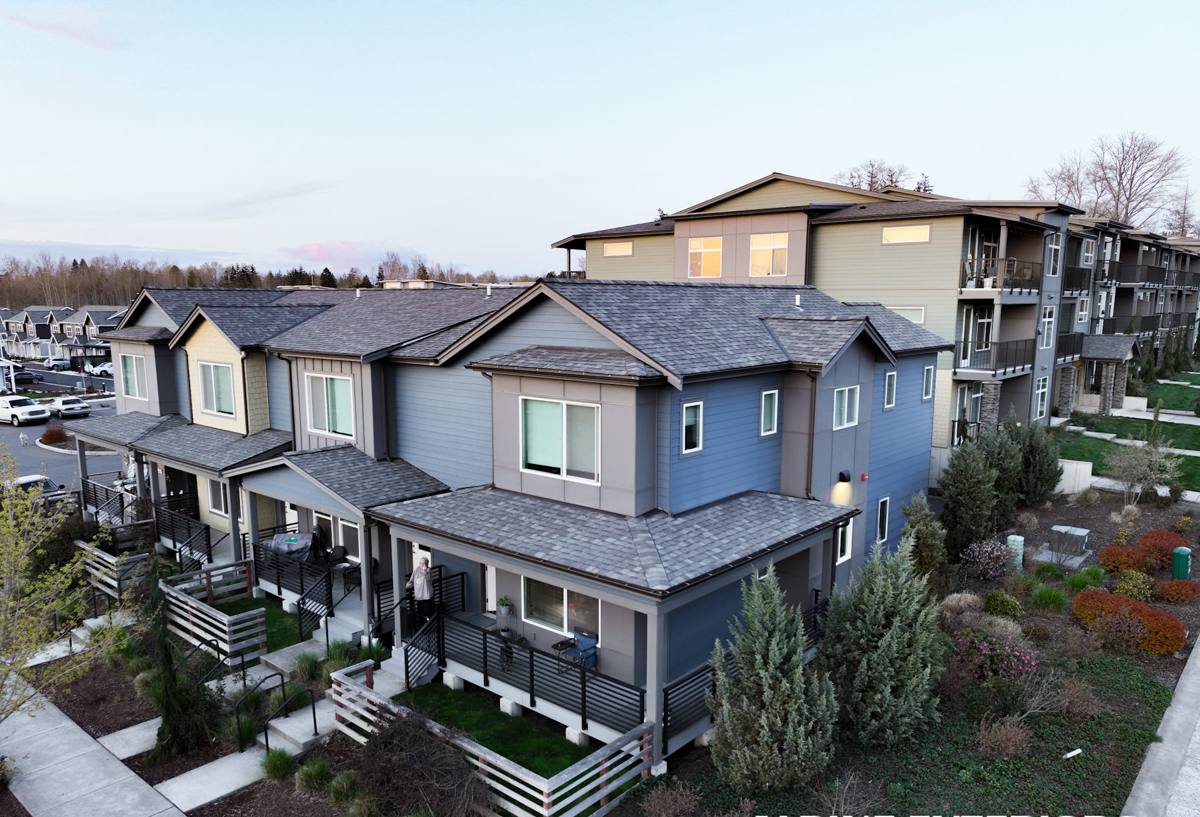
What Sehome's Climate Does to Windows
Bellingham's marine climate is generally mild, but "mild" doesn't mean easy on building materials. Sehome's proximity to Bellingham Bay means a steady dose of salt air, which accelerates corrosion on hardware, fasteners, and lower-grade metal components — anything not rated for coastal exposure will show it faster here than it would twenty miles inland. Combine that with driving rain that comes in sideways during winter storms, and any gap in flashing, sealant, or frame fit becomes a path for water intrusion rather than a cosmetic issue.
Then there's moss. Whatcom County's moss season runs long — shaded north- and west-facing walls, common on hillside lots with mature tree cover, stay damp for weeks at a stretch. Moss and algae don't just grow on roofs; they colonize window sills, frame joints, and any horizontal or textured surface that holds moisture. Over years, that constant dampness breaks down caulk, swells wood trim, and works its way into any seam that wasn't detailed correctly at installation.
The practical result
- Frame materials and hardware need real weather resistance, not just a warranty sticker — coastal-grade fasteners and finishes matter more here than in drier parts of the state.
- Flashing and sealant details around the window opening matter as much as the window unit itself.
- Wood components exposed to shaded, damp conditions need either a durable factory finish or a realistic maintenance plan — moss and mildew will find any unprotected surface.
- Condensation control matters indoors too — tight, well-insulated homes in a humid climate can get interior moisture buildup on window glass and frames if ventilation and glazing aren't matched correctly.
Why So Many Sehome Homes Need True Custom Sizing
A lot of Sehome's housing stock predates the era of standardized window manufacturing. Older framing, settled foundations, and additions or remodels done over the decades all mean that window openings in this neighborhood are frequently a half-inch (or more) off from what a stock vinyl replacement window is built for. When a contractor forces a stock-sized unit into an out-of-square or nonstandard opening, the fix is usually extra caulk, shims, or trim to hide the gap — and that gap is exactly where water and air infiltration start.
Custom windows are built to the actual measured dimensions of your opening, not the nearest standard size. That matters most in three situations common around Sehome:
| Situation | Why stock sizing falls short |
|---|---|
| Older homes with settled or slightly out-of-square framing | Stock units are square by design; forcing them into an irregular opening leaves gaps that need to be patched rather than properly sealed |
| Homes with character trim, deep sills, or original casing worth preserving | Custom units can be sized to work with existing exterior details instead of requiring the trim to be torn out and rebuilt |
| Additions, remodels, or non-standard openings (bay windows, unusual widths) | There's often no stock size that fits at all, so custom manufacturing is the only real option |
| Homes near the bay with higher salt exposure | Custom orders let you specify coastal-rated hardware and finishes that basic stock lines may not offer standard |
Choosing the Right Frame Material for This Climate
Frame material is one of the biggest factors in how a window performs in Sehome's conditions over the long run. There's no single "best" material for every home — it depends on your home's style, sun exposure, and how much maintenance you want to take on. Here's how the common options compare for this specific climate:
| Frame Material | Moisture & Salt Air Performance | Maintenance | Best Fit |
|---|---|---|---|
| Vinyl | Good — won't rot or corrode, handles damp shaded walls well | Low — occasional cleaning | Budget-conscious replacements, most home styles |
| Fiberglass | Very good — dimensionally stable, resists warping in temperature and moisture swings | Low | Larger openings, homes wanting a slimmer sightline than vinyl |
| Wood (clad exterior) | Good on the clad side; interior wood needs protection from condensation | Moderate — exterior clad low-maintenance, interior finish needs occasional attention | Historic or character homes where interior wood trim is part of the look |
| Aluminum | Fair — conducts cold and can corrode faster in salt air without a marine-grade finish | Low, but finish quality matters a lot here | Modern designs, narrow sightlines, only with coastal-rated hardware |
For homes closer to the bay-facing side of Sehome, we generally steer people away from bare or lower-grade aluminum unless it's specifically rated for coastal exposure — the salt air will find the weak point in the finish faster than it would a few miles inland. That's not a knock on aluminum as a product; it's a maintenance and longevity trade-off worth knowing about before you commit to a material.
What a Correct Installation Actually Involves
The window unit itself is maybe half the job. The other half — the part that determines whether the window still performs well in ten or twenty years — is how it's flashed, sealed, and integrated into the wall assembly. In a climate that sees this much driving rain and sustained dampness, corners cut here show up as leaks, rot, or interior moisture damage, sometimes years after the fact.
What we check and do on every custom window job
- Remove the old unit and inspect the opening for hidden rot, moisture damage, or framing issues before anything new goes in
- Confirm actual opening dimensions and squareness rather than assuming the old unit's listed size is still accurate
- Install or repair flashing so water sheds outward and downward, never toward the wall cavity
- Use sealants and building wrap details appropriate for a wet marine climate, not a one-size-fits-all caulk bead
- Shim and fasten so the window operates smoothly without binding — a window that's hard to open often has an installation problem, not a product defect
- Insulate the gap between frame and rough opening properly — too little insulation leaves cold spots and condensation risk; overpacking can bow the frame
- Finish exterior trim and caulk lines so water is directed away from seams, with attention to any shaded areas prone to moss and algae buildup
Our Process, Start to Finish
- On-site assessment. We measure every opening individually, check for rot or settling issues, and talk through what's realistic for your home's age and style — including whether custom sizing is actually needed or a near-stock size will work.
- Material and product selection. We walk through frame material, glazing options, and hardware finishes with your home's sun exposure and proximity to the bay in mind, not a generic recommendation.
- Custom manufacturing. Once measurements and specs are confirmed, units are built to the exact opening — this typically takes longer than a stock order, and we'll give you a realistic timeline up front rather than a best-case guess.
- Removal and inspection. Old windows come out carefully, and we inspect the opening for any moisture damage that needs to be addressed before the new unit goes in — this step is non-negotiable in a climate this wet.
- Installation and weatherproofing. Flashing, sealing, insulating, and trim work are done to hold up to driving rain and long damp stretches, not just to look finished on install day.
- Final walkthrough. We check operation, seals, and finish work with you before calling the job done.
What Custom Windows Typically Cost, and What Drives the Price
Every home is different, especially with the range of opening sizes and conditions in an older neighborhood like Sehome, so we don't quote a flat per-window number without seeing the job. What we can tell you is what actually moves the price:
| Cost Factor | How It Affects Price |
|---|---|
| Opening size and shape | Larger or irregular custom shapes (bays, non-rectangular openings) cost more to manufacture than standard rectangular sizes |
| Frame material | Vinyl is typically the most budget-friendly; fiberglass and wood-clad run higher |
| Glazing package | Double vs. triple pane, low-E coatings, and gas fills all add cost but also improve comfort and condensation resistance |
| Number of windows done at once | Bundling multiple windows into one project usually lowers the per-window labor cost |
| Condition of the existing opening | Hidden rot or framing repair adds cost, but skipping it just moves the cost to a future repair |
| Access and site conditions | Upper-story or hard-to-access openings on hillside lots can add labor time |
Broadly, custom windows cost more than stock replacements up front because of the manufacturing lead time and precision fit — but for a home where stock sizing genuinely doesn't fit, the alternative isn't cheaper in the long run, it's a gap that eventually causes a moisture problem.
Signs Your Windows May Be Due for Replacement
- Visible fogging or moisture between glass panes — a sign the seal has failed
- Drafts you can feel around the frame even when the window is fully closed and locked
- Wood trim or sills that feel soft, spongy, or show staining, especially on shaded or bay-facing walls
- Windows that are difficult to open, close, or lock — often a sign of frame movement or warping
- Persistent moss or algae buildup on the sill or lower frame that keeps coming back after cleaning
- Noticeable condensation on the inside of the glass during cold, damp stretches
- Visible daylight or gaps around the frame from outside
Why Working With a Crew That Already Knows Sehome Matters
A window installer who mostly works new construction in flat, sheltered subdivisions is solving a different problem than one who regularly works Sehome's older, hillside, bay-adjacent housing stock. Knowing which walls in this neighborhood take the worst of the driving rain, which framing quirks show up in homes of a certain era, and how aggressively moss and salt air attack an unprotected seam here isn't something you learn from a manufacturer's installation manual — it's something you learn by doing the work in this specific area, repeatedly, through multiple wet seasons.
That local familiarity shows up in small decisions that matter: which flashing detail to use on a shaded north wall, when a stock size genuinely won't work and custom is the only honest answer, and which hardware finish will actually hold up to salt air instead of just looking good on install day. It's the difference between a window that's installed and one that's installed correctly for where it actually sits.
Get a Free, No-Pressure Estimate
If your Sehome home has windows that are drafty, hard to operate, showing moisture damage, or simply don't fit their openings correctly anymore, we're happy to take a look. There's no pressure and no obligation — just a straightforward assessment of what your home actually needs and what it would cost to do it right. Use the form below to request your free estimate.