 Bellingham Exterior
 Birch Bay Sits in a Tougher Micro-Climate Than Most of Bellingham
Birch Bay faces open water, and that changes what a house needs from its exterior compared to a home a few miles inland in Bellingham proper. Homes here take on salt-laden air blowing off the water, wind-driven rain that hits siding at an angle instead of falling straight down, and long stretches of damp, shaded conditions that keep moss and algae established on north- and west-facing walls for much of the year. None of this is unique to any one street or block — it's the baseline reality of building this close to the Salish Sea in Whatcom County, and it's why siding that performs fine in a drier, more sheltered part of the region can still struggle here.
This page focuses on one thing: what fiber cement siding needs to deliver for a Birch Bay home, what a correct installation actually looks like, and why we install only James Hardie products to meet that standard.
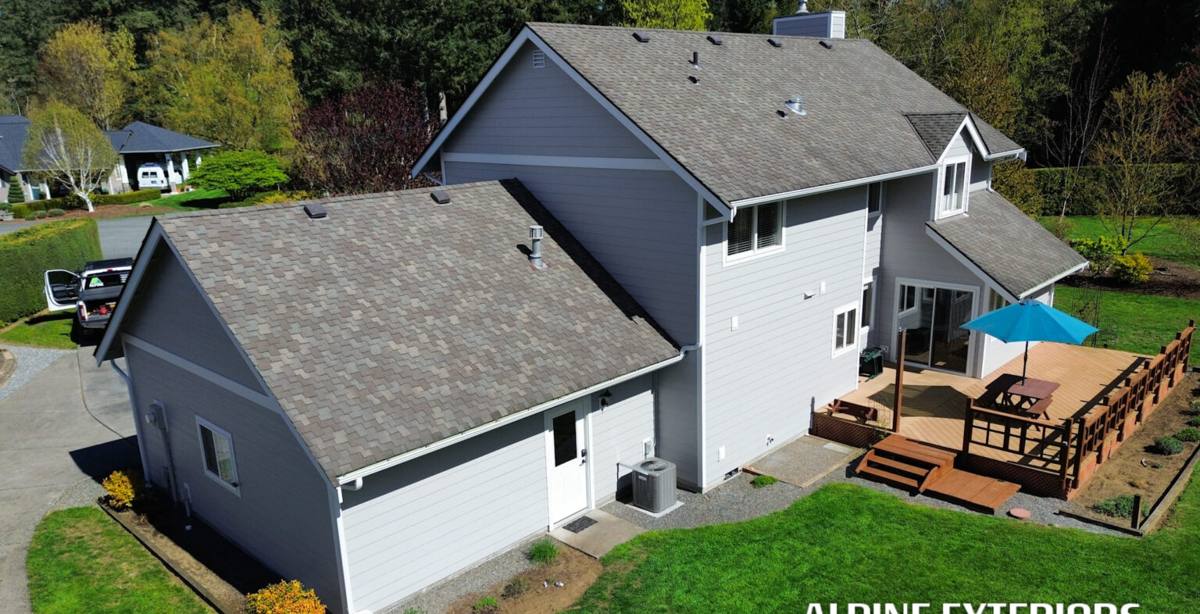
What Birch Bay's Climate Actually Does to Siding
Salt Air and Corrosion
Airborne salt doesn't just sit on a surface — it works into fasteners, trim joints, and any exposed metal on a building's exterior. Over years, that accelerates corrosion in anything not rated or protected for a marine-adjacent environment: cheap staples, unprotected flashing, and low-grade trim screws all show wear faster near the water than they would ten or fifteen miles inland. Siding materials themselves can also degrade under repeated salt exposure — some finishes chalk, fade, or become brittle faster than their manufacturer's published lifespan would suggest.
Wind-Driven Rain
Rain that comes off open water rarely falls straight down. It drives sideways into wall assemblies, which pushes water into laps, seams, and butt joints that would stay dry in a more sheltered inland setting. This is a water-management problem as much as a materials problem — the siding, the flashing behind it, and the weather-resistive barrier underneath all have to work together, or water finds its way to the sheathing regardless of how good the siding itself is.
Moss, Algae, and a Long Wet Season
Western Whatcom County's wet season runs long, and shaded or north-facing walls near the water can stay damp for weeks at a stretch. That's an ideal environment for moss and algae to establish on any surface that holds moisture at the joints or texture. Left unaddressed, sustained moss growth traps water against a wall longer than it would otherwise sit, which is a slow but real contributor to rot in the substrate behind lower-grade siding.
Why This Combination Rules Out Some Common Siding Choices
Vinyl siding can crack and become brittle with age, and its seams and J-channels give wind-driven rain more opportunities to get behind the cladding — a bigger liability on an exposed, waterfront-adjacent lot than on a sheltered inland one. Cedar and other wood sidings need consistent refinishing to resist moisture and moss in a climate this wet, and skipping even one maintenance cycle can let rot get a foothold. Engineered wood products like LP SmartSide use a wood-strand core that, while treated, is still fundamentally a wood product — it depends on flawless caulking, flashing, and finish maintenance to keep moisture out over the long run, and that margin for error gets thinner in a salt-air, high-rainfall setting like Birch Bay.
None of that means these products are junk everywhere — plenty of them perform acceptably in drier, more sheltered locations. It means we don't think they're the right call for the specific conditions homes face this close to the water in Whatcom County, and we've built our business around installing only the product line we're confident will hold up here.
Why We Install Only James Hardie Fiber Cement
James Hardie's fiber cement is cement, sand, and cellulose fiber — it doesn't rot, it isn't fuel for pests, and it's non-combustible, which matters anywhere wildfire smoke and ember exposure is a seasonal concern in Washington. Hardie also engineers its HZ5 product line specifically for colder, wetter climate zones like ours, with a formulation and installation spec built around freeze-thaw cycling and sustained moisture exposure rather than a one-size-fits-all national product.
The factory-applied ColorPlus finish is baked on under controlled conditions, which gives it more consistent, UV- and moisture-resistant coverage than a finish applied on-site in variable weather — and it comes backed by its own finish warranty separate from the substrate warranty on the board itself. For a home absorbing salt air and driving rain most of the year, that factory-cured finish and the transferable product warranty behind it are a meaningfully better bet than a field-painted or field-stained alternative.
What a Correct Fiber Cement Installation Involves
Fiber cement is only as good as the assembly it's installed into. A correct job on a Birch Bay home means getting every layer right, not just hanging boards:
- Confirming the sheathing underneath is sound before anything new goes up — covering rot or existing moisture damage instead of repairing it defeats the purpose of a new siding job
- Installing a proper weather-resistive barrier, lapped correctly so water sheds outward and down, never sideways into a seam
- Flashing every window, door, and horizontal trim transition so water is directed out and away from the wall assembly, not just relying on caulk
- Maintaining Hardie's specified fastener pattern, type, and embedment depth — corrosion-resistant fasteners matter more here than in a sheltered inland install
- Leaving Hardie's specified gaps at butt joints and trim, then sealing with a high-quality, paintable, flexible sealant rated for exterior exposure
- Field-sealing any cut edges according to Hardie's published spec, since a factory edge and a job-site cut don't behave the same way against moisture
- Keeping the bottom edge of the siding at the correct clearance above grade, decks, and roof lines so splashback and standing water don't sit against the board
- A final walk-through checking caulking lines, fastener spacing, and flashing laps before calling the job finished
Skipping or rushing any one of these steps is usually invisible on day one — the board still looks straight and the seams still look tight. The problems show up two, five, or ten years later, as moisture finds the one gap in the system. That's the real argument for correct installation over a fast one, especially in a climate that doesn't forgive shortcuts.
How the Options Compare for a Home Like Yours
| Factor | Vinyl | Cedar / Wood | Engineered Wood (LP SmartSide) | James Hardie Fiber Cement |
|---|---|---|---|---|
| Salt air / corrosion resistance | Fair — can become brittle over time | Poor without frequent refinishing | Fair — depends on finish upkeep | Strong — cement-based, non-corroding substrate |
| Wind-driven rain / seam risk | Higher — multiple seams and J-channels | Moderate — depends on lap and caulk quality | Moderate — relies on maintained finish | Low when installed and flashed to spec |
| Moss / algae resistance | Moderate | Poor without regular cleaning | Moderate | Strong — dense, moisture-resistant board |
| Fire resistance | Melts, not fire-rated | Combustible | Combustible (treated) | Non-combustible |
| Maintenance cycle | Low, but limited repair options | Refinish every few years | Regular finish maintenance required | Low — factory finish, occasional caulk checks |
| Typical warranty structure | Prorated, product only | Manufacturer varies, workmanship separate | Product warranty, finish maintenance conditions apply | Long-term, transferable, with separate factory finish coverage |
Our Process for a Birch Bay Siding Project
We start with an on-site assessment of the existing wall assembly — not just the visible siding, but what's likely happening underneath, especially on walls that face the water or stay shaded most of the day. From there:
- We walk the exterior with you and point out any areas showing early moisture or moss issues, and explain what's driving them
- We scope sheathing repair where needed rather than siding over a compromised wall
- We install a correctly lapped weather-resistive barrier and flash every penetration before the first board goes up
- We install James Hardie siding to manufacturer spec — fastener pattern, gaps, clearances, and sealant, all matched to our climate zone
- We do a final inspection focused on the details that fail first in this environment: caulk lines, flashing laps, and ground clearance
We price and schedule projects individually rather than running a single template for every job, because a shaded, moss-prone wall and a wide-open, wind-exposed wall on the same house can need different attention to detail.
Living With Fiber Cement Siding in Birch Bay
One of the practical advantages of Hardie's factory finish is how little upkeep it asks for compared to a field-finished product. That said, a few habits go a long way in this environment: rinse accumulated salt spray and grime off the siding periodically, keep gutters and downspouts clear so runoff isn't sheeting down the wall face, and keep an eye on caulk joints at trim and penetrations over the years, since sealant is the one component that wears out faster than the board itself. Moss on a roof or in gutters upstream of a wall can also redirect extra water onto siding below, so roof-level moss control indirectly protects the siding too.
Why It Matters That We Already Work in Birch Bay
Wind and rain exposure can vary noticeably from one lot to the next depending on how open a property is to the water and which direction its walls face — a detail that's easy to get wrong from a generic estimate and much easier to judge correctly when you've installed siding on homes with the same exposure before. A contractor who already works this stretch of Whatcom County knows to look harder at north- and west-facing walls for moss and moisture, to expect the fastener and flashing corrosion issues salt air causes over time, and to plan installation timing around a wet season that runs longer here than it does further inland. That local pattern recognition doesn't replace following the manufacturer's install spec — it's what tells us where to pay extra attention while we're following it.
Get a Straight Answer for Your Home
Every wall on every lot carries this climate a little differently. If you're weighing a siding replacement in Birch Bay, we're happy to take a look at your home, tell you honestly what condition your current siding and sheathing are in, and walk you through what a correct James Hardie installation would involve — no pressure, no generic estimate. Use the form below to request a free assessment.