 Bellingham Exterior
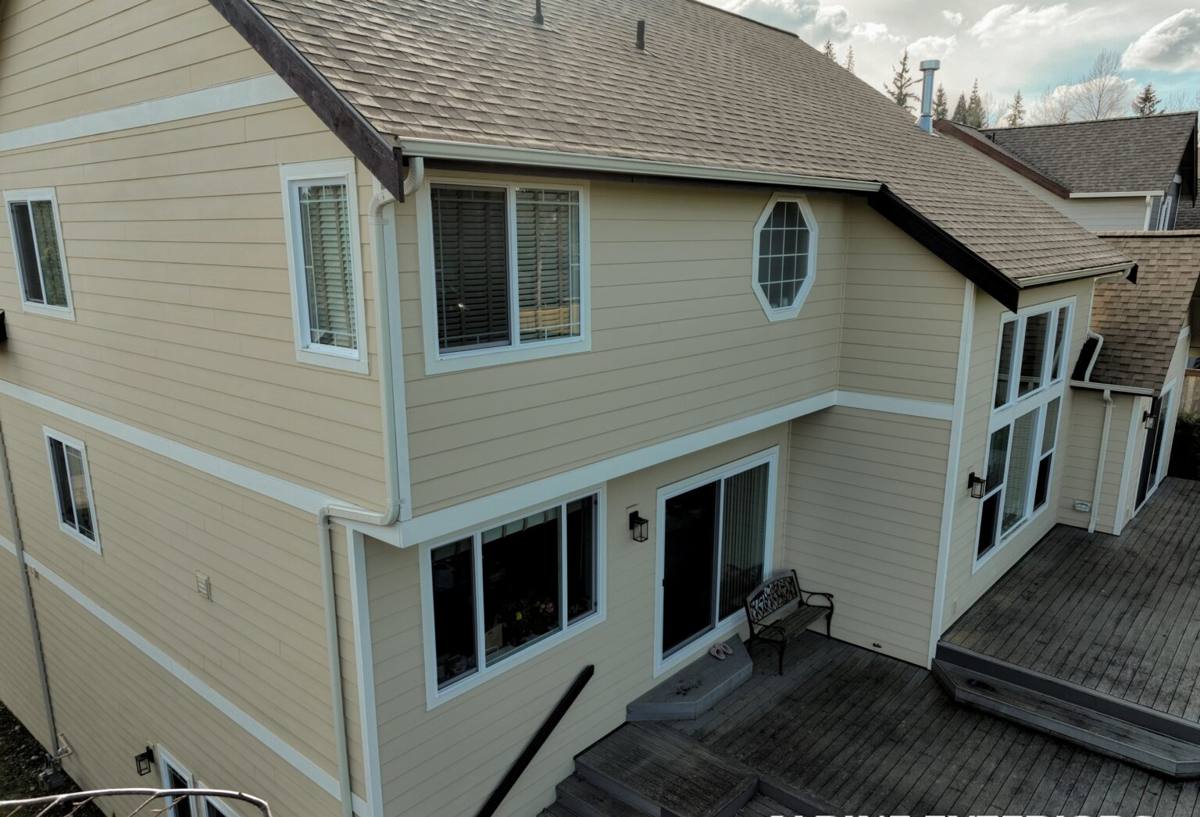
 Birch Bay Sits Right at the Edge of What Siding Can Take
Birch Bay's location on the water gives it a different exposure profile than most of inland Whatcom County. Homes here take salt-laden air off the bay, wind-driven rain that hits siding at an angle instead of falling straight down, and long stretches of gray, damp weather that keep exterior surfaces wet for days at a time. Add in the moss and algae growth that thrives in Northwest Washington's shade and humidity, and you have a set of conditions that will find every weakness in a siding system within a few years, not a few decades.
This page is specifically about James Hardie fiber cement siding as it applies to Birch Bay homes — not a general siding overview. If you own a home in this community, the material choice and the installation details matter more here than they would a few miles inland in Bellingham proper.
What Salt Air and Driving Rain Actually Do to a Wall System
Salt air accelerates corrosion on any exposed metal fasteners, flashing, and trim. It also settles into porous or absorbent siding materials and can contribute to premature breakdown of paint films and substrates that aren't built to handle it. Driving rain off the water doesn't just run down a wall — it gets pushed sideways and upward into laps, seams, and penetrations that are designed for water running straight down. Over time, that means:
- Faster deterioration of caulk joints and exposed seams facing the prevailing weather
- Increased risk of moisture intrusion behind siding that isn't properly flashed and lapped
- Accelerated wear on paint and finish coatings that aren't rated for constant UV and moisture cycling
- More aggressive moss and algae colonization on shaded, north-facing, and tree-covered elevations
None of these problems are unique to Birch Bay, but they show up faster and more severely here than in drier or more sheltered parts of the county. A siding product and installation method that "gets by" inland can fail outright on a bay-front or near-bay property.
Why We Install Only James Hardie in This Market
We made a decision as a company to install James Hardie fiber cement siding exclusively — we don't install vinyl, LP SmartSide, Cemplank, Allura, primed spruce, or cedar. That's not a marketing position; it's a standard we hold because of what we've seen these products do (and not do) in coastal Northwest conditions over time.
Vinyl siding is affordable and low-maintenance in mild climates, but it's a petroleum-based product that expands and contracts with temperature swings, can become brittle in cold snaps, and relies on lap seams and J-channels that aren't designed to resist sustained wind-driven rain the way a properly flashed fiber cement system is. Engineered wood products like LP SmartSide use wood strand technology that performs well when maintained perfectly, but any breach in the factory treatment or field-cut edge sealing creates an entry point for moisture — a real risk in a climate where surfaces stay wet for days. Cedar and primed spruce are natural wood products that require ongoing refinishing and are inherently more vulnerable to moisture absorption, insect activity, and rot in a wet marine climate, no matter how well they're installed.
James Hardie fiber cement is non-combustible, doesn't swell or rot from moisture the way wood-based products can, and holds a factory-applied ColorPlus finish that's engineered to resist fading and moisture damage far longer than field-applied paint. That combination is why it's the only product we put our name behind, especially for a location like Birch Bay.
Choosing the Right Hardie Product Line for a Bay-Front Exposure
James Hardie makes climate-engineered product lines, and matching the right one to Birch Bay's exposure is part of doing this job correctly. HZ5 formulations are engineered for regions with freeze-thaw cycling and moisture exposure, which fits the Pacific Northwest generally. On homes with direct water exposure, higher wind-driven rain loads, or heavy shade and moss pressure, we pay close attention to product selection, panel profile, and finish options — lap siding, panel siding, and shingle-style profiles all perform differently in terms of how much seam length is exposed to weather and how water sheds off the wall.
ColorPlus factory-finished color is also a real consideration here. A factory-baked finish holds up to UV and moisture cycling better than a field-applied paint job, which matters on a home that's going to see more rain days per year than most of the state.
What a Correct Installation Involves
James Hardie siding is only as good as the installation behind it. A huge share of the siding failures we see on older homes in this area trace back to installation shortcuts, not the product itself. For a Birch Bay home, correct installation means:
- A proper water-resistive barrier installed and lapped correctly behind the siding, not just stapled on
- Correct flashing at every window, door, deck ledger, and roof-to-wall intersection — the places water actually gets in
- Manufacturer-specified fastening patterns and clearances, including ground clearance and proper gapping at butt joints
- Caulking and sealant only where Hardie's install specs call for it — not as a substitute for proper flashing
- Correct nail placement and spacing to avoid the panel cracking or blowing off in high wind events off the water
Skipping any one of these steps can void manufacturer warranty coverage and create the exact moisture problems that fiber cement is supposed to prevent. On an exposed bay-front lot, there's very little margin for error in the flashing details.
Our Process for a Birch Bay Siding Job
We approach every Birch Bay project with the site's specific exposure in mind rather than a one-size-fits-all install. That starts with an on-site assessment of which elevations take the brunt of the weather, what the existing wall assembly looks like once old siding comes off, and where moisture damage may already be hiding behind the current cladding. From there we handle removal of the old siding, repair of any sheathing or framing issues we find, installation of the water-resistive barrier and flashing package, and then the Hardie siding itself — followed by a final walkthrough so you understand what was done and why.
Finding hidden rot or moisture damage during tear-off is common on older coastal homes, and we'll always show you what we find and explain the repair before proceeding, rather than covering it up with new siding.
What Drives Cost on a Job Like This
| Cost Factor | Why It Matters in Birch Bay |
|---|---|
| Existing wall condition | Hidden moisture or rot behind old siding is more common near the water and adds repair scope |
| Product line and profile | Panel vs. lap vs. shingle profiles and ColorPlus color selection affect material cost |
| Home exposure and elevation count | Bay-facing walls need more careful flashing and detailing than sheltered elevations |
| Trim, fascia, and accessory work | Coordinating Hardie trim boards with siding affects both cost and long-term performance |
| Access and site conditions | Waterfront lots, slopes, and limited access can affect labor time |
We won't quote a job without seeing the home in person — broad estimates without an inspection aren't useful on a climate-exposed property where hidden conditions are common.
Living With Moss, Algae, and Salt Air After the Install
Even with the right product and a correct install, Birch Bay's environment means ongoing homeowner attention still matters. A little upkeep goes a long way toward protecting your investment:
- Rinse siding periodically to remove salt residue and surface grime, especially on bay-facing walls
- Keep gutters clear so water isn't overflowing directly onto siding and trim
- Trim back vegetation and tree cover where moss and algae growth is heaviest
- Inspect caulking at trim and penetrations every year or two and have any gaps addressed promptly
- Address any impact damage or cracked panels quickly rather than letting moisture find its way in
None of this is heavy maintenance compared to a wood or engineered-wood product — it's the kind of upkeep any coastal home needs regardless of siding material.
Why Local Installation Experience Matters Here
Whatcom County covers a lot of different microclimates, from downtown Bellingham to the bay-front lots in Birch Bay. A crew that already understands how wind and moisture behave on this specific stretch of coastline will make better decisions about flashing details, product selection, and elevation-specific detailing than a crew working from a generic install manual. That experience is also what lets us spot pre-existing moisture damage during tear-off instead of missing it.
If you're considering new siding for a Birch Bay home, we're glad to walk the property with you, point out what your home's specific exposure means for the job, and put together a straightforward, no-pressure estimate using the form below.