 Bellingham Exterior
 Why Birch Bay Roofs Wear Differently
Birch Bay sits right on the water, and that changes what a roof has to deal with compared to a house a few miles inland in Bellingham or elsewhere in Whatcom County. The combination of salt-laden air, wind-driven rain coming off the Strait, and long stretches of shaded, damp weather during moss season puts more stress on roofing materials and the details around them than most manufacturers' warranty language assumes. A roof that would perform fine in a drier, more sheltered part of the county can fail early here if it wasn't specified and installed with the waterfront exposure in mind.
This isn't about scare tactics. It's about the fact that a roof replacement in Birch Bay is a slightly different job than a roof replacement three miles inland, and the crew doing it should treat it that way.
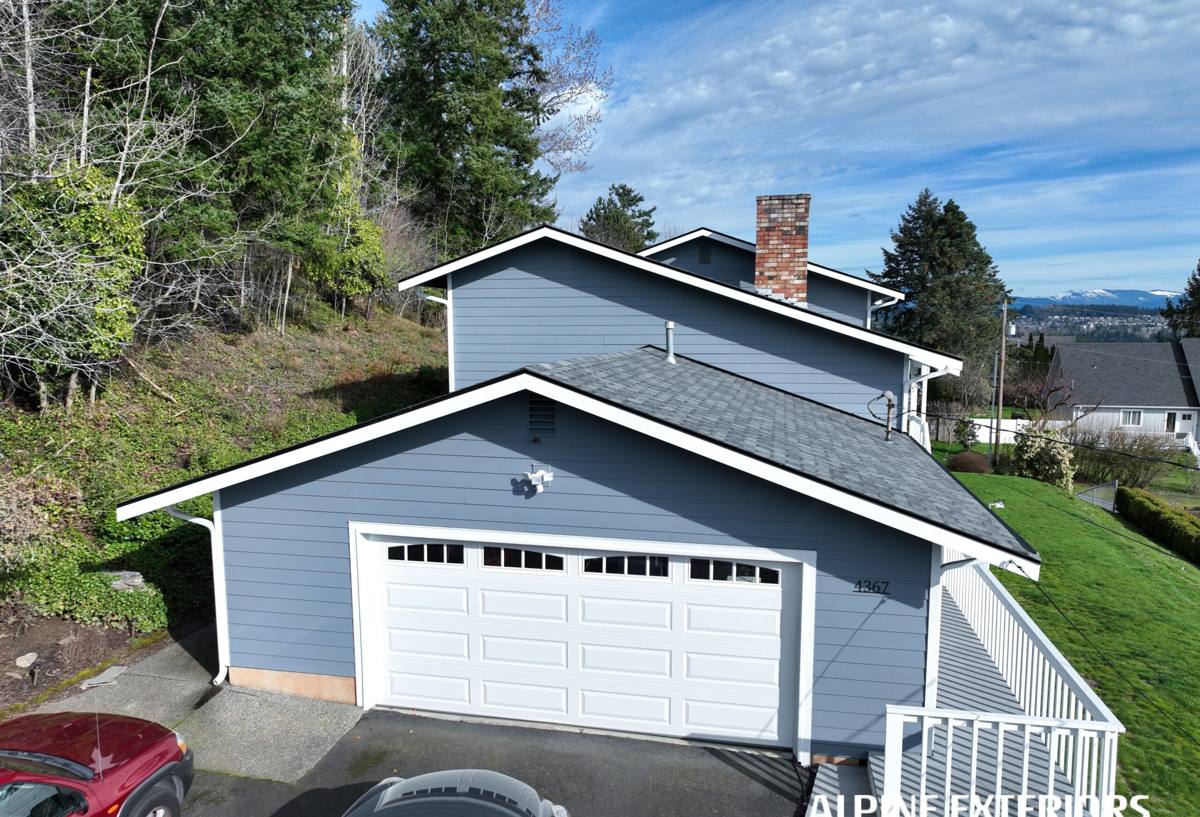
What Salt Air, Rain, and Moss Actually Do to a Roof
Salt Air and Corrosion
Airborne salt accelerates corrosion on any exposed metal — fasteners, flashing, vent boots, gutter hardware, and drip edge. Standard galvanized fasteners can start showing rust streaks well before a comparable roof would inland. Over years, corroded fasteners lose holding power, and corroded flashing develops pinholes that let water in long before the shingles or panels themselves are worn out.
Driving Rain
Wind off the water doesn't just drop rain straight down — it pushes it sideways and up under laps, ridge caps, and flashing that would shed water fine in a calmer setting. This is why underlayment quality and flashing detail matter more here than in a typical subdivision roof.
Moss and Prolonged Dampness
Whatcom County's long wet season, combined with tree cover common around Birch Bay, means roofs stay damp longer between dry-outs. Moss and algae take hold in shaded valleys, north-facing slopes, and anywhere debris collects. Moss doesn't just look bad — it holds moisture against the roofing material, lifts shingle edges as it grows, and can work its way under laps over time.
Signs a Birch Bay Roof Needs Replacement, Not Another Repair
- Granule loss heavy enough that you can see bare asphalt on multiple slopes, not just one worn patch
- Rusted or failing metal flashing around chimneys, skylights, and roof-to-wall transitions
- Soft or spongy decking felt underfoot, or sagging visible from the ground
- Moss growth that comes back within a season or two of cleaning, especially on shaded slopes
- Daylight visible through the roof deck from the attic, or water staining on attic sheathing
- Multiple past repairs in different spots — a sign the roof is failing broadly, not in one isolated area
- Shingles cupping, curling, or cracking, particularly on the side of the house facing the water
One or two of these on their own might mean a targeted repair is enough. Several together, especially on a roof that's already near the end of its expected service life, usually mean replacement is the more honest recommendation — repeatedly patching a roof that's failing in multiple places tends to cost more over time than doing the job once, correctly.
What a Correct Roof Replacement Involves Here
Tear-Off and Deck Inspection
A full tear-off lets us actually see the deck — not guess at its condition from the attic. Any water-damaged or soft sheathing gets replaced before anything new goes down. Skipping this step and roofing over a compromised deck is one of the most common shortcuts that leads to premature failure, and it's not something we do.
Underlayment Built for Wind-Driven Rain
Given the exposure Birch Bay properties get, we use synthetic or self-adhered underlayment products rated for higher wind-driven-rain resistance, with extra attention to lapping direction and fastening pattern. In vulnerable zones — eaves, valleys, and low-slope transitions — we use ice-and-water shield or equivalent self-sealing membrane, even in areas where it's not strictly code-required, because it closes off the paths water actually takes when wind is pushing it uphill under laps.
Flashing and Fasteners Chosen for Salt Exposure
This is where a lot of roofs near the water fall short. We spec corrosion-resistant flashing and fastener materials appropriate for coastal exposure rather than the cheapest option that meets minimum code. Chimney flashing, step flashing, valley metal, and vent boots all get the same consideration — these are the components most likely to corrode first, and when they fail, they cause leaks even while the field of the roof still looks fine.
Ventilation That Matches the Climate
Balanced intake and exhaust ventilation keeps the underside of the deck drier and helps the roof shed the county's persistent damp weather instead of trapping it. Poor ventilation contributes to premature deck rot and can shorten the life of the roofing material itself, regardless of how good the shingles or panels are.
Cleanup and Final Walkthrough
Magnetic sweep for stray nails, full debris removal, and a walkthrough where we point out what we did and why — including anything we saw during tear-off that's worth knowing about, like the actual condition of the decking or any past repair work we uncovered.
Roofing Material Options for a Waterfront Property
There's no single "best" roofing material for every Birch Bay home — it depends on the roof's slope, exposure, budget, and how the house is used. Here's how the common options stack up against this specific climate:
| Material | Performance in Salt Air / Rain | Moss Resistance | Typical Lifespan Here |
|---|---|---|---|
| Architectural asphalt shingles | Good with corrosion-resistant fasteners and flashing | Moderate — benefits from algae-resistant granules | 20–30 years |
| Standing seam metal | Very good with marine-grade coatings and stainless fasteners | Good — sheds moss more readily due to smooth surface and slope | 40–50+ years |
| Composite/synthetic shake | Good — resists moisture absorption better than wood | Good | 30–40 years |
| Cedar shake | Requires diligent maintenance in this exposure | Poor without regular treatment | Varies widely with upkeep |
We're generally cautious about recommending untreated cedar shake for homes with heavy water exposure and shade — not because it's a bad product everywhere, but because the maintenance burden to keep it performing well in this specific climate is significant, and moisture behavior under prolonged dampness works against it. That's a trade-off we'll walk through honestly rather than talk anyone out of a look they want without explaining why.
Our Process for a Birch Bay Roof Replacement
- On-site inspection of the current roof, attic, and ventilation, with photos of anything relevant
- Written estimate that spells out materials, underlayment, flashing approach, and scope — no vague line items
- Material selection conversation, including honest trade-offs for your specific slope and exposure
- Scheduled tear-off and deck inspection, with any deck repairs communicated before we proceed
- Installation following manufacturer specs plus the coastal-specific details covered above
- Final walkthrough and cleanup, with documentation of what was installed for warranty purposes
Why Local Experience with Birch Bay Roofs Matters
A crew that mostly works drier, more sheltered inland properties can still do competent general roofing work — but they may not default to marine-grade fasteners, extra underlayment in vulnerable zones, or the ventilation adjustments that matter most near the water. Those aren't exotic upgrades; they're standard practice for anyone who roofs Whatcom County's coastal properties regularly. Knowing which slopes on a given lot stay shaded and damp longest, which flashing details tend to corrode first in this exposure, and how the local wind pattern actually drives rain against a roof comes from doing this work on the water repeatedly, not from a manufacturer's install guide alone.
Maintenance That Extends the Life of a New Roof
- Clear debris from valleys and gutters at least twice a year — more often under heavy tree cover
- Have moss growth treated promptly rather than left to spread across a full slope
- Keep gutters and downspouts flowing freely so water isn't backing up against the roof edge
- Trim back overhanging branches that keep sections of the roof shaded and slow to dry
- Schedule a periodic visual inspection, especially after major windstorms off the water
None of this replaces a quality installation, but it meaningfully extends the life of one — and it's far cheaper than early repairs.
Get a Straightforward Estimate
If your Birch Bay roof is showing its age or you just want an honest read on how much life it has left, we're glad to take a look. The estimate is free, there's no pressure, and we'll tell you plainly whether you need a full replacement, a targeted repair, or nothing at all yet. Use the form below to get started.