 Bellingham Exterior
 Birchwood Decks Face a Tough Climate
Decks in the Birchwood area take on more punishment than most homeowners realize. Whatcom County's marine climate means long stretches of driving rain, salt-tinged air moving in off the water, and a moss season that can run from early fall well into spring. None of that is dramatic on its own, but stacked year after year it wears down the parts of a deck you can't see from the yard — the ledger board, the joists, the fasteners, and the hidden flashing that's supposed to keep water out of the framing.
A deck built or last repaired a decade ago in a drier climate would likely still be in decent shape. In Bellingham, the same deck is already showing wear at the connections and the wood-to-house junction, even if the surface boards still look presentable. That gap between "looks fine" and "is structurally fine" is where most of our repair calls in Birchwood start.
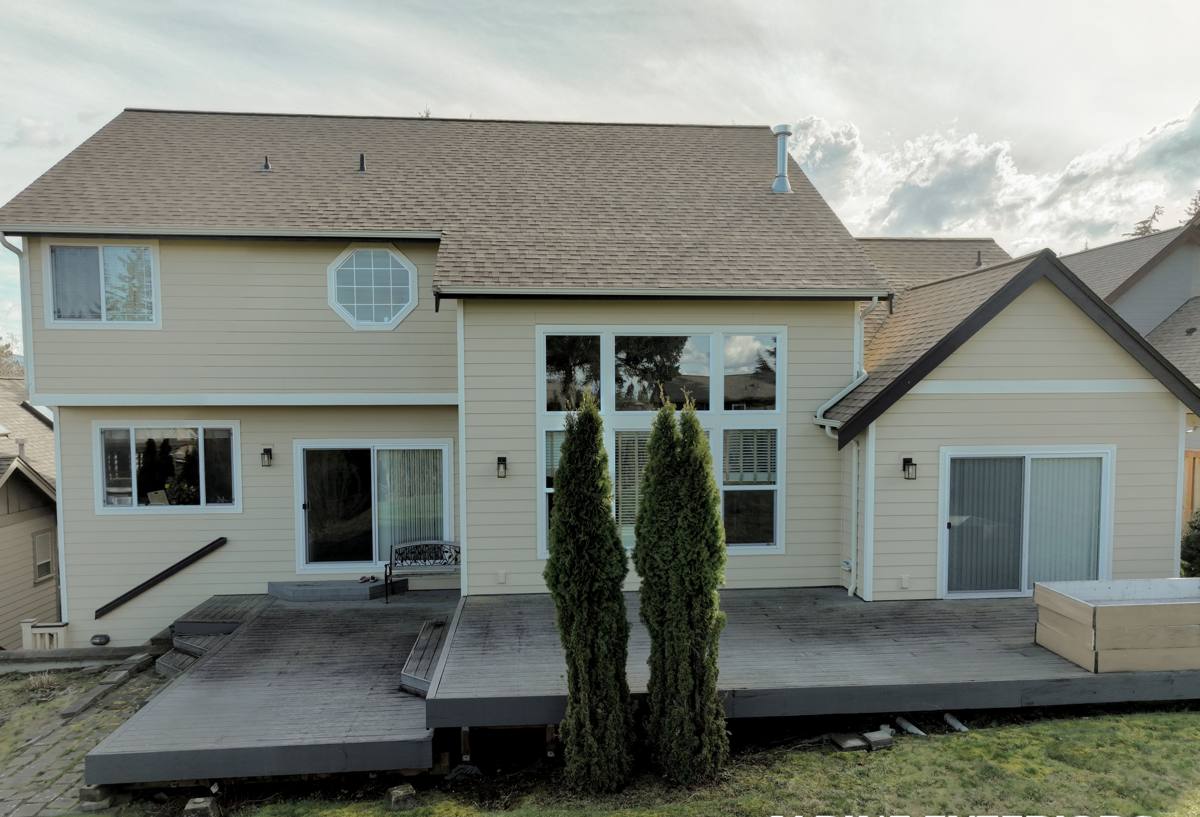
Signs a Birchwood Deck Needs Repair
Most deck problems announce themselves quietly before they become safety issues. Homeowners usually notice one or two of these and assume it's cosmetic, when it's often a sign of something happening underneath.
- Boards that feel spongy, springy, or noticeably softer underfoot in one area
- Green or black staining that keeps returning within weeks of cleaning, especially on shaded sections
- Rust streaks bleeding out around screws, bolts, or joist hangers
- Gaps opening up where the deck meets the house, or a slight downward sag near that connection
- Railings or stair posts that wiggle more than they used to
- Standing water that takes hours to drain after a rain instead of running off
- Visible daylight or gaps in the flashing where the ledger board attaches to the house
Any one of these is worth a look. Several at once usually means the repair needs to start at the framing level, not just the surface.
What Correct Deck Repair Actually Involves
A repair that only replaces what's visible tends to fail again within a season or two, because the cause — usually trapped moisture — never got addressed. A correct repair works from the structure outward.
Framing First
Joists and beams get checked for soft spots, splitting, and rot, particularly near where they contact the ledger board or rest on posts and footings. Damaged sections get sistered or replaced with lumber rated for exterior structural use, not general-purpose stock.
The Ledger and Flashing
The ledger board — where the deck bolts to the house — is the single most common failure point we find on older decks in this climate. If the flashing behind it is missing, cracked, or was never properly lapped to shed water, moisture gets driven straight into the rim joist by wind-blown rain. Fixing that junction correctly, with proper flashing and a drainage gap, matters more to the deck's lifespan than almost anything else in the repair.
Decking Surface and Fasteners
Surface boards get replaced where they've cupped, split, or rotted. Fasteners matter here more than people expect — hardware that isn't rated for coastal, high-moisture conditions corrodes early, staining the wood and weakening the hold well before the boards themselves fail.
Hardware and Connectors
Joist hangers, post bases, and structural screws get matched to the exposure. In a climate with this much rain and salt air, using standard interior-grade hardware is one of the most common shortcuts we see from past repairs, and it's usually the reason a "repaired" deck needed repairing again a few years later.
Common Repairs We See in Birchwood
Older Wood Decks
Cedar and pressure-treated decks that are 12-plus years old typically need attention at the ledger connection, stair stringers, and any area that stays shaded and damp longer than the rest of the deck. Moss holds moisture against the wood surface, and over time that accelerates surface rot even where the framing underneath is still sound.
Newer Composite Decking
Composite surfaces resist rot better, but the substructure underneath is still wood in almost every case. We regularly find composite decks with excellent-looking boards sitting on joists that have been quietly deteriorating because the framing wasn't protected the same way the visible surface was. Composite decking also expands and contracts with temperature and moisture more than some homeowners expect, which can loosen fastening over time if it wasn't installed with the right gaps and hardware.
Repair or Replace? What Actually Determines the Right Call
Not every deck problem calls for a full replacement, and not every deck is worth saving as-is. The right call usually comes down to a few honest factors.
| Factor | Leans Toward Repair | Leans Toward Replacement |
|---|---|---|
| Ledger board condition | Solid wood, isolated flashing failure | Widespread rot at the house connection |
| Joist damage | Limited to one or two joists | Rot spread across most of the framing |
| Footings and posts | Stable, no movement or heaving | Settling, cracking, or undersized for current code |
| Deck age | Under 15–20 years, framing intact | Original construction quality unknown or aging out |
| Surface material | Boards worn but framing sound | Both surface and structure failing together |
When only the surface or one connection point is compromised, repair is almost always the more cost-effective and perfectly durable option. When the framing itself is failing in multiple places, patching it piece by piece usually costs more over a few years than doing the replacement once, correctly.
Our Deck Repair Process
- On-site inspection of the surface, framing, ledger connection, and footings — including probing suspect areas rather than just a visual look
- A clear explanation of what we found, what's causing it, and which repairs are actually necessary versus optional
- A written estimate that separates structural work from cosmetic work, so you know exactly what you're paying for and why
- Repair work performed in the sequence that matters: framing and flashing first, then decking surface, then railings and finish details
- A final walkthrough so you can see what was done and ask questions before we consider the job finished
Materials and Methods We Use
Our standard on Birchwood repairs is to use exterior-rated structural lumber, corrosion-resistant fasteners and connectors suited to coastal, high-moisture exposure, and proper self-adhered flashing at every ledger and joist connection we open up. It costs a little more than the minimum hardware option, and it takes longer than skipping the flashing step, but it's the difference between a repair that lasts and one that reopens the same problem in a few years.
We're also selective about which decking products we recommend for repairs in this climate. Some engineered and composite boards perform very well here; others are more sensitive to installation gaps, ventilation, and moisture cycling than their marketing suggests. Where we steer a homeowner away from a particular product, it's because of how it behaves in Whatcom County's wet, moss-prone conditions specifically — not a knock on the manufacturer, just an honest trade-off worth knowing before you spend the money.
Why a Crew That Already Works Birchwood Matters
Deck repair done right depends on understanding how a specific climate treats a specific structure over time, and that's something you learn by working in the same neighborhoods repeatedly, not by reading a spec sheet. A crew familiar with Birchwood knows which failure points show up again and again in this area's homes, how to schedule work around the region's rain patterns so repairs aren't rushed or sealed while still damp, and what Bellingham's permitting and inspection process expects for structural deck work.
That local familiarity also means fewer surprises once we open things up. When we've already seen how ledger flashing, footing depth, and framing choices tend to hold up on homes like yours in this climate, we can flag likely issues during the initial inspection instead of discovering them mid-project.
Keeping Your Repaired Deck Lasting
A good repair buys you years, but a little upkeep buys you more. In this climate, that mostly comes down to managing moisture and moss before they get a foothold again.
- Sweep debris and standing organic matter off the deck regularly, especially in shaded corners
- Clean moss and algae growth promptly rather than letting it establish and hold moisture against the wood
- Check the gap between deck boards periodically to make sure it hasn't closed up and started trapping water
- Reseal or refinish wood decking on the schedule appropriate to the product, rather than waiting until it visibly fails
- Keep an eye on the ledger connection and any flashing you can see for early signs of water intrusion
If you're noticing soft spots, staining, or movement in your Birchwood deck, we're happy to take a look and give you a straight answer about what it needs. Reach out for a free, no-pressure estimate using the form below.