 Bellingham Exterior
 Asphalt Shingle Roofing Built for Blaine's Weather
Blaine sits close enough to the water that homes here take on a different kind of weather load than roofs just a few miles inland. Salt-laden air off the Salish Sea, wind-driven rain that comes in sideways during winter storms, and a long, damp moss season all put extra stress on a roof year after year. An asphalt shingle roof can handle all of that — but only if it's specified and installed with those conditions in mind, not treated like a generic reroof.
We work throughout Whatcom County, including Blaine, and we approach every asphalt shingle job the same way: match the materials to the exposure, get the details right underneath the shingles, and build in the drainage and airflow the roof needs to shed moisture instead of holding onto it.
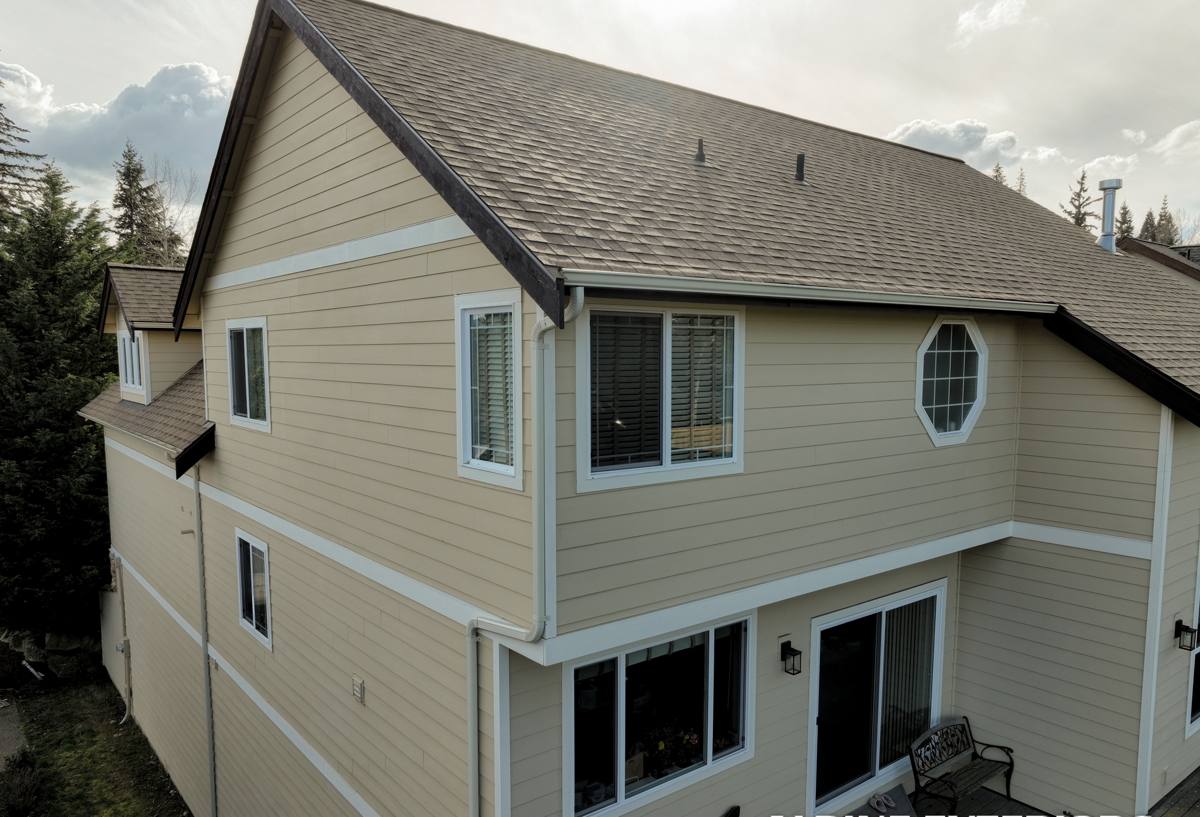
Why the Local Climate Is Hard on Shingle Roofs
Salt Air and Coastal Exposure
Homes closer to the water deal with airborne salt that settles on roofing, siding, and metal components. Over time it accelerates corrosion on exposed fasteners, flashing, and vents that aren't rated for coastal exposure. It's rarely dramatic — more of a slow wear pattern that shows up years earlier than it would on a roof twenty miles inland.
Driving Rain
Storms coming off the water don't just fall straight down — they push rain sideways and up under the shingle tabs, roof-wall flashing, and anywhere the roof plane changes direction. A roof that would perform fine in a calmer inland setting can leak in exactly these spots if the underlayment and flashing weren't built for wind-driven moisture.
Moss and Shade
Whatcom County's damp, mild winters are ideal growing conditions for moss, and Blaine's tree cover and marine humidity make it worse. Moss holds water against the shingle surface, works its way under tabs, and lifts them over time — which is one of the most common causes of early shingle failure we see on roofs that are otherwise in decent shape.
What a Correctly Installed Roof Needs Here
A shingle roof is a system, not just a layer of shingles nailed to plywood. In this climate, a few details matter more than they would elsewhere:
- Ice and water shield at eaves, valleys, and roof-wall intersections — the areas most exposed to wind-driven rain and ponding
- Synthetic underlayment across the full deck for a second line of defense if wind ever drives moisture past the shingles
- Balanced attic ventilation so moist air escapes instead of condensing under the deck, which softens sheathing and shortens shingle life from underneath
- Corrosion-resistant flashing and fasteners at chimneys, skylights, and sidewalls, sized for coastal exposure rather than standard-grade hardware
- Proper nailing pattern and shingle exposure, since underdriven or overdriven nails are a leading cause of premature wind and rain damage
Skipping any one of these doesn't usually cause an immediate problem — it shows up as a leak or a shortened lifespan three, five, or ten years down the road, which is exactly the kind of failure that's expensive to trace back to its cause.
Signs Your Blaine Roof Needs Attention
Because this climate wears roofs from the inside out as often as from the outside in, it helps to know what to look for before a small issue becomes a ceiling stain.
- Moss or dark streaking building up on north-facing or shaded slopes
- Granules collecting in gutters or at downspout outlets
- Shingle tabs that look lifted, curled, or cupped, especially after a windstorm
- Soft spots or sagging felt at the roof edge when you look up from the ground
- Rust staining below metal flashing or exposed fasteners
- Daylight visible through the attic roof deck, or damp insulation near the eaves
- A noticeable jump in how often moss needs to be cleaned off compared to a few years ago
Any one of these is worth a look before winter storm season, since a roof that's already compromised has much less margin for a hard driving rain event.
Our Asphalt Shingle Roofing Process
- On-site evaluation — we walk the roof and attic, note existing damage, ventilation, and any trouble spots specific to your home's exposure
- Straightforward proposal — materials, scope, and price explained in plain terms, with options rather than a single take-it-or-leave-it package
- Tear-off and deck inspection — old roofing removed, deck checked for soft or water-damaged sheathing before anything new goes down
- Underlayment and flashing installed to the level this climate requires — not the minimum code allows, but what actually holds up to wind-driven rain
- Shingle installation to manufacturer spec, correct nailing pattern and exposure, with attention to hips, valleys, and penetrations
- Ventilation check — intake and exhaust balanced so the new roof isn't fighting trapped moisture from day one
- Final walk-through and cleanup — magnetic sweep for debris, gutters cleared, and a review of what was done
Choosing the Right Shingle for This Area
Not every shingle product is worth the same premium in a marine climate. The table below outlines how the common tiers compare for a home in the Blaine area, where moss resistance and wind rating matter more than they would in a drier inland location.
| Shingle Type | Typical Lifespan | Wind Rating | Best Fit |
|---|---|---|---|
| Standard 3-tab | 15–20 years | Lower | Budget-focused projects, less wind/moss exposure |
| Architectural (laminate) | 25–30 years | Higher | Most Blaine-area homes; better wind and moisture performance |
| Algae-resistant architectural | 25–30 years | Higher | Shaded lots and homes with a history of moss or dark staining |
| Premium/designer laminate | 30+ years | Highest | Homeowners prioritizing longevity and curb appeal over lowest upfront cost |
For most homes in this area, we lean toward architectural shingles with algae-resistant granules. The added cost over standard 3-tab is modest, and it directly addresses the moss and staining problem that's so common here rather than just delaying it.
Moss, Algae, and Ongoing Maintenance
Even a well-installed roof benefits from some upkeep in this climate. A few practices go a long way toward protecting the investment:
- Keep overhanging branches trimmed back to reduce shade and debris buildup on the roof
- Clean gutters at least twice a year so water isn't backing up under the shingle edge
- Have moss removed by hand or with a gentle, low-pressure method rather than power-washed, which can strip granules and shorten shingle life
- Consider algae-resistant shingles on any future reroof or repair, since they're a one-time upgrade that reduces recurring cleaning
Zinc or copper control strips near the ridge can help slow moss regrowth on some roofs, though they're not a substitute for periodic cleaning and shouldn't be the only line of defense on a heavily shaded roof.
What Affects the Cost of a Reroof Here
Pricing an asphalt shingle roof always depends on the specifics of the home, but a few factors tend to move the number more in this area than elsewhere:
| Factor | Why It Matters Here |
|---|---|
| Roof complexity (valleys, dormers, penetrations) | Each detail is a place wind-driven rain can find a way in — more of them means more flashing work |
| Deck condition under old roofing | Long-term moisture and past moss cover sometimes hide soft sheathing that needs replacing |
| Ventilation upgrades needed | Older homes often need added intake or exhaust to keep a new roof performing as designed |
| Shingle tier selected | Algae-resistant and premium laminates cost more upfront but reduce moss-related maintenance and callbacks |
| Access and site conditions | Steep pitches, mature landscaping, or tight lot access can add labor time |
We'd rather walk your specific roof and give you real numbers than quote a broad range that doesn't mean much — but as a general reference, most straightforward asphalt shingle reroofs land in the mid four figures to low five figures, with complexity and materials moving that number up or down.
Why a Local Crew Makes a Difference
A crew that already works in and around Blaine knows how this stretch of Whatcom County behaves — which slopes hold moss longest, where wind-driven rain tends to find weak flashing, and what ventilation setups actually work in older coastal-area homes versus newer construction. That's knowledge you don't get from a crew that mostly works drier inland neighborhoods and treats every job the same way.
It also means faster response if a storm damages your roof, easier scheduling for follow-up service, and a contractor who's still around and reachable years after the job is done — not just for the install, but for the maintenance conversations that come after.
If you're weighing a repair against a full reroof, or just want an honest read on how much life is left in your current roof, we're happy to take a look. The estimate is free, there's no pressure, and you'll get a straight answer either way — reach out through the form below to get started.