 Bellingham Exterior
 Board & Batten Siding in Blaine's Marine Climate
Blaine sits right on the water at the north edge of Whatcom County, and that location shapes everything about how siding performs there. Homes close to Semiahmoo Bay and the open water toward the Strait of Georgia take a steady beating from salt-laden wind, driving rain that comes in sideways during winter storms, and a moss season that can run most of the year on shaded, north-facing walls. Board and batten siding — with its bold vertical lines and wide, clean panels — is one of the most requested looks for Blaine homes right now, but it's also one of the least forgiving styles when the installation cuts corners.
The style itself isn't the problem. The problem is that board and batten has more vertical seams and butt joints than a standard lap profile, and every one of those joints is a potential water entry point if it isn't detailed correctly. In a mild inland climate that might not matter much. On Blaine's exposed lots, it matters a lot.
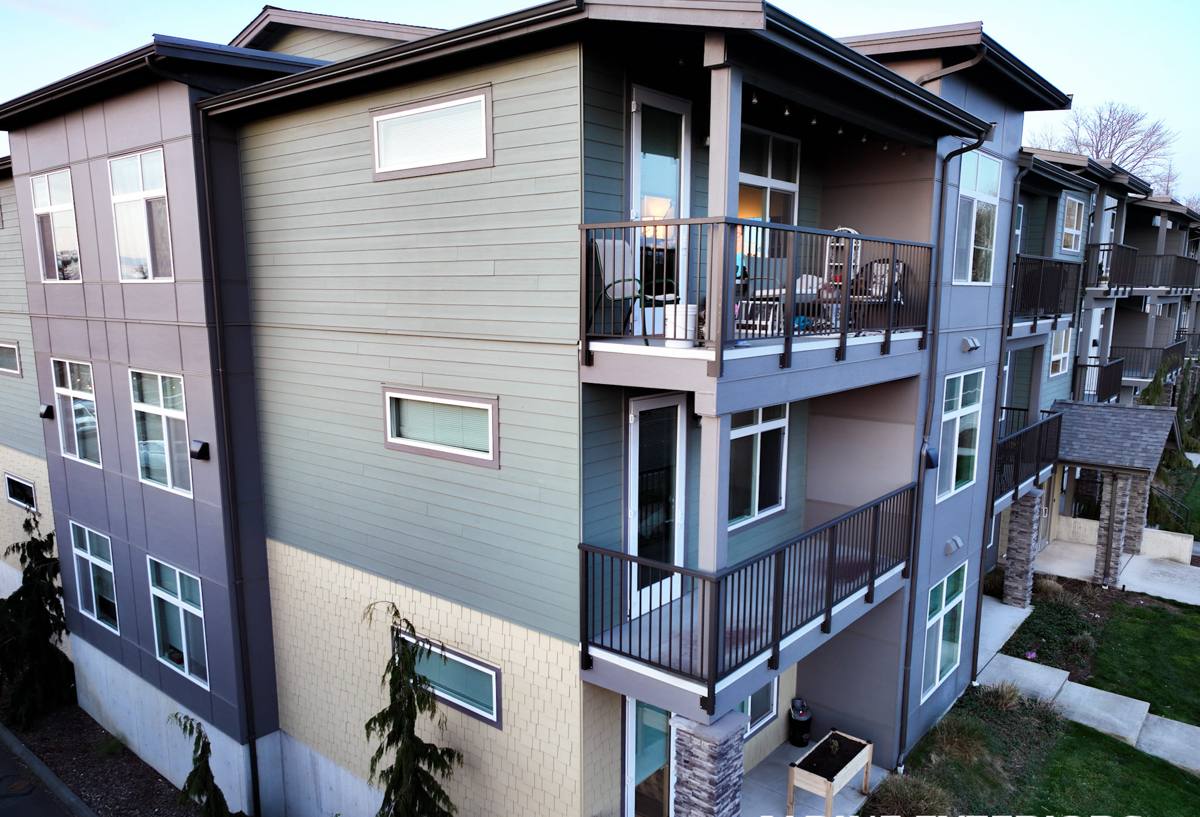
What Blaine's Climate Actually Does to Siding
Salt Air and Fastener Corrosion
Airborne salt from the bay accelerates corrosion on anything metal — nail heads, flashing, trim fasteners. Cheap or mismatched fasteners can start bleeding rust streaks down a board and batten wall within a few seasons, and once a fastener corrodes enough to lose its grip, the board it's holding starts to work loose in wind.
Driving Rain on Exposed Elevations
Waterfront and near-waterfront lots in Blaine catch wind off the water with very little to slow it down. That means rain doesn't just fall on a wall, it gets driven into it under pressure. Vertical board and batten seams that aren't backed by a proper drainage plane can wick moisture inward at exactly the points where two boards meet.
Long Moss Season
Shaded walls, mature tree cover, and persistent damp air add up to a moss and algae season that can stretch across most of the year in parts of Whatcom County. Board and batten's wide flat panels give moss and algae a lot of surface area to colonize if the siding material and finish aren't resistant to sustained moisture exposure.
What a Correct Board & Batten Installation Involves
A board and batten job that's going to hold up in Blaine isn't just nailing boards to the wall in a pleasing pattern. The details behind the surface matter more than the surface itself.
- A weather-resistive barrier installed and lapped correctly behind the siding, with every penetration sealed
- A rainscreen drainage gap (furring strips or a purpose-built drainage mat) so any moisture that gets past the face of the siding can drain and dry instead of sitting against the sheathing
- Corrosion-resistant fasteners rated for coastal exposure, driven to manufacturer spec — not overdriven, not underdriven
- Properly flashed butt joints and any horizontal seams, since board and batten often runs full wall height but not always without a joint
- Correct batten spacing and fastening so battens don't trap water against the underlying panel
- Factory-finished or factory-primed material so cut ends and exposed surfaces are sealed before they're ever exposed to weather
Skip any one of these and the wall might look right for a year or two before the problems show up as staining, soft spots, or boards that have started to cup or separate at the seams.
James Hardie Board & Batten Options
We install James Hardie fiber cement exclusively, and board and batten is one of the styles where the product system really earns its keep. Fiber cement doesn't absorb and swell the way wood-based products can, and it holds paint and factory finish far longer than materials that rely on a surface coating alone to keep moisture out.
| Option | What It Is | Best Fit |
|---|---|---|
| HardiePanel vertical siding with battens | Large-format fiber cement panels installed vertically, with wood-look or smooth battens covering the seams | Full board and batten look at a more efficient install pace, popular on modern farmhouse and craftsman exteriors |
| Hardie Artisan vertical siding | A premium, thicker-profile fiber cement product with deeper shadow lines and a more dimensional, true board-and-batten appearance | Homeowners who want the highest-end look and are willing to pay for the added depth and detail |
| ColorPlus factory finish | Baked-on finish applied at the factory rather than job-site painting | Every board and batten project we install in Blaine's salt air and rain — factory finish resists fading and chipping better than field-applied paint |
Why We Don't Install Vinyl or LP Board & Batten in Blaine
Vinyl board and batten is common and inexpensive, but it's a thin, flexible material trying to imitate a look that's inherently about crisp, substantial lines. In steady coastal wind it can flex, rattle, and eventually warp or bow, especially on longer wall runs. It also isn't a great match for salt air over the long haul — the plastic can chalk and discolor faster than in a drier inland climate.
LP SmartSide is a wood-strand product with a resin-treated core, and it performs reasonably well in a lot of climates. But it's still an engineered wood product at its core, meaning any breach in the finish — a missed caulk joint, a fastener that backs out, a cut edge left unsealed — gives moisture a path into a material that can swell and deteriorate once it's wet. On a style with as many seams as board and batten, in a climate that drives rain sideways for months at a time, we don't think that's a risk worth taking on a customer's home. Fiber cement doesn't have that vulnerability, which is why it's the only material we put up.
Our Process for a Blaine Board & Batten Project
Every project follows the same sequence, because skipping steps is exactly how coastal siding jobs fail early.
- Assessment. We look at wall exposure, existing siding condition, and sheathing underneath before quoting anything — a wall facing the water gets treated differently than a sheltered side yard.
- Tear-off and inspection. Old siding comes off and we check the sheathing for rot or hidden moisture damage before anything new goes up. This step matters more in Blaine than almost anywhere else in the county, since long-term moisture intrusion is common on exposed walls.
- Weather barrier and drainage plane. A correctly lapped weather-resistive barrier and a rainscreen gap go in before a single board is hung.
- Installation. Panels and battens go up to Hardie's fastening and spacing specifications, with flashing at every joint and penetration.
- Finish detailing. Caulking, touch-up, and trim work are finished to shed water at every seam, not just to look clean.
- Walkthrough and cleanup. We review the finished work with the homeowner and haul away all debris.
Cost Factors for Board & Batten Siding in Blaine
Board and batten costs vary more than lap siding because the labor is more detail-intensive. Here's what actually moves the number.
| Factor | Why It Matters |
|---|---|
| Existing siding removal | Tear-off adds labor, and water-damaged sheathing found underneath needs repair before new siding goes on |
| Wall height and battens | Board and batten uses more linear trim per square foot than lap siding, which adds material and install time |
| Wind and water exposure | Waterfront-facing walls need more careful flashing and drainage detailing, which takes more time to do right |
| Product line | Standard HardiePanel vertical costs less than the deeper-profile Hardie Artisan system |
| Access and site conditions | Tight lots, slopes, or limited staging area near the water can add setup time |
We give every Blaine homeowner a written, itemized estimate so there's no guessing where the cost is coming from.
Maintenance That Keeps Board & Batten Looking Right
Fiber cement board and batten is low-maintenance, not no-maintenance. A little attention goes a long way in this climate.
- Rinse siding gently once or twice a year to clear salt residue and organic buildup, especially on shaded or north-facing walls
- Check caulk joints at trim and penetrations every year or two and recaulk if it's cracked or pulling away
- Keep gutters clear so overflow doesn't run down the wall face and feed moss growth
- Trim back vegetation that shades walls and keeps them damp longer than they need to be
- Have a professional look at any staining, soft spots, or loose boards right away rather than waiting
Why a Crew That Already Works in Blaine Makes a Difference
Board and batten in Blaine isn't a generic install. A crew that already works this stretch of Whatcom County knows which walls take the brunt of the wind off the water, how much drainage detailing a given exposure actually needs, and how long moss season really runs on a shaded elevation. That local pattern recognition is what keeps a job from being "technically correct on paper" and instead makes it correct for the specific house and lot it's going on.
If you're considering board and batten siding for a home in Blaine, we're happy to take a look and put together a free, no-pressure estimate — just fill out the form below.