 Bellingham Exterior
 Why Blaine's Waterfront Climate Is Hard on a Roof
Blaine sits at the far north end of Whatcom County, right on the water near Semiahmoo Bay and Drayton Harbor, just south of the Canadian border. That location gives homes here a specific mix of punishment that a roof further inland doesn't deal with in the same combination: near-constant salt-laden air off the water, wind-driven rain that hits siding and roof edges sideways instead of straight down, and a moss and algae season that can run most of the year in the shaded, damp spots on a roof.
None of that is unique to Blaine, but the intensity is higher here than in drier parts of Whatcom County. Salt air accelerates corrosion on any exposed metal — fasteners, flashing, gutter hardware — faster than the same materials would wear in Bellingham proper, a few miles inland. Driving rain finds its way under poorly lapped flashing and worn underlayment. And moss doesn't just sit on the surface; given enough time it works into shingle mat and holds moisture against the roof deck. A metal roof, installed correctly for this specific environment, handles all three of those stresses better than most other roofing materials — but "installed correctly for this environment" is the part that actually matters.
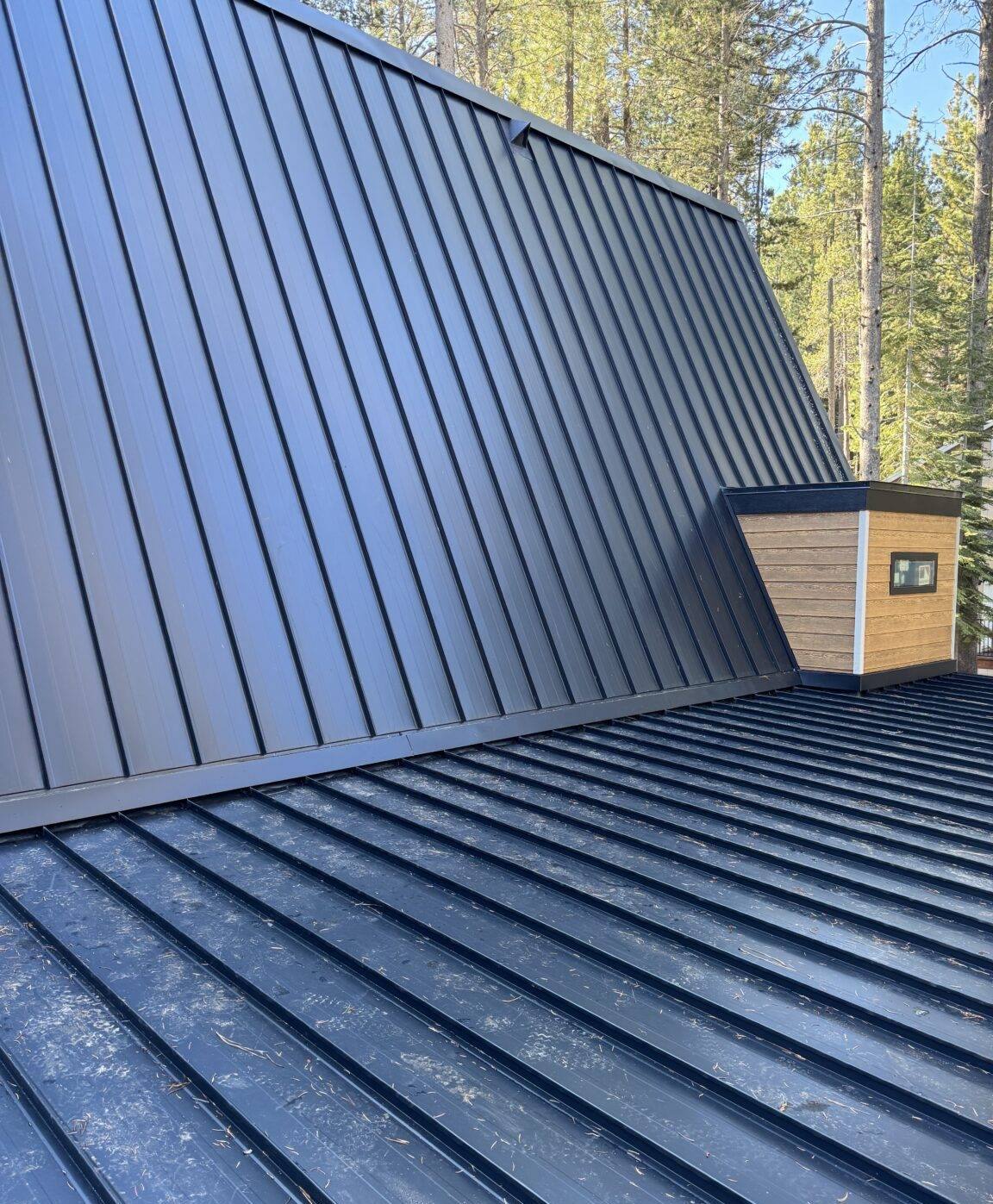
What a Correct Metal Roof Installation Involves
Metal roofing has a reputation for being nearly maintenance-free, and in the right conditions it earns that reputation. But a metal roof is only as good as the details underneath it — the fasteners, the flashing, the underlayment, and how the panels handle expansion and contraction over the years. In a salt-air, high-rainfall environment like Blaine's, those details matter more than they would somewhere drier and further from the water.
Fasteners and Flashing Near Salt Water
Not all metal roofing hardware is created equal, and this is where a lot of corners get cut on coastal jobs. Fasteners, flashing, and trim need to be matched to the panel material to avoid galvanic corrosion — dissimilar metals in contact with each other, combined with salt air and moisture, corrode faster than either metal would on its own. We spec fastener and flashing materials specifically for proximity to salt water, not just whatever matches the panel color on a shelf.
Underlayment and Moisture Control
Under the metal itself, a synthetic or self-adhered underlayment does the real waterproofing work — the metal sheds bulk water, but wind-driven rain and ice-dam-style backups (less common here than in colder climates, but not unheard of) can push moisture under panel laps. A high-quality underlayment, properly lapped and sealed at every penetration, is what keeps that moisture out of the roof deck rather than just off the top surface.
Choosing the Right Metal Panel System
"Metal roofing" covers a range of products, and the right choice for a Blaine home depends on budget, roof pitch, and how much you want to minimize long-term maintenance. The two main categories homeowners choose between are standing seam and exposed-fastener panels.
Standing Seam vs. Exposed-Fastener Panels
Standing seam panels use hidden clips and interlocking seams, with no exposed screws penetrating the panel face. Exposed-fastener panels are screwed directly through the panel, with gasketed screws sealing each penetration. Both are legitimate roofing systems; the difference is mostly upfront cost versus long-term maintenance.
| Factor | Standing Seam | Exposed-Fastener |
|---|---|---|
| Upfront cost | Higher | Lower |
| Fastener exposure | Hidden clips, no face penetrations | Screws through panel face, gasket-sealed |
| Long-term maintenance in salt air | Minimal — no exposed gaskets to inspect | Gaskets and screws should be checked periodically |
| Typical service life | Longer, with less upkeep | Long, but gasket wear can shorten it if unmaintained |
| Best fit | Waterfront and full-exposure roofs | Budget-conscious projects, secondary structures |
For homes with direct water exposure — which describes a good number of properties in and around Blaine — we generally recommend standing seam specifically because it removes the exposed-fastener gaskets from the equation entirely. Those gaskets are durable, but they're also the one component on an exposed-fastener roof that ages faster in salt air and eventually needs attention. On a budget-driven project or a detached garage or shop roof, exposed-fastener panels are still a sound, honest choice — we just want homeowners to understand the trade-off going in.
Moss, Algae, and a Roof That Rarely Dries Out
Whatcom County's wet season runs long, and roofs in shaded areas — under trees, on north-facing slopes, or in spots that just don't get much sun — can stay damp for weeks at a stretch. That's exactly the condition moss and algae need to establish themselves. On an asphalt shingle roof, moss roots into the mat and lifts shingle edges, which is how a moss problem turns into a leak. Metal roofing doesn't give moss the same foothold — there's no mat to root into — but that doesn't mean a metal roof is immune to buildup in valleys, behind chimneys, or wherever debris collects and holds moisture against the panel. Keeping those areas clear is still part of caring for a metal roof, even though the roof itself isn't feeding the growth.
How Our Metal Roofing Process Works
A metal roof installed wrong will still look fine for the first year or two — the problems that show up later are almost always tied back to shortcuts taken during install. Our process is built to avoid that.
- On-site inspection of the existing roof deck, flashing points, and ventilation before any work is quoted.
- Tear-off of old roofing material and a deck inspection for rot or soft spots, common on older Whatcom County homes.
- Installation of a synthetic or self-adhered underlayment rated for the panel system and roof pitch.
- Panel installation with fasteners and flashing matched to the panel metal to prevent galvanic corrosion.
- Detail work at valleys, chimneys, vents, and wall transitions — this is where the majority of roof leaks actually originate.
- Final walkthrough covering ventilation, drainage, and what maintenance (if any) the specific system requires.
What Drives the Cost of a Metal Roof in Blaine
Metal roofing costs more upfront than asphalt shingles, and the final number depends on several variables specific to the home and the site. We don't quote sight-unseen, but the factors below are what typically move the price up or down.
| Cost Factor | Why It Matters |
|---|---|
| Panel system (exposed-fastener vs. standing seam) | Standing seam runs higher due to material and labor for hidden-fastener installation |
| Roof pitch and complexity | Steep or multi-plane roofs take longer and require more flashing detail |
| Existing roof condition | Deck repair from rot or past moisture damage adds cost before panels ever go on |
| Tear-off vs. overlay | Removing old roofing exposes the deck for inspection but adds labor and disposal cost |
| Panel material | Steel, aluminum, and specialty coatings each carry different material costs |
| Access and site conditions | Waterfront lots and tight access can affect staging and labor time |
We'll walk through these factors specific to your roof during the estimate rather than quoting a number without seeing the site.
Maintenance Checklist for a Coastal Metal Roof
One of the real advantages of metal roofing is how little ongoing maintenance it needs compared to shingles — but "little" isn't "none," especially this close to the water. A short annual check covers most of what matters:
- Clear debris from valleys, behind chimneys, and around vent penetrations where moisture and moss can collect.
- Check gutters and downspouts for salt-air corrosion or blockage, especially after fall storms.
- Look at exposed-fastener gaskets (if that's your panel system) for cracking or wear every couple of years.
- Inspect flashing at chimneys, skylights, and wall transitions for lifted edges or sealant wear.
- Rinse off salt residue near the water where wind carries spray onto the roof surface.
- Watch for any fastener heads or trim edges showing early rust — an early sign worth addressing before it spreads.
Why a Crew That Already Works in Blaine Matters
A roofing crew that works across Whatcom County but doesn't spend regular time on the water side of it will size fasteners, flashing, and panel specs the same way they would for a drier, inland roof. That's not a matter of skill — it's a matter of not seeing the salt-air corrosion patterns often enough to build them into every quote by default. Working Blaine and the surrounding waterfront communities regularly means we spec hardware for this environment as a baseline, not an upsell, and we've seen firsthand how standard-grade fasteners and generic flashing hold up (or don't) a few years into a coastal roof's life.
If you're weighing metal roofing for a home in Blaine, we're happy to walk the roof, talk through the standing seam versus exposed-fastener trade-off for your specific situation, and put together a straightforward, no-pressure estimate. There's a form below to get that started.