 Bellingham Exterior
 Board & Batten Siding in Columbia's Climate
Columbia is one of the older, closer-in neighborhoods in Bellingham, and it shows in the housing stock: a mix of early-1900s cottages, mid-century additions, and newer infill builds sitting close enough to Bellingham Bay to catch salt-laden air off the water. That combination matters when you're choosing a siding profile. Board and batten is a strong architectural fit for the craftsman and farmhouse-style homes common in this part of Whatcom County, but the vertical lines that make it attractive also change how water moves down the wall compared to standard lap siding. Get the detailing wrong and a board and batten wall traps moisture behind the battens; get it right and it's one of the more durable, low-maintenance looks you can put on a Bellingham home.
This page is specifically about board and batten siding installed correctly for Columbia's conditions — the driving rain off the Sound, the long stretch of damp shoulder seasons that keep moss and algae active most of the year, and the salt air that accelerates corrosion on fasteners and hardware that aren't rated for it.
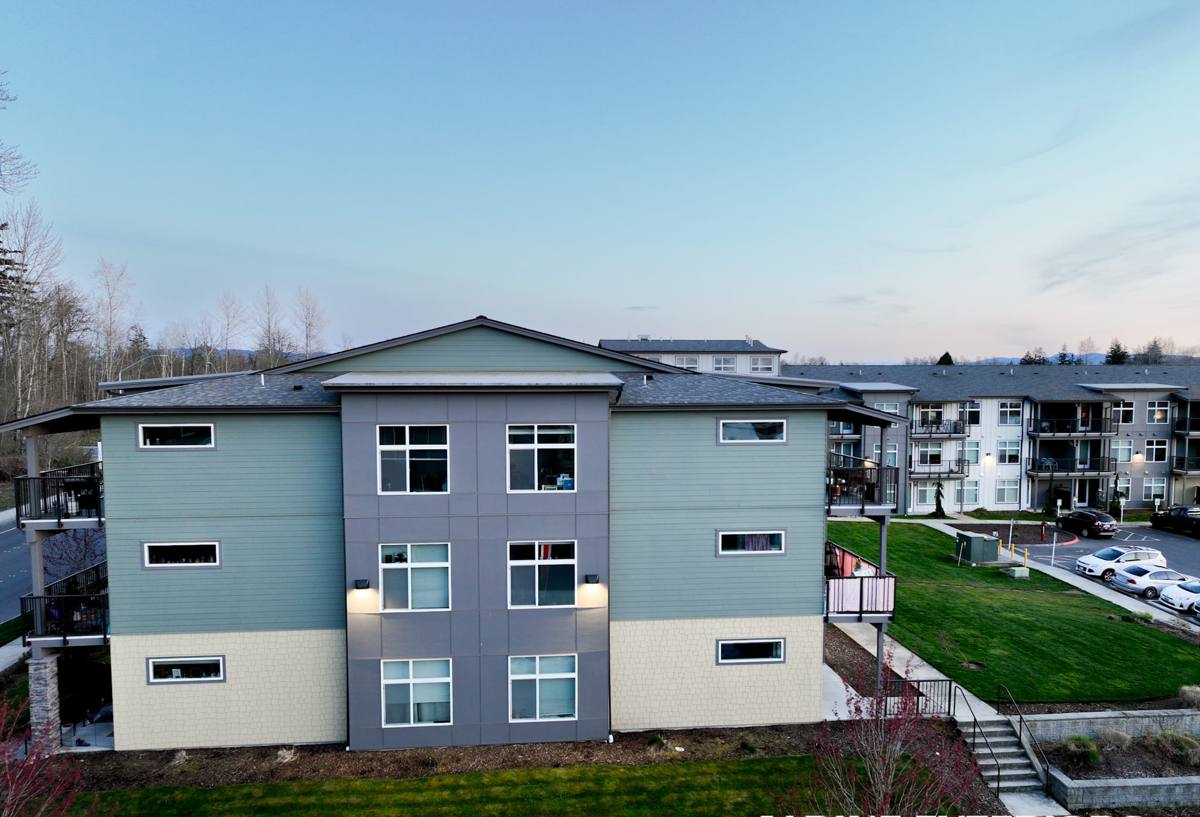
What Board and Batten Actually Is
Board and batten is a vertical siding pattern: wide flat panels or boards installed vertically, with narrower strips (battens) covering the seams between them. It's not a separate material — it's a profile that can be built from different products, and the product underneath the pattern is what determines how the wall performs over the next 20-30 years.
- Traditional versions used solid wood boards and battens, which move seasonally and need repainting on a short cycle.
- Some contractors build the look from engineered wood panels, which are more dimensionally stable than solid wood but still absorb moisture at cut edges and fastener penetrations.
- Vinyl board and batten exists but reads as plastic up close and can't hold the crisp shadow lines that make the style attractive in the first place.
- We build it exclusively from James Hardie fiber cement vertical panel siding with true wood-textured battens — a non-combustible, moisture-stable substrate that holds paint and color far longer than wood-based alternatives.
Why Vertical Siding Needs Different Detailing Than Lap Siding
Water Runs Differently on a Vertical Wall
Horizontal lap siding is designed to shed water downward, course by course, with each board overlapping the one below it. Board and batten runs vertically, so water tends to run straight down the face of the panel and can concentrate at the batten seams and at horizontal breaks like window heads and the base of the wall. In a neighborhood like Columbia, where wind-driven rain comes off the bay at an angle rather than falling straight down, those seams and transitions take a real beating during fall and winter storms.
Moss and Algae Add a Second Problem
Whatcom County's damp, mild climate keeps surfaces wet long enough for moss and algae to take hold, especially on north- and west-facing walls that don't get much direct sun. On a board and batten wall, moss growth at the battens and panel bottoms isn't just cosmetic — organic growth holds moisture against the wall surface longer than a clean, dry surface would, which is exactly the wrong condition for any wood-based product and a stress test for the finish on any product, including fiber cement.
Salt Air Attacks Metal First
Columbia's proximity to the water means fasteners, flashing, and trim hardware are exposed to salt air that accelerates corrosion compared to siding installed further inland in the county. Rusting fasteners eventually stain the siding face and can fail structurally, which is why fastener selection matters as much as the panel itself.
The James Hardie System We Install
We install James Hardie fiber cement exclusively — no LP SmartSide, no vinyl, no Cemplank or Allura, no primed spruce or cedar boards. For board and batten specifically, that means HardiePanel vertical siding paired with Hardie batten trim, both manufactured from fiber cement rather than wood fiber or wood-plastic composite.
Why Fiber Cement Fits This Application
- Non-combustible — fiber cement doesn't burn, rot, or feed insects the way wood-based sidings can.
- Dimensionally stable — it doesn't swell and shrink with moisture the way solid wood or wood-composite panels do, which keeps the batten seams tight over time instead of opening gaps that let water behind the wall.
- HZ10 climate engineering — James Hardie makes region-specific HZ products, and the HZ10 line is engineered for the wetter Pacific Northwest climate zone that includes Whatcom County, with a formulation and moisture-management approach suited to sustained damp conditions rather than dry heat or freeze-thaw cycles.
- ColorPlus factory finish — a baked-on finish applied under controlled conditions, which holds up to UV and moisture better than field-applied paint and comes with its own finish warranty separate from the substrate warranty.
What a Correct Board and Batten Installation Involves
The single biggest quality variable on board and batten isn't the panel — it's what's behind it. A rainscreen gap (a drainage channel between the back of the siding and the water-resistive barrier) gives any water that gets past the surface a way to drain and dry out instead of sitting against the sheathing. On a wall style that channels water down through vertical seams, skipping this step is a common shortcut with long-term consequences.
| Detail | Correct approach | Common shortcut |
|---|---|---|
| Drainage plane | Rainscreen gap behind panels so trapped moisture can drain and dry | Panels fastened directly against the weather-resistive barrier |
| Panel seams | Battens installed over flashed, properly spaced joints per Hardie's fastening schedule | Battens placed for looks without joint flashing underneath |
| Fasteners | Corrosion-resistant fasteners rated for coastal/salt-air exposure, per manufacturer spec | Standard fasteners that streak and corrode within a few years near the water |
| Bottom termination | Clearance and flashing at the base to keep the panel edge out of standing water and splash-back | Panels run too close to grade or hardscape, wicking moisture from below |
| Window and door heads | Head flashing integrated with the water-resistive barrier before trim goes on | Trim caulked on top without flashing behind it |
Our Process for a Columbia Board and Batten Job
- On-site assessment — we walk the exterior, check the current siding and sheathing condition, and note exposure direction (which walls take the worst of the wind-driven rain) since that affects detailing priorities.
- Moisture and substrate check — before any new siding goes on, we confirm the sheathing underneath is sound; board and batten hides more square footage per panel than lap siding, so it's important nothing is being covered up rather than fixed.
- Rainscreen and water-resistive barrier — installed per manufacturer requirements, not skipped to save labor time.
- Panel and batten installation — HardiePanel and battens installed to James Hardie's fastening and clearance specifications, which is also what keeps the manufacturer's warranty intact.
- Flashing and trim details — window heads, corners, and the base of the wall get flashed and sealed as part of the install, not treated as an afterthought.
- Final walkthrough — we go over the finished work with you before calling the job done.
Why a Crew That Already Works in Columbia Matters
Bellingham's neighborhoods aren't identical in exposure. A home a few blocks from the bay in Columbia takes wind-driven rain and salt air that a home in a more sheltered part of the county doesn't deal with to the same degree. A crew that already works this area knows which walls typically need extra attention at flashing and fastener choice, understands the moss and algae cycle that comes with Whatcom County's damp shoulder seasons, and isn't guessing at how the local permitting and inspection process works. That local familiarity shows up in the small decisions — where to prioritize the rainscreen detail, how tight to run the panel-to-grade clearance — that separate a board and batten wall that looks good for two years from one that performs well for two decades.
What Drives the Cost of a Board and Batten Project
| Factor | Why it matters |
|---|---|
| Wall prep and sheathing condition | Repairs to rotted or damaged sheathing found during tear-off add labor and material beyond the siding itself |
| Batten spacing and trim complexity | Narrower batten spacing and more architectural detail (gables, dormers, mixed siding transitions) increase labor time |
| Panel and finish selection | ColorPlus factory-finished panels in different color lines carry different material costs |
| Number of stories and access | Second-story and steep-roof walls require more scaffolding or lift access, which adds labor time |
| Existing siding removal | Tear-off and disposal of old siding (especially old wood board and batten) is a separate cost from new installation |
Keeping Board and Batten Siding Performing Long-Term
- Rinse off moss and algae buildup on shaded walls before it spreads, using a soft wash rather than high-pressure spray that can drive water behind panels.
- Keep gutters clear so overflow doesn't run down the wall face and concentrate at batten seams.
- Keep landscaping and mulch beds pulled back from the base of the wall so soil and moisture aren't sitting against the bottom edge of the siding.
- Have caulking at trim and window transitions checked periodically — caulk is a maintenance item even on a well-installed wall.
- Watch for any staining below fasteners or trim, which can be an early sign of corrosion or a flashing issue worth checking before it spreads.
If you're considering board and batten siding for a home in Columbia or elsewhere in Bellingham, we're happy to walk the property, look at your current siding and exposure, and give you an honest read on what the job actually involves. There's no pressure and no cost to get an estimate — just fill out the form below.