 Bellingham Exterior
 Windows Built for the Columbia Neighborhood's Climate
Columbia is one of Bellingham's older, established neighborhoods, and that means a lot of its homes are still running on original or first-generation replacement windows that were never designed for what Whatcom County weather actually does over 30, 40, or 50 years. Salt-tinged air off Bellingham Bay, long stretches of driving rain, and a moss season that seems to start earlier every year all work on window frames, seals, and sills in ways that inland or drier-climate windows simply don't have to withstand. If you've noticed fogging between panes, drafts you can feel with your hand, or wood trim that's gone soft at the corners, that's not bad luck — it's the normal timeline for windows in this part of Bellingham.
Custom windows done right for a Columbia home aren't just about picking a style out of a catalog. They're about matching frame material, glazing, and installation detail to a specific house, a specific exposure, and a specific budget — and doing it in a way that holds up to the salt air and rain load this neighborhood sees year after year.
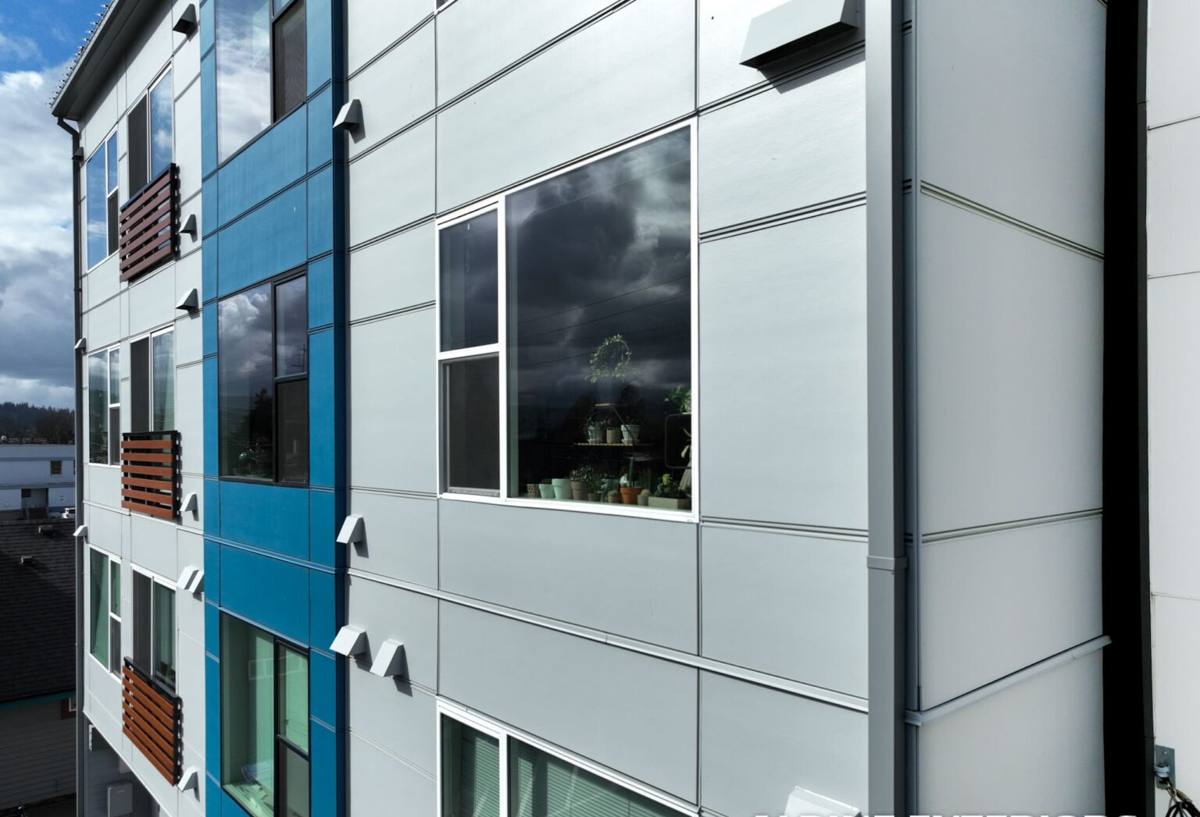
What Salt Air, Rain, and Moss Actually Do to Windows
Salt Air and Metal Fatigue
Homes closer to the water pick up airborne salt that settles on window hardware, screen frames, and any exposed metal fasteners. Over time this accelerates corrosion on lower-grade hardware — hinges get stiff, locks stop aligning, and aluminum components can pit and discolor. It's a slow process, but it's steady, and it's one reason we pay close attention to hardware spec, not just glass and frame, when we quote a job in this area.
Driving Rain and Wind-Driven Moisture
Bellingham doesn't just get rain — it gets rain pushed sideways by wind off the bay and the Strait. That matters because a window that performs fine in a light, straight-down drizzle can still leak under wind-driven rain if the flashing detail, sill pan, or sealant joint isn't right. Most leaks we find in older Columbia homes aren't a failure of the window itself — they're a failure of how it was flashed and sealed into the wall assembly.
Moss, Algae, and Trapped Moisture
Whatcom County's moss season isn't limited to roofs. Moss and algae take hold anywhere shaded, moisture-retaining surfaces sit for long stretches — north-facing sills, under window trim, in corners where wood meets wood. Once organic growth gets a foothold on a wood sill or frame, it holds moisture against the material and speeds up rot from the inside out, often well before it's visible from the street.
Signs a Columbia Home Needs a Custom Window Solution
- Fogging or a hazy film between panes of double-pane glass (a broken seal, not a cleaning issue)
- Visible gaps, drafts, or a cold spot near the window frame even with it fully closed
- Soft, spongy, or discolored wood at the sill or lower frame corners
- Moss, algae, or black staining building up on the sill or trim year after year
- Windows that are hard to open, close, or lock — a sign of frame swelling or hardware corrosion
- Condensation forming on the inside of the glass regularly, especially in colder months
- Paint that keeps failing on wood trim no matter how often it's touched up
Any one of these on its own might just mean a repair. Several together, especially on a home with its original windows, usually means it's time to talk about replacement rather than continuing to patch.
Choosing the Right Frame Material for This Exposure
There's no single "best" window material for every home — it depends on the home's exposure, its age, its trim style, and the owner's tolerance for maintenance. Here's how the common options actually perform under Bellingham's coastal, wet conditions:
| Material | Salt Air / Moisture Resistance | Maintenance | Best Fit |
|---|---|---|---|
| Vinyl | Very good — won't rot or corrode | Low; occasional cleaning | Most Columbia homes wanting durability without upkeep |
| Fiberglass | Excellent — very stable in wet, salt-exposed conditions | Low | Higher-exposure homes or owners wanting a premium, long-life option |
| Wood (clad exterior) | Good if the exterior cladding and sealant details are correct | Moderate to high; interior wood still needs care | Historic-style homes where wood interior trim matters |
| Solid wood (unclad) | Poor to fair in this climate without diligent upkeep | High; regular painting and sealant checks required | Only where strict historic accuracy is required, with a clear maintenance plan |
| Aluminum | Fair — prone to pitting from salt air over time unless marine-grade | Moderate | Specific architectural or budget situations |
We're straightforward with Columbia homeowners about this: an unclad solid wood window can look great, but in a salt-air, high-rain environment it demands a maintenance commitment most people underestimate. Vinyl and fiberglass options exist now that mimic traditional wood profiles closely enough to keep a home's character while cutting that maintenance burden dramatically — which is why we lean toward those for most replacement jobs in this neighborhood unless there's a specific reason not to.
What "Custom" Actually Means for a Columbia Window Job
Custom doesn't have to mean exotic or expensive — it means the window is sized, styled, and detailed to fit the specific opening and the specific home, rather than forcing a standard stock size into a space it wasn't made for. That matters more in older Columbia homes than in new construction, because original openings are rarely exactly standard sizes, and older houses often have settled slightly over the decades.
Where Custom Sizing Pays Off
- Older homes with non-standard or slightly out-of-square openings
- Matching sightlines and grille patterns across a whole facade so the house reads consistently
- Replacing one unusual window (a bay, an arched top, an odd bathroom window) without compromising the design
- Preserving a home's architectural character while upgrading performance
Where Standard Sizing Still Makes Sense
Not every window on a job needs to be custom — plenty of openings in Columbia homes are close enough to standard sizes that a quality stock unit performs just as well and costs less. Part of doing this job honestly is telling a homeowner which openings actually need custom work and which don't, rather than upselling custom sizing across the board.
Installation Detail Is What Actually Stops the Leaks
In a climate with this much wind-driven rain, the window unit itself is only part of the story. Most of the leak problems we get called out to investigate in Bellingham trace back to installation shortcuts, not product defects. A correct install includes:
- A properly sloped, sealed sill pan so any water that gets past the frame drains outward, not into the wall
- Flashing tape integrated with the home's existing weather-resistive barrier, layered so water sheds downward and outward at every seam
- Backer rod and quality sealant at the exterior trim joint, sized and applied correctly rather than just caulked over gaps
- Proper shimming so the window operates square and doesn't stress the seal over time
- Insulation in the gap between the frame and the rough opening — not just sealant, which alone won't stop air movement
Skipping any one of these steps might not show up as a problem for a year or two. In this climate, it eventually will.
Our Process for a Columbia Window Project
1. On-Site Assessment
We look at each window individually — frame condition, current flashing, signs of past leaks or moss buildup, and how the opening sits relative to the home's overall drainage. Two windows on the same house can be in very different condition depending on which direction they face.
2. Material and Style Recommendation
Based on exposure and the home's existing character, we recommend frame material, glazing package, and style options — explaining the trade-offs honestly rather than steering toward whatever's easiest to install.
3. Accurate Measurement and Ordering
Custom or near-custom sizing means precise measurement up front. We account for the home's actual opening dimensions, not assumed standard sizes, to avoid gaps or field-cutting that compromises the seal.
4. Removal and Installation
Old windows and any compromised sill or framing material are removed and inspected. Any rot or moisture damage found underneath gets addressed before the new window goes in — installing a new window over a wet or rotted opening just hides the problem temporarily.
5. Sealing, Flashing, and Finish Work
This is where the leak-prevention work happens — sill pans, flashing integration, insulation, and exterior trim sealing, done to hold up against sideways rain, not just vertical rain.
6. Final Walkthrough
We check operation, seal, and finish on every window before calling the job done, and walk the homeowner through anything they should watch for or maintain going forward.
What Drives Cost on a Custom Window Job
| Factor | Why It Affects Cost |
|---|---|
| Frame material | Vinyl is generally the most budget-friendly; fiberglass and clad wood cost more upfront but reduce long-term maintenance |
| Custom vs. standard sizing | Non-standard openings require custom-built units, which cost more than stock sizes |
| Glazing package | Double vs. triple pane, low-E coatings, and gas fill all affect price and performance |
| Condition behind the old window | Rot or moisture damage discovered during removal adds repair scope before the new window goes in |
| Number of windows and access | Whole-house jobs typically cost less per window than single, hard-to-access replacements |
| Trim and finish work | Matching existing interior/exterior trim profiles adds labor versus a simple swap |
Because so much depends on individual window condition and sizing, we don't quote Columbia jobs off a phone call — an honest number requires seeing the actual openings.
Why Local Experience in Columbia Matters
A crew that's worked in Columbia and similar Bellingham neighborhoods has already seen how homes of this era and exposure behave — where moisture tends to collect, which directions take the worst of the driving rain, and what's normal wear versus a sign of a bigger problem underneath. That experience shortens the assessment process and reduces surprises during installation. It also means we're building in flashing and sealing details that are appropriate for Whatcom County's rain load and salt air specifically, not generic installation instructions written for a drier climate.
If your Columbia home's windows are drafty, fogged, hard to operate, or showing moss and moisture damage at the sills, we're happy to take a look and talk through honest options — no pressure, no upsell, just a clear assessment and a straightforward estimate using the form below.