 Bellingham Exterior
 New Roof Installation for Columbia Homes
Columbia is one of Bellingham's older, established neighborhoods, and that shows up in its roofs. A lot of homes here were built in eras when roofing standards, ventilation codes, and underlayment products were very different from what's available today. When one of these roofs finally needs full replacement, it's rarely a simple swap of old shingles for new ones. It's a chance to correct decades-old shortcuts and build something that's actually matched to what a Whatcom County roof has to survive year after year.
We install new roofs in Columbia regularly, which means we already know the housing stock, the tree cover, and the access challenges that come with narrower older lots. That familiarity saves time on the estimate and keeps surprises to a minimum once the tear-off starts.
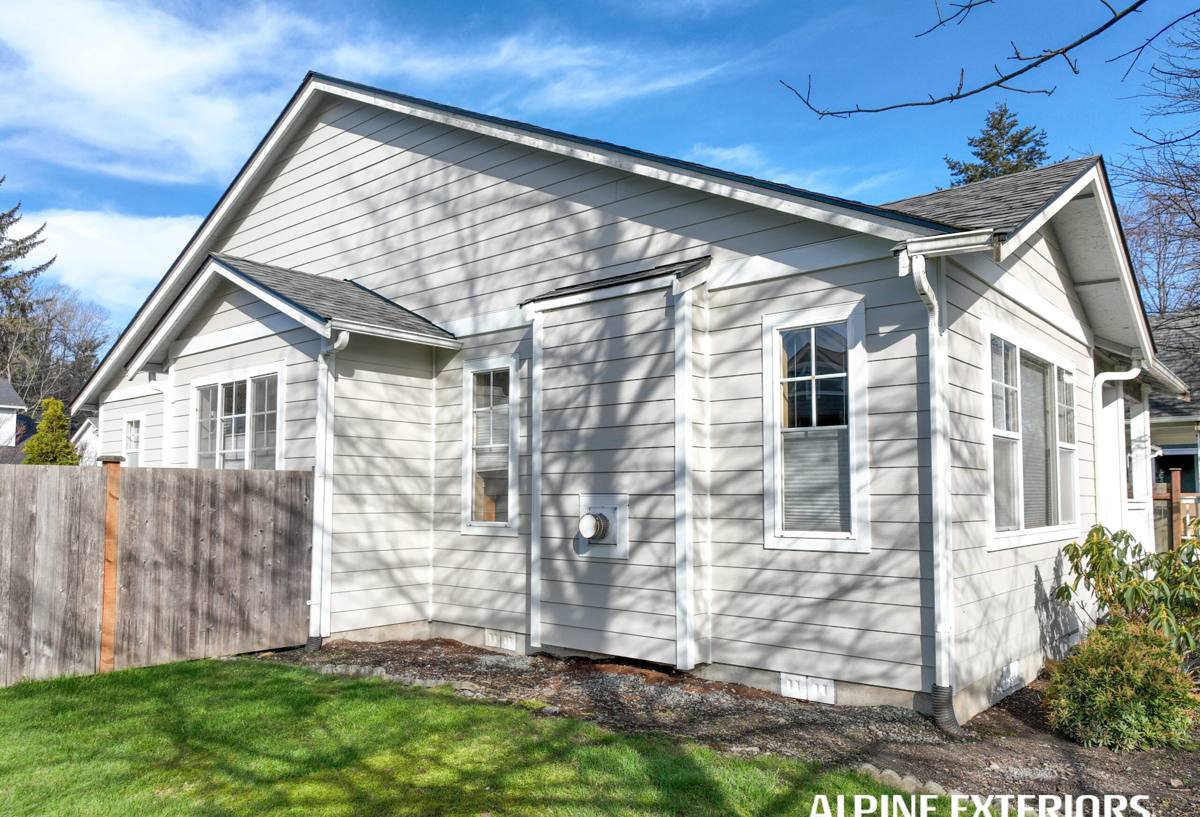
What Bellingham's Climate Does to a Roof
Whatcom County sits in a spot that's tough on roofing in a few specific ways, and Columbia gets all of them.
Salt air off the bay
Proximity to Bellingham Bay means a steady low-grade exposure to salt-laden moisture in the air. Over years, this accelerates corrosion on unprotected metal — fasteners, flashing, vent caps, and gutter hardware are all affected. It's not dramatic damage in any single season, but it adds up, and it's a big reason we're selective about the metal components we use on coastal-adjacent installs.
Driving rain
Storms here don't just fall straight down — wind-driven rain gets pushed sideways under shingle edges, around chimneys, and into any gap in flashing that a fair-weather installation might get away with. A roof built for a drier climate, or built to minimum code without attention to wind-driven exposure, will eventually leak at these transition points.
A long moss season
Cool, damp, shaded conditions for much of the year mean moss and moisture-loving growth get a long runway. Columbia's mature street trees are part of the neighborhood's character, but they also mean more shade and more organic debris landing on roofs. Moss holds moisture against the roofing surface, works its way under shingle tabs, and shortens the life of a roof that isn't detailed to resist it.
Signs a Columbia Home Needs a New Roof, Not Another Repair
Repairs make sense when a roof has years of usable life left and the problem is isolated. Full replacement makes sense once the underlying materials are worn out across the board. Some signs worth a real inspection:
- Granule loss heavy enough that shingles look patchy or bald in sun-exposed areas
- Moss established in the shingle mat itself, not just sitting on the surface
- Multiple past repairs in different areas of the roof rather than one localized issue
- Soft or spongy decking felt underfoot, or sagging visible from the ground
- Daylight or water staining in the attic, especially near valleys and chimneys
- A roof that's already at or past the manufacturer's expected service life for its material
If you're only seeing one or two of these, a repair or a partial section replacement may still be the honest answer — we'll tell you that directly rather than push a full tear-off you don't need yet.
What a Correct New Roof Installation Actually Involves
A new roof is only as good as what's underneath the visible layer. For Columbia's climate, several steps matter more than they might elsewhere:
Full tear-off and deck inspection
We remove existing roofing down to the deck rather than layering over it. That's the only way to actually see and fix rot, soft spots, or delamination in the plywood or plank decking underneath — problems that are common on older Columbia homes and invisible from above.
Ice and water shield at vulnerable points
Self-adhering waterproof membrane goes in at eaves, valleys, and around roof penetrations — the spots where wind-driven rain is most likely to find a way in. This is a place where cutting corners doesn't show up for a year or two, then shows up as a ceiling stain.
Proper ventilation
Balanced intake and exhaust ventilation keeps attic moisture from condensing under the deck, which matters a lot in a climate this damp. Poor ventilation shortens shingle life from underneath, not just from weather exposure on top — and it's an easy thing to get wrong on additions or older homes with mismatched roof lines.
Flashing and metal detailing
Chimneys, skylights, sidewalls, and valleys all depend on correctly formed and sequenced flashing, not just caulk. Given the salt-air exposure in this part of Bellingham, we pay attention to the corrosion resistance of the metal we're specifying here, not just its shape.
Moss-conscious detailing
Where a roof has heavy tree cover, detailing choices — tighter valley work, zinc or copper strip placement, and material selection — can meaningfully slow future moss colonization. We don't oversell what's possible here; shade and moisture will always push back, but a roof can be built to resist it better or worse.
Comparing Roofing Materials for a Columbia Home
There's no single right material for every house — it depends on the roof's exposure, the home's style, and your maintenance appetite. Here's how the common options stack up against this area's specific conditions:
| Material | Moss resistance | Salt-air durability | Maintenance |
|---|---|---|---|
| Architectural asphalt shingle | Moderate — depends on detailing and shade | Good when flashing/fasteners are corrosion-resistant | Low to moderate |
| Metal roofing (standing seam) | Good — sheds debris, little for moss to grip | Requires coated or marine-grade finishes near the bay | Low |
| Cedar shake | Poor without diligent upkeep — organic material feeds growth | Fair, but moisture-sensitive | High |
| Synthetic/composite shingle | Good — inorganic, resists moss colonization | Good | Low |
We're generally cautious about cedar shake in shaded, damp settings like Columbia — not because it's a bad product on its own, but because its organic composition and the maintenance schedule it demands are a mismatch for a long moss season and a lot of homeowners' realistic upkeep habits. That's a trade-off worth knowing before you commit, not a judgment on anyone who chooses it.
How Our Process Works
- On-site inspection. We walk the roof and attic, check decking condition, ventilation, and flashing points, and take photos to explain what we find.
- Written estimate. You get a clear scope and price — materials, tear-off, disposal, and any deck repair allowances — before any work starts.
- Scheduling around weather. Given how much rain factors into timing here, we plan installs for weather windows and keep the roof protected if conditions shift mid-project.
- Tear-off and deck repair. Old roofing comes off, decking gets inspected and repaired as needed, and we document anything beyond the original scope before proceeding.
- Installation. Underlayment, ice and water shield, flashing, and the new roofing material go in per manufacturer specification, not just "close enough."
- Cleanup and walkthrough. Magnetic sweep for nails, full debris removal, and a final walkthrough so you know what was done and what your warranty covers.
Why a Crew That Already Works Columbia Matters
Columbia's older lots often mean tighter driveways, mature trees close to the house, and roof lines that have been added onto over the decades. A crew unfamiliar with the neighborhood spends part of the job figuring out access and working around these quirks. A crew that already works here plans for it up front — equipment staging, tree protection, and material delivery logistics are worked out before the crew shows up, not improvised on day one.
Local familiarity also means we're not guessing at Whatcom County permitting requirements or inspection expectations — we handle that as a normal part of the job.
Cost Factors for a New Roof in Columbia
Every roof is different, but the main variables that move the price are consistent:
- Roof size and complexity — square footage, plus the number of valleys, dormers, and penetrations
- Current layers and tear-off scope — how much existing material has to come off and be disposed of
- Decking condition — how much plywood or plank replacement turns up once the old roof is off
- Material choice — asphalt, metal, and synthetic products carry different material and labor costs
- Access and site conditions — steep pitches, tree cover, and tight lot access all affect labor time
- Ventilation and flashing upgrades — bringing older systems up to a proper standard adds some cost but pays off in roof lifespan
We'd rather walk your roof and give you real numbers than throw out a broad range that doesn't reflect your specific situation.
Ready for a Straight Answer About Your Roof?
If your Columbia home's roof is showing its age, we're glad to come take a look, explain what we find in plain terms, and put together a free, no-pressure estimate — no obligation, no pressure to sign anything on the spot. Use the form below to get started.