 Bellingham Exterior
 Siding Repair in Columbia: What Bellingham's Climate Actually Does to a Home's Exterior
Columbia is one of Bellingham's older, established neighborhoods, which means a lot of its homes have gone through several decades of Whatcom County weather. That weather is not gentle on siding. Salt-tinged air off Bellingham Bay, long stretches of driving rain, and a moss season that can run from fall through late spring all work on exterior materials in different ways — and most of the damage happens slowly, behind the surface, long before it's visible from the sidewalk.
Salt air accelerates corrosion on fasteners, flashing, and any exposed metal trim. Driving rain, especially when it's pushed sideways by wind off the water, finds every gap in caulking, every hairline crack, and every place where old siding has started to cup or separate. And moss doesn't just look bad — it holds moisture against the siding surface for months at a time, which is exactly the condition that rots wood-based products and breaks down poorly sealed seams.
For a Columbia homeowner, the practical result is that siding problems tend to show up first at the details: butt joints, corner trim, window and door casings, and the bottom few feet of wall near grade. A repair that only addresses the visible symptom and ignores what's driving it usually fails again within a season or two.
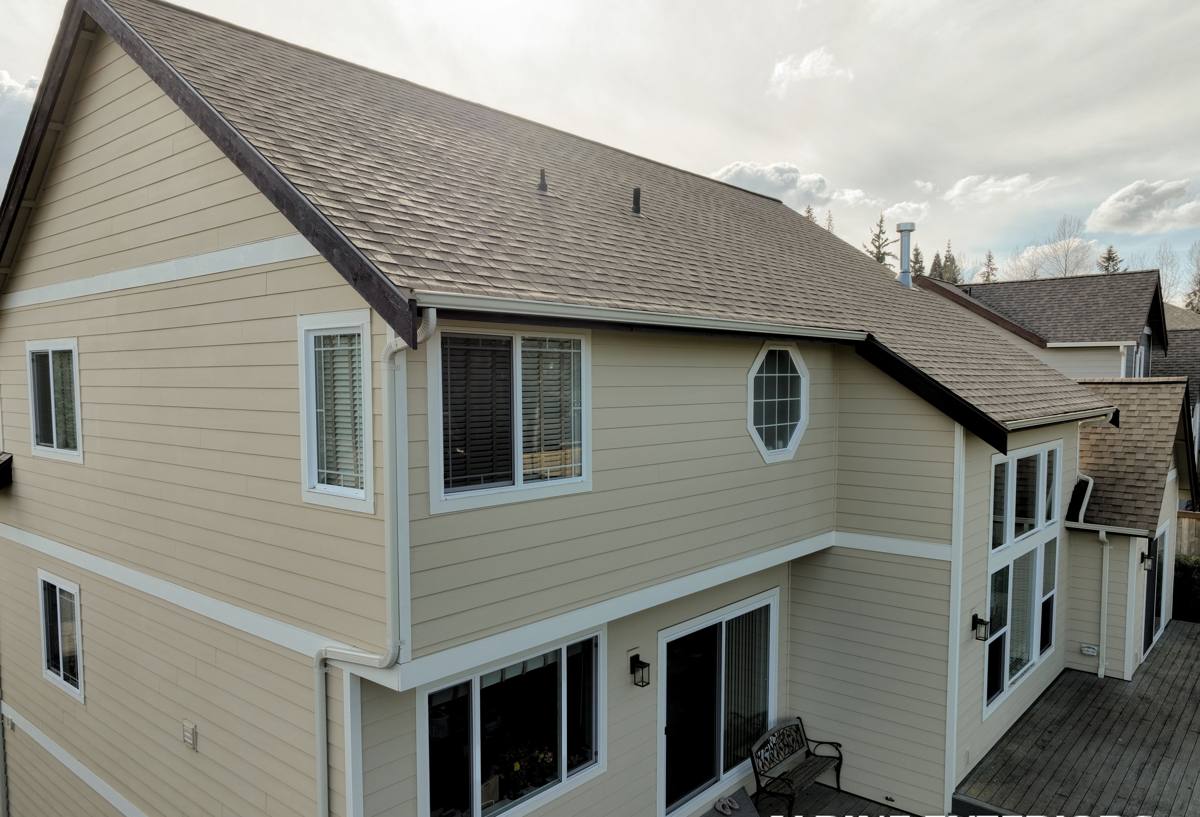
Signs Your Columbia Home May Need Siding Repair
Most siding failures give warning signs well before they become structural problems. Catching them early is the difference between a straightforward repair and a much larger job.
- Soft, spongy, or crumbling siding when pressed, especially near the bottom of walls or below windows
- Visible cracking, splitting, or buckling in individual boards or panels
- Paint that's peeling, bubbling, or failing repeatedly in the same spots
- Persistent moss or dark streaking that returns shortly after cleaning
- Gaps opening up at seams, corners, or where siding meets trim
- Interior signs like musty smells, peeling interior paint, or damp drywall on an exterior wall
- Rust staining running down from nail heads or metal flashing
- Warping or separation where siding meets window and door frames
If more than one of these is present, it's worth having a crew look at the wall assembly as a whole rather than treating each symptom individually.
What a Correct Siding Repair Actually Involves
Diagnosing the cause, not just patching the symptom
A repair that lasts starts with figuring out why the siding failed in the first place. Was it a flashing detail that never shed water properly? A caulk joint that dried out and cracked years ago and was never resealed? Moss holding moisture against the surface long enough to soften the material underneath? Patching over rotten or compromised siding without addressing the water source behind it just buys a little time before the same spot fails again — often worse than before.
Checking what's behind the siding
Once siding is opened up for repair, we look at the house wrap or building paper, the sheathing underneath, and the framing at that location. In a wet climate like ours, siding is the visible layer, but the water-resistive barrier behind it is what actually keeps a house dry over the long run. If that layer has failed, replacing siding alone without correcting the barrier underneath is a temporary fix.
Matching materials and getting the details right
Repairs need to match the existing siding in profile, exposure, and finish closely enough that the patch doesn't stand out or create a new failure point. Fasteners, flashing, and sealants all need to be appropriate for coastal Whatcom County conditions — not just whatever is on the shelf. Corners, butt joints, and trim transitions are where most repairs go wrong if they're rushed.
Repair or Replace? How We Help Columbia Homeowners Decide
Not every damaged section needs a full re-side, and not every repair is worth doing if the underlying siding is near the end of its life. We walk through this honestly rather than defaulting to the bigger job.
| Factor | Leans toward repair | Leans toward replacement |
|---|---|---|
| Extent of damage | Isolated to a few boards or one wall section | Recurring failures across multiple walls |
| Age of existing siding | Relatively recent, otherwise sound | Original siding, decades old, near end of service life |
| Underlying sheathing/framing | Solid, no rot found on inspection | Soft sheathing or framing found behind siding |
| Moisture barrier condition | Intact and functioning | Failed, missing, or improperly installed |
| Material used | Repairable, well-matched material still available | Discontinued profile or a product we no longer install |
When the underlying structure is sound and the damage is contained, a targeted repair is the right call and the honest recommendation. When the damage points to a bigger moisture problem, we'll tell you that plainly rather than patching over it.
Why the Siding Material Behind the Repair Matters
Bellingham Exterior Company installs James Hardie fiber cement siding exclusively, and that standard shapes how we approach repair work too. Fiber cement doesn't rot, doesn't feed moss the way wood-based products can, and holds paint and factory finish far longer under sustained damp conditions than many alternatives. When we repair a Hardie-sided home, we're typically replacing a damaged section with matching Hardie product and reinforcing the flashing details around it — a straightforward, durable fix.
When we're called to repair a home sided in something else — old cedar, primed spruce, vinyl, or another fiber cement brand — we'll still do the repair honestly and correctly if that's the right call for that home. But if the underlying material is failing broadly rather than in one spot, we'll say so, and we'll explain why our long-term recommendation for that kind of failure is a re-side in Hardie rather than repeated patching of a product that's reached the limits of what it can handle in this climate.
Our Siding Repair Process in Columbia
- On-site inspection. We look at the damaged area and check surrounding sections, trim, and flashing for related issues before quoting anything.
- Diagnosis. We identify the actual cause — moisture intrusion, failed sealant, physical damage, material failure — and explain it in plain terms.
- Honest scope and pricing. You get a clear recommendation: repair this section, or consider a broader fix, with the reasoning laid out.
- Removal and inspection behind the siding. Damaged material comes off and we check the sheathing and barrier underneath before closing anything back up.
- Correct reinstallation. Matching material, proper flashing and fastening, and sealant appropriate for coastal exposure.
- Final check. We confirm the repair blends in, sheds water correctly, and doesn't leave a weak point for the next storm season.
What Drives the Cost of a Siding Repair
Every repair is different, but a few factors consistently determine scope and cost. We'll walk through these with you before any work starts.
| Cost factor | Why it matters |
|---|---|
| Accessibility | Second-story or hard-to-reach sections take more time and equipment |
| Extent of hidden damage | Rot found behind siding adds sheathing or framing repair to the scope |
| Material match | Older or discontinued profiles can be harder to source or blend seamlessly |
| Number of affected areas | Scattered damage across several walls costs more than one contained section |
| Trim and flashing work | Corners, window casings, and butt joints require more careful, slower work |
Why a Crew That Already Works in This Neighborhood Matters
Older Whatcom County neighborhoods like Columbia have a wide mix of home ages, siding types, and construction eras. A crew that has already worked on similar homes in the area understands the common failure points before they even start — which trim details tend to trap moisture, which siding vintages are prone to which problems, and how moss and driving rain off the bay tend to concentrate damage on certain exposures. That experience means a faster, more accurate diagnosis and fewer surprises once the siding comes off.
It also means accountability. We're not driving in from out of the area for a one-time job — we're a local crew that expects to be back in this neighborhood, on this street, for the next homeowner too. That's a strong incentive to do the repair right the first time.
Get an Honest Look at Your Siding
If you're seeing soft spots, recurring moss, cracked boards, or paint that won't hold near Columbia, it's worth having someone look before the damage spreads further into the wall. We'll give you a straightforward assessment — repair, replace, or leave it alone — with no pressure either way. Request a free estimate using the form below and we'll set up a time to take a look.