 Bellingham Exterior
 Window Replacement Built for Columbia's Marine Climate
Columbia sits close enough to the water and the tree canopy that its homes take a different kind of weather beating than houses further inland. Salt-tinged air off Bellingham Bay works on metal hardware and finishes year-round. Driving rain off the Sound doesn't just fall straight down here — wind pushes it sideways into window frames, trim, and siding joints. And Whatcom County's long, gray moss season keeps everything damp for months at a stretch, which is exactly the environment that finds every weak seal, every gap in flashing, and every spot where an old window was never quite installed right in the first place.
If you own a home in Columbia and you're starting to notice drafts, fogged glass, or windows that stick when the weather turns wet, that's not just an aging-house problem. It's a climate problem, and it calls for a window and an installation approach that actually accounts for where you live — not a generic swap-and-go job.
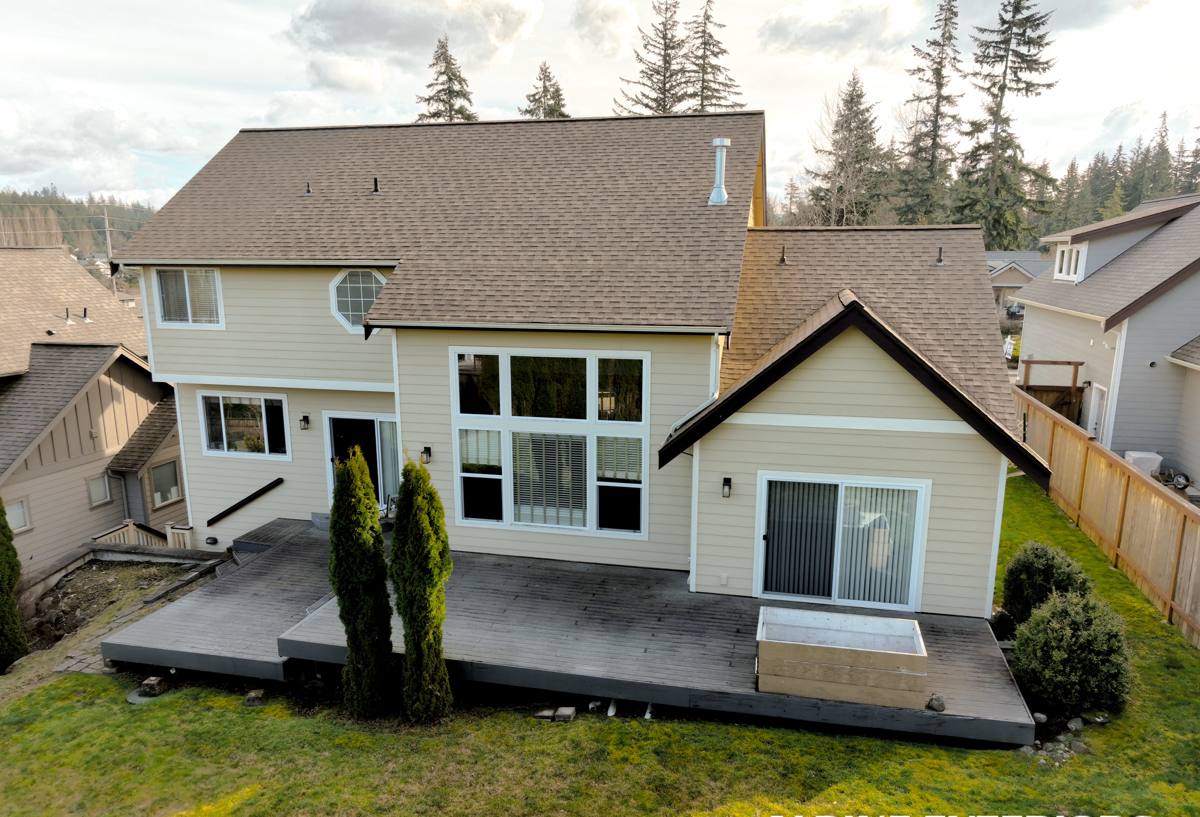
What Marine Air and Wet Winters Do to Older Windows
Most window failures we see in this part of Whatcom County aren't really about the glass. They're about everything around the glass.
Seal and Hardware Breakdown
Salt-laden air accelerates corrosion on window hardware — hinges, cranks, locks — faster than it would inland. Once hardware seizes or a weatherstrip compresses and stops rebounding, the window stops sealing tight, and that's when you start feeling drafts and hearing rattles during storms.
Moisture Intrusion Behind the Frame
Bellingham gets a lot of wind-driven rain, and that rain finds its way behind poorly flashed or caulked-instead-of-flashed window openings. Once water gets behind a frame, it doesn't dry out quickly in our climate — humidity stays high for long stretches, especially during moss season from late fall through spring. That trapped moisture rots wood framing, delaminates sheathing, and eventually shows up as soft trim, peeling interior paint near the sill, or a musty smell that never fully goes away.
Moss and Organic Growth on Sills and Trim
Anywhere moisture sits and doesn't get sun exposure, moss and algae take hold — and Columbia has plenty of tree cover and shaded exposures that fit that description. On window sills and trim, this isn't just cosmetic. Moss holds moisture against wood and paint, which speeds up rot and finish failure underneath it.
Condensation and Fogging
Failed seals on older double-pane windows let the gas fill (or plain air) between the panes escape and let humid outside air in. The result is permanent fogging between the panes that no amount of cleaning fixes — a sign the insulated glass unit itself has failed, not just the frame.
Signs a Columbia Home Needs Window Replacement, Not Just a Repair
- Fogging or moisture trapped between panes that doesn't clear up
- Visible gaps between the frame and siding or trim, especially after a storm
- Soft, spongy, or discolored wood at the sill or lower frame corners
- Windows that are hard to open, close, or lock — especially worse in damp weather
- Noticeable draft or cold spot near the window even with it fully closed
- Rising heating bills without any other clear cause
- Moss or dark staining building up on sills, trim, or the bottom of the frame
- Condensation forming on the inside of the glass regularly, not just on cold mornings
One or two of these can sometimes be handled with a repair or a re-caulk. Several at once, especially on a window over 15-20 years old, usually means the unit and its installation have reached the end of their useful life.
What a Correct Window Replacement Job Actually Involves
The window itself is only part of the job. In a climate like ours, the installation detailing is what determines whether the new window lasts 5 years or 25.
Opening Prep and Inspection
Before anything new goes in, we open the wall enough to check the framing and sheathing around the old window for rot or hidden water damage. If we find it, we address it before installing anything new — putting a new window into a compromised opening just hides the problem for a while.
Sill Pan and Flashing
This is the step that matters most for a house exposed to driving rain. A properly installed sill pan and flashing sequence directs any water that does get past the exterior finish back outside, instead of letting it pool at the sill and soak into framing. It's not optional detailing for us — it's the difference between a window that holds up here and one that doesn't.
Air and Water Sealing
We integrate the new window with your home's weather-resistive barrier (house wrap or building paper) rather than relying on caulk alone to keep water out. Caulk is a backup line of defense, not the primary one.
Fit and Function Check
Every window gets shimmed level and square, checked for smooth operation, and confirmed to lock tight before we consider the job done. A window that's slightly out of square will bind, wear its hardware faster, and eventually leak.
Choosing a Window Frame Material for This Climate
There's no single "best" window material for every home — it depends on your budget, your home's style, and how much upkeep you want to take on. Here's how the common options hold up in a wet, salt-air environment like Columbia's.
| Frame Material | Moisture & Salt-Air Behavior | Maintenance | Typical Trade-Off |
|---|---|---|---|
| Vinyl | Doesn't rot or corrode; handles humidity well | Low — occasional cleaning | Limited color options; can look less traditional on older homes |
| Fiberglass | Very stable in wet, temperature-swinging conditions; resists warping | Low | Higher upfront cost than vinyl |
| Wood-clad (exterior clad, wood interior) | Good if cladding and flashing details are done right; exterior wood is more vulnerable if seals fail | Moderate — cladding protects the wood, but any breach needs prompt attention | Higher cost; more installation-sensitive in wet climates |
| Aluminum | Can corrode with prolonged salt-air exposure unless well-finished; conducts cold | Moderate | Prone to condensation on frame in cold, damp weather |
Given the salt air and rain exposure common in Columbia, we generally steer homeowners toward vinyl or fiberglass frames for most window replacements — not because other materials are bad products, but because they demand less from ongoing maintenance in exactly the conditions this neighborhood sees most of the year. If you have a period home where wood-clad windows fit the architecture, we'll walk you through what upkeep that choice realistically requires here before you commit.
Glass Packages Worth Considering
For a marine climate with a lot of gray, damp days, the glass package affects comfort as much as the frame does.
- Double-pane, argon-filled — a solid, cost-effective baseline for most Bellingham homes
- Triple-pane — worth it for north-facing rooms, homes near busier streets (extra sound dampening), or anyone prioritizing maximum efficiency
- Low-E coatings — help manage heat loss in winter and reduce solar gain in the rare stretches of strong summer sun
Our Process, Start to Finish
- On-site assessment — we look at each window's current condition, the framing behind it, and how exposed that side of the house is to wind and rain
- Straightforward estimate — options broken down by material and glass package, with no pressure to upsize the scope
- Scheduling around weather — we plan install windows with Bellingham's wet season in mind so openings aren't sitting exposed longer than necessary
- Removal and opening inspection — old units come out, framing gets checked and repaired if needed
- Installation with proper flashing and sealing — as detailed above, this is where long-term performance is won or lost
- Final walkthrough — every window operated and checked with you before we call it complete
What Affects the Cost
| Factor | Why It Matters |
|---|---|
| Frame material | Vinyl is typically the most budget-friendly; fiberglass and wood-clad cost more |
| Glass package | Triple-pane and specialty coatings add cost but improve comfort and efficiency |
| Number and size of windows | Larger openings and full-house jobs have different per-window economics than a handful of replacements |
| Condition of existing framing | Hidden rot or water damage found during removal adds repair scope |
| Access and trim work | Second-story windows, custom trim, or matching existing exterior detailing can affect labor time |
We give real, written numbers after seeing the windows in person — not a phone quote based on guesswork. Broad ranges without a site visit tend to be wrong in one direction or the other, and we'd rather give you an accurate number than a fast one.
Why a Crew That Already Works in Columbia Matters
A contractor who works regularly in Bellingham and around Whatcom County has already seen how this specific mix of salt air, wind-driven rain, and shaded, moss-prone exposures plays out on real houses — including the older housing stock common in established neighborhoods like Columbia. That experience shows up in small decisions: how much slope to build into a sill pan, which flashing sequence handles this area's rain direction best, and when a window opening's rot has gone deeper than it looks from outside. It also means someone local you can call if a question comes up after the job is done, not a crew that's moved on to a different region entirely.
If your Columbia home has windows that are drafty, fogged, hard to operate, or just old enough that you're wondering whether it's time, we're happy to take a look and walk you through honest options — no pressure, no inflated urgency. Reach out for a free estimate using the form below and we'll get you a straight answer on what your windows actually need.