 Bellingham Exterior
 If you live in the York neighborhood and you're weighing composite decking, you already know the local weather doesn't do decks any favors. Bellingham sits close enough to the water that salt-laden air reaches yards well inland, and Whatcom County's long wet season means any outdoor structure spends months of the year damp, shaded, and slow to dry. Composite decking handles that better than wood in most cases, but "composite" isn't one product with one set of rules. How it's installed matters as much as what it's made of.
This page covers what a composite deck actually needs to hold up in York's climate, what a correct installation involves, and how we approach the job from first look to final walk-through.
Why York's Climate Is Harder on Decks Than It Looks
Bellingham doesn't get the extreme freeze-thaw cycles of the Midwest, but it makes up for it with sheer duration of moisture exposure. A few things stack up against outdoor structures here specifically:
- Salt air: Proximity to Bellingham Bay means fine salt particles carried on wind can settle on fasteners, flashing, and railing hardware over time, accelerating corrosion on lower-grade metal components.
- Driving rain: Wind-driven rain doesn't just fall on a deck surface — it gets pushed sideways into board gaps, ledger connections, and any gap in flashing. Water that can't drain or dry becomes the source of rot underneath, even on a composite surface.
- Moss and algae season: Shaded, north-facing, or tree-covered yards in this area can stay damp for weeks at a time in fall and winter. That's exactly the environment moss and algae need to establish on any deck surface with texture or porosity.
- Low winter sun angle: Many York-area lots have mature trees or neighboring structures that keep sections of a deck in shade most of the day during the wetter months, slowing natural drying even after rain stops.
None of this means composite decking is a bad fit — quite the opposite. But it does mean the substructure, drainage, and hardware choices matter more here than they would in a drier climate, and a deck built to a generic spec sheet without local adjustments will show problems within a few wet seasons.
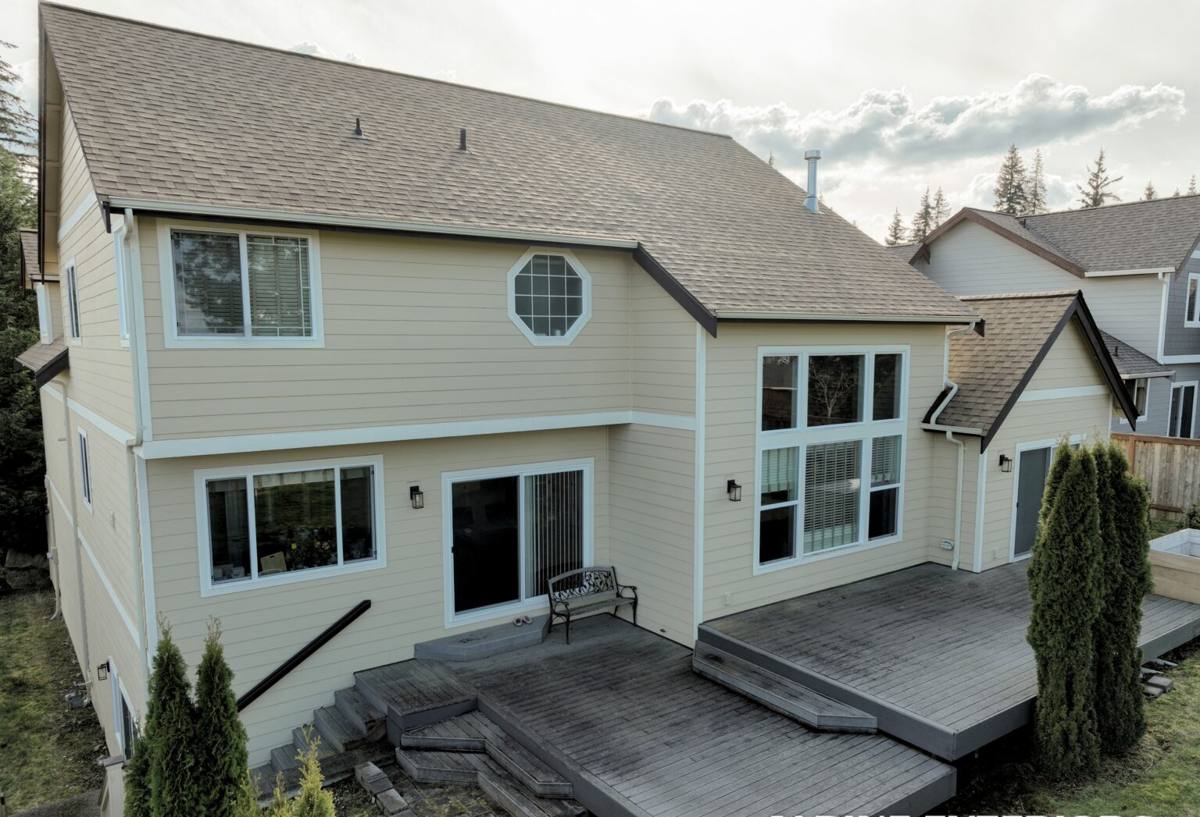
What Composite Decking Gets Right for This Environment
Composite boards are made from a mix of wood fiber and plastic (polyethylene or polypropylene), which gives them real advantages over solid wood in a climate like ours:
- They don't absorb water the way solid wood does, so they're far less prone to splintering, cupping, or rot from surface moisture.
- They don't need annual staining or sealing, which matters when half the year is too wet to get a good cure on a finish anyway.
- Modern capped composite boards resist mold and algae staining better than uncapped composite or bare wood, though nothing outdoors in this region is completely immune to surface growth if it's shaded and damp long enough.
- Color and grain are baked in, so fading and wear show up more slowly than with a painted or stained wood surface.
The trade-off is upfront cost and the fact that composite is only as good as the frame underneath it. A composite deck built on an undersized, poorly ventilated, or poorly flashed substructure will still fail early — just in the joists and ledger rather than the boards themselves.
What a Correct Composite Deck Build Involves Here
Substructure First
The framing underneath a composite deck matters more in this climate than the decking brand on top. We look at joist spacing (composite typically needs tighter spacing than wood — check the manufacturer's span table, don't assume standard 16" on-center is fine), ledger board flashing and attachment to the house, and post footing depth relative to frost and drainage conditions on the lot.
Ventilation and Drainage
Low-to-ground decks and decks over patios or living space need a real plan for where water goes once it passes between board gaps. Standing water under a deck is what breeds moss, rots joists, and attracts pests. A membrane or drainage system under an occupied space, and proper grading or a gravel bed below a standard deck, keeps that moisture moving instead of pooling.
Fastener and Hardware Grade
Given the salt air, we don't cut corners on hardware. Stainless steel or high-grade coated fasteners and structural connectors cost more than standard galvanized hardware, but on a deck that's going to sit through 20+ years of coastal Whatcom County weather, corroding screws and brackets are one of the most common early-failure points we see.
Board Installation Detail
Composite boards need consistent gapping for both drainage and thermal expansion — composite expands and contracts with temperature more than solid wood does. Hidden fastener clip systems, when installed to spec, also help avoid the face-screw holes that can become small moisture entry points over time.
Composite vs. Other Decking Options: An Honest Comparison
| Factor | Composite | Pressure-Treated Wood | Cedar |
|---|---|---|---|
| Upfront cost | Higher | Lowest | Mid-High |
| Annual maintenance | Low (occasional wash) | Stain/seal every 1-2 yrs | Stain/seal every 1-2 yrs |
| Moisture/rot resistance | High (boards); frame still needs care | Moderate, depends on treatment | Moderate, naturally rot-resistant but still needs sealing |
| Moss/algae resistance | Good with capped boards | Poor in shaded/damp areas | Fair |
| Typical lifespan | 25-30+ years | 10-15 years before major repair | 15-20 years with upkeep |
| Feel underfoot | Consistent, some products can get warm in direct sun | Natural but rougher over time | Natural, ages to gray without maintenance |
None of these is a wrong choice on its own — it depends on budget, how much upkeep a homeowner wants to do, and how long they plan to be in the house. We'll walk through this trade-off honestly rather than push one product line regardless of fit.
How We Approach a York Composite Deck Project
- On-site assessment: We look at the existing structure (if there is one), sun/shade exposure, drainage path, and proximity to the water or open wind exposure — all of which affect material and hardware recommendations.
- Design and material selection: Board profile, color, railing style, and fastening system are chosen together, not as an afterthought once framing is done.
- Permitting: Most deck work in Bellingham and unincorporated Whatcom County requires a permit, especially for elevated structures or anything attached to the house. We handle that process rather than leaving it to the homeowner.
- Demo and substructure build: Old decking and, where needed, old framing come out. New joists, ledger flashing, footings, and drainage provisions go in to current code and to span requirements for the composite product chosen.
- Composite installation: Boards, fascia, and railing go in with consistent gapping, correct fastening, and attention to cut-end sealing where composite boards are trimmed.
- Final walk-through: We check board seating, railing stability, and drainage function before calling the job done.
Maintenance That Actually Matters in This Climate
Composite decking is marketed as low-maintenance, and compared to wood it is — but "low" isn't "zero," especially with our moss season. A short seasonal checklist keeps a composite deck performing the way it's supposed to:
- Sweep debris (leaves, needles, moss spores) out of board gaps before fall rains set in — trapped organic matter is what feeds surface growth.
- Rinse or gently wash the surface a couple times a year, more often in shaded areas, to keep algae and pollen film from building up.
- Check railing posts and stair connections annually for any looseness — hardware works loose from thermal cycling faster than most people expect.
- Keep gutters and downspouts near the deck clear so roof runoff isn't dumping extra water directly onto or under the deck.
- Trim back overhanging branches where practical to cut down on shade and debris, which slows moss growth without needing chemical treatments.
Why a Crew That Already Works in York Makes a Difference
Deck problems in this part of Whatcom County tend to repeat themselves — undersized joists, missing or poor ledger flashing, standard-grade hardware that corrodes early, and drainage that was never really planned. A crew that has already built and repaired decks in this specific area has seen which shortcuts cause callbacks in year three, not just in a showroom brochure. That local pattern recognition is worth more than a generic national installation guide, because it accounts for wind exposure, tree cover, and salt air that vary block to block, not just region to region.
It also means faster, more accurate estimates. We're not guessing at how a coastal Bellingham winter will treat a given board profile or hardware choice — we've seen it.
Questions Worth Asking Before You Commit
- What joist spacing and span tables is the contractor using, and do they match the composite product's manufacturer specs?
- What grade of fasteners and structural hardware is included, and is it upgraded for coastal exposure?
- Is there a real drainage plan for water passing through the deck boards, especially if the space underneath will be used or enclosed?
- Does the quote include permitting, or is that left to the homeowner?
- What does the manufacturer's warranty actually cover — the boards only, or fading and staining too?
If you're weighing composite decking for a home in York, we're glad to take a look and give you a straight answer on what your specific yard and exposure call for — no pressure, no upsell script. Fill out the form below for a free estimate.