 Bellingham Exterior
 Roofing in Cordata Has to Answer to the Weather
Cordata sits on the north end of Bellingham, close enough to the water and the lowland fog belt that its roofs deal with a different combination of stresses than homes further inland in Whatcom County. Winters bring long stretches of driving rain that comes in sideways off the Strait, summers are short and mild, and the shoulder seasons — fall through early spring — are when moss and algae get their real foothold. A roof that isn't built for that cycle doesn't fail all at once. It fails slowly, granule by granule, one soft spot of trapped moisture at a time, until a homeowner is looking at interior stains or a sagging section they didn't see coming.
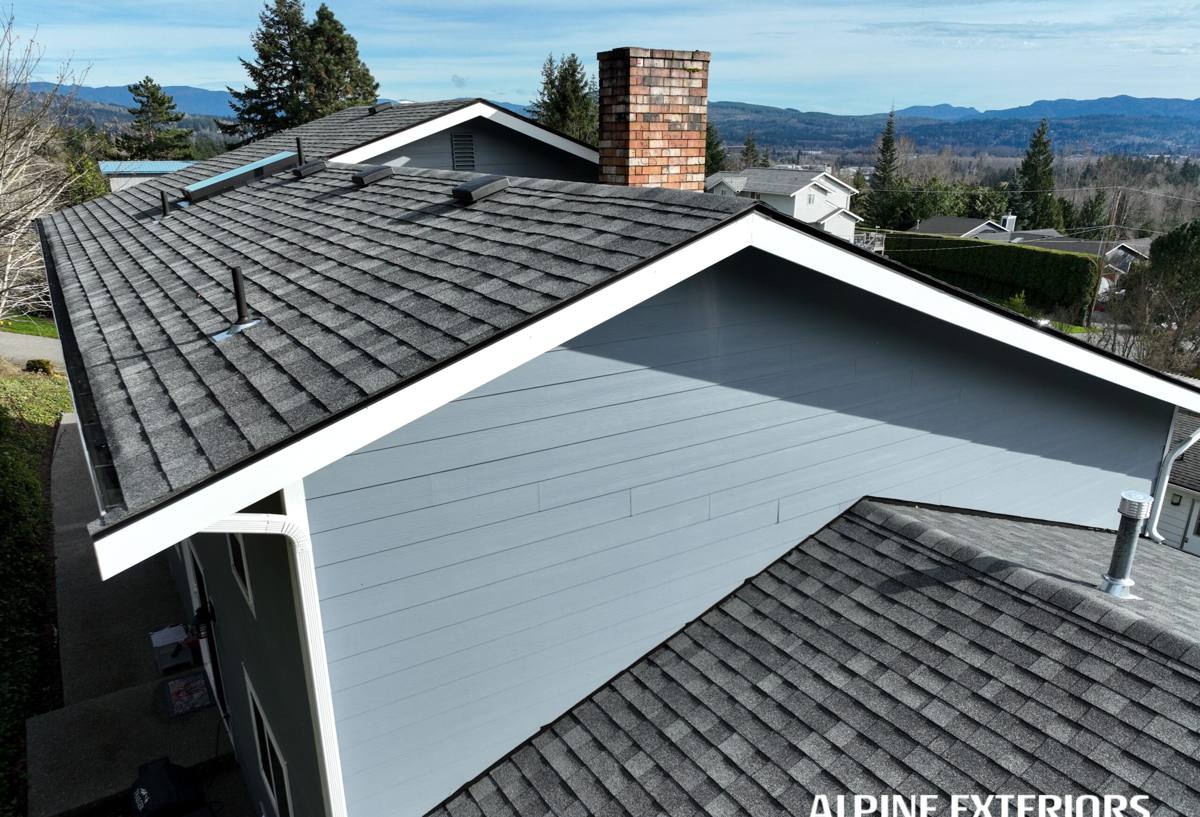
Asphalt shingle roofing is still the right call for most Cordata homes — it's cost-effective, well understood, and when installed correctly it handles this climate fine for decades. The issue is almost never the shingle itself. It's what happens underneath it, and how much attention the crew paid to ventilation, flashing, and moss resistance before the first shingle ever went down.
What Bellingham's Climate Actually Does to a Roof
Moisture That Doesn't Let Up
Whatcom County doesn't get the heaviest rainfall in the state, but it gets persistent rainfall — weeks of low-intensity rain rather than short heavy storms. That matters for roofing because it's less about a single downpour overwhelming a roof and more about water finding every small gap, lap error, or nail pop over time. Underlayment quality and flashing detail work matter more here than in drier climates, because the roof is wet far more often than it's dry.
Moss and Algae Season
Cordata's tree cover and the region's damp shoulder seasons create ideal conditions for moss and algae growth, especially on north-facing slopes and anywhere shade lingers. Moss isn't just cosmetic — it holds moisture against the shingle surface, lifts shingle edges as it grows, and accelerates granule loss. A roof that's shaded most of the day needs a different maintenance and material approach than one in full sun.
Wind-Driven Rain
Storms moving through the region often bring wind alongside the rain, which pushes water uphill under shingle edges and into any flashing that isn't sealed properly. This is where a lot of budget installs cut corners — the shingles look fine from the street, but the flashing around chimneys, skylights, and roof-to-wall transitions wasn't done to a standard that holds up against wind-driven rain.
What a Correct Asphalt Shingle Job Actually Involves
A roof replacement is really several systems working together, not just a layer of shingles. For Cordata homes, we treat each of these as non-negotiable:
- Full tear-off, not a layover. We remove the old roofing down to the deck so we can actually inspect and repair what's underneath, rather than hiding problems under a second layer.
- Deck inspection and repair. Any soft, delaminated, or water-damaged sheathing gets replaced before new roofing goes down — skipping this is the single biggest cause of early roof failure.
- Ice and water shield at vulnerable points. Eaves, valleys, and roof penetrations get a self-adhering waterproof membrane, not just felt paper, since these are the spots where wind-driven rain and ice find their way in.
- Synthetic underlayment across the field. A high-quality synthetic underlayment handles the extended wet periods this climate produces better than older felt products, which can absorb moisture and wrinkle.
- New flashing at every transition. Chimneys, walls, skylights, and vents get new metal flashing, properly step-flashed and sealed — reused flashing is one of the most common sources of hidden leaks.
- Balanced attic ventilation. Intake at the soffits and exhaust at the ridge, sized to the attic's actual square footage, so moisture and heat don't get trapped against the underside of the deck.
- Algae-resistant shingles where shade is a factor. On roofs with significant tree cover, we favor shingle lines with copper-infused or algae-resistant granules to slow regrowth.
Choosing Shingles for a Wet, Shaded Climate
Not every asphalt shingle is built the same way, and the differences matter more in a climate like this than they would somewhere dry. The table below is a general guide to how common shingle tiers compare for Cordata conditions — actual product lines and warranties vary by manufacturer, so we'll walk through specific options during your estimate.
| Shingle Type | Typical Lifespan | Wind/Rain Performance | Best Fit |
|---|---|---|---|
| 3-tab (economy) | 15-20 years | Adequate; lower wind rating | Budget-driven projects, low tree cover |
| Architectural / dimensional | 25-30+ years | Strong; heavier, better wind rating | Most Cordata homes — our default recommendation |
| Algae-resistant architectural | 25-30+ years | Same as standard architectural | Shaded lots, north-facing slopes, heavy moss history |
| Impact-resistant (Class 4) | 30+ years | Highest durability rating | Homes wanting maximum longevity and potential insurance credit |
For most homes in this part of Whatcom County, a mid-to-upper tier architectural shingle with algae-resistant granules is the sweet spot between upfront cost and how the roof actually holds up over 20-30 years of Bellingham weather.
Ventilation: The Part Homeowners Never See
A shingle roof lives or dies based on what's happening in the attic below it. Without enough intake air at the soffits and exhaust at the ridge, warm moist air gets trapped, condenses against the roof deck, and slowly rots the sheathing from the inside — long before the shingles themselves would have worn out. In a climate this humid, under-ventilated attics are one of the most common issues we find when we tear off an older roof.
Correct ventilation isn't a single vent here or there — it's a calculated ratio of intake to exhaust based on the attic's square footage, and it needs to be balanced. Too much exhaust without matching intake can actually pull moist household air up into the attic instead of venting it out. We check and correct this on every full replacement, because it directly affects how long the new roof will last.
How Our Process Works
- On-site inspection. We walk the roof (not just the ground), check the attic, and note deck condition, ventilation, and any moss or algae patterns tied to shade or drainage.
- Written estimate. You get a clear scope of work and price — what's included, what shingle options fit your home, and what could add cost if the deck needs repair once we open it up.
- Scheduling around the weather. We plan tear-off and dry-in around forecast windows so your home isn't left exposed during a rain system, which matters more here than almost anywhere else in the state.
- Tear-off and deck repair. Old roofing comes off, the deck gets inspected board by board, and any damaged sheathing is replaced before anything new goes down.
- Dry-in and flashing. Ice and water shield, underlayment, and new flashing go in first — this is the waterproofing layer that does the real work.
- Shingle installation. Shingles go down to manufacturer spec, with attention to nailing pattern and exposure, which affects both wind resistance and warranty validity.
- Ventilation check and correction. Soffit and ridge venting get verified or upgraded as part of the job, not treated as an afterthought.
- Cleanup and final walkthrough. Magnetic sweep for nails, debris hauled off, and a walkthrough so you know what was done and what to keep an eye on.
What Affects the Cost of a Cordata Roof Replacement
Every roof is priced from its own specifics, but these are the factors that move the number most for homes in this area:
| Factor | Why It Matters |
|---|---|
| Roof pitch and complexity | Steeper roofs and more valleys/hips take longer and require more safety setup |
| Number of existing layers | Tear-off of two layers costs more than one, and layered roofs often hide deck damage |
| Deck repair needed | Rot found during tear-off, common on shaded or poorly ventilated roofs, adds material and labor |
| Ventilation upgrades | Adding proper soffit or ridge venting where none existed is a worthwhile add, not just a line item |
| Shingle tier chosen | Architectural and algae-resistant products cost more upfront but last longer in this climate |
| Access and site conditions | Steep driveways, tight lots, or difficult material staging affect labor time |
We'd rather walk you through these factors honestly during the estimate than quote a number over the phone that doesn't hold up once we're actually on the roof.
Simple Maintenance That Extends Roof Life Here
Between installations, a few habits make a real difference in how long an asphalt shingle roof lasts in this climate:
- Keep gutters clear of needles and leaf debris — clogged gutters back water up under the shingle edge
- Trim back overhanging branches to reduce shade and debris buildup, which slows moss growth
- Have moss removed by a professional rather than pressure-washed, which can strip granules
- Check attic ventilation isn't blocked by insulation stuffed into the soffits
- Have a roof inspected after any major windstorm, even if nothing looks obviously wrong from the ground
- Address small leaks immediately — in this climate, a slow drip becomes rot faster than homeowners expect
Why Local Experience in Cordata Specifically Matters
A roofing crew that works Bellingham and Whatcom County regularly knows which slopes in a given neighborhood tend to hold moss longest, which older homes were built with ventilation standards that no longer meet what a modern roof needs, and how to schedule tear-offs around a weather pattern that can turn quickly. That local pattern-recognition is hard to replace with a general contractor passing through the area for one job.
It also matters for the boring but important stuff: knowing the local permitting process, being available quickly if a storm causes damage, and standing behind the work because we're still going to be here next season, not just for the one job.
Get a Straightforward Estimate
If your Cordata home needs a roof inspection, a repair, or a full asphalt shingle replacement, we're happy to take a look and give you an honest read on what it actually needs — no pressure, no inflated scope. Use the form below to request a free estimate.