 Bellingham Exterior
 Why Decks in Cordata Wear Out Faster Than You'd Expect
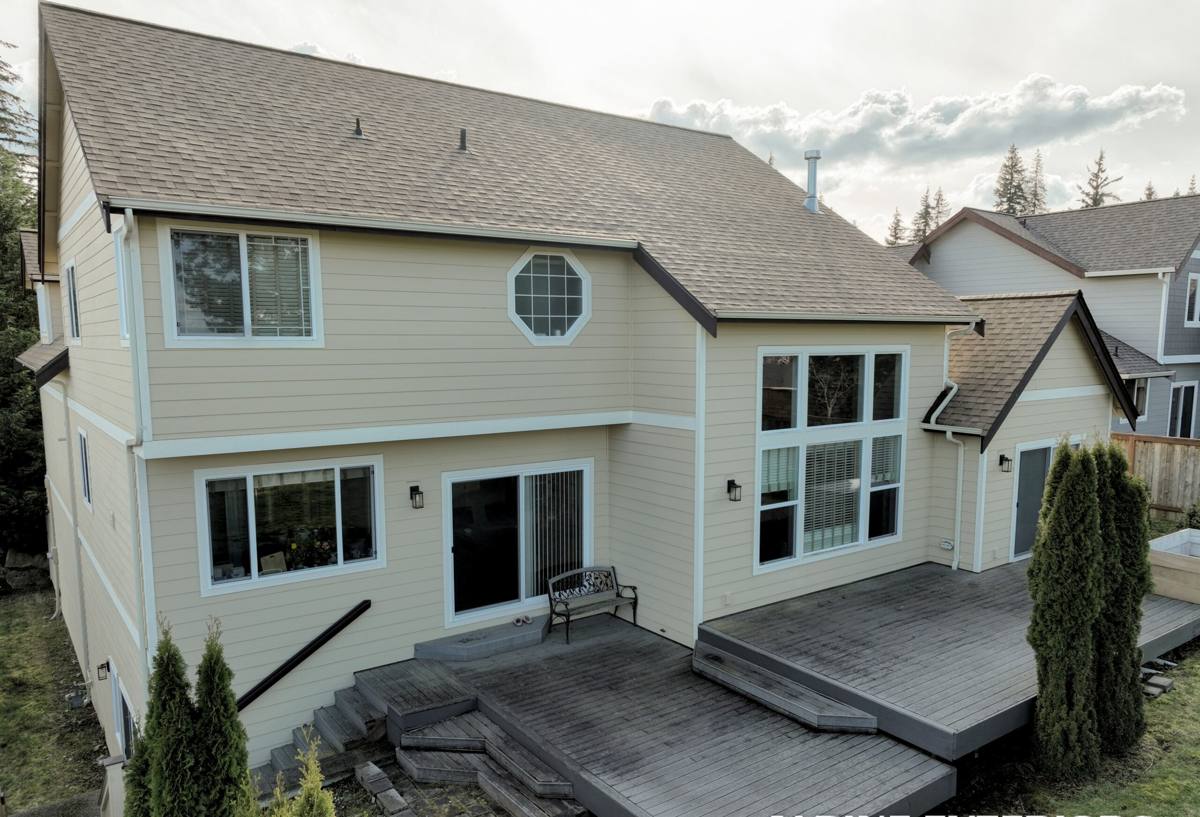
Cordata sits in north Bellingham, close enough to Bellingham Bay and the Salish Sea that salt-laden air reaches even inland yards on a windy day. Combine that with Whatcom County's long, wet winters and a moss season that can stretch from October through May, and you have a climate that is genuinely hard on outdoor structures. A deck here doesn't fail because it was built wrong. It fails because wood, fasteners, and finishes are being asked to shed water and resist corrosion for months at a stretch, year after year, without much of a dry-out period in between.
We repair decks all over Bellingham and Whatcom County, and the pattern in Cordata is consistent: moisture finds the weak points first — ledger boards, post bases, fastener heads, and anywhere two pieces of wood meet without enough airflow to dry out between rains. Salt air speeds up corrosion on screws, joist hangers, and railing hardware, which is often the real reason a deck starts to feel "loose" before the wood itself looks bad.
Signs Your Deck Needs Repair
Most deck problems give warning signs well before anything becomes unsafe. Catching them early is almost always cheaper than waiting.
What to look for
- Boards that feel spongy, bouncy, or noticeably softer underfoot than the rest of the deck
- Dark staining or streaking around fastener heads — a common sign of trapped moisture and corroding screws
- Gaps opening up between boards, or boards that have cupped or crowned
- Railings or guardrails that wiggle, flex, or feel less solid than they used to
- Green or black growth (moss, algae, mildew) that keeps coming back no matter how often it's cleaned
- Stair stringers or the ledger board (where the deck attaches to the house) showing rot, rust streaks, or gaps
- Persistent standing water in low spots after rain, instead of draining and drying within a day or so
Any one of these on its own might just mean routine maintenance. Several at once, especially near the ledger or stair connections, usually means it's time for a proper inspection rather than another round of cleaning and sealing.
Common Deck Repair Issues We See in Cordata
Ledger board and structural connections
The ledger board — where the deck bolts to the house — is the single most important structural connection on most decks, and it's also the one most exposed to trapped moisture if flashing wasn't installed correctly or has failed over time. In a climate with as much sustained rainfall as ours, a compromised ledger connection is a safety issue, not a cosmetic one, and it's usually the first thing we check on an older Cordata deck.
Fasteners, hardware, and post bases
Salt-influenced air corrodes exposed metal faster than most homeowners expect. We regularly find joist hangers, screws, and post base hardware that have rusted enough to lose holding strength, even when the surrounding wood still looks okay. Post bases that sit close to grade or in a spot that stays damp are especially prone to this.
Decking boards and moss buildup
A long moss season means organic growth isn't just a surface annoyance — moss and algae hold moisture against the wood, which accelerates rot and makes boards slicker and more dangerous underfoot. Boards that have gone through repeated wet-dry cycles without adequate sealing tend to cup, split, or loosen from their fasteners well before their expected lifespan.
Railings and guardrails
Guardrails take a lot of side-to-side stress and are frequently under-built or under-fastened to begin with. Combined with moisture at the post connections, loose or wobbly railings are one of the most common repair calls we get — and one of the more important ones to address promptly.
Stairs
Exterior stairs see concentrated foot traffic on a structure that's already dealing with the same rot and corrosion risks as the rest of the deck. Stringer rot and loose treads are common on older stairs that haven't had hardware or flashing updated in years.
Repair, Restore, or Replace? How We Make That Call
Not every problem deck needs to be torn out. Our goal is always to fix what can be reliably fixed and be straightforward with you about what can't. The table below outlines the general factors that push a project toward repair versus replacement — every deck is different, so this is a starting point for the conversation, not a substitute for an on-site look.
| Factor | Repair Usually Makes Sense | Replacement Usually Makes Sense |
|---|---|---|
| Framing condition | Joists and beams are structurally sound; issues are isolated | Widespread rot or rust in the framing itself |
| Ledger board | Ledger and flashing are intact or repairable | Ledger connection is compromised or was never flashed correctly |
| Decking surface | Some boards are bad, most are sound | Most boards are cupped, split, or soft |
| Age | Deck is within its expected service life | Deck is well past it and showing systemic wear |
| Hardware | Isolated corrosion at a few connections | Corrosion is widespread across fasteners and hangers |
| Design | Original layout and drainage were reasonably sound | Poor drainage or airflow keeps causing repeat problems |
When the framing and ledger are solid, targeted repair — new boards, hardware upgrades, railing rebuilds, refinishing — usually gets years more life out of a deck for a fraction of replacement cost. When the structure itself is compromised, patching the surface just delays a bigger problem.
Our Deck Repair Process
1. Inspection
We start underneath and at the connections, not just on the walking surface. That means checking the ledger board and flashing, probing joists and beams for soft spots, and testing hardware for corrosion — the issues that actually determine whether a deck is safe, not just whether it looks worn.
2. A straight assessment
You get a clear explanation of what we found, what's causing it, and what your realistic options are — repair, partial rebuild, or full replacement — along with honest reasoning for the recommendation. No pressure to upgrade beyond what the deck actually needs.
3. The repair itself
Depending on scope, this can include replacing rotted framing or decking boards, upgrading corroded hardware to fasteners rated for exterior and coastal-adjacent use, correcting flashing at the ledger, rebuilding loose railings and guardrails, and re-securing stair stringers and treads.
4. Finish and protection
Where wood is involved, we make sure the repaired sections are properly sealed or finished so they hold up against the same rain and moss exposure that caused the original damage — patchwork repairs that skip this step tend to fail again quickly in this climate.
Maintenance That Actually Extends a Cordata Deck's Life
A little seasonal attention goes a long way toward avoiding repeat repairs. This is the routine we recommend to homeowners in and around Cordata:
- Clear moss and debris from boards and between gaps at least twice during the wet season, not just once in spring
- Keep gutters and downspouts clear so runoff isn't dumping extra water directly onto or under the deck
- Check railings and stair treads for movement a couple of times a year — loose hardware is easier to fix before it wears the surrounding wood
- Reseal or refinish wood decking on the manufacturer's recommended schedule, not just "when it looks dry"
- Keep plants and shrubs trimmed back from the deck edges so air can actually circulate and dry the wood
- Look underneath once a year — most serious problems start where you can't see them from the top
Why Hiring a Crew That Already Works Cordata Matters
Deck repair done right depends on understanding how a specific climate attacks a specific structure. A crew that regularly works Bellingham and Whatcom County knows which connections fail first in salt-influenced air, how long moss season really runs here, and which materials and fastener grades hold up versus which ones become next year's callback. That local pattern recognition is what separates a repair that lasts from one that reappears in two winters.
It also matters for the practical side of the job — knowing typical permitting expectations for structural deck work in this area, and being realistic with you about timelines given our weather windows rather than promising a schedule that doesn't account for the rain.
Get an Honest Look at Your Deck
If your deck in Cordata is showing soft boards, loose railings, rust staining, or a moss problem that won't quit, it's worth getting an honest, no-pressure inspection before those issues get more expensive to fix. We'll tell you straight whether you're looking at a targeted repair or something bigger — use the form below to request a free estimate.