 Bellingham Exterior
 Siding Built for Cordata's Weather, Not Just Its Curb Appeal
Cordata sits close enough to Bellingham Bay and the Puget Sound air currents that homes here take a specific kind of beating: salt-tinged moisture that works into seams and fasteners, driving rain that comes in sideways during fall and winter storms, and a moss season that can stretch from October clear through April. None of that is unique to Cordata, but the combination is a real test for exterior siding, and it shows up fastest on products that weren't engineered for it. We install James Hardie fiber cement siding exclusively, and on Cordata homes specifically, we pay close attention to the details that matter most in this climate: drainage behind the cladding, fastener placement, and butt joints that won't wick water.
This page is about that one job — fiber cement siding installation in Cordata — not a general overview of every siding option. If you're comparing materials first, that's a separate conversation. If you already know you want fiber cement and want to understand what a correct installation looks like in this specific part of Whatcom County, this is written for you.
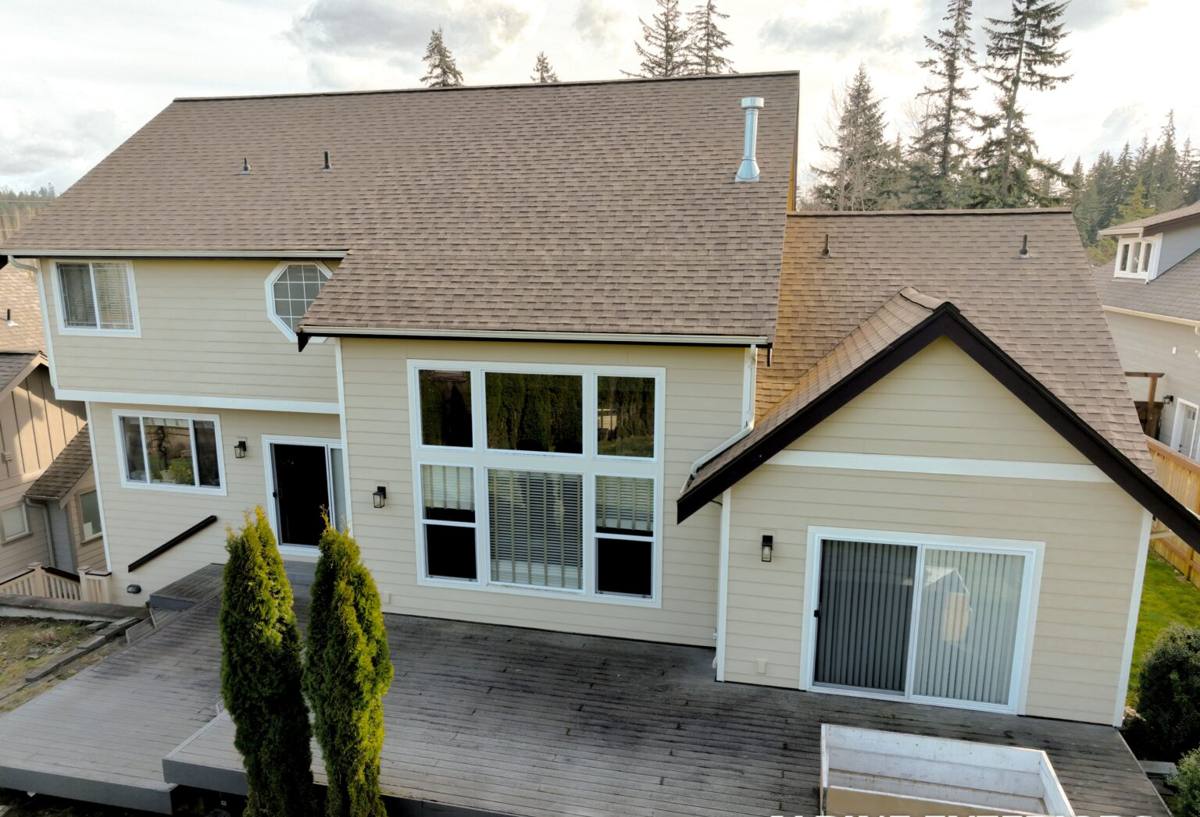
What Cordata's Climate Actually Does to Siding
Salt Air and Moisture Cycling
Homes closer to the water deal with airborne salt that accelerates corrosion on exposed metal fasteners and trim. Combined with the near-constant humidity of a Pacific Northwest winter, siding materials that aren't dimensionally stable will swell, cup, or separate at the seams over a few wet seasons. Fiber cement doesn't absorb water the way wood-based products do, which is a big part of why it holds up here.
Driving Rain
Bellingham's storms often come with real wind behind them, which means rain doesn't just fall — it gets pushed sideways into wall assemblies, especially on the west and southwest exposures common in this neighborhood. Any gap in flashing, any caulk joint doing a job it shouldn't be doing, becomes an entry point. Correct installation depends far more on flashing and water-management detail than on the siding material's brand name.
Moss and Sustained Shade
Cordata has a good tree canopy in places, and homes tucked under mature trees stay damp longer after a storm passes. Moss and algae growth on siding isn't just cosmetic — sustained organic growth holds moisture against the surface and can accelerate wear on lower-quality substrates and finishes. A factory-cured finish that resists moss adhesion, and siding that doesn't feed on that moisture, matters more here than it would in a drier climate.
Why We Only Install James Hardie Fiber Cement
We don't install LP SmartSide, vinyl, Cemplank, Allura, primed spruce, or cedar. That's a deliberate standard, not a sales position, and it's worth explaining honestly rather than just asserting.
- Vinyl is inexpensive and low-maintenance in mild climates, but it expands and contracts with temperature swings, can crack in cold snaps, and doesn't hold up well against direct wind-driven rain intrusion at seams the way a properly flashed fiber cement assembly does.
- Wood products (cedar, primed spruce) look great and age with character, but they need real maintenance — recoating, caulk inspection, moisture monitoring — and in a climate with Cordata's rain totals and moss pressure, that maintenance burden is constant, not occasional.
- LP SmartSide is an engineered wood product with real strengths, but it's still wood-based at its core, meaning cut edges and any breach in the factory coating are vulnerable to moisture absorption over time — a real concern in a wet marine climate.
- Cemplank and Allura are other fiber cement manufacturers and structurally similar to Hardie in concept. Our decision to standardize on one product line is about installer familiarity, factory finish consistency, and warranty structure — not a claim that competing fiber cement products fail in the field.
James Hardie's HZ5 product line is engineered for climates with prolonged moisture exposure and freeze-thaw cycling — a good match for Whatcom County. The ColorPlus factory finish is baked on under controlled conditions, which gives more consistent color retention and moss/mildew resistance than field-applied paint, and it comes with its own finish warranty separate from the substrate warranty. Fiber cement itself is non-combustible, which matters increasingly given regional wildfire smoke seasons and general fire-code trends, even in a wet coastal county.
What a Correct Fiber Cement Install Actually Involves
The siding board itself is only part of the job. Most siding failures we get called out to inspect — regardless of brand — trace back to installation shortcuts, not the material. On a Cordata home, here's what we treat as non-negotiable:
| Step | Why It Matters Here |
|---|---|
| Full tear-off and sheathing inspection | Reveals hidden rot or moisture damage from years of driving rain before it's covered up again |
| Weather-resistive barrier, properly lapped | Sheds bulk water down and out before it reaches the sheathing, critical in wind-driven rain events |
| Rainscreen / drainage gap where called for | Lets any moisture that gets behind the siding drain and dry instead of sitting against the wall |
| Correct fastener type, spacing, and depth | Prevents blow-off in wind events and avoids the corrosion issues salt air accelerates on the wrong hardware |
| Factory-primed cut edges field-sealed | Any cut edge left unsealed is a moisture entry point — this is the single most common install shortcut we see |
| Flashing at every penetration and butt joint | Windows, vents, and hose bibs are where driving rain finds its way in if flashing is skipped or reused |
| Manufacturer-spec clearances from grade, roofline, and decks | Keeps siding out of standing water and splash-back zones common on Cordata lots with mature landscaping |
Our Process for a Cordata Siding Job
1. On-Site Assessment
We walk the home, check the current siding and sheathing condition where accessible, note drainage patterns around the foundation, and look at sun/shade exposure and tree cover that affects moss risk. This tells us whether it's a straightforward re-side or whether there's sheathing repair to plan for.
2. Product and Line Selection
We talk through Hardie's plank, shingle, and panel options and which HZ line fits the home's exposure. A shaded, damp lot under tree cover gets a different conversation than an open, sun-exposed one.
3. Written Scope and Timeline
Before any tear-off starts, you get a clear scope: what's being removed, what sheathing repairs are anticipated versus contingent, fastener and flashing details, and a realistic timeline that accounts for Bellingham's wetter months.
4. Tear-Off and Sheathing Check
We don't side over problems. If we find soft sheathing or old moisture damage, we stop and show you before covering it back up.
5. Installation to Manufacturer Spec
Fastener schedule, clearances, flashing, and joint treatment all follow Hardie's published installation guidelines — not shortcuts that void the warranty later.
6. Final Walkthrough
We check joints, trim, caulking, and clearances with you before calling the job done.
Why a Crew That Already Works Cordata Matters
Siding installation isn't one-size-fits-all across Whatcom County. A crew that regularly works Cordata already has a feel for the microclimate details that matter: which exposures on which lots tend to hold moisture longer, how local permitting and inspection tends to go, and what drainage and grading issues commonly show up around here versus other parts of Bellingham. That local pattern recognition doesn't replace following manufacturer spec — it just means fewer surprises and fewer callbacks.
It also means we're not disappearing after the job. If a question comes up two years later — a caulk line that needs a look, a question about the ColorPlus warranty — we're a local outfit you can actually reach, not a crew that passed through once.
Maintenance: What Cordata Homeowners Should Expect
- Rinse siding periodically to knock off pollen, dust, and early moss growth — especially on shaded, north-facing walls.
- Keep gutters clear so overflow isn't running down the siding face during heavy storms.
- Trim back vegetation and tree limbs that keep siding sections damp and shaded longer than the rest of the house.
- Inspect caulk joints around windows and trim yearly; caulking is a wear item even on a well-installed job.
- Watch for any hairline cracking or staining near ground level, which can indicate splash-back or grading issues rather than a siding defect.
Correctly installed Hardie siding with a ColorPlus finish needs far less attention than wood, but "low-maintenance" isn't "no-maintenance" — a few minutes a season keeps small issues from becoming siding problems.
Cost Factors for a Cordata Fiber Cement Project
| Factor | How It Affects the Job |
|---|---|
| Home size and wall complexity | More corners, dormers, and trim details mean more labor and cut edges to seal properly |
| Sheathing condition | Hidden moisture damage found at tear-off adds repair scope before new siding goes up |
| Product line and profile | Plank, shingle, and panel styles and different HZ specs carry different material costs |
| Trim and accessory scope | Fascia, soffit, and trim replacement alongside siding changes the overall project size |
| Access and site conditions | Mature landscaping, fencing, or tight lot lines common in Cordata can affect staging and labor time |
We give a firm, itemized quote after the on-site assessment — not a phone estimate. Every home's exposure and existing condition is different enough that a number given sight-unseen isn't a useful one.
Signs Your Cordata Home May Need Siding Attention Now
- Visible warping, cupping, or gaps at board seams
- Persistent moss or algae staining that returns quickly after cleaning
- Soft spots or give when you press on the siding near the base of the wall
- Peeling or fading paint on wood siding that's outpacing your repaint schedule
- Rising energy bills alongside drafts near exterior walls
If any of that sounds familiar, it's worth having someone look before another wet Whatcom County winter goes by. If you'd like an honest, no-pressure look at your home's siding, use the form below to request a free estimate — we'll walk the property, tell you what we actually see, and give you a straight answer.
Frequently asked questions
How long does a full siding replacement take on an average Cordata home?
Most single-family homes take one to two weeks from tear-off to final trim, depending on size, sheathing condition, and weather delays. Bellingham's wetter months can add buffer days since we won't install over damp sheathing. We give you a realistic window after the on-site assessment, not before.
What should I ask a contractor before hiring them for siding work?
Ask for their manufacturer certification status, whether they carry liability and workers' comp insurance, and whether they'll show you sheathing condition before covering it back up. Ask how they handle unexpected repairs found mid-project and get that process in writing. A contractor who won't answer those plainly is worth passing on.
Why do you only install James Hardie instead of offering multiple siding brands?
Standardizing on one manufacturer lets our crew stay deeply familiar with one installation spec, one warranty structure, and one finish system rather than splitting attention across several. It also means every job gets the same accountability if a warranty question comes up later. It's a business decision about consistency, not a claim that other fiber cement brands can't perform.
What's the actual difference between Hardie's HZ5 and HZ10 product lines?
The HZ numbers correspond to climate zones Hardie engineers the product for — HZ5 is built for regions with freeze-thaw cycling and sustained moisture, which fits Whatcom County's marine climate. HZ10 is engineered more for hot, humid, high-UV regions. Using the zone-matched product isn't cosmetic; it affects how the substrate handles the moisture cycling we actually get here.
Does Bellingham's moss season affect siding differently than other exterior materials?
Moss and algae need sustained moisture and shade to establish, and siding that stays damp longer because of tree cover or poor sun exposure will show growth faster regardless of material. Fiber cement with a factory-cured ColorPlus finish resists moss adhesion better than bare wood or field-painted surfaces. But no exterior surface is immune, so gutter maintenance and occasional rinsing still matter.
Get expert help in Bellingham.
Have questions about your siding project? Our local crew serves Bellingham and all of Whatcom County — call or request a free on-site estimate.