 Bellingham Exterior
 Siding Installation Built for Cordata's Marine Climate
Cordata sits in north Bellingham, close enough to Bellingham Bay and the broader Puget Sound airshed that homes here deal with a steady diet of salt-tinged moisture, wind-driven rain, and long stretches of gray, damp weather that never fully dries out between storms. Add in Whatcom County's extended moss season — often eight or nine months of the year when conditions favor growth on north-facing walls and shaded siding — and you have a climate that is genuinely hard on exterior cladding. Siding installation here isn't just about appearance. It's a moisture-management job first and a cosmetic upgrade second.
We install siding for homes throughout Cordata and the rest of Bellingham, and the recurring theme is the same: siding that looks fine from the curb is often failing quietly behind the surface, because it was installed without enough attention to how water actually moves through a wall assembly in this climate.
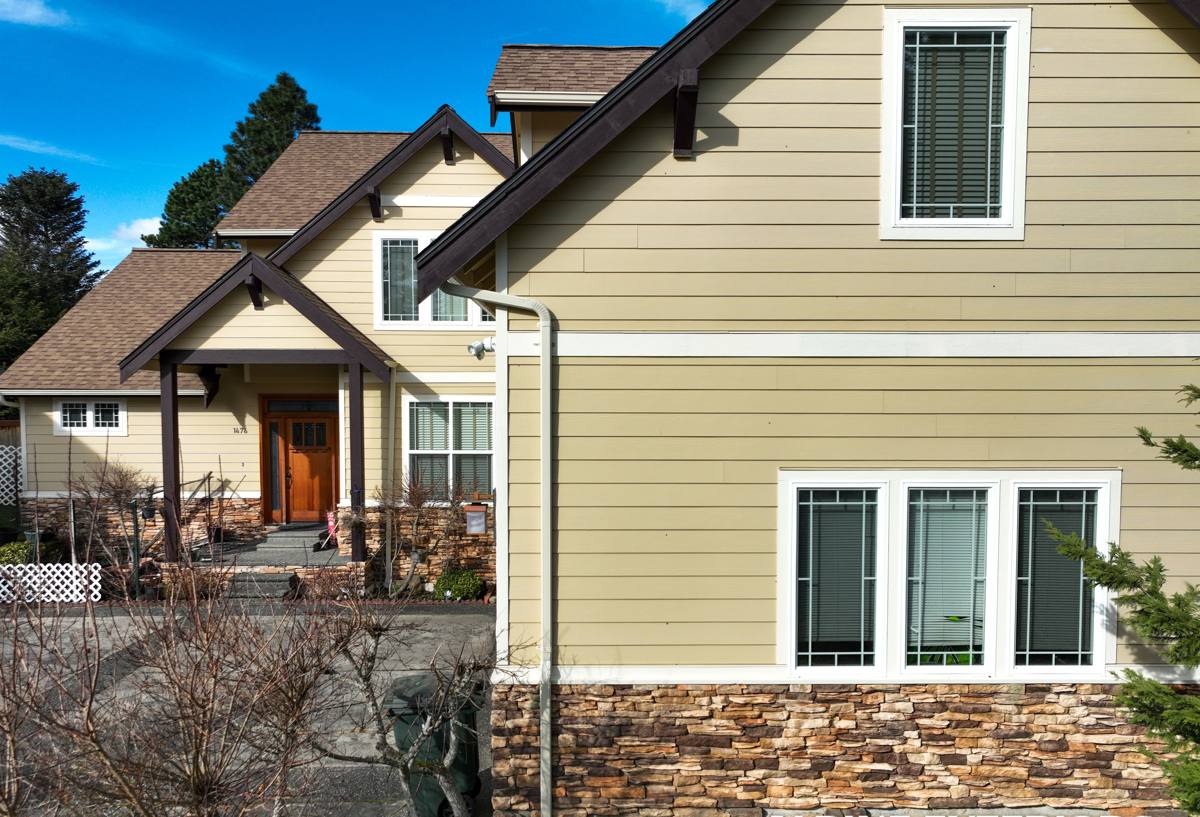
What Driving Rain, Salt Air, and Moss Do to Bellingham Siding
Three climate factors drive almost every siding problem we see in this part of Whatcom County:
- Wind-driven rain — storms off the Strait of Georgia and Bellingham Bay push rain sideways into walls, not just down onto roofs. Siding and flashing details that would be fine in a drier climate can let water past the surface here.
- Salt-influenced air — proximity to saltwater accelerates corrosion on exposed fasteners, staples, and untreated trim, and it degrades cheaper paint films faster than an inland climate would.
- Extended moss and algae season — shaded, north- and west-facing walls in Cordata stay damp for long stretches, which is exactly what moss, mildew, and algae need to take hold on porous or poorly sealed siding surfaces.
None of these factors are unique to Cordata, but the combination is a real test of both the siding product and the installation quality. A product that resists moisture but is installed with the wrong flashing sequence will still fail. A well-installed job with the wrong product will still degrade early. Both parts have to be right.
Why We Install Only James Hardie Fiber Cement
We made a deliberate decision to install James Hardie fiber cement siding exclusively — we don't install vinyl, LP SmartSide, Cemplank, Allura, primed spruce, or cedar. That's not a marketing position; it's a response to what we've seen holds up in a coastal, wet, moss-prone climate like this one.
Vinyl siding is inexpensive and low-maintenance in the sense that it doesn't need painting, but it's a thin plastic product that expands and contracts significantly with temperature swings, can warp or crack in wind events, and does nothing to slow moss and mildew growth on its surface — if anything, its panel laps and J-channels are a common spot for organic buildup in a shaded, damp yard. Engineered wood products like LP SmartSide use real wood fiber, which means the cut edges and any breach in the factory coating are vulnerable to moisture intrusion; in a climate with this much sustained dampness, edge and fastener sealing has to be nearly perfect and stay that way for decades. Primed spruce and cedar are traditional, attractive materials, but they're organic wood — they need ongoing refinishing, and in a marine climate with a long moss season, that maintenance burden shows up faster and more often than most homeowners expect.
James Hardie fiber cement is cement, sand, and cellulose fiber — it doesn't rot, it isn't attractive to pests, and it's non-combustible. The ColorPlus factory finish is baked on under controlled conditions rather than field-painted, which gives more consistent coverage and a longer repaint interval than site-applied paint on wood or engineered wood substrates. Hardie's climate-engineered HZ product lines are formulated for specific regional moisture and freeze conditions rather than a one-size-fits-all approach, and the company backs the product with a substantial, transferable limited warranty. None of that makes fiber cement maintenance-free — it still needs correct installation, caulking upkeep, and periodic cleaning to manage moss and algae in a climate like this — but it starts from a materially stronger position against the specific conditions Cordata homes face.
What a Correct Siding Installation Actually Involves
Most siding failures we're called to look at in Bellingham aren't caused by bad material — they're caused by shortcuts taken during installation that don't show up until years later. A correct install has several non-negotiable steps.
Tear-Off and Substrate Inspection
Old siding comes off and the sheathing underneath gets inspected before anything new goes on. Hidden water damage, soft sheathing, or rot around windows and penetrations has to be found and repaired first — covering it over with new siding just hides the problem for another few years.
Weather-Resistive Barrier and Flashing
A properly lapped weather-resistive barrier, correctly integrated flashing at windows, doors, and every penetration, and careful sequencing so water is always directed outward and down — this is the single most important part of the job in a wind-driven rain climate. Get the flashing order wrong and even the best siding product will let water in.
Rain Screen Gap
A ventilated gap between the weather barrier and the siding lets any moisture that does get past the surface drain and dry out instead of sitting against the wall. In a climate with Cordata's rainfall and humidity pattern, this drainage plane is what keeps minor moisture events from becoming rot.
Fastening and Joint Treatment
Fiber cement has to be fastened per the manufacturer's specification — correct nail type, placement, and depth — and butt joints need to be treated so they shed water rather than wick it. Salt-air exposure makes corrosion-resistant fasteners especially important here.
Finish and Caulking
Factory-finished ColorPlus panels reduce field painting, but joints, trim, and penetrations still need the right sealant, applied correctly, to complete the water-management system. This is also where a lot of rushed jobs cut corners.
Our Installation Process, Start to Finish
- On-site assessment — we walk the home, check the existing siding and sheathing condition, and note anything specific to the lot's exposure (shade, wind direction, drainage around the foundation).
- Scope and product selection — we go over James Hardie product lines, profiles, and ColorPlus finish options that fit the home's style and the site's sun/shade and moisture exposure.
- Written estimate — a clear scope of work so you know exactly what's included before anything starts.
- Tear-off and substrate repair — old siding removed, sheathing inspected, and any rot or damage repaired before new material goes up.
- Weather barrier, flashing, and rain screen installation — the moisture-management layer that does the real long-term work.
- Hardie siding installation — installed to manufacturer fastening and clearance specifications.
- Trim, joint treatment, and caulking — finishing details that complete the water-shedding system.
- Final walkthrough — we review the completed work with you before calling the job done.
Choosing the Right James Hardie Product for a Cordata Home
James Hardie makes several distinct product lines, and the right one depends on the home's architectural style and its specific exposure on the lot.
| Product | Typical Look | Best Suited For |
|---|---|---|
| HardiePlank lap siding | Traditional horizontal lap | Most single-family homes; the most common choice in this area |
| HardiePanel vertical siding | Board-and-batten, vertical panels | Modern or farmhouse-style exteriors, accent walls |
| HardieShingle siding | Staggered or straight-edge shingle look | Craftsman and cottage-style homes wanting shingle texture without wood upkeep |
| HardieTrim boards | Smooth or textured trim profiles | Window, door, and corner trim to complete the system |
Color and texture matter too — homes on heavily shaded, north-facing lots in Cordata are more prone to visible moss and algae staining over time regardless of product, so we'll talk through finish options and realistic maintenance expectations for the specific exposure of your home rather than a generic recommendation.
What Affects the Cost of a Siding Job in Cordata
We don't quote pricing without seeing the home, but these are the factors that most often move a siding project up or down in scope and cost:
| Factor | Why It Matters |
|---|---|
| Home size and wall complexity | More linear footage, more corners, dormers, and gables all add labor and material |
| Condition of existing sheathing | Rot or water damage found during tear-off requires repair before new siding goes on |
| Removal of old siding | Vinyl, wood, or old fiber cement removal adds labor compared to install-only situations |
| Trim and detail work | Window and door trim, corner boards, and fascia detail add time and material |
| Product line and profile | Lap width, shingle profile, and panel style carry different material costs |
| Site access | Multi-story sections, tight lot lines, or limited staging space affect labor time |
Signs Your Current Siding Needs Attention
A lot of Cordata homeowners call us after noticing a specific problem, but by the time siding shows visible damage, the underlying issue has usually been developing for a while. Watch for:
- Persistent moss, algae, or black streaking on shaded or north-facing walls that returns quickly after cleaning
- Soft, spongy, or bubbling spots on wood or engineered wood siding, especially near the bottom courses or window sills
- Cracked, warped, or buckled panels, particularly after wind events
- Paint that's peeling, chalking heavily, or failing well ahead of schedule
- Gaps opening up at seams, corners, or trim joints
- Rising energy bills or noticeably drafty rooms along exterior walls
- Visible rot or staining on trim boards around windows and doors
Any one of these is worth a closer look. Several together usually mean the wall assembly itself — not just the surface — needs attention.
Why Hire a Crew That Already Works in Cordata
Siding installation in a marine climate is a lot less forgiving of guesswork than it looks. A crew that regularly works Bellingham and Whatcom County neighborhoods like Cordata has already seen how wind-driven rain behaves against different home orientations, which walls tend to hold moss longest, and where older homes in this area typically have hidden moisture damage before the tear-off even starts. That local pattern recognition shortens the guesswork and reduces the chance of surprises mid-project.
It also means accountability doesn't end when the crew leaves. A local, established contractor is the one you call if a question comes up two years down the road — not a name that only shows up for the sale.
If your Cordata home's siding is aging, showing moss buildup that won't go away, or you're planning ahead for a replacement, we're happy to take a look and walk you through what a correct James Hardie installation would involve for your specific home. Reach out for a free, no-pressure estimate using the form below.