 Bellingham Exterior
 Custom Decks for Barkley Homes
Barkley's mix of newer construction and established lots means we see a wide range of deck conditions on the same street — some homes still on their original builder-grade deck, others due for a full replacement after twenty-plus years of Whatcom County weather. Whichever category your home falls into, the fundamentals of a deck that actually lasts here don't change: the right framing, the right fasteners, the right drainage plan, and materials chosen for how they'll behave in wet, moss-prone conditions year after year.
A deck in Barkley isn't fighting the same battles as one in a dry climate. It's fighting near-constant moisture exposure for much of the year, occasional salt-laden air moving in off the water, and long stretches where surfaces barely get a chance to fully dry between rain events. None of that is a reason to avoid building a deck — it just means the build has to account for it from the ground up.
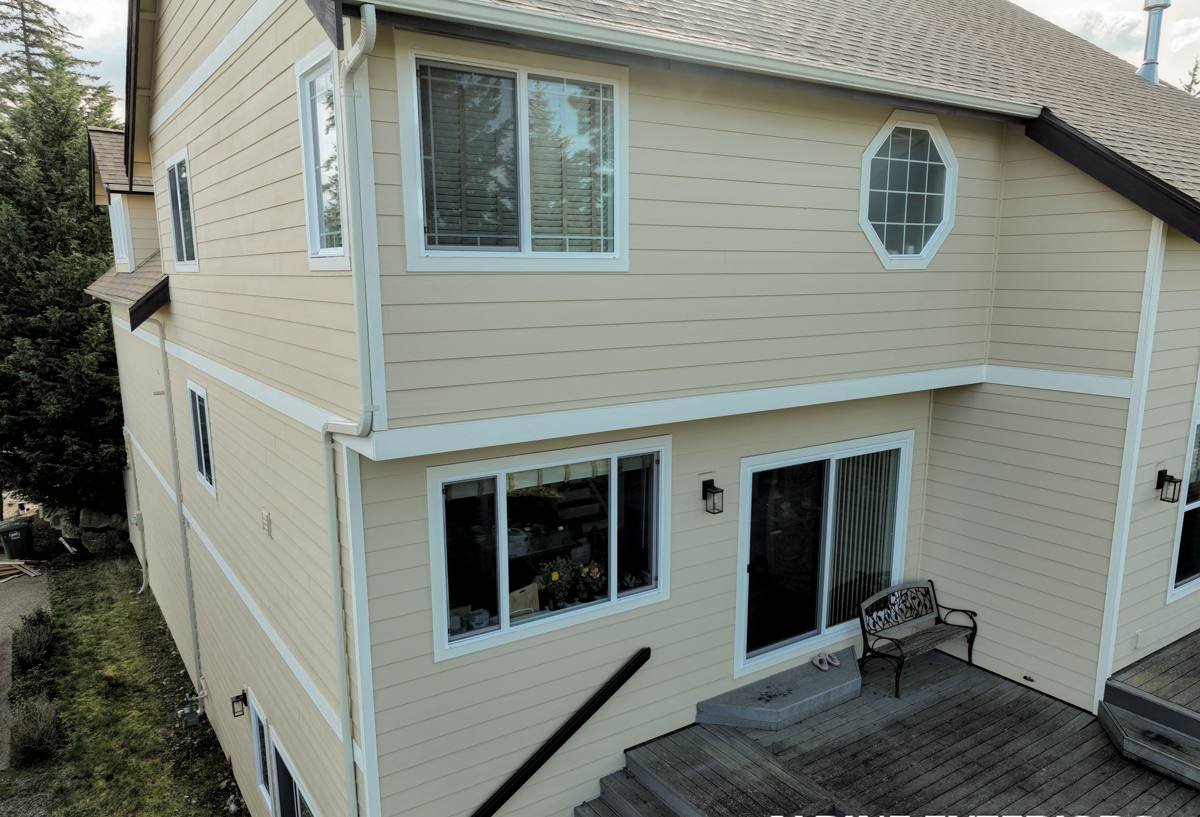
What Bellingham's Climate Does to an Outdoor Deck
Bellingham sits in a marine climate that's generous with rainfall and light on hard freezes, which sounds mild until you consider what that combination does to wood, fasteners, and footings over time.
Driving Rain and Standing Moisture
Our rain doesn't just fall straight down — wind-driven rain gets pushed sideways into ledger connections, under poorly flashed rim boards, and into any gap where water can collect instead of shed. A deck built without deliberate drainage detailing will hold moisture in exactly the spots you can't see: where the ledger meets the house, around post bases, and beneath decking boards that sit too tight together.
Moss and Algae Season
Whatcom County's moss season runs long — shaded decks, north-facing decks, and anything under tree cover can stay damp enough to grow moss for much of the fall through spring. Moss holds moisture against the wood surface and, on stairs and walking surfaces, turns into a slip hazard. Deck boards with tight grain, proper spacing, and the right surface texture resist this far better than boards chosen for looks alone.
Salt Air Exposure
Barkley isn't right on the water, but Bellingham's proximity to Bellingham Bay means homes across the area get some degree of salt-laden air, especially during onshore wind. Salt air accelerates corrosion on exposed fasteners and hardware that isn't rated for it. Over years, cheap or mismatched screws and brackets will show rust streaks and eventually weaken — which is a structural issue, not just a cosmetic one.
What a Correctly Built Deck Requires Here
A deck that's going to hold up in this climate is built differently than one going up in a dry inland region. The differences aren't dramatic, but they matter over a 15-25 year lifespan.
- Ledger board flashing that actually diverts water away from the house rim joist, not just a bead of caulk
- Corrosion-resistant, code-rated fasteners and structural hardware throughout — not mixed hardware grades
- Post bases set above grade with proper drainage so water doesn't pool against the wood or concrete
- Joist spacing and blocking specified for the actual decking material chosen, not a generic spacing
- Board gapping calculated for the specific product's expansion and moisture behavior
- Ventilation underneath the deck so the framing can dry out between rain events
- Stair and railing hardware rated for exterior, high-moisture use
Skip any one of these and the deck may look fine for a few years before problems show up as soft spots, rust stains, or a wobble in the railing that shouldn't be there yet.
Choosing Decking Material for a Wet, Moss-Prone Climate
There's no single "best" decking material — there's a best material for your budget, your maintenance appetite, and how much sun or shade your particular deck gets. We walk every Barkley homeowner through the real trade-offs rather than pushing one product.
| Material | Moisture Behavior | Maintenance | Typical Lifespan |
|---|---|---|---|
| Pressure-treated wood | Absorbs and releases moisture; needs sealing to control this | Annual cleaning and periodic sealing/staining | 10-15 years before major repairs |
| Cedar | Naturally moisture-resistant but still needs upkeep in constant wet exposure | Regular cleaning, periodic oil or sealer | 15-20 years with upkeep |
| Composite decking | Doesn't absorb water like wood but can still grow surface moss/mildew if not cleaned | Occasional washing, no sealing/staining required | 20-30 years, varies by product |
| PVC/synthetic decking | Fully moisture-resistant surface, least affected by standing water | Lowest — occasional rinse | 25+ years |
Shaded or heavily tree-covered lots in Barkley tend to do better with composite or synthetic decking simply because moss and mildew get less traction on the surface. Sunnier, more exposed lots can do well with either wood or composite, depending on how much maintenance the homeowner actually wants to keep up with.
Fasteners and Hardware — the Part Nobody Sees
We use corrosion-resistant fastener and hardware systems throughout, matched to the decking and framing materials being used. This matters more in this region than most, because inconsistent or bargain hardware is where early failures actually start — not usually in the decking boards themselves, but in the connectors, screws, and brackets holding everything together underneath.
Structural Considerations Specific to Barkley Lots
Barkley includes a mix of sloped and level lots, and grading plays a real role in how a deck performs long-term. On sloped lots, footing depth and post height need to account for how water moves across the yard, not just where the deck sits. On more level lots, the concern shifts to making sure water draining off the deck itself has somewhere to go instead of pooling against the house foundation or under the deck framing.
We also look at how close the deck sits to mature trees, since root systems and overhanging branches both affect drainage, sun exposure, and how much organic debris ends up collecting on the deck surface — all factors that speed up moss growth and wood breakdown if ignored.
Our Process for a Barkley Deck Project
1. On-Site Assessment
We look at grading, sun/shade exposure, proximity to trees, existing structure condition (for replacements), and how the deck will connect to the house.
2. Material and Design Conversation
We go over decking material options honestly, including what each one actually costs to own over time, not just to install.
3. Permitting
Most new decks and many deck replacements in Bellingham require a permit, particularly when structural framing, footings, or railings are involved. We handle the permitting process so the project meets current code.
4. Build
Framing, flashing, footings, and decking installation, built to the standards outlined above — not shortcuts to hit a lower bid.
5. Final Walkthrough
We walk the finished deck with the homeowner, cover any maintenance needs specific to the material chosen, and make sure everything is solid before we call it done.
Deck Maintenance Realities for This Climate
Whatever material you choose, plan on some seasonal upkeep given how much moisture this region gets. This isn't unique to us telling you this — it's just physics.
- Clear leaves and debris regularly, especially in fall, so they don't trap moisture against the surface
- Rinse or scrub moss growth before it gets established, particularly on shaded sections and stairs
- Check fastener heads and hardware annually for early rust or loosening
- Re-seal or re-stain wood decking on the manufacturer's recommended schedule — don't stretch it
- Keep gutters and downspouts near the deck clear so overflow isn't adding extra water onto the structure
Repair vs. Replace — How to Tell
Soft or spongy spots in decking boards, rust streaking from fasteners, a railing that flexes more than it should, or gaps opening up at the ledger connection are all signs worth having looked at. Sometimes it's a targeted repair; sometimes the framing underneath has enough moisture damage that a full rebuild is the more honest answer. We'll tell you which one it actually is rather than defaulting to the bigger job.
Why Local Deck-Building Experience Matters in Barkley
A deck built to a generic national spec sheet doesn't automatically hold up to Bellingham's specific combination of driving rain, long wet seasons, and salt-influenced air. Crews who work regularly in Whatcom County build habits around this climate — flashing details, hardware choices, and drainage planning that aren't always second nature to a crew used to drier regions. That local pattern recognition is what keeps a deck performing well in year eight and year fifteen, not just at the final walkthrough.
If you're planning a new deck, a replacement, or just want an honest read on what shape your current deck is in, we're happy to take a look. Reach out for a free, no-pressure estimate using the form below.