 Bellingham Exterior
 Building Decks That Actually Hold Up on South Hill
South Hill is one of the more distinctive neighborhoods we build in around Bellingham. The elevation, the mature tree canopy, and the closeness to Bellingham Bay all shape what a deck needs to survive here. A deck design that works fine in a flat, sunny yard across town can fail early on a shaded South Hill slope — not because the crew did bad work, but because nobody accounted for the site conditions. We've built and repaired enough decks in this part of town to know what actually holds up and what doesn't.
This page is specifically about custom deck construction for South Hill homes. Not a generic overview of decks — the real factors that matter for this neighborhood: the terrain, the tree cover, the salt air drifting up from the bay, and the long stretch of wet, low-sun months that define a Whatcom County winter.
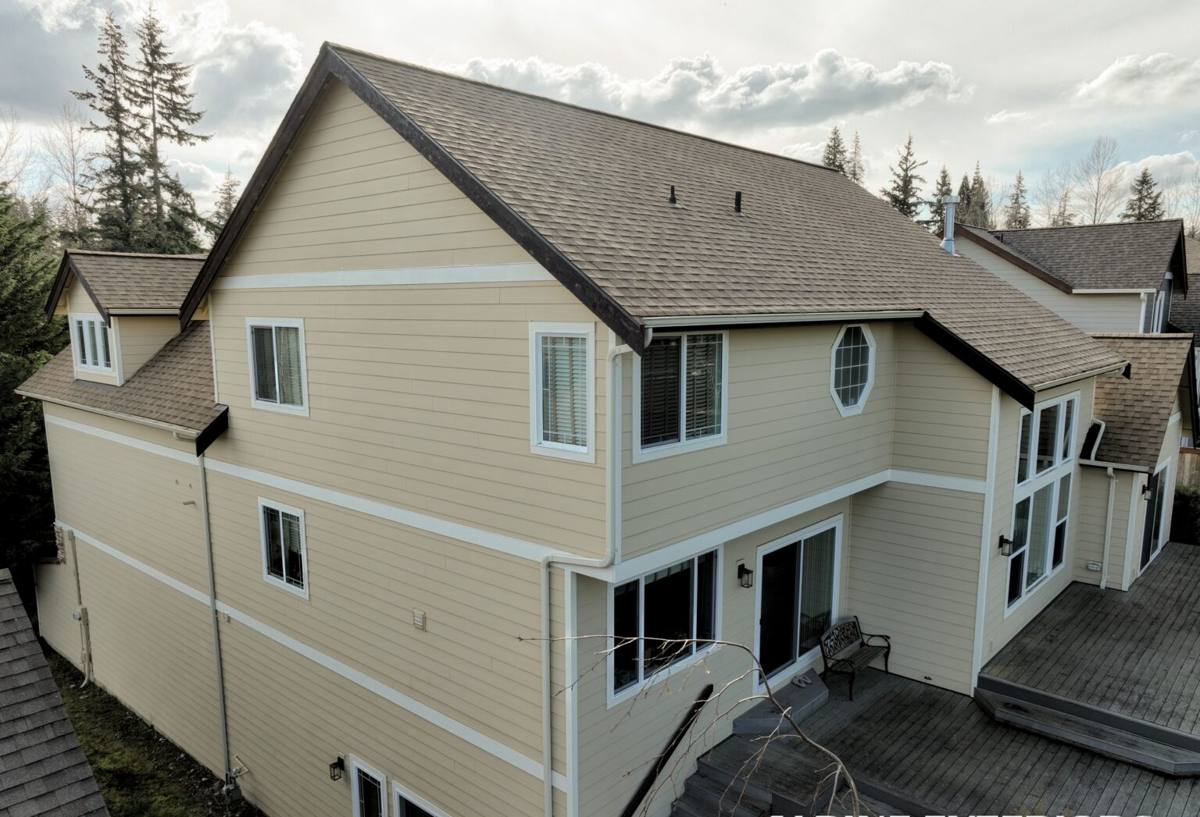
What South Hill's Terrain Means for Your Deck
A lot of South Hill sits on sloped or terraced ground, and older homes up here were often built to work with that slope rather than against it. That has real consequences for deck construction:
Footings and support
On a hillside lot, footing depth and placement aren't a formality — they're the difference between a deck that stays solid for decades and one that starts to rack or lean within a few years. Sloped ground usually means longer support posts, sometimes stepped footings, and closer attention to how the structure transfers load down to stable soil. We dig to frost depth and to undisturbed soil, not just "deep enough to pass a glance."
Access for equipment
Hillside and terraced lots often don't give you flat, open access for a mini excavator or concrete truck the way a level yard would. Good crews plan for that ahead of time — hand-digging footings where needed, staging material efficiently, and protecting existing landscaping and retaining walls instead of improvising around them mid-project.
Tying into an older structure
Many South Hill homes are older, with character-era framing that wasn't built with modern deck ledger attachment in mind. Tying a new deck into an older house correctly — solid framing connection, proper flashing, no shortcuts on the ledger board — matters more here than on newer construction, because the existing structure gives you less margin for error.
Salt Air, Rain, and Moss: Designing for This Climate
Whatcom County weather is the other half of the equation, and South Hill gets a concentrated version of it.
Salt air and hardware corrosion
Proximity to Bellingham Bay means a steady, low-level exposure to salt-laden air, even well up the hillside. Standard hardware corrodes faster under that exposure — screws rust, brackets pit, and fasteners weaken years before they should. We spec stainless steel or marine-grade coated fasteners and structural hardware for South Hill decks specifically because of this, not as an upsell.
Driving rain and drainage
Storms here don't just fall straight down — wind-driven rain gets pushed sideways into ledger connections, under flashing, and into any gap that isn't properly sealed. A deck built without correct flashing detail at the house connection will let water track behind the siding, and that's a rot problem you won't see until it's already serious. Proper slope for water runoff, gapped decking for drainage, and flashing that actually sheds water outward are non-negotiable in this climate.
Shade, tree cover, and the long moss season
South Hill's mature trees are part of what makes the neighborhood attractive, but they also mean a lot of decks sit under partial or heavy shade for much of the year. Combined with our long wet season, that's a recipe for moss, algae, and mildew building up fast on any surface that holds moisture. Board spacing, airflow underneath the deck, and material choice all affect how much of a moss battle you're signing up for long-term.
Choosing the Right Decking Material for a Shaded South Hill Lot
There's no single "best" decking material — the right choice depends on how much sun and airflow your specific site gets, and how much upkeep you're willing to do. Here's how the common options actually compare under South Hill conditions:
| Material | How it handles shade & moisture | Maintenance | Typical lifespan |
|---|---|---|---|
| Cedar | Naturally rot-resistant, but stays damp longer in shaded spots without regular sealing | Annual cleaning and re-sealing/staining | 15–20 years with upkeep |
| Pressure-treated fir/pine | Prone to moss and mildew in shade if not cleaned regularly; needs a sealed finish | Regular cleaning, periodic sealing | 10–15 years |
| Capped composite | Sheds moisture well, resists moss better than wood, but can still get slick under moss/algae film | Occasional washing; no staining or sealing | 25–30 years |
| PVC decking | Fully moisture-resistant, best performer in heavy shade, doesn't absorb water into the board | Occasional washing | 25–30+ years |
For heavily shaded South Hill lots, we usually steer clients toward capped composite or PVC — not because wood is a bad product, but because a shaded, damp site asks a lot of a natural material's finish, and re-sealing a deck you can barely get direct sun on is a real, recurring maintenance burden. If you want the look and feel of real wood and are prepared for the upkeep, cedar is still a solid, honest choice — we just want you to know what you're signing up for before we build it.
What a Correctly Built Deck Actually Involves
A deck that's going to hold up on South Hill isn't just boards on a frame. The parts that matter most are mostly the parts you won't see once it's finished:
- Footings sized and placed for the actual slope and soil, not a generic spacing chart
- Ledger board attached with proper flashing that directs water away from the house, not into it
- Joist spacing and hardware rated for your specific decking material and expected load
- Stainless or coated fasteners throughout, given the salt-air exposure this close to the bay
- Adequate gapping between boards for drainage and airflow, even under shade
- Railing and stair construction that meets current code height and baluster spacing
- Post bases set to keep wood-to-concrete contact points from trapping moisture
Skip any one of these and the deck might still look fine on day one. The problems show up in year three or four, usually as soft spots near the house connection or hardware that's already rusting through.
How Our Process Works
We keep this straightforward, and every step accounts for the site conditions specific to South Hill:
- On-site visit — we walk the lot, note the slope, tree cover, drainage patterns, and how the deck will tie into your existing home.
- Design and material conversation — we talk through layout, sizing, and which decking material actually fits your sun exposure and maintenance preference, with honest trade-offs, not a sales pitch.
- Written estimate — clear scope, materials, and price, so there are no surprises once work starts.
- Permitting — we handle the permit application and inspection scheduling for the project.
- Construction — footings, framing, decking, and railings built in sequence, with attention to flashing and drainage detail at every connection point.
- Final walkthrough — we go over the finished deck with you, including basic care guidance for your specific material and site.
Permits and Codes for Bellingham Deck Projects
Most custom deck builds in Bellingham require a permit, and elevated decks or those attached to the home almost always do. Permitting confirms footing depth, structural connections, and railing/guard requirements meet current code — which matters even more on a sloped South Hill lot where an under-built deck has less room for error. We handle the permit process as part of the build rather than leaving it to the homeowner to sort out separately.
Keeping Moss and Mildew From Taking Over
Even a well-built, well-drained deck needs some seasonal attention in a climate like ours — especially under tree cover. A little regular care goes a long way toward avoiding a slick, green surface by February:
- Sweep off leaves, needles, and debris regularly through fall — trapped organic matter holds moisture and feeds moss
- Rinse or wash the deck surface at least once or twice a year, more often in heavy shade
- Keep gutters and downspouts clear so runoff isn't dumping extra water onto the deck
- Check and clear debris from underneath the deck where airflow tends to be worst
- For wood decks, re-seal on the manufacturer's recommended schedule — don't wait until it's visibly failing
- Trim back overhanging branches where practical to get a bit more sun and airflow onto the surface
Why Hire a Crew That Already Works South Hill
South Hill isn't a neighborhood where a generic deck plan just drops in cleanly. Sloped lots, mature trees, older home framing, and the bay's salt air all push back on a one-size-fits-all approach. A crew that's already built and repaired decks up here knows how to plan around limited equipment access, how to flash a ledger connection on an older house correctly, and which materials are actually worth the extra cost given the shade and moisture a specific lot deals with. That local experience shows up less in the sales pitch and more in whether your deck is still solid — and not rusting or rotting at the connection points — ten years from now.
If you're planning a custom deck for your South Hill home, we're glad to come take a look and talk through what your specific lot needs. Fill out the form below for a free, no-pressure estimate.