 Bellingham Exterior
 Deck Building in Happy Valley, Built for Bellingham's Weather
Happy Valley homes see the same weather pattern as the rest of Bellingham: long stretches of overcast drizzle, heavier driving rain off and on through fall and winter, and enough shade from mature trees that moss and algae get a real foothold on any horizontal surface that stays damp. A deck here isn't just outdoor furniture placement — it's a structure that spends most of the year wet, and that reality should drive every decision from the footings up to the fastener choice.
We build and repair decks throughout Bellingham and Whatcom County, and Happy Valley's mix of established lots, mature landscaping, and a range of home ages means we see everything from decks that were built correctly decades ago and just need updating, to newer decks that were built fast and are already showing rot at the ledger or soft spots at the stairs. This page covers what actually matters for a deck in this neighborhood — not a generic national write-up.
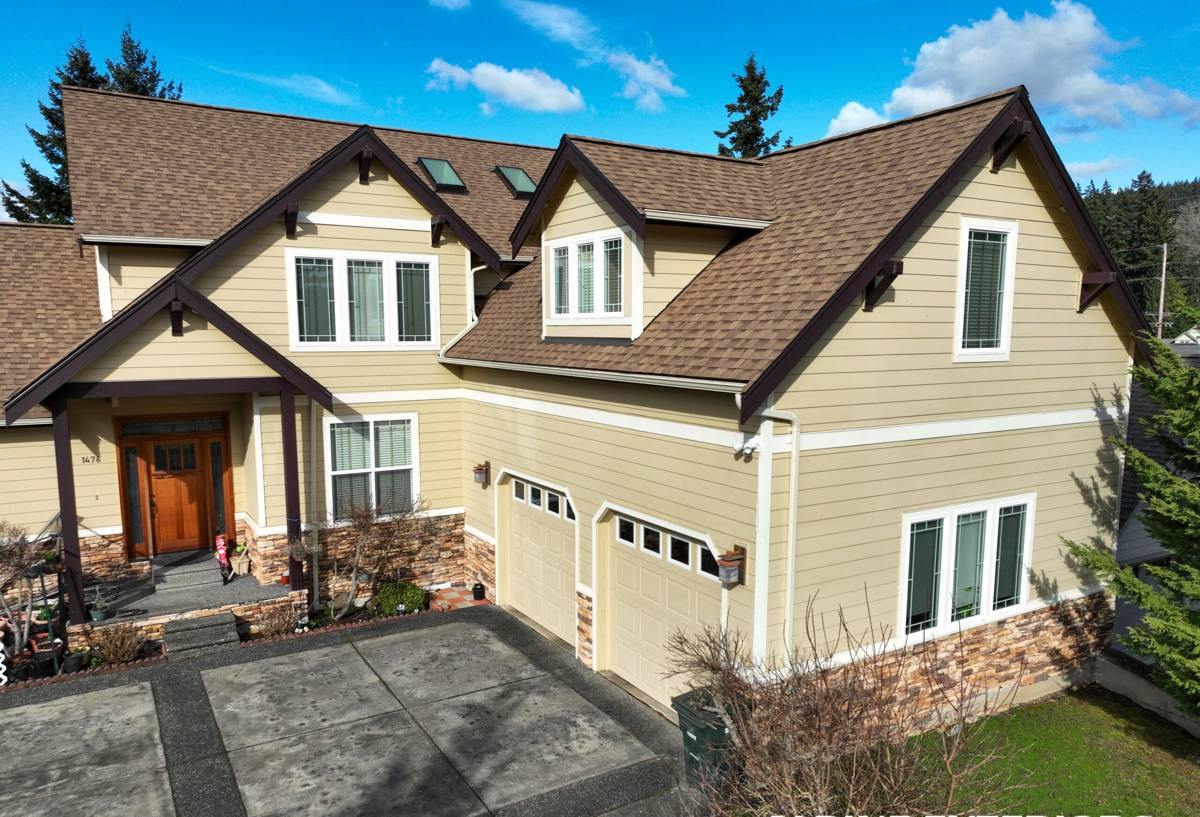
What Bellingham's Climate Does to a Deck Over Time
Three things drive most of the deck problems we see in this area:
Moss and Algae
Shaded lots and near-constant fall-through-spring moisture mean moss and algae growth is close to guaranteed on any deck surface that doesn't drain and dry quickly. Beyond looking bad, moss holds moisture against the board surface, which accelerates rot in wood decking and can leave composite decking slick and slippery underfoot.
Driving Rain
Rain here doesn't just fall straight down — wind-driven rain gets pushed sideways into ledger connections, under rail posts, and into any gap where flashing was skipped or done poorly. Most of the structural deck failures we get called about trace back to water getting into a connection point that was never properly sealed, not to the decking boards themselves.
Salt Air
Bellingham sits on the bay, and salt-laden air travels further inland than most homeowners expect. It accelerates corrosion on fasteners, joist hangers, and any exposed metal hardware. A deck built with interior-grade or mismatched hardware will show rust streaks and weakened connections years before it should.
None of this means a deck in Happy Valley won't last — it means the build has to account for these conditions from the start rather than trying to fix them after the fact.
Choosing Decking Material for This Climate
There's no single "best" decking material — there's a best fit for your budget, your maintenance appetite, and how much sun or shade the deck actually gets. Here's how the common options stack up under Whatcom County conditions:
| Material | Moisture Behavior | Maintenance | Typical Lifespan Here |
|---|---|---|---|
| Pressure-treated fir/hem-fir | Prone to cupping and splitting if not sealed regularly; moss takes hold fast in shade | Annual cleaning and re-sealing recommended | 15-20 years with upkeep |
| Cedar | Naturally rot-resistant but still needs sealing to prevent graying and moss in shaded spots | Periodic cleaning and oil/sealant | 20-25 years with upkeep |
| Composite decking | Doesn't rot, but still needs cleaning — moss and algae will grow on the surface film if left unwashed | Occasional washing, no sealing or staining | 25-30+ years, manufacturer-dependent |
| PVC decking | Fully moisture-resistant board itself; drainage and airflow underneath still matter for the framing | Lowest maintenance of the surface options | 25-30+ years, manufacturer-dependent |
We'll walk you through these trade-offs honestly, including where a lower-maintenance material makes sense versus where a traditional wood deck fits your home and budget better. What we won't do is talk you into a premium material your project doesn't need, or downplay the maintenance a wood deck actually requires in a shaded, rainy yard.
Shaded Lots Need Extra Thought
Happy Valley has plenty of tree cover, and a deck tucked under or near mature trees gets less direct sun to dry it out between rain events. On these lots, board spacing, joist spacing, and airflow underneath the deck matter more than on an open, sunny lot — tighter gaps and poor underdeck ventilation are a recipe for chronic moss and premature rot regardless of which material you choose.
Framing, Footings, and What's Underneath
A deck is only as good as what's under the decking boards, and that's the part homeowners can't easily inspect themselves once it's built. We size footings to the load and to what Whatcom County code requires for our soil and drainage conditions, and we don't shortcut post base connections — standing water at a post base is one of the fastest ways to rot a deck from the ground up.
For framing hardware, we use galvanized or stainless connectors rated for exterior and coastal-adjacent use, not general-purpose interior hardware. Given the salt air this area gets, that's not an upsell — it's the difference between hardware that lasts the life of the deck and hardware that's rusting within a few years.
Ledger Attachment and Moisture Management
If a deck is attached to your house, the ledger board connection is the single most important detail on the whole project. Water that gets behind an improperly flashed ledger doesn't just rot the ledger — it can work its way into your rim joist, sheathing, and framing, turning a deck problem into a house problem.
A correct ledger installation includes:
- Proper flashing that directs water out and away from the house, not into the wall assembly
- A gap or drainage plane between the ledger and siding so water doesn't sit trapped against the house
- Structural fasteners rated for the load, not just deck screws
- Sealant details at every penetration, sized for actual wind-driven rain, not just vertical rainfall
This is also the area where we most often find problems on existing Happy Valley decks — a ledger that was face-nailed with no flashing, or flashing that was installed but never properly lapped with the house wrap. If your deck is more than a few years old and you've never had the ledger connection checked, it's worth having someone look before it becomes an expensive repair.
Permitting and Code in Bellingham
Most deck construction and significant deck repair in Bellingham requires a permit, and inspections exist for a reason — they catch footing depth, ledger attachment, and guardrail issues before they're buried under decking boards. We handle the permitting process as part of the job, including the plan details the city wants to see for footings, framing spans, and guardrail height and spacing. Skipping this step to save time isn't worth it: unpermitted deck work can become a real problem when you go to sell the house.
How We Work in Happy Valley
Our process for a Happy Valley deck project is straightforward:
- On-site assessment — we look at your lot's sun/shade exposure, drainage, soil, and how the deck will connect to your home
- Material and design discussion — honest trade-offs between wood and composite/PVC options based on your budget and how much upkeep you want to do
- Permit and plan submission — we handle the paperwork with the city
- Framing and footings — built to code depth with corrosion-rated hardware throughout
- Ledger, flashing, and decking installation — the moisture-control details done right the first time
- Final walkthrough and inspection — nothing gets called finished until it passes and until you've seen it
Keeping a New Deck Looking Good
Whatever material you choose, a little seasonal attention goes a long way in this climate. A simple maintenance routine for a Happy Valley deck:
- Sweep leaves and debris off the deck regularly in fall — trapped wet leaves are where moss growth starts
- Wash the surface at least once or twice a year with a deck cleaner or diluted cleaner solution to knock back algae and moss before it sets in
- Check and clear gaps between boards so water can drain instead of pooling
- For wood decks, plan on re-sealing or re-staining every 1-3 years depending on sun exposure
- Look underneath the deck once a year for signs of standing water, soft framing, or hardware rust
- Keep gutters and downspouts near the deck clear so runoff isn't dumping directly onto or under it
Why Hire a Crew That Already Works This Area
Deck-building basics don't change from region to region, but the details that determine whether a deck lasts 10 years or 30 do change with the climate. A crew that works Bellingham and Whatcom County regularly already knows how much moss pressure a shaded Happy Valley lot gets, what hardware actually holds up against the salt air off the bay, and what the city's inspectors want to see on a ledger connection. That local experience shows up in fewer callbacks and a deck that's still solid well after the novelty of a new build has worn off.
If you're planning a new deck or want an honest look at an existing one, we're happy to come take a look. Fill out the form below for a free, no-pressure estimate — we'll walk the site with you and give you a straight answer on what your Happy Valley deck actually needs.