 Bellingham Exterior
 Building Decks That Actually Hold Up in Puget
Puget sits close enough to the water that salt air is part of daily life, and that changes what a deck needs to survive here. A deck built with the same materials and details you'd use in a dry inland climate will not perform the same way a few blocks from Bellingham Bay. Between salt-laden air, driving rain that comes in sideways off the water, and a moss season that can stretch from October through May, outdoor structures in this part of Whatcom County take a beating that homeowners further inland simply don't deal with. We build decks for this specific environment, not a generic one.
A deck that looks right the day it's finished but wasn't detailed for salt exposure and constant moisture will show problems within a few seasons — corroding fasteners, soft spots where water pools, and moss creeping across boards that never fully dry out. Getting it right the first time means understanding how this microclimate actually behaves, not just following a generic building guide.
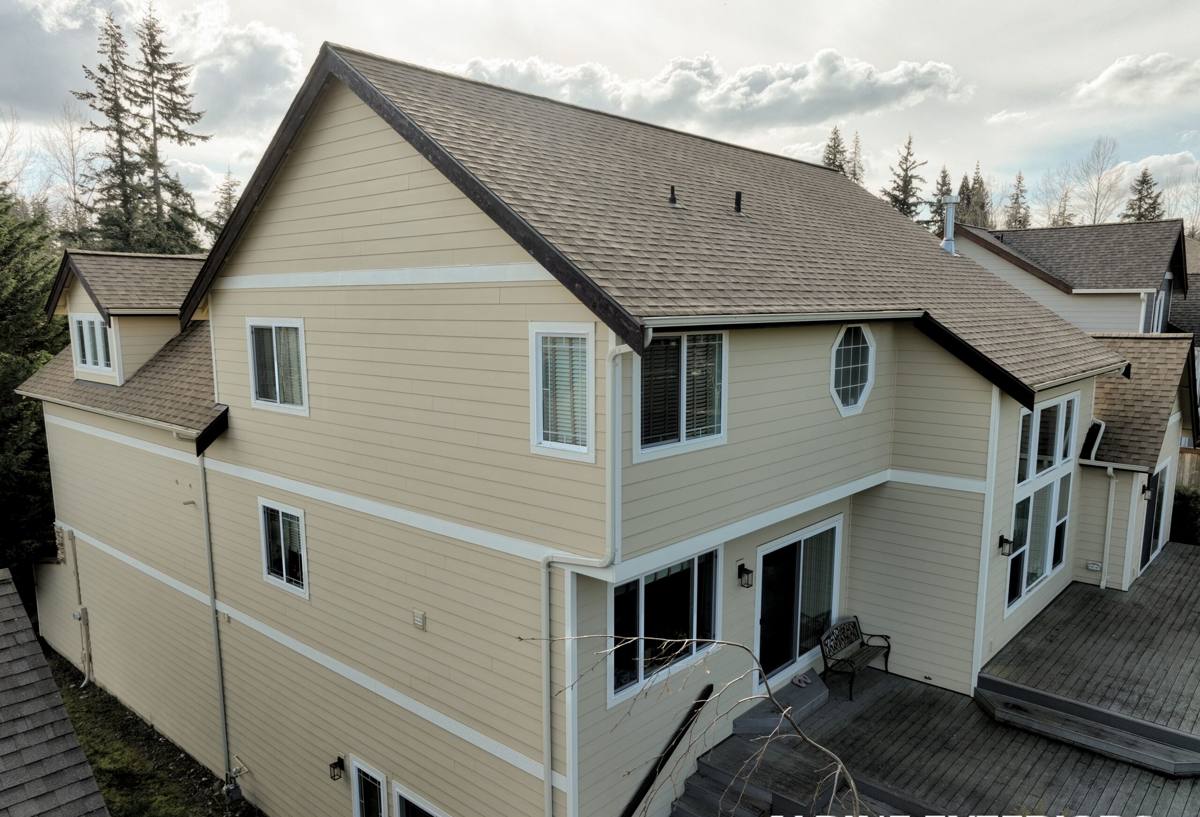
What Puget's Climate Does to a Deck
Salt Air and Metal Fatigue
Airborne salt from the bay accelerates corrosion on anything metal — fasteners, joist hangers, railing brackets, and structural connectors. Standard galvanized hardware that would last decades in a drier, inland yard can start showing rust streaks and pitting in a fraction of that time this close to salt water. Once a fastener starts to corrode, it loses holding strength long before it looks obviously bad, which is part of what makes this issue easy to underestimate.
Driving Rain and Water Intrusion
Rain in this area doesn't always fall straight down. Wind off the water regularly pushes it sideways, which means water finds its way into spots that a purely vertical rain would never reach — under railing caps, behind ledger boards, into end-grain cuts that weren't sealed. A deck built without flashing details and drainage planned for wind-driven rain will absorb moisture in places you can't see until rot has already set in.
Moss Season and Surface Buildup
Long stretches of damp, mild weather are ideal growing conditions for moss and algae. On a deck surface, that buildup isn't just cosmetic — it holds moisture against the wood or composite surface, makes boards slippery and dangerous underfoot, and can work into seams and fastener holes over time. Decks with poor airflow underneath or tight board spacing tend to hold onto moss far longer than decks built with drainage and ventilation in mind from the start.
What a Correctly Built Puget Deck Involves
A deck built for this environment isn't just about picking a "good" material — it's about how every component is specified and installed. Here's what we treat as non-negotiable on Puget-area projects:
- Stainless steel or premium coated fasteners and structural connectors rated for coastal/marine exposure, not standard galvanized hardware
- Ledger board flashing detailed to shed wind-driven rain away from the house structure, not just downward
- Joist and beam spacing that accounts for the actual decking material's wet-weather performance, not manufacturer minimums alone
- Proper gapping between boards for drainage and airflow, sized correctly for the material chosen
- Under-deck ventilation planning so the substructure can actually dry out between rain events
- Sealed or capped end-grain cuts on any wood components, since exposed end grain is where rot starts fastest
- Footings and post bases set to shed water away from the base of every support, not just meeting minimum depth code
Skipping any one of these doesn't usually cause an immediate, visible problem. It shows up two or three years later as soft boards, rust-stained railings, or a substructure that never quite dries out — and by then the fix is far more expensive than doing it right the first time would have been.
Choosing Materials for This Environment
There's no single "best" decking material for every homeowner — it depends on budget, maintenance appetite, and how the deck will be used. What matters is understanding the honest trade-offs of each option in a salt-air, high-moisture climate before you decide.
| Material | How It Handles This Climate | Maintenance Reality |
|---|---|---|
| Pressure-treated wood | Solid performer if properly sealed and end-cuts treated; needs consistent upkeep to resist moss and moisture | Annual cleaning and periodic resealing; most affordable upfront |
| Cedar | Naturally rot-resistant and handles moisture well, but still needs protection from constant salt and rain exposure | Regular oiling or sealing to keep its resistance intact |
| Composite decking | Very strong resistance to moisture and rot; still needs proper drainage underneath or moss can build up on the surface | Occasional washing; no sealing or staining required |
| Hardwoods (e.g., ipe-type species) | Excellent natural density and rot resistance, performs well in coastal conditions | Higher upfront cost; periodic oiling to maintain appearance |
Whatever material a homeowner chooses, we're honest about what it will actually require to keep it performing well here — we'd rather set correct expectations upfront than have a client surprised by maintenance three years in.
Hardware and Fasteners: The Part Nobody Sees But Everyone Feels
The single most common shortcut we see on decks that fail early in this area isn't the decking material — it's the fasteners and connectors underneath it. Standard hardware store galvanized screws and joist hangers are built for general-purpose use, not sustained salt air exposure. Within a coastal-influenced climate like Puget's, that hardware can start corroding from the inside of the connection before any surface rust is even visible. Once a joist hanger weakens, the structural integrity of the whole deck is compromised, even though the deck boards on top might still look fine.
We spec stainless steel or marine-grade coated fasteners and connectors on every Puget-area deck, full stop. It costs more upfront than standard hardware, but it's the difference between a deck that's structurally sound in fifteen years and one that needs a hidden hardware replacement in five.
Our Process for Puget Deck Projects
1. On-Site Assessment
We look at your specific lot — sun and wind exposure, proximity to water, existing drainage patterns, and how the deck will connect to your home. Two homes a few streets apart in Puget can have meaningfully different exposure levels depending on elevation and wind direction.
2. Design and Material Selection
We walk through material trade-offs honestly based on your budget and how you plan to use the space, and design the structure — footings, framing, drainage, ventilation — around what this climate will actually throw at it.
3. Permitting
Deck projects in Whatcom County typically require permitting depending on size and height. We handle that process so you're not stuck deciphering code requirements yourself.
4. Construction
Framing first, with attention to flashing, fastener selection, and drainage detailing at every connection point — not just at the end when it's time to lay decking boards.
5. Final Walkthrough
We go over maintenance expectations specific to your chosen material and this climate, so you know what to watch for as the seasons change.
Maintenance That Actually Matters Here
A well-built deck in Puget still needs some seasonal attention — the climate doesn't let anyone off the hook entirely. This isn't a long list, but it's one worth taking seriously given how much damp weather this area sees:
- Clear debris and standing moss off the surface before it has a chance to establish, especially heading into fall
- Check railing hardware and visible fasteners annually for early signs of corrosion
- Keep gutters and downspouts near the deck clear so runoff isn't dumping extra water onto or under the structure
- Reseal or oil wood surfaces on the manufacturer's recommended schedule — don't wait until it looks obviously weathered
- Inspect under-deck ventilation paths periodically to make sure nothing (stored items, overgrown landscaping) is blocking airflow
Why a Crew That Already Works Puget Matters
Building codes, wind exposure, and drainage patterns in this specific pocket of Whatcom County aren't the same as they are twenty miles inland, and a crew that mostly works drier, more sheltered areas may not default to marine-grade hardware or wind-driven-rain flashing details unless specifically asked. We work this area regularly, so those details are our standard approach, not an upgrade someone has to request. That familiarity also means fewer surprises during permitting and a design that's already accounting for how your specific lot handles rain and wind, rather than a one-size-fits-all approach applied after the fact.
Get a Straightforward Estimate
If you're planning a new deck or replacing one that's showing its age, we're happy to come take a look, walk through material options honestly, and put together a clear estimate — no pressure, no upsell. Use the form below to get started.