 Bellingham Exterior
 Why Edgemoor Decks Wear Differently Than Decks Inland
Edgemoor sits close to Bellingham Bay, under heavy tree cover, on lots that see more shade and more standing moisture than homes further inland in Whatcom County. That combination is hard on a deck. Salt-laden air off the bay accelerates corrosion on fasteners, hardware, and any metal flashing that isn't rated for it. Driving rain, pushed sideways by wind off the water, gets up under railings and into end grain that a straight-down rain would never reach. And the tree canopy that makes these lots so pleasant to live on also means decks here spend more months of the year damp and shaded than a deck out in the open would — which is exactly the recipe moss and algae need to take hold.
None of that means a deck in Edgemoor is doomed. It means the deck has to be built and detailed differently than one going up on a dry, sunny lot on the other side of town. A lot of the decks we get called out to replace in this neighborhood weren't built wrong on purpose — they were built to a generic standard that didn't account for what this specific site does to lumber, fasteners, and finishes year after year.
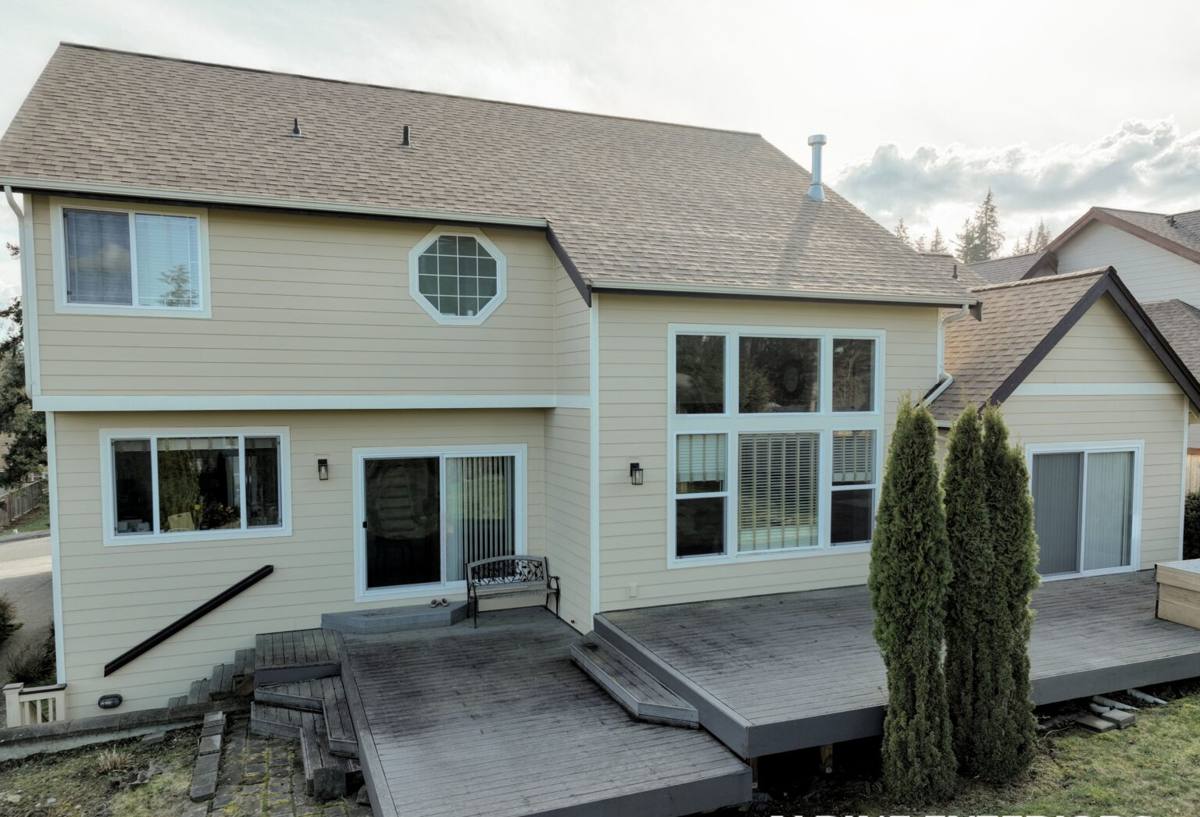
Signs Your Deck Has Reached the End of Its Life
Not every tired-looking deck needs full replacement. Sometimes a repair, a board swap, or a proper cleaning and refinish is the honest answer. But there's a point where patching stops making sense — where the structure underneath, not just the surface, has given out. Here's how we tell the difference.
Structural Warning Signs
These are the signs that mean the deck's frame, not just its surface, is compromised. If you're seeing any of these, repair usually isn't a lasting fix.
- Soft, spongy, or bouncy spots underfoot, especially near the house or stair landings
- Visible rot, dark staining, or crumbling wood at the ledger board where the deck meets the house
- Posts or footings that have shifted, settled unevenly, or show cracking at the base
- Railings that flex or wobble more than a firm push should cause
- Rust streaking or corroded, loosening fasteners, especially on older galvanized hardware
- Persistent moss or algae growth in the same spots no matter how often it's cleaned
Surface and Cosmetic Signs
Graying wood, surface splinters, and flaking finish on their own don't mean the deck is unsafe — they mean it needs attention, and sometimes that attention is a full tear-off if the boards themselves are past saving. Cupped or twisted boards, especially on older cedar or pressure-treated decking, are usually a sign the boards have absorbed and released moisture unevenly for years and won't lie flat again no matter how they're refinished.
What a Correct Deck Replacement Actually Involves
A deck replacement done right is more than pulling up old boards and screwing down new ones. The parts nobody sees — the ledger, the flashing, the footings, the framing — are what determine whether the new deck lasts 10 years or 25.
Tear-Out and What We Find Underneath
Once the old decking and railings come off, we can actually see the frame — and in a shaded, damp lot like most in Edgemoor, this is often where the real story is. Rot at the ledger, undersized or corroded joist hangers, and framing lumber that was never rated for ground contact or wet exposure are common finds. We document what we find before covering it back up, so you know exactly what was wrong and why it's being addressed.
Framing, Footings, and Structural Correction
Any framing member that's compromised gets replaced, not patched around. Footings that have shifted or were undersized to begin with get corrected to current structural standards — this matters more on sloped, wooded lots where soil drainage and root growth can move a footing over time. We size joists and beams to the actual span and load, not just to match what was there before.
Ledger Attachment and Flashing
The ledger board — where the deck bolts into the house — is the single most common failure point on any deck, and it's the point most exposed to whatever moisture runs off a shaded, rain-heavy roofline. Correct flashing here isn't optional trim; it's the difference between water shedding away from your house framing and water working its way behind the siding for years without anyone noticing until there's rot in the wall.
Decking, Fasteners, and Railing Install
Fasteners and hardware get specified for the environment, not just the material — stainless or coated hardware rated for coastal exposure holds up where standard galvanized will streak and corrode within a few seasons this close to the bay. Boards are spaced and fastened to allow for drainage and airflow underneath, which matters directly for how much moss and mildew the deck grows in year two and beyond.
Choosing a Decking Material for This Climate
There's no single "best" decking material — there's a best material for your budget, your maintenance appetite, and how much sun versus shade your specific lot gets. In a shaded, damp neighborhood like Edgemoor, moisture behavior and how a material handles staying wet for extended periods matter more than they would on a sunnier lot.
| Material | Moisture Behavior | Maintenance | Typical Lifespan |
|---|---|---|---|
| Pressure-treated wood | Absorbs and releases moisture; prone to cupping and checking in shade | Annual cleaning and periodic staining/sealing required | 10–15 years before major issues |
| Cedar | Naturally rot-resistant but still needs sealing to stay that way in constant damp | Regular cleaning and refinishing to prevent graying and moss | 15–20 years with upkeep |
| Capped composite | Resists moisture absorption well; won't rot, but surface can still host algae/moss film if not cleaned | Occasional washing; no staining or sealing | 25–30 years, manufacturer-warrantied |
| PVC decking | Fully moisture-resistant; best performance in constantly shaded, damp conditions | Lowest maintenance of the group | 25–30+ years, manufacturer-warrantied |
For a lot with heavy tree cover and consistent shade — common in Edgemoor — we lean toward recommending capped composite or PVC decking specifically because they don't feed moss and algae the way bare wood grain does, and they don't require the annual sealing schedule that wood needs to keep moisture out. That's a maintenance-burden and long-term-cost conversation, not a claim that wood decking is a bad product — plenty of homeowners still prefer the look and feel of real wood and are willing to keep up the maintenance it takes to protect it in a wet climate.
Permits and Code Requirements in Bellingham and Whatcom County
Most deck replacements that involve structural work — new footings, changes to framing, or any change to the deck's height or footprint — require a permit and inspection. Simply swapping decking boards on an otherwise sound structure sometimes doesn't, but the line between "resurfacing" and "replacement" is exactly where a lot of shortcuts get taken. Guardrail height, baluster spacing, and stair rise-and-run all have to meet current code, which sometimes means an older deck's railings can't simply be reused even if the boards themselves are fine. We handle permitting and inspection scheduling as part of the job so you're not left chasing down paperwork or discovering a code issue after the deck is already built.
Our Process, Start to Finish
- On-site assessment — We walk the existing deck, check the framing and ledger where accessible, and talk through what you actually want from the new deck: size, material, layout, budget range.
- Written estimate — A clear scope of work and price, so you know what's included before anything is torn out.
- Permitting — We pull the required permits and schedule inspections so the job stays compliant from the start.
- Tear-out and structural assessment — Old decking and railings come off, framing gets inspected, and we flag anything we find that changes the plan before proceeding.
- Framing, flashing, and footings — Structural work gets done and inspected before decking goes down over it.
- Decking and railing install — Final material goes down, fastened and spaced correctly for drainage and long-term performance.
- Final walkthrough — We go over the finished deck with you before calling the job done.
Why Local Experience in Edgemoor Matters
A contractor who's worked this neighborhood before already knows the questions to ask about a shaded, sloped lot before the tear-out even starts — how the site drains, how much sun a given yard actually gets through the tree canopy, what kind of hardware corrosion to expect this close to the bay. That's not a substitute for a proper on-site assessment of your specific deck, but it does mean fewer surprises mid-project and a crew that isn't learning Whatcom County's rain-and-moss cycle for the first time on your house. It also means realistic scheduling — knowing which weeks of the year give a solid stretch of workable weather in this specific microclimate, and building the timeline around that instead of around a generic regional forecast.
Keeping a New Deck Ahead of Moss Season
A well-built deck still needs a little seasonal attention in a climate like this one, and doing it consistently is what actually stretches out the years between replacements.
- Sweep leaves and debris off the deck surface regularly through fall — trapped organic matter is what moss and mildew feed on
- Rinse the deck surface periodically through the wet months, especially in shaded corners that don't get any direct sun to dry them out
- Keep gutters and downspouts near the deck clear so runoff isn't dumping extra water onto or under the structure
- Check railings and stair connections once a year for looseness, especially after the first hard freeze-thaw cycle of the season
- For wood decking, keep to a sealing/staining schedule rather than waiting until the wood already looks gray and dry
- Trim back overhanging branches where practical to let more light and air reach the deck surface
If you're weighing whether your current deck needs a repair or a full replacement, or you're ready to plan a new one built for this exact climate, we're happy to take a look and give you a straight, no-pressure estimate. Use the form below to get started.