 Bellingham Exterior
 Decks in Sunnyland Take a Different Kind of Beating
Sunnyland sits close enough to Bellingham Bay that salt-laden air is a constant factor in how long any exterior structure lasts, and a deck is one of the most exposed things a house owns. Add Whatcom County's long wet season, and you've got a recipe for slow, steady damage that's easy to miss until it isn't: soft spots underfoot, rust bleeding from fasteners, and that dark green film that shows up on shaded boards every fall and doesn't fully leave until late spring.
None of this means Sunnyland is a bad place for a deck. It means a deck here needs to be built with the actual climate in mind, not just built to a generic code minimum and hoped for the best. We've replaced enough decks in this neighborhood to know which parts of a build matter most when the weather is this consistently damp and the air carries salt.
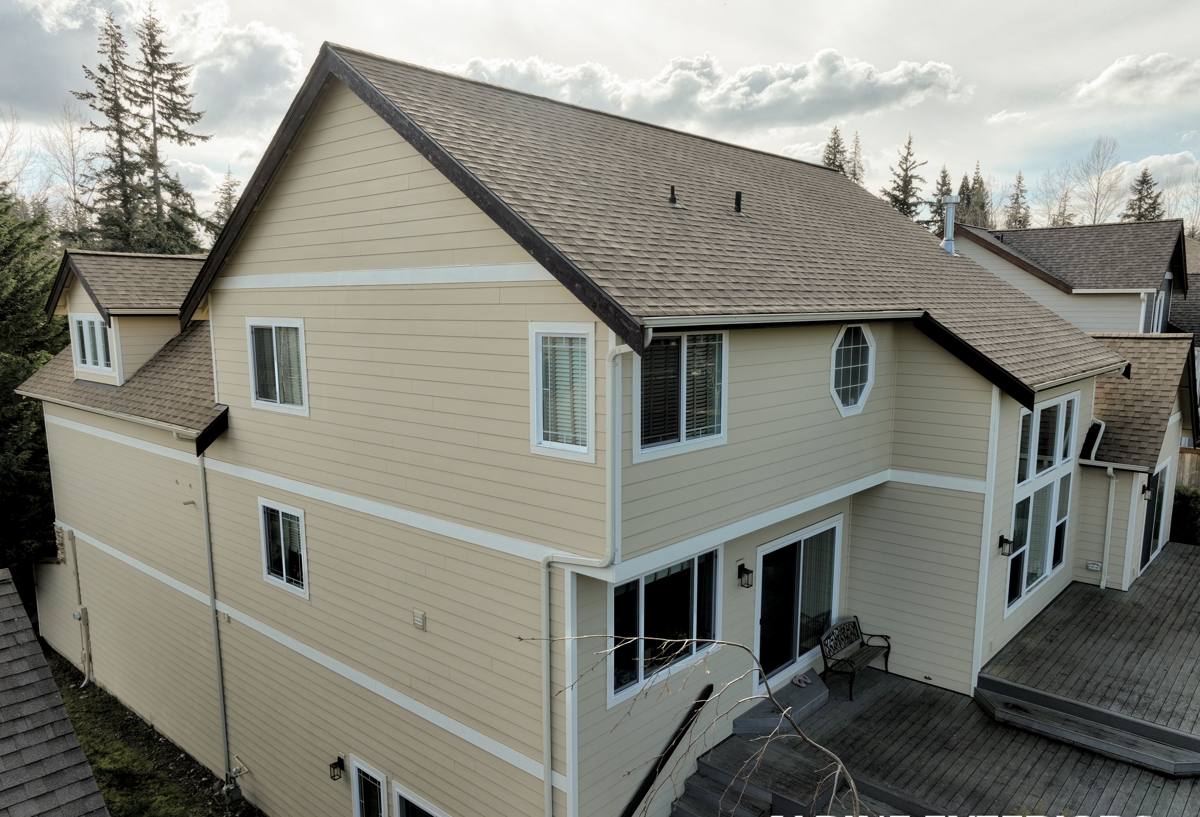
Why Salt Air and Moss Are the Two Things to Design Around
Salt air and metal fasteners
Salt air accelerates corrosion on any exposed metal — nails, screws, joist hangers, bolts. A deck built with mismatched or under-rated hardware can look fine for a couple of years and then start failing at exactly the connections that hold it together. This is one of those problems that doesn't announce itself with a visible crack; it shows up as a hanger that's rusted through on the back side, invisible until someone's underneath looking for it.
Moss season and moisture retention
Bellingham's wet stretch runs long, and shaded or north-facing sections of a deck can stay damp for days at a time. Moss and algae don't just look bad — they hold moisture against the wood surface, and that moisture works its way into checking and fastener holes. Over a few seasons, that's what turns a solid deck into one with soft boards and a slick, unsafe surface in the wet months.
Driving rain and end-grain exposure
Wind-driven rain in this area doesn't just fall straight down — it gets pushed sideways into railings, stair stringers, and the end grain of boards, which is the single most absorbent part of any piece of lumber. End cuts that aren't sealed or protected are almost always where rot starts first on a deck in this climate.
What a Correct Deck Replacement Looks Like Here
A deck replacement isn't just pulling up old boards and screwing down new ones. Done right, it's a chance to fix the structural and drainage issues that caused the original deck to fail in the first place — which matters even more in a climate that doesn't give a poorly built deck any slack.
- Full substructure inspection: ledger board attachment, joists, beams, and posts checked for rot, not just the visible decking
- Ledger flashing done correctly: proper flashing where the deck meets the house is the single most common failure point we find on older decks in wet climates
- Corrosion-resistant hardware throughout: hangers, screws, and bolts rated for the moisture and salt exposure this area actually sees, not just standard-grade fasteners
- Proper drainage and slope: decking that sheds water instead of holding it, with attention to low spots that trap standing water after a storm
- Airflow underneath: enough clearance and ventilation below the deck so the structure can actually dry out between rain events
- Sealed and protected end cuts: every field-cut board end treated so it isn't the weak point in an otherwise solid deck
Material Choices That Actually Hold Up
There's no single "best" decking material for every situation — every option is a trade-off between upfront cost, maintenance, and how it behaves in a consistently wet, salt-exposed environment. Our job is to walk homeowners through those trade-offs honestly rather than push whatever has the best margin.
| Material | Upfront Cost | Maintenance in This Climate | Notes |
|---|---|---|---|
| Pressure-treated wood | Lowest | Annual cleaning and periodic sealing recommended | Needs consistent upkeep to resist moss and moisture in shaded areas |
| Cedar | Moderate | Regular sealing to maintain color and resist moisture | Natural rot resistance, but still needs attention in damp, shaded spots |
| Composite decking | Higher | Low — periodic washing to keep surfaces from staying damp | Doesn't absorb moisture the way wood does, but installation quality still matters a lot |
| PVC decking | Highest | Lowest | Fully synthetic; performs consistently in wet, salt-exposed conditions but comes at a premium |
We don't install every product on the market, and that's intentional. Some engineered decking systems have installation tolerances and warranty structures that only hold up when installed exactly to spec — get one detail wrong and the manufacturer's warranty can be void even though the deck looks fine on the surface. We'd rather install fewer products correctly, every time, than offer every option and cut corners on any of them.
Framing Material Matters Too
The decking surface gets all the attention, but the framing underneath is what actually determines how long a deck lasts in a wet climate. Pressure-treated framing lumber rated for ground contact, stainless or hot-dip galvanized hardware, and proper flashing tape on joists all cost more upfront but are far cheaper than a full structural rebuild ten years earlier than it should have been necessary.
Signs a Sunnyland Deck Needs Replacing, Not Just Repairing
Not every deck problem means a full replacement — sometimes a board swap or hardware upgrade solves it. But there are signs that point to a structural issue that repair alone won't fix.
- Soft, spongy, or bouncy spots when you walk across the deck, especially near the house
- Visible rust streaking from screws, bolts, or joist hangers
- Gaps or separation where the ledger board meets the house
- Persistent moss or algae that returns within weeks of cleaning
- Cracking concentrated at board ends or around fastener holes
- A railing or stair post that feels loose or flexes under weight
If more than one or two of these show up at once, it usually means the underlying structure — not just the surface boards — has been compromised by moisture over time, and that's a replacement conversation, not a patch job.
Our Process for a Sunnyland Deck Replacement
1. On-site assessment
We look at the whole structure — decking, framing, ledger connection, footings — and talk through what we find in plain language, including what's failing and why.
2. Honest material recommendation
Based on sun exposure, shade patterns, and how much upkeep the homeowner actually wants to commit to, we recommend material options with real trade-offs explained, not just the highest-margin product.
3. Permitting
Deck replacements in the City of Bellingham and unincorporated Whatcom County often require permits depending on size, height, and scope. We handle that process so it isn't left to the homeowner to figure out.
4. Demolition and structural correction
Old decking, and any compromised framing or hardware, comes out. This is also where we fix ledger flashing and drainage issues that caused the original problems.
5. Rebuild to climate-appropriate standards
New framing, hardware, and decking go in with the fastener grade, flashing, and airflow considerations this climate actually requires.
6. Final walkthrough
We walk the finished deck with the homeowner, point out any maintenance recommendations specific to the material chosen, and answer questions before we consider the job done.
Maintenance That Actually Extends the Life of a New Deck
Even the best-built deck benefits from a little seasonal attention in a climate like this. None of it is complicated, but skipping it is how a well-built deck ends up looking and performing like a poorly built one within a few years.
- Sweep debris and standing leaves off the surface regularly, especially in fall
- Rinse off salt residue and grime a couple of times a year, more often in exposed spots
- Check and clear gaps between boards so water and debris don't accumulate
- Inspect fastener heads and hardware annually for early rust
- Reapply sealant on wood decking on the schedule the product recommends — don't wait until it looks dry and gray
- Keep gutters and downspouts near the deck clear so runoff isn't draining directly onto it
Why Local Experience with Sunnyland Conditions Matters
A deck built to a generic national spec can still fail early in a spot like Sunnyland if it doesn't account for the specific combination of salt air, shade patterns, and sustained wet weather this part of Whatcom County sees. A crew that already works in this neighborhood knows which corners of a lot tend to stay damp longest, which framing details actually hold up here, and which hardware grade is worth the extra cost versus which is overkill.
That's not a marketing point — it's the difference between a deck that needs attention again in five years and one that holds up for decades with normal maintenance. We'd rather spend the extra time getting the structural details right the first time than come back to fix a failure that proper flashing or hardware would have prevented.
Get a Straightforward Estimate
If your Sunnyland deck is showing soft spots, persistent moss, or rusted hardware, it's worth having someone take an honest look before deciding between repair and replacement. We offer free, no-pressure estimates and will tell you plainly what we find — use the form below to get started.