 Bellingham Exterior
 Board & Batten in a Neighborhood Built on Trees and Water
Edgemoor sits close to Bellingham Bay and Chuckanut Bay, tucked under a mature tree canopy that gives the neighborhood its shade and privacy — and also gives it a siding problem most inland neighborhoods don't deal with. Board and batten is one of the most requested looks in this part of Bellingham, and for good reason: the vertical lines read as clean and traditional against wooded lots, they pair well with the mix of craftsman, mid-century, and newer custom builds you see through the neighborhood, and the deep shadow lines the battens create hold up visually against tall firs and cedars in a way flat lap siding sometimes doesn't.
The look works. The question is what it's made of and how it's put together, because board and batten has more seams, more fastener points, and more places for water to find a way in than a standard lap profile. In a marine climate like Whatcom County's, that difference matters more than the style choice does.
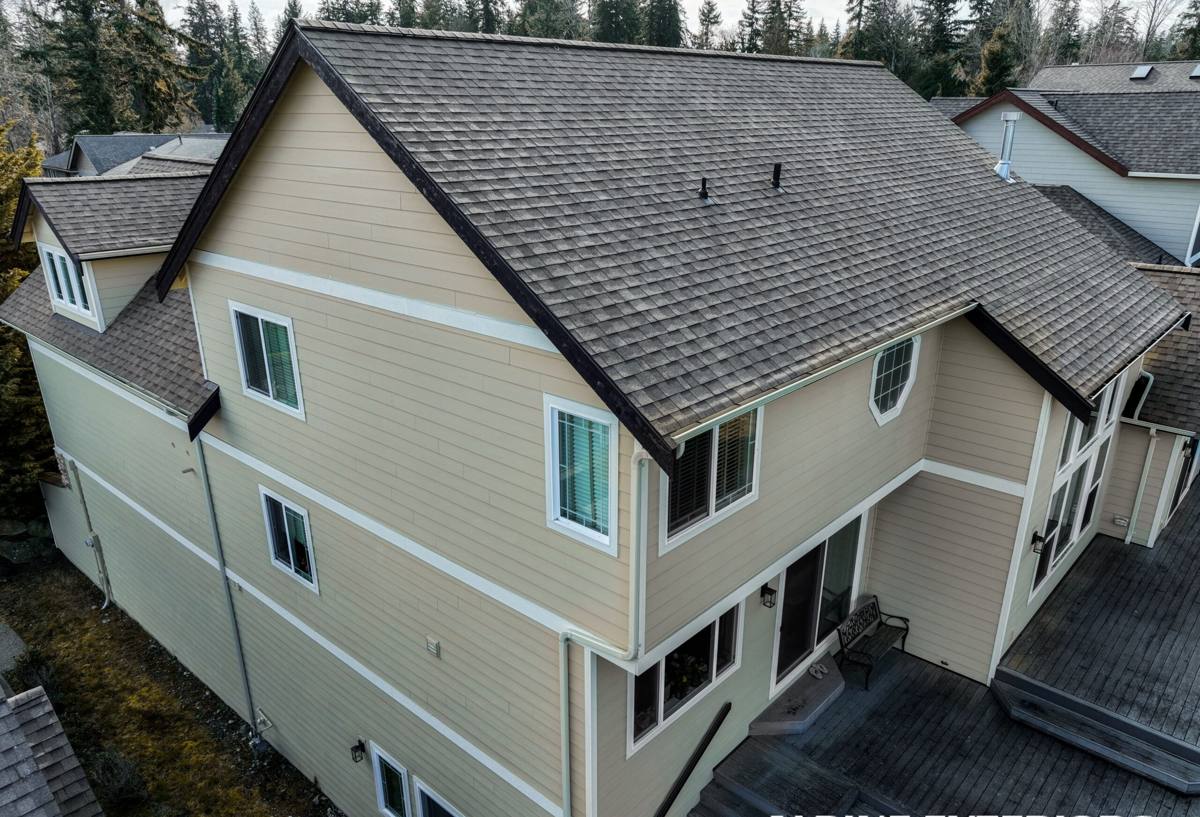
What Bellingham's Climate Actually Does to Vertical Siding
Three things work against exterior siding in Edgemoor, and they compound each other:
Salt Air
Proximity to the bay means a steady low-level exposure to salt-laden moisture. Over years, that accelerates corrosion on exposed fasteners and metal trim, and it degrades paint and finish coatings faster than they'd wear inland. Any board and batten system here needs fasteners and flashing that are rated for it, not standard-grade hardware.
Driving Rain
Bellingham doesn't just get rain, it gets wind-driven rain off the water, and board and batten has more vertical seams than horizontal lap siding — each one is a potential entry point if the water-resistive barrier and flashing details behind the siding aren't done correctly. This is the single biggest failure point we see on vertical siding jobs that weren't installed to spec.
Moss and Shade
The tree cover that makes Edgemoor desirable also means many homes sit in partial shade most of the day. Combined with the region's long wet season, that's a recipe for sustained moisture retention and moss growth on north- and west-facing walls. Siding material that absorbs water and swells under that kind of exposure is going to fail faster here than it would on a sunnier, more exposed lot.
Why We Only Install Board & Batten in James Hardie Fiber Cement
We don't install board and batten in vinyl, LP SmartSide, primed spruce, cedar, or other engineered wood products — not because those materials don't have a place in the industry, but because we've made a standard for our own crews and our own warranty, and vertical siding in a climate like this is exactly where that standard matters most.
Wood-based battens and boards, even primed ones, rely on paint film and caulk joints staying intact to keep moisture out of the substrate. In a shaded, damp environment like parts of Edgemoor, that's a maintenance commitment that doesn't let up — recaulking, repainting, and watching for soft spots becomes a recurring job, not a one-time install. Vinyl board and batten avoids rot but it's a thin, flexible material with limited color range, and it doesn't hold the crisp, deep shadow line that makes the style attractive in the first place.
James Hardie fiber cement is dimensionally stable — it doesn't swell, cup, or split the way wood-based products can when they take on moisture. It's non-combustible, which matters given the amount of tree cover and dry-season wildfire risk that shows up even in western Washington. And the factory-applied ColorPlus finish is baked on under controlled conditions, which holds up better against UV and salt exposure than field-applied paint, with a finish warranty that follows the product rather than depending on how well a repaint was done five years down the line.
What a Correct Board & Batten Installation Actually Involves
Board and batten looks simple from the curb — vertical boards, spaced battens over the seams — but the assembly behind it is where jobs succeed or fail. A correct install includes:
- A continuous water-resistive barrier installed and lapped correctly behind the panels, not just stapled up as an afterthought
- Properly flashed window and door openings, with head flashing that actually directs water out and away rather than behind the trim
- Correct fastener placement and spacing per Hardie's engineering specs for the HZ climate zone, using corrosion-resistant fasteners appropriate for salt-air exposure
- A rainscreen or drainage gap where the wall assembly calls for it, so any incidental moisture behind the siding has somewhere to go
- Battens fastened into structural framing or proper backing — not just face-nailed into the base panel
- Correct clearance at the bottom of the wall assembly from grade, decks, and roof lines to keep splash-back and standing water away from the siding edge
Skip any one of these and the siding can look right for a year or two before problems show up behind the wall where they're expensive to find and fix. This is also why board and batten is not a good DIY or handyman-crew project in this climate — the failure points are invisible until they aren't.
Material Comparison for Edgemoor Conditions
| Material | Moisture & Rot Behavior | Maintenance in Shade/Salt Air | Fire Rating |
|---|---|---|---|
| James Hardie Fiber Cement | Dimensionally stable, does not swell or rot | Occasional wash; factory finish holds color | Non-combustible |
| Cedar / Primed Wood | Absorbs moisture, prone to cupping and rot in shade | Regular recaulk and repaint cycle | Combustible |
| LP SmartSide / Engineered Wood | Resin-treated but edge-swelling risk if seams fail | Watch seams and cut edges closely | Combustible |
| Vinyl Board & Batten | Won't rot, but flexes and can warp in heat/cold cycling | Low, but limited color and thin profile | Combustible, can deform near heat |
This isn't a knock on every material in that table — it's context for why, given what Edgemoor's shade and salt exposure do to a wall over ten and twenty years, fiber cement is the material we're willing to put our install warranty behind.
Our Process on an Edgemoor Job
We start with a walk of the exterior to check the existing wall assembly — what's under the current siding, where moisture has already gotten in, and whether the sheathing and framing behind problem areas are sound. On tree-shaded lots that's often the first real conversation, because board and batten replacement is also the point where hidden moisture damage from years of a failing wall gets found and fixed, not just covered over.
From there we plan out flashing details at every window, door, and roofline intersection before a single board goes up, confirm batten spacing and layout against the home's proportions, and order Hardie panels and battens in the ColorPlus finish and reveal that fits the house. Installation follows manufacturer fastening and clearance specs for our climate zone, and we walk the finished job with the homeowner before calling it done.
Living With Board & Batten in Edgemoor's Climate
Even with the right material and a correct install, a little homeowner attention keeps a board and batten wall looking good for the long haul in a shaded, damp neighborhood:
- Rinse north- and west-facing walls that stay shaded most of the day once or twice a year to keep moss and algae from taking hold
- Keep gutters clear so overflow isn't running down the wall face during heavy rain events
- Trim back branches and shrubs that hold moisture against the siding or block airflow along a wall
- Check caulk joints at trim and penetrations annually — even with fiber cement, sealant is a wear item
- Have any impact damage or cracked boards repaired promptly rather than left through a wet season
Why a Crew That Already Works Edgemoor Matters
Board and batten done wrong doesn't usually fail in year one — it fails in year five or eight, quietly, behind a wall that still looks fine from the street. A crew that's worked other homes in this neighborhood already knows which walls sit in permanent shade, which lots get the harder wind-driven rain off the bay, and how the City of Bellingham's permitting and inspection process applies to exterior re-siding work. That local familiarity shows up in the decisions made before installation even starts — where to add drainage, which walls need extra attention at grade, how to detail around mature landscaping without disturbing root systems. It's the difference between a crew installing a product and a crew installing a wall assembly built for this specific street.
If you're weighing board and batten for a home in Edgemoor, we're glad to walk the exterior with you, look at what's there now, and put together a straightforward, no-pressure estimate for a James Hardie installation built for this climate. There's a form below — reach out and we'll get a time on the calendar.