 Bellingham Exterior
 Edgemoor's Setting Shapes How We Build
Edgemoor sits close to Bellingham Bay, with wooded lots, elevated sites, and homes that were often built to take advantage of water and mountain views. That setting is part of what makes the neighborhood desirable, but it's also exactly the combination of conditions that wears out a poorly built deck faster than almost anywhere else in Whatcom County. Salt-laden air moving off the bay, heavy tree canopy that keeps wood surfaces damp, and long stretches of driving rain all work against a deck at the same time. A deck built for a dry inland lot in eastern Washington, or even a sunnier part of town, simply isn't specified the same way a deck in Edgemoor needs to be.
We don't treat this as a generic build-it-and-move-on job. Every material choice, fastener, and drainage detail on an Edgemoor deck gets picked with this specific microclimate in mind, because the cost of getting it wrong shows up as rot, corrosion, and slick moss-covered boards within a few seasons rather than a decade or more.
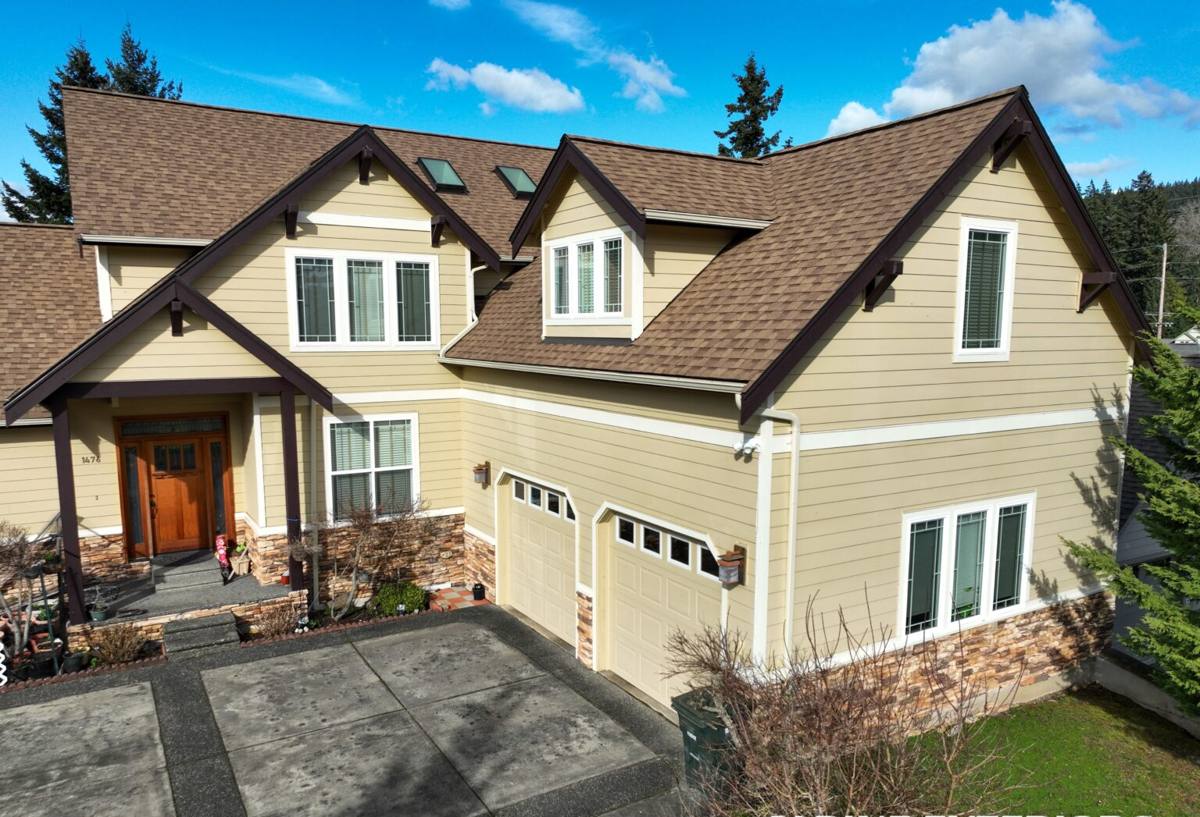
What Salt Air, Rain, and Moss Do to a Deck Over Time
Salt Air and Metal Fatigue
Proximity to Bellingham Bay means airborne salt settles on every exposed surface, including deck hardware. Standard zinc-plated screws, brackets, and nails corrode faster near the water than they would a few miles inland. Once a fastener starts to rust, it weakens, stains the surrounding wood or composite, and eventually fails — often at the exact structural connections that matter most, like ledger bolts and joist hangers.
Driving Rain and Moisture Intrusion
Bellingham gets a lot of rain, but it's the sideways, wind-driven rain off the bay that causes the real damage. It gets pushed into gaps around ledger boards, under poorly flashed rim joists, and into end grain that isn't sealed. Once moisture gets into a structural member, it doesn't dry out quickly under a shaded canopy — it just sits there, and that's when rot sets in.
Moss and Shade
Edgemoor's mature trees are one of its best features, but the shade they cast keeps deck surfaces damp for days after a storm. That damp, low-light environment is exactly what moss and algae need to take hold. Beyond looking bad, a mossy deck surface gets genuinely slippery, and moss holds moisture against the board itself, accelerating whatever decay process is already underway.
Choosing the Right Decking Material for This Site
There's no single "best" decking material for every Edgemoor property — it depends on how much shade the lot gets, how close it sits to the water, and what kind of maintenance the homeowner actually wants to keep up with. Here's how the common options hold up under these specific conditions:
| Material | Moss & Algae Resistance | Salt Air Durability | Maintenance Needs |
|---|---|---|---|
| Pressure-treated fir/pine | Low — needs regular cleaning and sealing | Moderate if fasteners are corrosion-rated | Annual cleaning, periodic re-sealing |
| Cedar | Moderate — natural oils help but fade over time | Good, especially with stainless fasteners | Cleaning and oil/stain every 1-2 years |
| Capped composite | Good — textured caps resist algae better than wood | Very good | Occasional washing, no sealing or staining |
| PVC decking | Best — non-organic surface won't feed moss growth | Excellent | Lowest — soap and water as needed |
For heavily shaded, damp lots — which describes a fair number of Edgemoor properties tucked under tree cover — we lean homeowners toward capped composite or PVC unless they specifically want the look and feel of real wood and are prepared for the upkeep that comes with it. Cedar remains a solid choice when the site gets reasonable sun exposure and the homeowner is comfortable with a maintenance routine.
Framing, Flashing, and Hardware That Won't Let You Down
The decking surface is what everyone sees, but the framing underneath is what determines whether the deck is still safe and level in fifteen years. In a climate like this, three details matter more than they would in a drier region:
- Ledger flashing: Where the deck attaches to the house needs continuous flashing, not just caulk, to stop wind-driven rain from working its way behind the ledger board and into the house's rim joist.
- Corrosion-rated fasteners: Hot-dip galvanized or stainless steel hardware throughout — not just at the ledger — because salt air attacks any exposed fastener, not only the ones closest to the water.
- Joist protection: Butyl tape or a comparable joist tape over the top of every joist keeps standing water from soaking into the cut ends and top face of the framing lumber, which is where rot typically starts first.
None of this is visible once the deck is finished, which is exactly why it's worth asking a contractor about before work starts rather than after boards are already down.
Drainage and Substructure: Breaking the Moss Cycle
Moss doesn't just grow on top of a deck — it thrives underneath one too, in the crawlspace between the ground and the joists, where airflow is often poor and the ground stays wet for most of the wet season. A deck built without attention to substructure drainage and ventilation will hold moisture at ground level long after the surface has dried, and that moisture works its way back up into the framing over time.
On sites with limited clearance or heavy shade, we look at grading away from the house, a permeable ground cover instead of bare dirt, and enough joist spacing and skirting ventilation to let air actually move through the space. On elevated or sloped Edgemoor lots, this often means coordinating footing placement with the existing grade rather than fighting it, which also helps avoid standing water pooling against posts.
Our Process, Start to Finish
- On-site assessment: We walk the lot, check sun and shade exposure, existing drainage patterns, and how close the build site sits to prevailing wind and rain direction off the bay.
- Design and material selection: Based on that assessment, we recommend decking, railing, and fastener choices suited to the specific spot on the property — not a one-size answer for the whole neighborhood.
- Permitting: Deck projects in Bellingham typically require a building permit through the city, and we handle that submission and inspection scheduling as part of the job.
- Framing and flashing: Ledger attachment, footings, joists, and flashing details go in first, with corrosion-rated hardware and joist protection throughout.
- Decking, railings, and finish work: Surface material, railing system, and any stairs or built-in features go in last, with attention to drainage gaps between boards.
- Final walkthrough: We go over care and maintenance specific to the material installed before calling the job done.
What Affects the Cost of a Custom Deck Here
Every deck is priced around its own footprint, materials, and site conditions, so we won't quote a number without seeing the lot — but these are the factors that move the price up or down on most Edgemoor projects:
| Factor | Why It Matters Here |
|---|---|
| Site access and slope | Elevated or wooded lots can require more complex footings and equipment access |
| Decking material | PVC and composite cost more upfront than wood but need far less long-term upkeep |
| Height above grade | Taller decks need more substantial railings and stair systems, and more structural engineering |
| Fastener and flashing spec | Corrosion-rated hardware and full flashing details add modest cost but prevent early failure |
| Size and layout complexity | Multiple levels, built-in seating, or curved edges add labor beyond a simple rectangular deck |
Maintenance Checklist for Edgemoor Decks
Even a well-built deck needs some seasonal attention in this climate. Here's what we recommend homeowners stay on top of:
- Sweep or blow off leaves and debris regularly, especially in fall — trapped organic matter holds moisture and feeds moss growth.
- Wash the surface with a deck cleaner (not just a pressure washer on high, which can damage wood fibers or composite caps) at least once a year, more often in heavy shade.
- Check railing connections and stair hardware annually for early signs of rust bleed or loosening.
- Keep gutters and downspouts near the deck clear so runoff isn't dumping extra water directly onto or under the structure.
- For wood decks, re-inspect the sealant or stain coat every 1-2 years and reapply before it fully wears through.
- Trim back overhanging branches where practical to let more light and airflow reach the deck surface.
Why a Crew That Already Works Edgemoor Matters
A contractor who mostly builds decks in drier, sunnier parts of Whatcom County can still do competent framing — but if they haven't spent real time building specifically along Bellingham Bay, they may not default to corrosion-rated hardware, full ledger flashing, or shade-appropriate materials unless a homeowner specifically asks. Those aren't upgrades in this neighborhood; they're what a correctly built deck requires from the start. Knowing the local permitting process, the way certain lots drain, and how much shade a given site actually gets throughout the year comes from having built here before, not from a general specification sheet.
If you're planning a new deck or replacing one that's showing its age, we'd be glad to walk the site with you and talk through what makes sense for your specific spot in Edgemoor. Reach out for a free, no-pressure estimate using the form below.